The Independent Jewelry Brands That Hold Their Value
Spending real money with an independent jewelry designer means trusting your own eye instead of a famous name. The used market is where that trust gets tested, because nobody pays most of retail for a secondhand piece as a favor. Seven designers pass that test on their signature pieces, and have for years.
Buy a bracelet from one of the great houses and the name does part of the vouching: a century of other people’s confidence comes attached. Buy from an independent jewelry designer and the vouching is mostly the brand’s own storytelling, which leaves you weighing real money against your own judgment. What you want, before you spend it, is evidence the designer had no hand in. There is one signal like that, and it sits in public view: what strangers pay for the work secondhand.
Fine jewelry resale value is that signal read as a number, the share of its original price a piece keeps when it comes up used and sells. Most fine jewelry resells for about half of what it cost new, often less. So the jewelry brands that hold their value are the exceptions, and holding has a specific look: a $3,000 piece coming up used, asking around $2,600, and selling anyway.
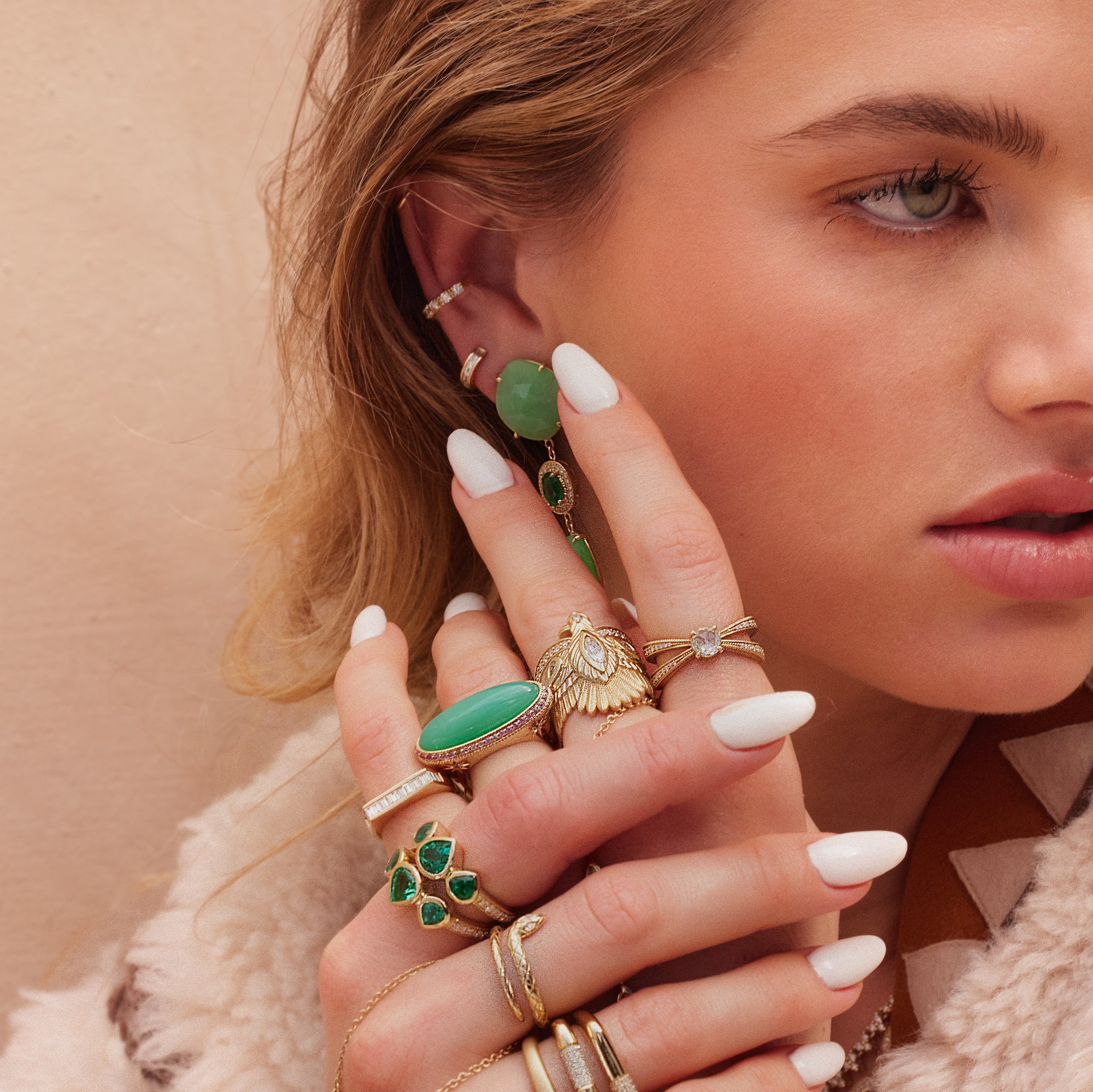
A short list of independent designers keeps pulling that off on TheRealReal this July: signature pieces coming up used, keeping most of their price, and selling through, with waitlists forming behind the sold listings. The proven core is Foundrae, Marla Aaron, Anita Ko, and Spinelli Kilcollin. Retrouvai, Prounis, and Lizzie Mandler hold alongside them, each with a catch attached. Those seven are the names you can buy new with confidence.
Why resale value is the demand signal a jewelry brand can’t easily buy
A young jewelry house can legitimately purchase nearly everything on its way up. Editorial placement, stylist relationships, influencer saturation, the right wrists at the right parties: all of it is standard practice, and none of it tells you whether strangers would part with real money for the work. The secondary market runs on consignment, meaning an owner hands her piece to a platform like TheRealReal, which authenticates it, prices it, sells it, and keeps a cut. Every sale there is a cold transaction between two people the brand has never met, at a price the brand doesn’t set.
Watch and handbag houses prop their secondary markets with real machinery: tight allocation, waitlists, certified pre-owned programs, buyback desks that hold a floor under prices. Independent jewelers have none of that apparatus. There are no quotas on a medallion, no authorized pre-owned desk repurchasing locks, and even the biggest jewelry houses barely run buyback at all. The only thing propping up a used piece’s price is the next person who wants it.
How to read fine jewelry resale value
The number that matters is retention on the signature: how much of its original price a designer’s defining object still commands when it comes up used. A deep pile of listings just means a brand is widely owned, and how deep the pile gets is partly the platform’s own stocking decision anyway. So watch the one piece a designer is known for: how much of its price does it keep, and does it sell?
Every read here comes from one site, TheRealReal, pulled in July 2026, and the site sets both halves of the ratio: its own estimate of what a piece cost at retail and its own resale ask. Treat every figure as directional, a barometer rather than an audit. When I write that a piece holds around 85 percent of estimate, the honest translation is modest discount, one platform, this summer. The listings themselves are marked as discounts, so that same piece shows up on the site as fifteen percent off; it is one number, read from either end.
Holding value, in fine jewelry, means losing least. Every piece on this list resells at a loss; the names below simply lose the least on their best objects, and lab grown diamond resale value has already shown buyers what a floor with nothing under it looks like. Retention describes the next buyer’s price, and an owner sees much less of it: the platform’s commission comes out of the sale, promo codes shave the ask at checkout, and an owner who consigns typically walks away with about fifty-five to sixty percent of what she originally paid. And whether fine jewelry is a good investment at all is a separate question with a mostly unromantic answer. If you love a piece, it is worth buying. Buy it knowing you will not get your money back.
Gold flatters everyone’s numbers right now. The metal has more than doubled in five years, to around $4,100 an ounce as I write this, and on TheRealReal’s own data a generic unbranded gold piece now resells for close to half its original retail, purely because the metal repriced. Call that the melt floor: what the material alone would bring if you scrapped it. The signal worth trusting is the distance these designers hold above it. Core signatures keep around 85 percent of their price while generic gold sits near half, the sold tags and waitlists are something a metal price cannot manufacture, and several of these same names sat at the top of TheRealReal’s independent resale read in early 2021, when gold sold for less than half of what it does today. The pattern has been building for at least five years; it has only now become easy to see.
Do independent jewelry designers hold their value? A short list does, on their signature objects, in the losing-least sense, and it has been the same short list for years.
Nobody gets seeded or gifted into paying near retail for a used piece of jewelry.
The proven core: four independent jewelry brands the resale market keeps confirming
Foundrae: the medallion is the buy
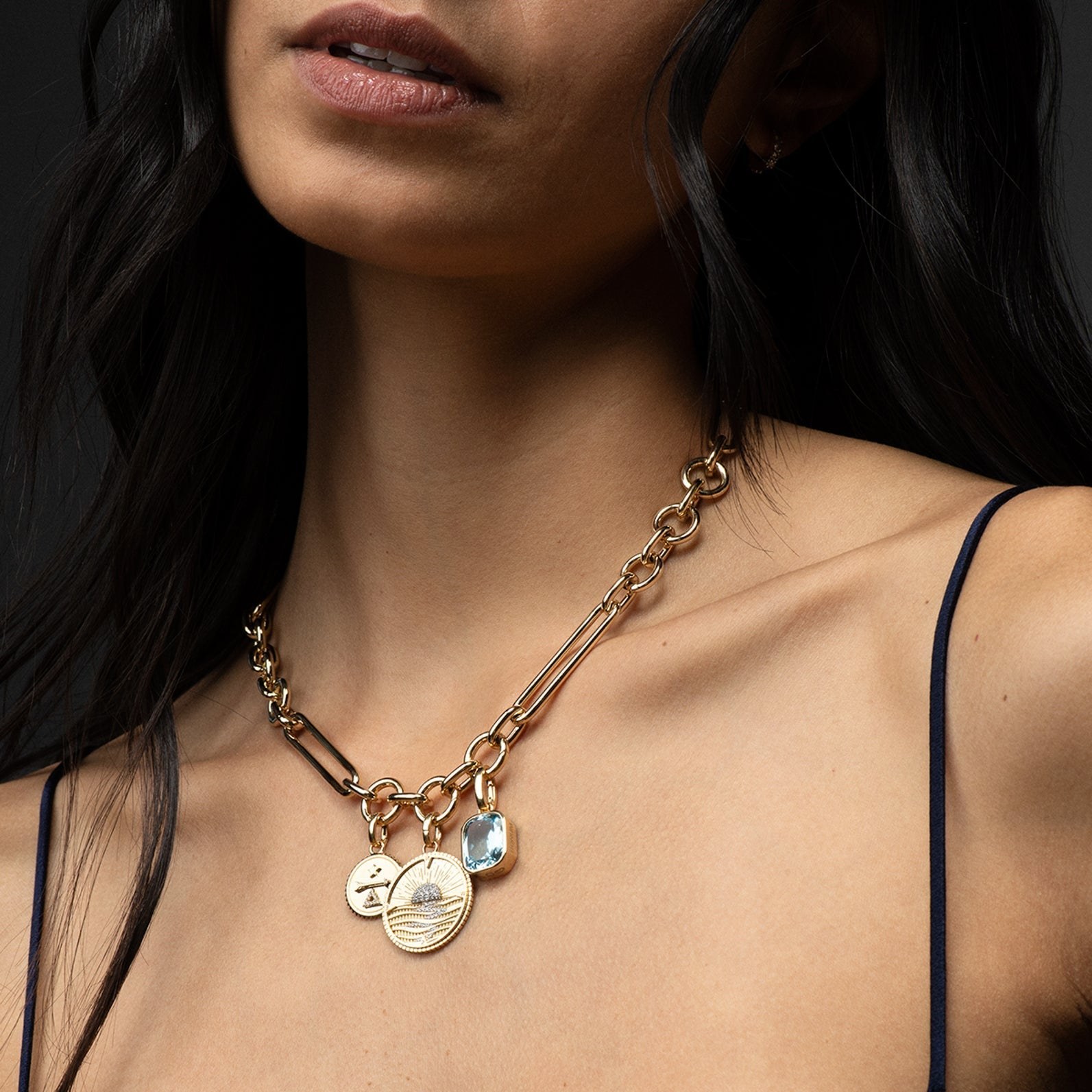
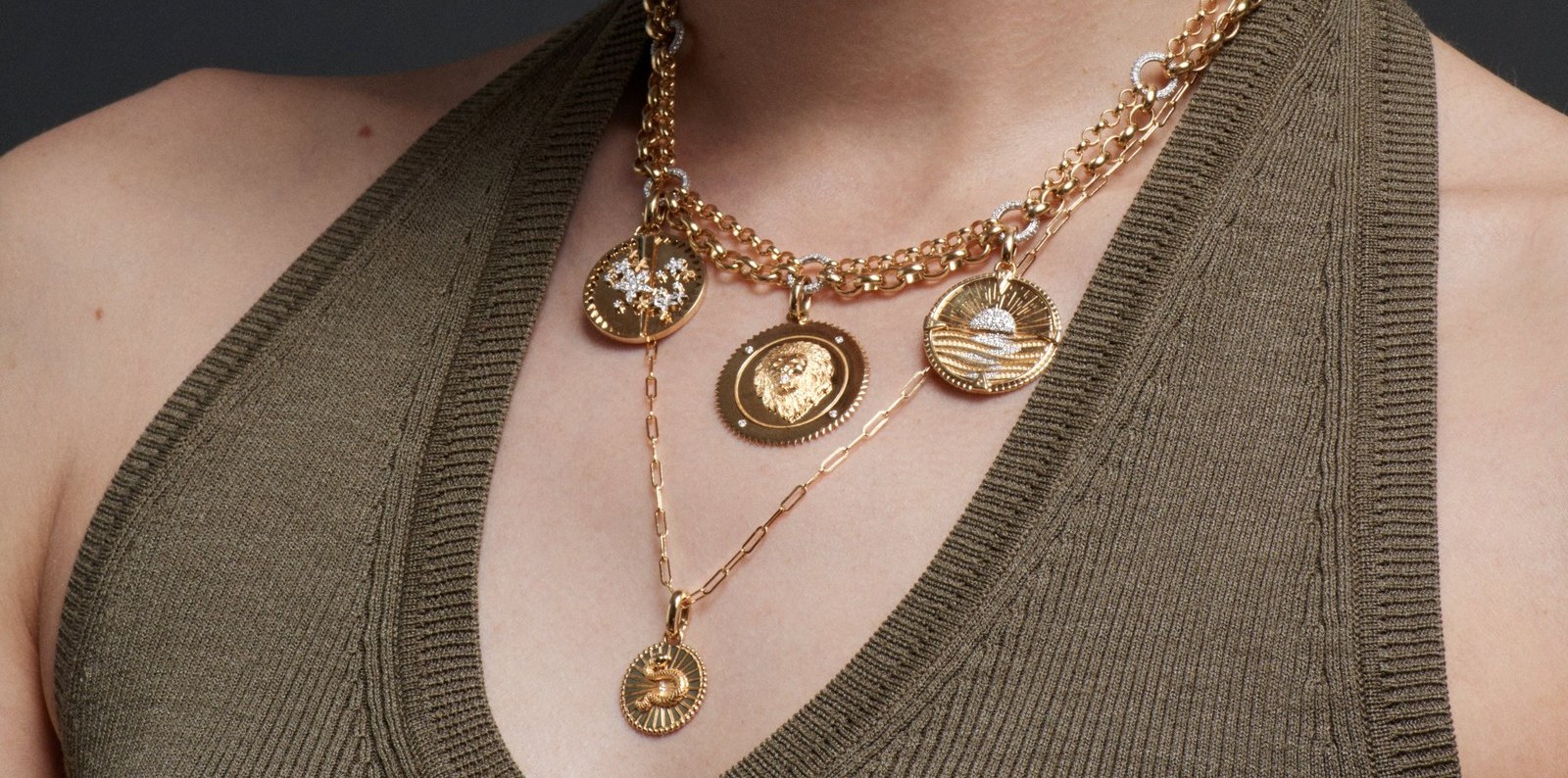
Foundrae built a language of talismanic medallions, cast symbols for karma, strength, dream states, protection, worn on heavy chains and collected the way an earlier generation collected charms. The house’s resale presence is the deepest of any independent name here, a couple hundred listings at a time, and the core medallions mostly ask five to twenty percent off the site’s estimate, with a full page of sold pieces carrying waitlists behind them. The house itself is scaling rather than coasting: eight stores now, including a first international door inside Liberty London in 2025. Buying new, the medallion language opens at $2,100 for the small diamond-set Dream Baby Medallion, and a full-size Karma medallion runs just under five thousand with its chain at stockists. The right symbol is often a personalized, made-to-order object rather than a shelf pick, and the same site carries one-off earrings and bands at thirty or forty percent off, so the discipline is the core medallion itself, whatever else wears the house’s enamel.
Marla Aaron: the Lock, and you don’t need the all-gold one
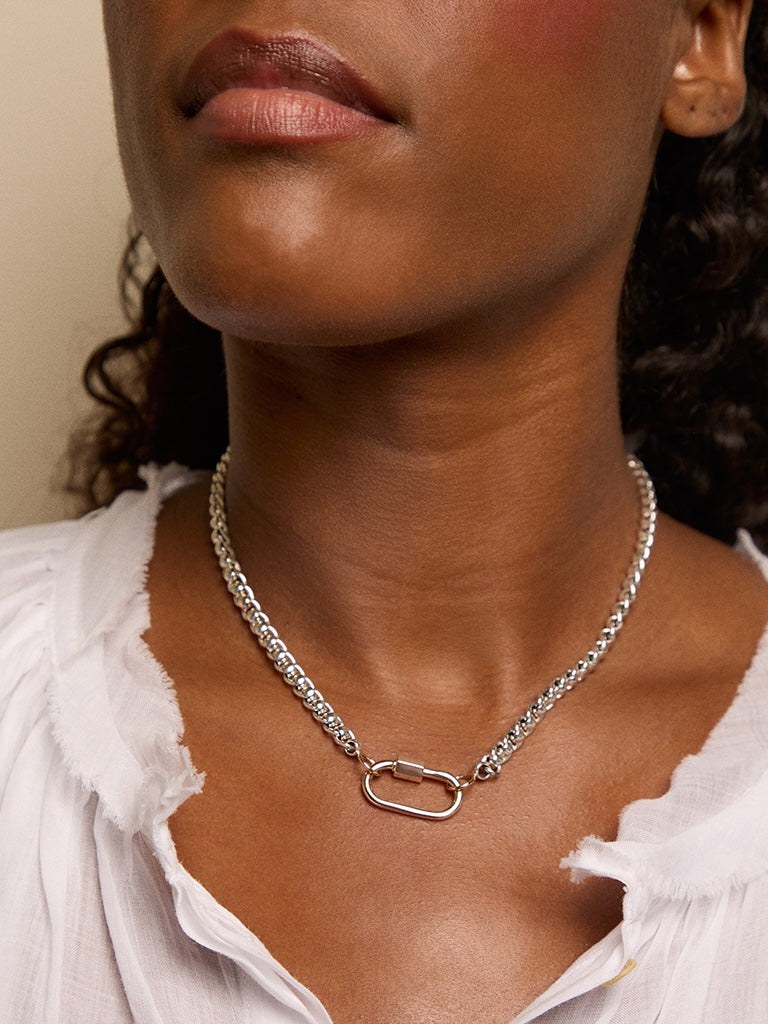
Marla Aaron recast the carabiner as the Lock in 2012, a working clip in precious metal that hangs charms and joins chains, hardware doing jewelry’s job. Used, her gold locks and chains sell through heavily, waitlists trailing the sold pieces, mostly at five to twenty percent off estimate. Her plain chains post some of the prettiest retention numbers on the site, and they are also the numbers to trust least, because a plain chain is mostly metal and the gold run flatters that math; the locks selling through is the better evidence. The outliers are the odd two-tone and heavy-diamond pieces, which discount hard. Buying new, the two-tone silver and gold lock runs about $1,200, roughly the same money as the 14k fine curb chain people hang it from, silver locks cost far less, and the all-gold Regular Lock is $5,500 for what is, in silhouette, the same object. Most pieces are made by hand, often to order, so plan on a two to three week wait.
Anita Ko: the safety pin, sold by the single
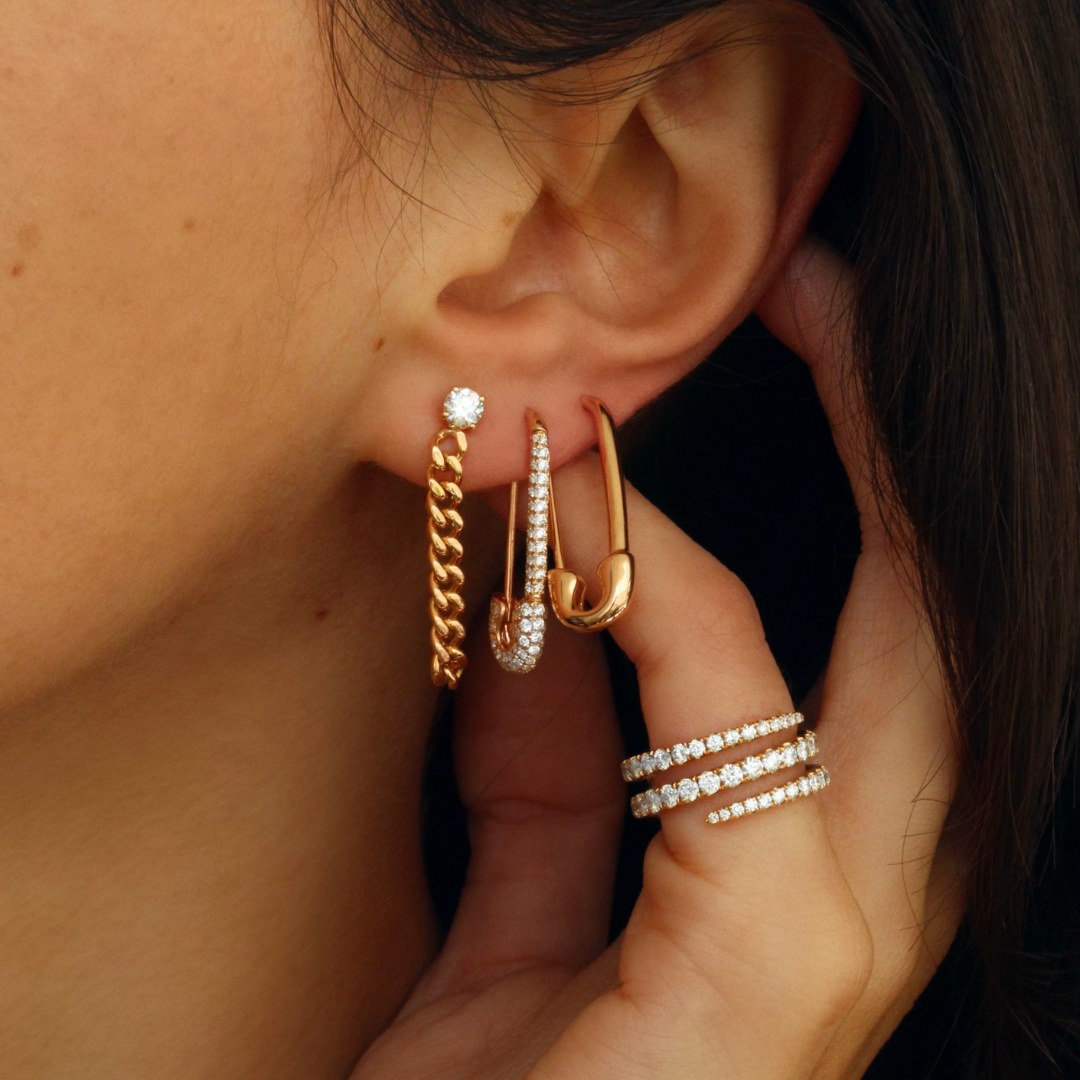
Anita Ko turned the safety pin into a fine jewelry vocabulary, plain, mini, diamond, gemstone, alongside her coil rings and spike pieces, and the used market chases the whole set: one of the deepest independent markets on the site, an entire results page of sold listings with waitlists, signature pieces mostly five to twenty-five percent off estimate. The demand is not a gold-window artifact either; she was the platform’s highest-volume fine jewelry seller as far back as early 2021. Buying new, the Classic Safety Pin earring in 18k is $1,800, and the catch is arithmetic rather than quality: it is priced and sold as a single. The pair you are picturing is $3,600, which is worth knowing before you fall in love twice. Her deep-diamond one-offs discount forty percent and more used; the plain vocabulary is what holds.
Spinelli Kilcollin: the plainest rolling ring is the one that holds
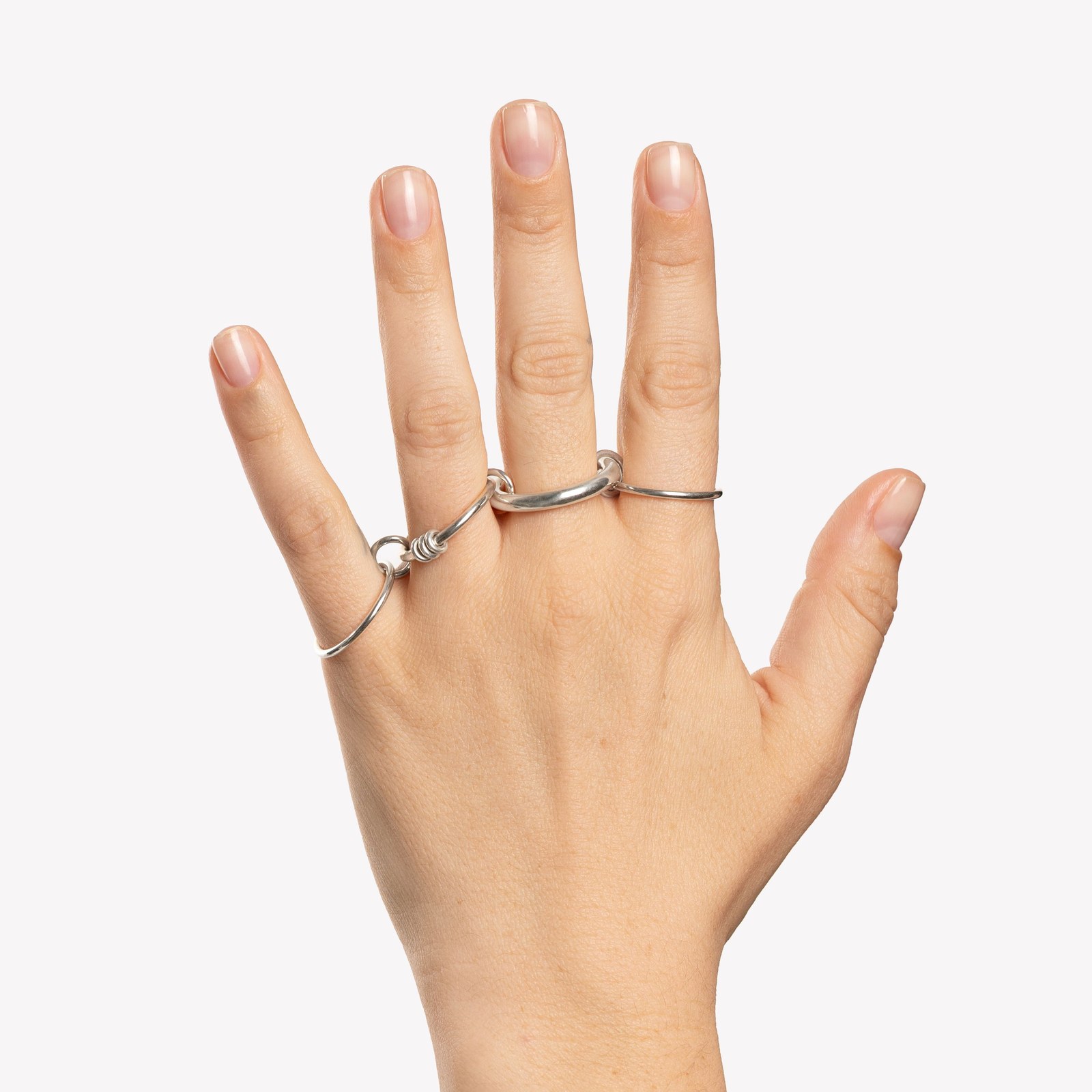
Spinelli Kilcollin makes one of the most recognizable silhouettes in independent jewelry, the linked rolling ring: separate bands joined by orbiting connectors, worn spread across two fingers or gathered into one. The used market for it is deep, with an enormous tail of sold pieces and waitlists, and the plain cores, silver, two-tone, and gold rings and Solarium bands, mostly ask ten to twenty percent off estimate, while the maximal diamond and gemstone stacks go half off and more. The version of the signature the market keeps paying for is the plainest and least expensive one: a silver Solarium band is $390 new, the silver Aries sits around a thousand dollars, and the all-gold Solarium is $2,900. The five-figure statement stacks are beautiful, and the secondhand market prices them as a different purchase.
Three more names that hold, with the catches attached
Retrouvai: the talismans hold, the Mini Compass is the soft spot
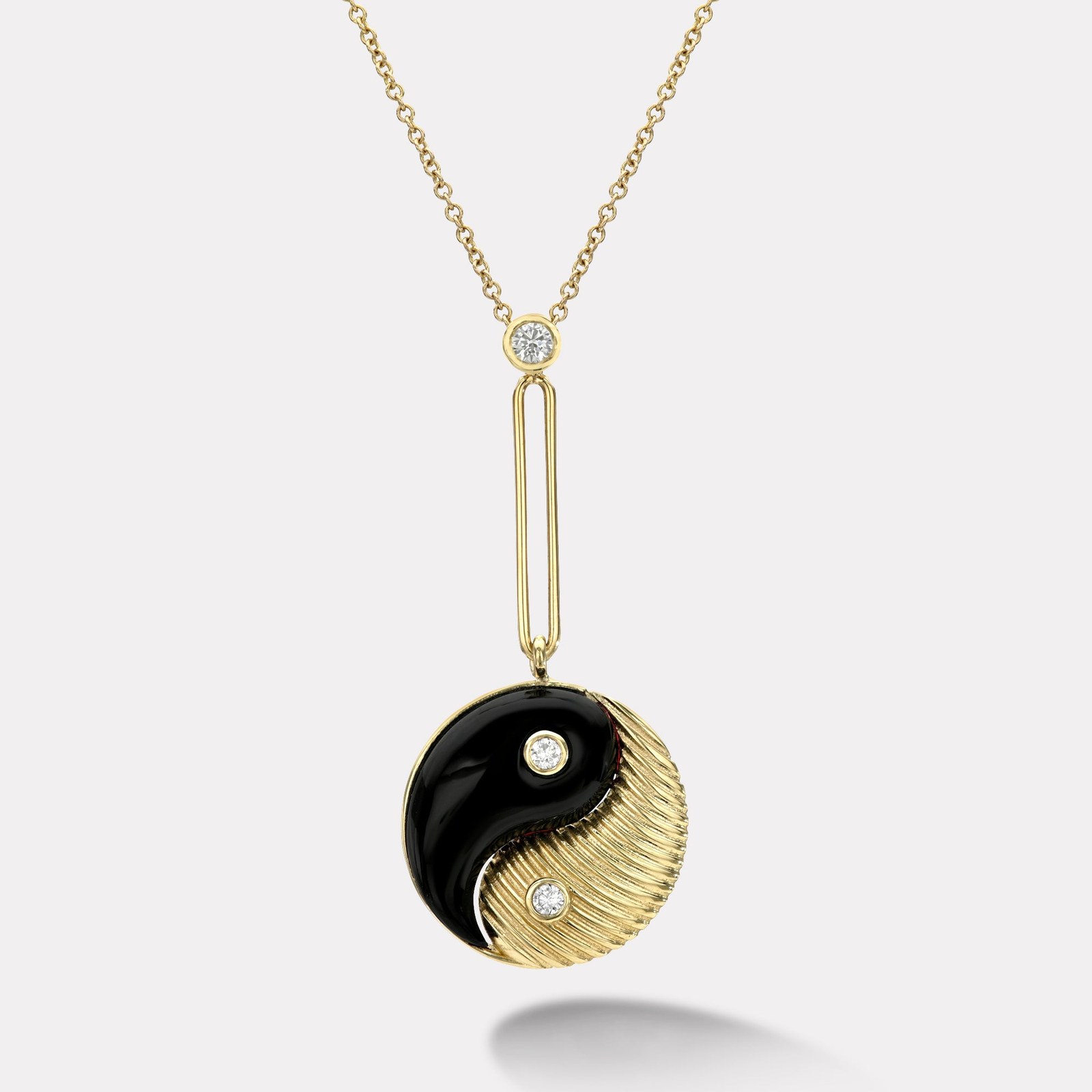
Retrouvai, Kirsty Stone’s Los Angeles house, trades in substantial talismans: Yin Yang pendants, Compass pieces, Fantasy Signet rings, all handmade to order. The resale market is mid-sized and active, walls of sold pieces for a house this size, with the core talismans mostly asking five to twenty-five percent off estimate, and the house was already a top-ten independent resale name on TheRealReal’s 2021 read. The catch sits at the entry price: the small Mini Compass pendants, the cheapest way in, show up used at close to half off again and again. So skip the toe-dip and enter through the real thing. The Mini All Gold Yin Yang pendant is $1,760 new, the full Signature Compass pendant with stones runs a bit over four thousand, and every piece is made after you order it, so build in the lead time.
Prounis: tiny supply, and nearly everything sells
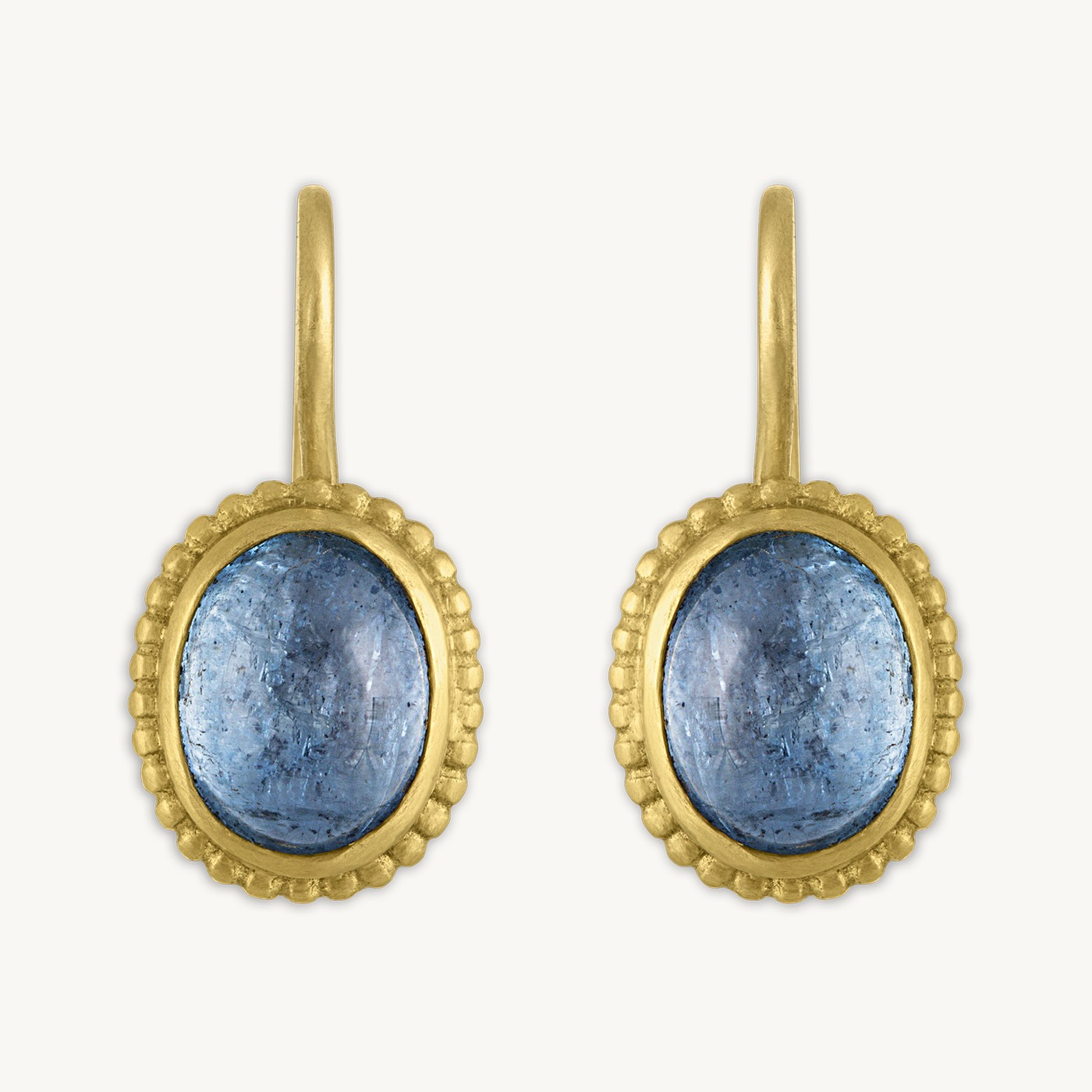
Prounis is a small New York house doing hand-fused granulation, tiny spheres of recycled 22 karat gold fused one at a time, a technique with a five-thousand-year pedigree and single-digit resale listings to show for it. The thin market reflects scarce supply rather than weak demand, and when pieces reach it they move: at the July read, seven of nine listings were already sold, with modest discounts on the signature 22k work. The first catch is the metal itself: soft, the very softness that gives the surfaces their buttery hand, so pieces scratch and dent more readily than 14k or 18k and want gentler wear. The second is what the signature costs new: the rings and hoops the house is known for mostly sit near five thousand and up, so the way in is small, 22k Hexa studs at $880. The demand has a track record too; Prounis held a top-ten spot on TheRealReal’s early-2021 independent read, before the gold run gave everyone better-looking numbers.
Lizzie Mandler: one signature holds, and the buy is the bracelet
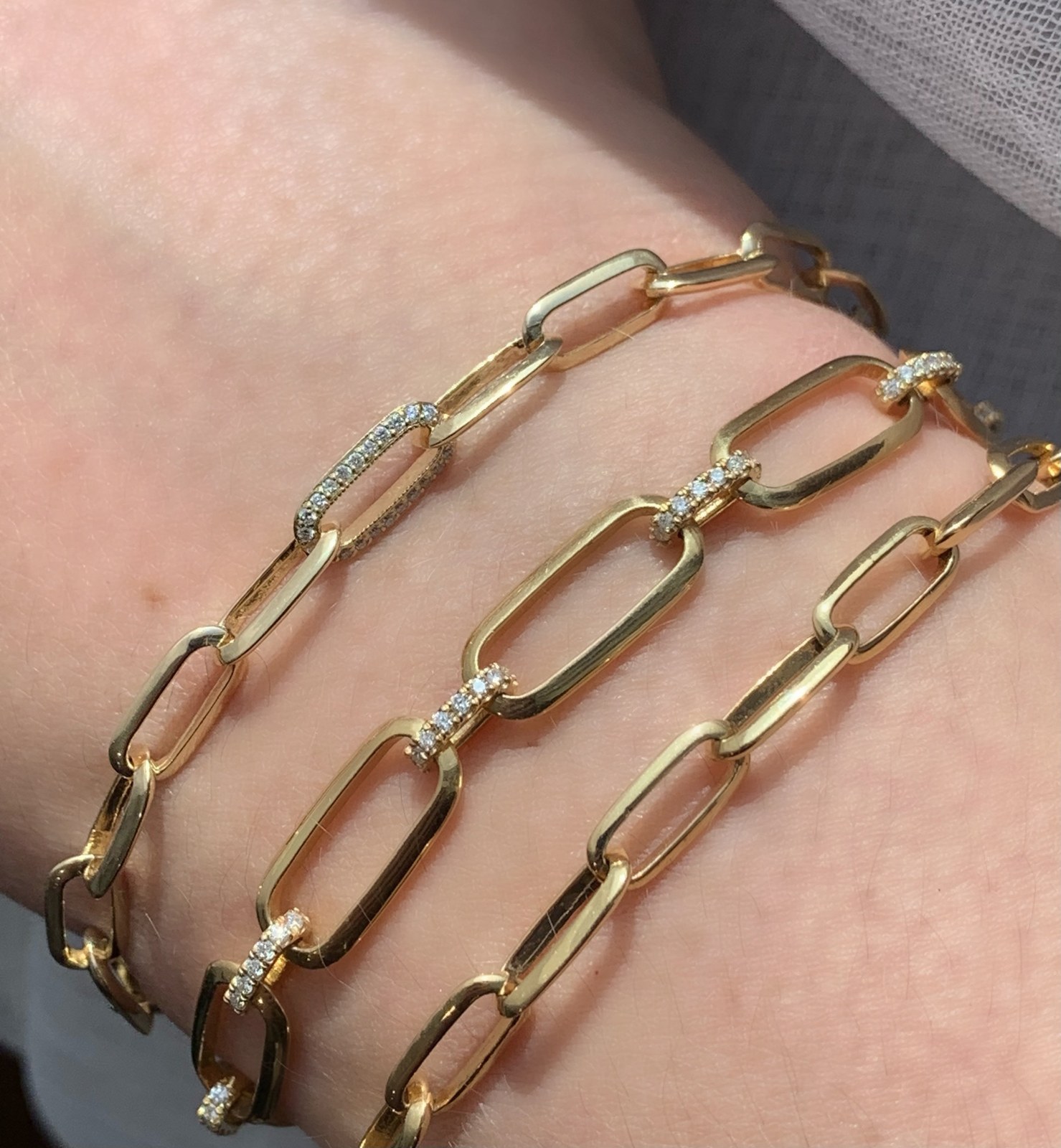
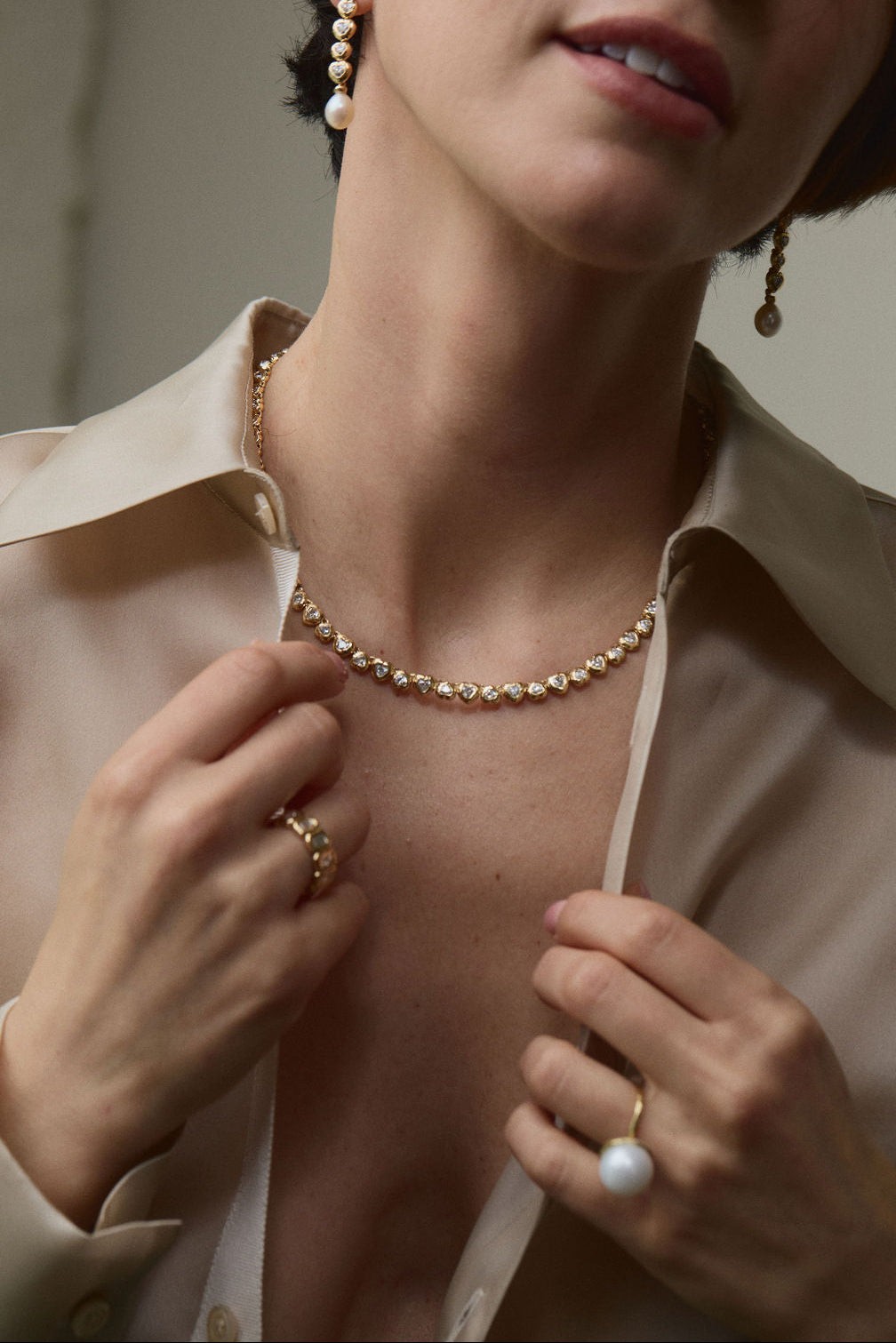
Lizzie Mandler’s signature is the knife edge, a sharp triangular profile she runs through chains, bands, and studs. Her resale presence is thin, and the signal inside it is narrow and unusually clear: the knife-edge oval link chain holds around ninety percent of estimate and sells, while nearly everything else in the range discounts hard used. Buying new, the flagship expression of that signature, the full knife-edge chain necklace, is $18,000 and frequently sold out, and it is not the buy. The same silhouette lives in the knife-edge oval link bracelet at $4,380 and the Signature Knife Edge band ring at $1,690, and those are where the signal and the sticker meet.
Retention on the signature is the signal; the size of the pile is context.
The rule across all seven: buy the plain core signature
The plain core signature is the piece to buy, because the diamond, two-tone, and statement versions of the same silhouette are where the losses concentrate. Core medallions hold while one-off pieces go forty percent off, plain locks and chains hold while two-tone and heavy-diamond experiments drop by half or more, and the same split runs through the rolling rings and the safety pins. A flagship diamond expression of an icon is not a safer purchase because it shares the icon’s shape. Loving the flagship version is reason enough to buy it, and it is the right reason. The used market treats it as a different object from the plain signature it resembles.
The list is not a verdict on anyone missing from it. Absence or thinness on the resale marketplaces says nothing against the work; some of the most interesting jewelry in this tier is made in small numbers for people who never plan to sell, and plenty of fine jewelry brands worth knowing barely trade used at all. If reading the used market leaves you tempted to shop it directly instead of buying new, buying secondhand fine jewelry is its own discipline.
What you get back
An expensive dress pays back nothing when you are done with it, and neither does the dinner or the trip. A signature piece from one of these seven gives you years of wear and then, if you ever sell it, hands back about sixty percent of what you paid. Almost nothing else you buy for pleasure does that. Buy the right piece and the math works in your favor.
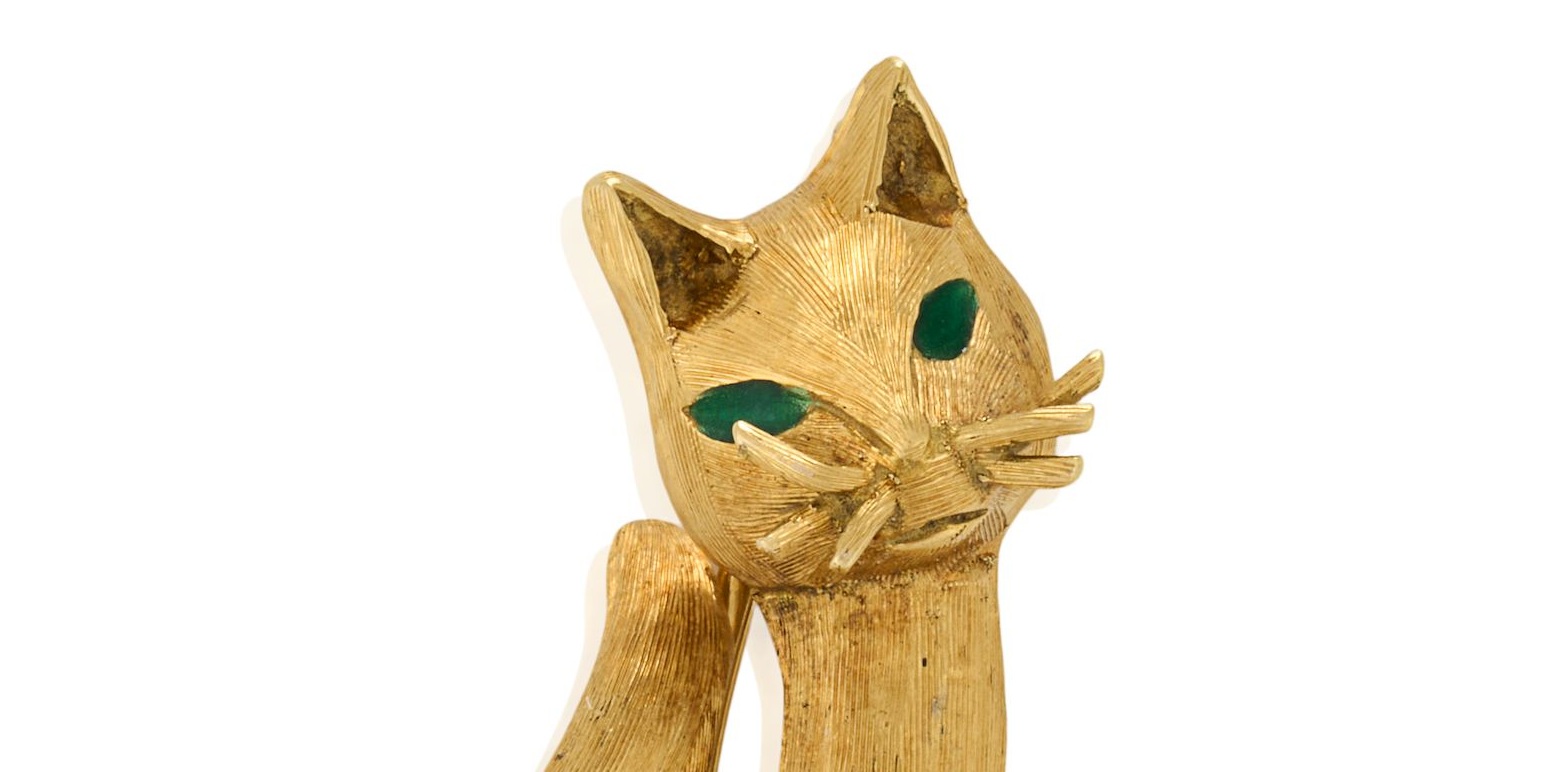
Sandy Lerner Is Rehoming Her Cats: A Tiffany Cat Brooch and Sixty-Five More
The Cisco co-founder spent four decades collecting cats in gold, enamel, amethyst and bronze. On 30 September 2026 Bonhams sells 66 of them in New York, from a $700 carved cat to a $120,000 bronze by the sculptor Rembrandt Bugatti. She is keeping the live ones.
Why Are Jewelry Prices Still Going Up?
Jewelry costs about 15% more than it did a year ago, and it is the gold accounting for most of it. The answer coming back from the jewelry trade and brands is less gold in the piece, which changes what you have to ask for at the counter.
Natural Diamond Prices Are Going Up Again, at Least for Now
Lab-grown stones pushed mined diamond prices down for years. The diamond trade's price index rose again in August, led by small stones. What that changes for you.
The newsletter.
One email when something is worth your attention. New essays, the buying calls behind them, and what we’re watching in the trade. No roundups, no affiliate dumps.