Brown Diamonds: Is the Hype Real?
Taylor Swift's ring and De Beers' Desert campaign pushed brown diamonds into a moment. What's manufactured, what's real taste, and what to know before you buy.
You’ve probably seen Taylor Swift’s engagement ring, revealed on Instagram last August, 2025, is an old mine brilliant cut diamond set in hand-engraved yellow gold, designed by Kindred Lubeck of Artifex Fine Jewelry. Travis Kelce proposed. The stone’s exact carat and color grade were never officially disclosed, but expert estimates landed between 7 and 10 carats with a soft, candlelit warmth. Within 24 hours, jeweler Ali Galgano told People she’d received hundreds of inquiries about antique cushion diamonds. Lubeck herself launched Artifex Bridal shortly after because the custom practice couldn’t absorb the demand.
And by now you’ve probably seen the ads. In October 2025 De Beers launched Desert Diamonds, which the company called its “largest category marketing investment in more than ten years” and the first new industry-wide diamond beacon in over a decade. Either it was planned or some smart marketing folks jumped into action after the Swift engagement. The launch party was at ARTECHOUSE New York; attendees included Anthony Ramos, Daisy Edgar-Jones, Rachel Brosnahan, and Sofia Black-D’Elia. The color palette runs from Sunlit Whites and Warm Whites through Honey, Amber, Champagne, Cinnamon, Whisky, and Caramel. According to De Beers’ own release, the campaign generated more than 250,000 mentions and 450 million views across digital platforms. A bridal extension followed on April 9, 2026.
Today, every jewelry brand with a brown stone in inventory discovered they’d been sitting on something fashionable this whole time.
So: is the brown diamond a real taste shift, or is this manufactured demand for a stone the industry has spent decades trying to figure out what to do with?
The answer is both. And that’s what makes it interesting.
A Brief History of Diamonds Nobody Wanted
Brown diamonds are the most common color in nature. Dr. George Harlow of the American Museum of Natural History put it flatly in a 2014 JCK debate: “The most common color is brown, and then colorless.” For most of the twentieth century, the diamond industry treated them accordingly. They were industrial-grade stones, used for cutting and grinding, sorted out of gem production lines, and sold at a fraction of what colorless diamonds commanded. A brown diamond wasn’t a product. It was a byproduct.
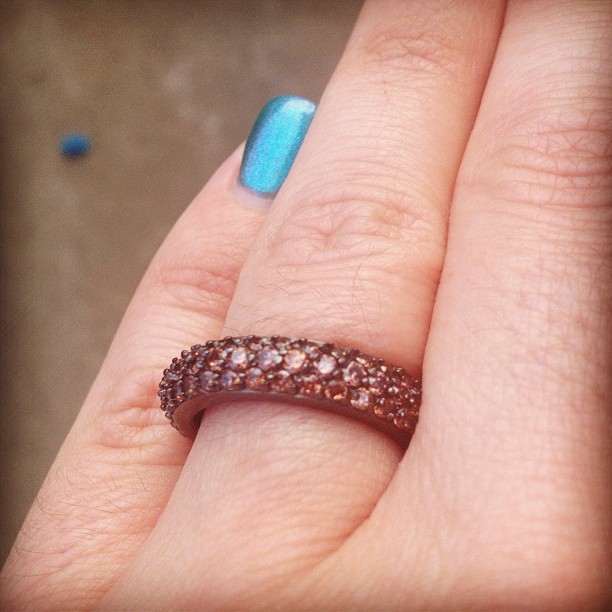
Le Vian changed the conversation starting in 2000, when it debuted the concept of Chocolate Diamonds (the trademark didn’t register until 2008–2009). The rebrand worked, commercially. By the brand’s own 25-year retrospective, Chocolate Diamonds became a $500 million-a-year force with 43% brand recognition among American adults and 5 million collectors, though those are all self-reported numbers rather than audited figures. The rebrand drew skepticism too. A 2014 JCK panel quoted the bluntest version of the critique: “‘chocolate’ diamonds are just brown diamonds… and brown diamonds are the most common kind of diamonds.” That same year, GIA itself wrote that brown diamonds had risen in popularity “due in large part to positive marketing campaigns.” Not exactly a ringing endorsement from the lab that grades them.
What Le Vian proved at the time, whether you liked the branding or not, was that the problem with brown diamonds had always been perception. The stone itself was never the obstacle. It’s still a diamond, and the value is in the marketing.
De Beers is now doing the same thing on a vastly larger scale. The Desert Diamonds campaign reframes warm-toned natural diamonds as something distinct and desirable, a spectrum from cream through champagne to deep amber. The language is careful. In October 2025, De Beers’ Sally Morrison told JCK, “It’s not a brown program,” and explained that the Desert color palette functions as “a metaphor for ‘natural.’” Sunlit white. Honey. Whiskey. Not brown. Never brown.
The Part Nobody Wants to Say Out Loud
De Beers has had a large strategic problem for the past bunch of years. Lab-grown diamonds have gotten very good at producing colorless, high-clarity stones at a fraction of the natural price. The clearer and more perfect the lab stone, the harder it is for natural diamonds to justify their premium on looks alone. And lab grown diamonds don’t have the societal problems that mined diamonds do.
But lab-grown diamonds are mostly colorless. The warm, earthy tones of natural brown and champagne diamonds are harder to replicate and (for now) rarer in the lab market. By shifting consumer desire toward these warmer colors, De Beers creates a category where natural diamonds have a built-in advantage that lab-grown can’t easily match.
Sally Morrison’s “it’s not a brown program” line is almost the perfect admission. The company knows the raw category name is commercially weak. The campaign’s whole job is to relabel the emotional frame around a stone most people already owned opinions about. That’s smart business. It is also a campaign, which works differently from a taste shift that starts with buyers. The demand for brown diamonds is real, but it’s real in the way that the demand for De Beers’ “A Diamond is Forever” was real: created by marketing, sustained by genuine consumer response, and eventually indistinguishable from organic preference. That’s how the diamond industry has always worked. They’re just doing it again with a new color.
The taste shift was already underway before De Beers industrialized it. GIA’s 2014 acknowledgement, Le Vian’s two-decade head start, and a 2024 Wall Street Journal piece noting that brown diamonds had already surged from undervalued stones to sought-after gems all point to the same thing. De Beers didn’t invent warm-tone desire. It just wrote the script, built the set, and hired the talent. Call it what you want. The end result is a category that goes mainstream faster than it would have on its own.
Does that mean you shouldn’t buy one? No. It means you should know what you’re buying into.
What Brown Diamonds Look Like (and Cost)
Brown diamonds cost noticeably less than their colorless equivalents, though the gap is messier than tidy shorthand suggests. Blue Nile’s own FAQ says the cost of a 1-carat brown diamond “starts from approximately $2,500.” Current retailer pages mostly bear that out. A 1.20 carat certified brown round on Blue Nile sits at $3,300. A 1.26 carat yellow-brown round runs $4,080. A 1.13 carat yellowish-brown round at James Allen is $3,020. Comparable colorless stones climb fast. A 1.00 carat G-color round on Blue Nile runs $5,150. A 1.20 carat H-color Super Ideal round at Brilliant Earth is $4,900. The defensible shorthand: 1-carat browns often land in the low $3,000s to low $4,000s, while colorless rounds at the same size commonly sit closer to the high $4,000s and up. At this price point, that means a larger stone or a better-made setting than you’d manage with a white diamond budget.
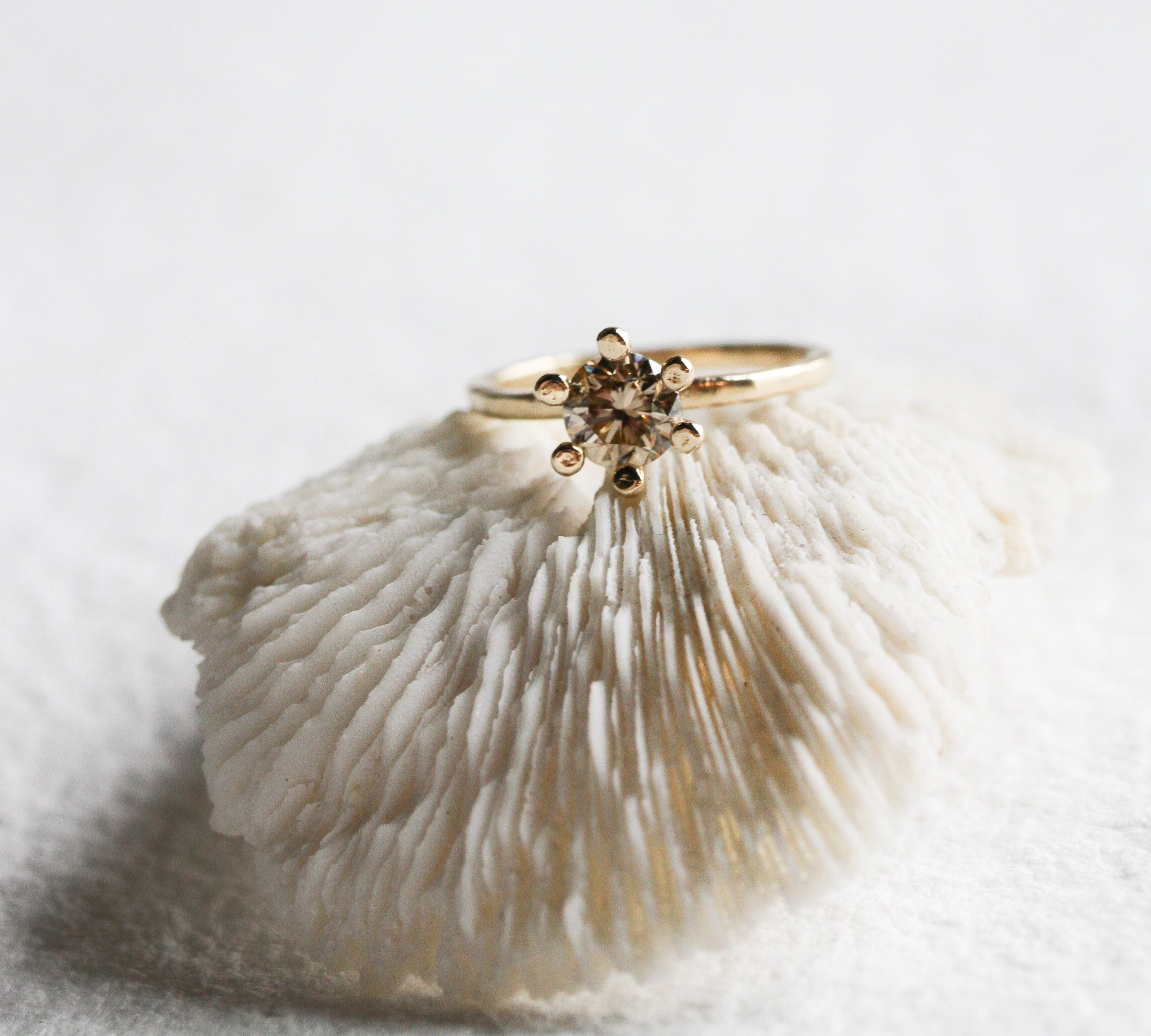
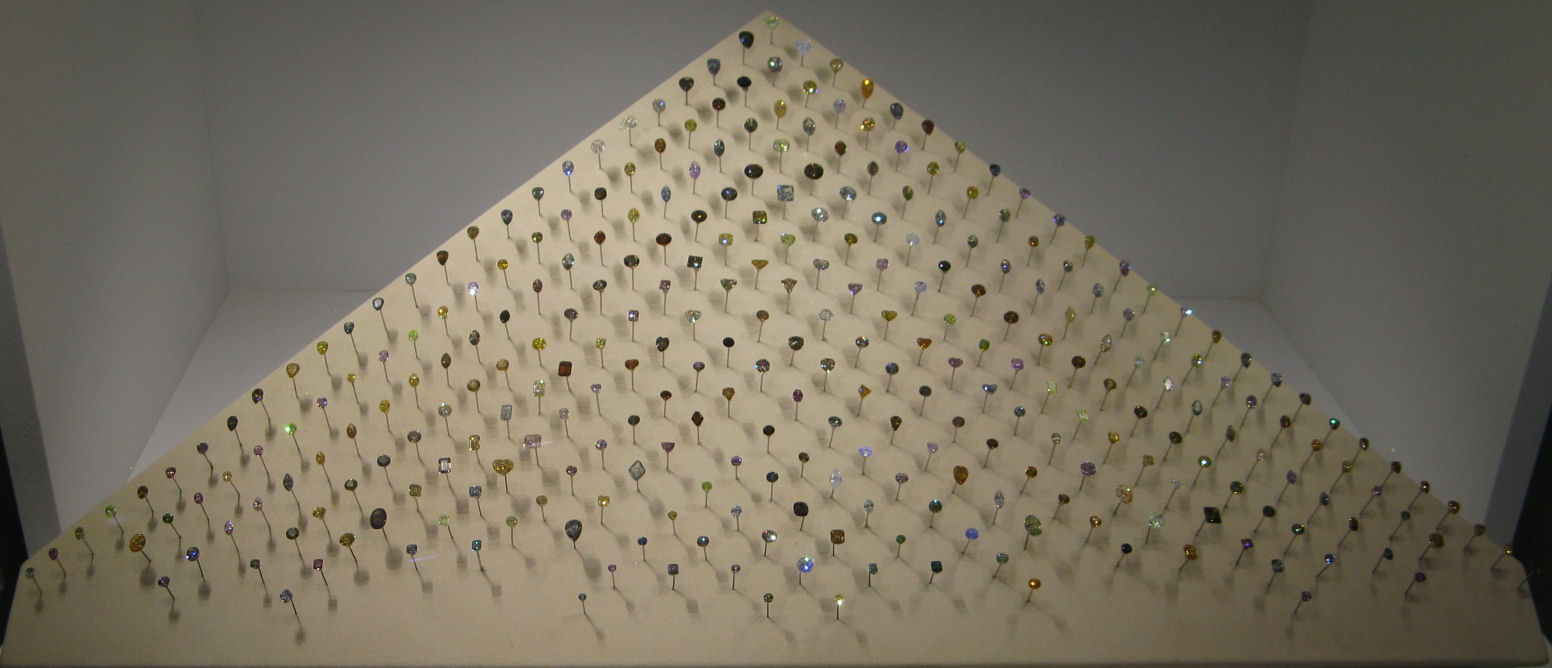
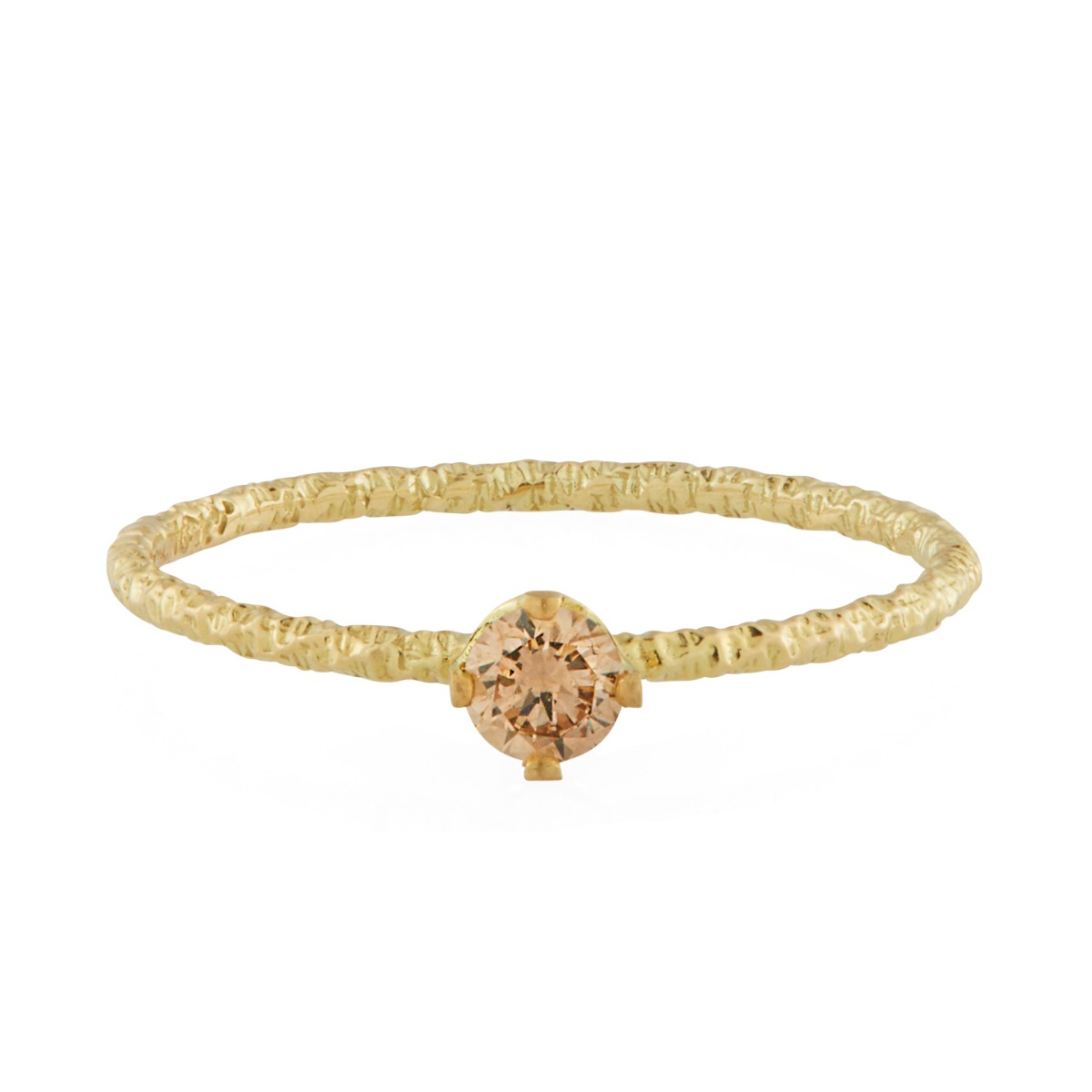
The color range is wider than most people expect. Light champagne reads almost like a warm white, especially in yellow gold settings where the metal and the stone harmonize. Medium cognac has a warmth that’s visible and intentional. Deep brown is a statement, and it’s the color that either thrills you or leaves you cold. There isn’t much middle ground with a deeply saturated brown diamond. You either love the warmth or you think it looks muddy. Both reactions are valid.
(A thing I keep coming back to: brown diamonds look fundamentally different in yellow gold versus white gold. A champagne diamond in a yellow gold bezel setting has a honeyed, almost antique quality. The same stone in a white gold prong setting can look like a discolored white diamond. Setting matters more with brown diamonds than with almost any other stone, and that’s a detail most online listings don’t show you.)
The best way to understand whether you like brown diamonds is to see several of them at different saturations in person. Photos compress the color range and neutralize the warmth. A brown diamond in a jewelry store, under decent lighting, with your skin next to it, is a completely different experience than a product photo on a white background. If you’re drawn to the idea, go see them before you buy online.
Where the Taste-Tier Market Actually Lives
If you’re shopping in this band, the retailer choice set looks different from colorless shopping. Blue Nile’s brown-diamond page carries roughly 162 loose-stone listings; James Allen’s roughly 207. Those are mostly loose stones, thin on preset rings compared with the colorless side. The taste-led end of the market lives with design-led independents. GOODSTONE’s catalog leans heavily into old mine cut, which is the same cut as Swift’s ring. Its Signature Cathedral Solitaire with an old mine cut runs $2,600 to $3,050 depending on metal; the Finest Tapered Bezel starts at $4,750. Catbird, the Brooklyn independent, has a standing champagne diamond engagement ring category. Its Homespun Solitaire in champagne diamond starts at $4,438. These two brands are the clearest proof points that champagne and brown reach well beyond mall-jewelry channels. The inventory is smaller and the styling more coherent.
Le Vian is still Le Vian. Its Chocolate Waterfall Diamond Ring at Kay runs $3,500; the Chocolate Diamonds 7/8 ct tw Ring at Jared is $3,600; the Chocolate Diamond Double Halo is $4,800. The customer friction, from BBB complaints and Reddit threads, centers on repair and warranty experience (stones coming loose, slow service) rather than the stones themselves. Treat that as a service warning. If you’re buying into the chocolate-diamond category specifically, go in knowing what other buyers report. And it makes sense, diamonds don’t scratch easily, even brown ones. What most people don’t remember is that diamonds do shatter easily, so don’t hit them with a hammer.
The Taylor Swift of It All
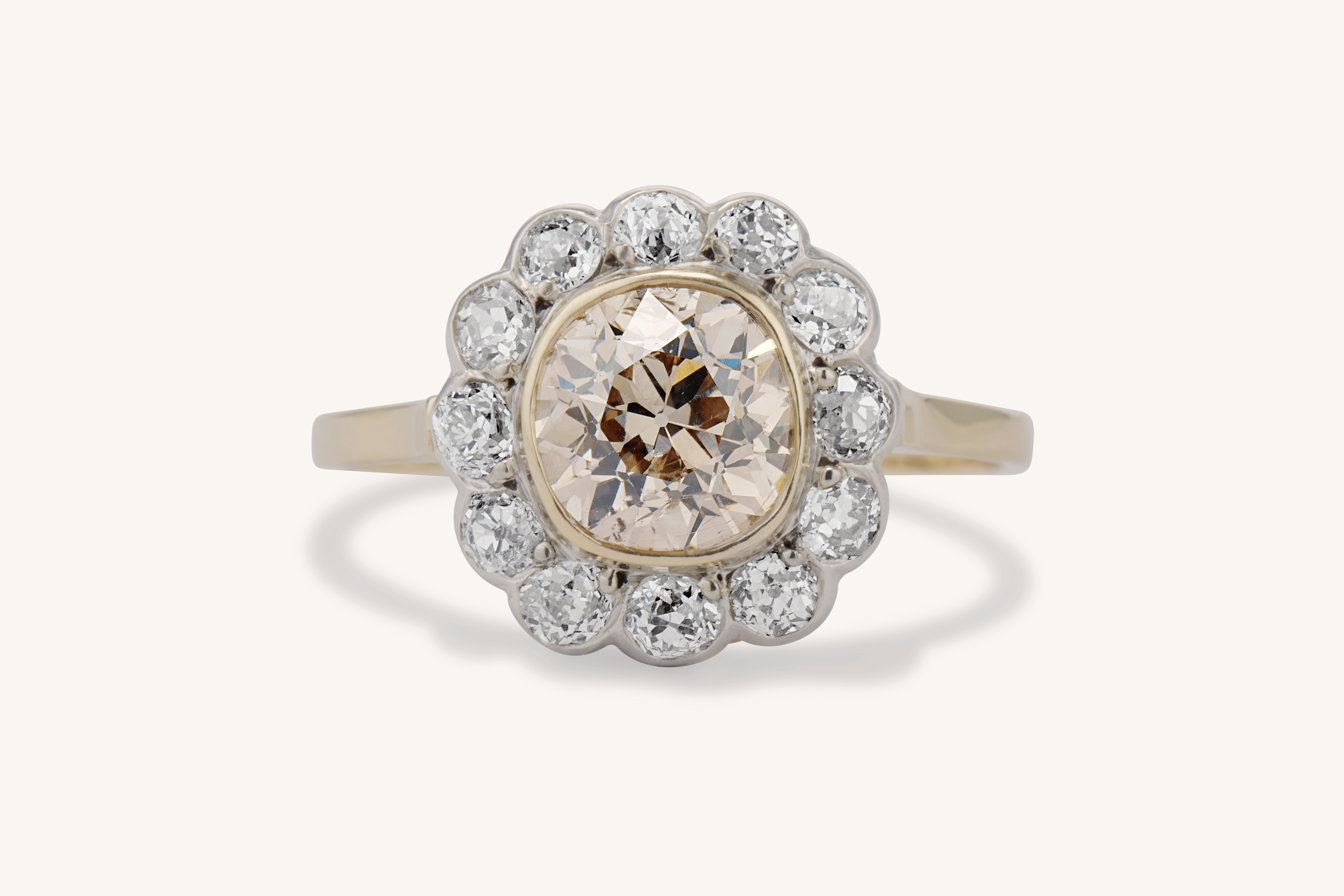
The Swift ring is carrying this trend. The Swiftee effect is real. The old mine brilliant cut combined two of the hottest currents in jewelry simultaneously: warm-toned diamonds and antique-cut stones. The old mine cut gives the stone a different kind of sparkle, broader flashes rather than the tight brilliance of a modern round cut, and that vintage character pairs with the warm color in a way that feels collected rather than trendy.
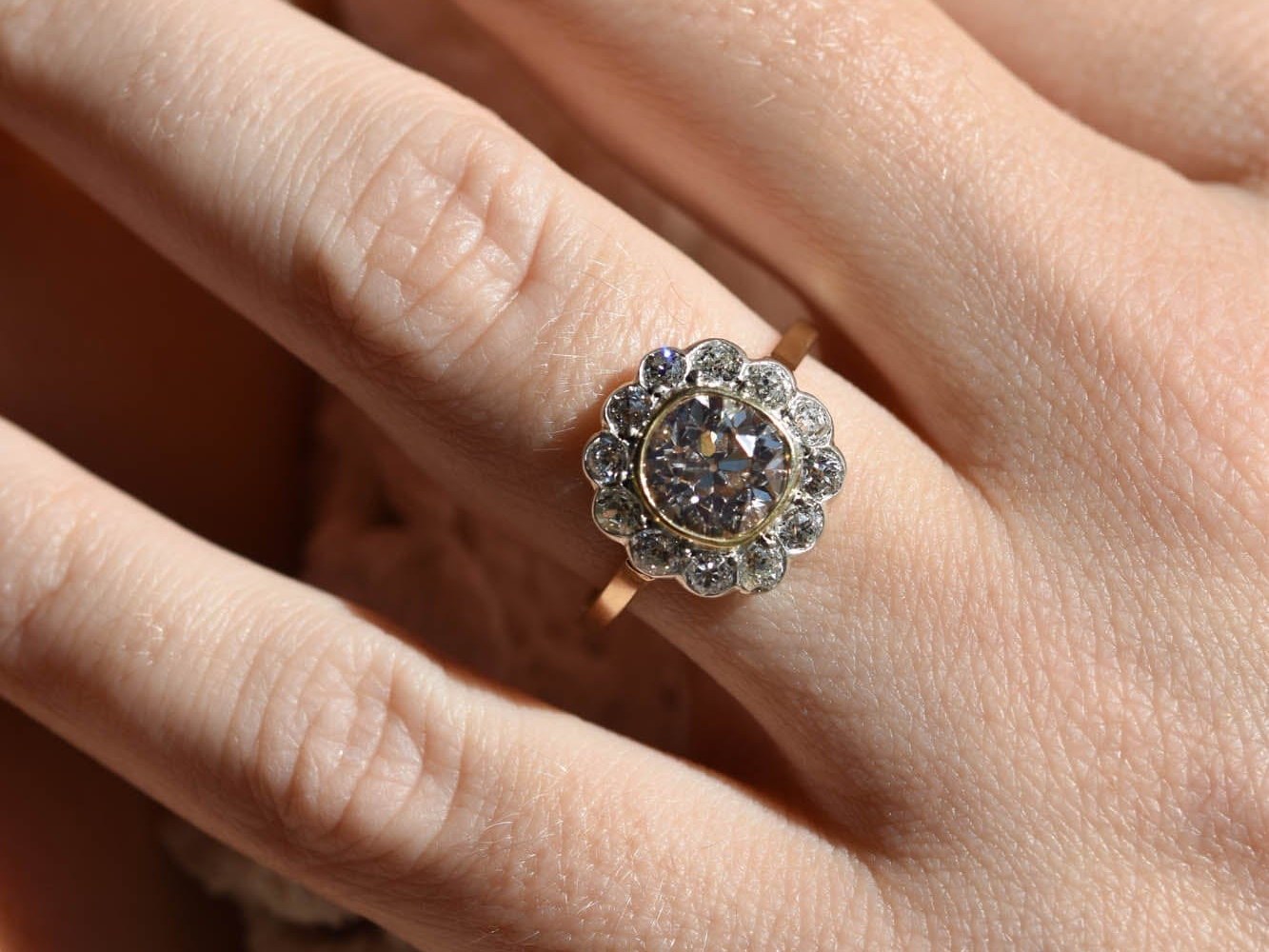
The number that got quoted everywhere after the reveal, the one about a “10,000% spike,” is worth pinning down, because it describes a different stone entirely. It came from a different Taylor, Laura Taylor of Lorel Diamonds, quoted by Page Six on August 28, 2025, saying searches for old mine cuts had risen “by almost 10,000% overnight.” The methodology behind that number was never publicly disclosed. But it captured something real. Demand for old mine cuts went from niche to mainstream inside a week. Vogue cited Pinterest’s 2025 Wedding Trend Report showing that searches for “vintage wedding rings from the 1920s” were up 1,458% and “vintage cushion cuts” up 175% year over year. Broader antique-cut evidence, not brown-specific, but running in the same current.
The ring matters because it showed millions of people what a warm-toned diamond looks like on a famous hand, in real light, at a scale that made the color undeniable. Prior to that ring, brown diamonds were a niche interest. After it, they were a search query.
Whether Swift’s ring is responsible for the trend or De Beers’ campaign isn’t really up for debate. Taylor makes millions of women move, and De Beers’ marketing power is substantial. Put the two together and suddenly you are at least a little bit interested in brown diamonds. The point is: people are looking at warm-toned diamonds who weren’t looking at them two years ago. That’s real, regardless of what started it.
The Lab-Grown Wrinkle
In November 2025, Rapaport reported that Gemological Science International had found undisclosed lab-grown diamonds mixed into jewelry featuring natural brown diamonds. JCK followed a week later summarizing a spike in small lab-grown brown diamonds being mixed with natural brown stones. GSI said the mixing ran across color intensities, from near-colorless with faint brown modifiers through fancy dark brown.
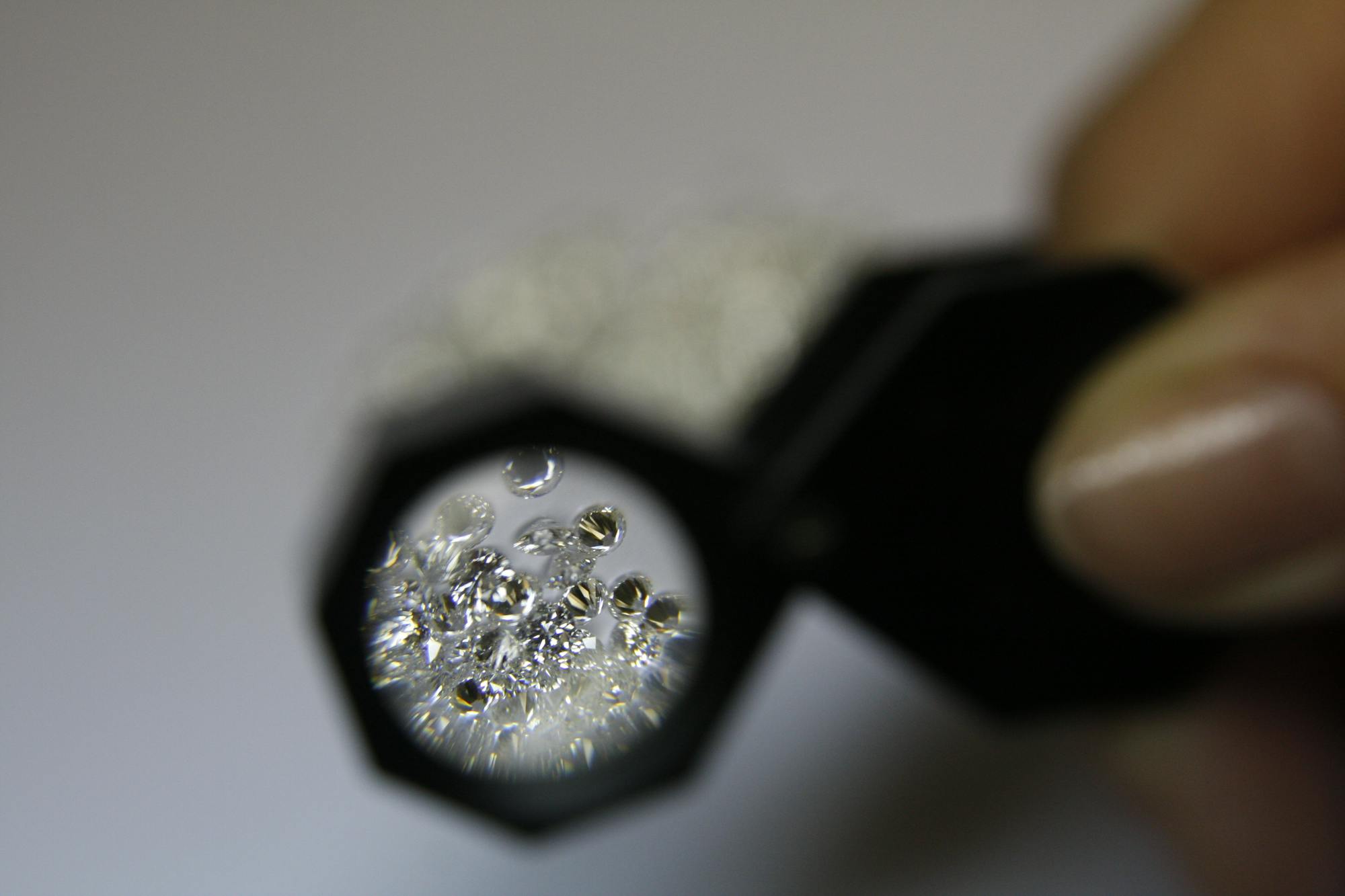
The scale isn’t public. GSI hasn’t disclosed the percentage of affected parcels or a named supply-chain route. What’s useful to know is where the practical risk sits. The mixing GSI caught was in multi-stone jewelry and small brown melee (the tiny accent stones clustered around a center piece). Reported single-stone center diamonds came back clean. For a buyer looking at a center stone in this price band, the defensive move is simple. Insist on an individual grading report from one of the three major labs (GIA, IGI, or GSI) that explicitly identifies the stone as natural. That’s standard practice for any diamond over half a carat and should be non-negotiable. For pieces with small brown melee, ask the jeweler how the accent stones are sourced and whether they’re certified.
So, Is It Real?
The hype is manufactured and the taste is real. Both things are true. If it wasn’t for a long term marketing campaign long ago, you probably wouldn’t even care about diamonds.
De Beers created Desert Diamonds because they needed a category where natural diamonds could compete with lab-grown on something other than price or a debate about what natural is and why you should even care. Taylor Swift’s ring made warm-toned diamonds visible to an audience that had never considered them. Le Vian spent twenty-five years proving the color itself has appeal once you stop treating it as a defect. And the current warm-tone moment isn’t just brown: bridal coverage through 2025 and 2026 keeps grouping champagne, nude, yellow, and brown together as part of a broader shift away from icy uniformity and toward characterful, vintage-coded stones.
If you’re drawn to brown diamonds because you like warm tones, because you like the way champagne or cognac stones look against your skin, because you want something that doesn’t look like every other engagement ring or cocktail ring on the market: that’s taste. Buy the stone. Get it set well. Enjoy wearing something that most people can’t identify on sight, which is half the fun of interesting jewelry.
If you’re drawn to brown diamonds because they’re trending, because the algorithm served you a pretty picture, because everyone on Pinterest is pinning them: that’s hype. You can still buy the stone, just know that trends cycle, and the brown diamond’s moment will eventually cool, and you’ll be left with the stone and how you feel about it at that point. If the answer is “I still love it, it boosts my favorite outfit” you’re fine.
The stone doesn’t care either way. It’ll still be brown in twenty years and it’ll still be holding value.
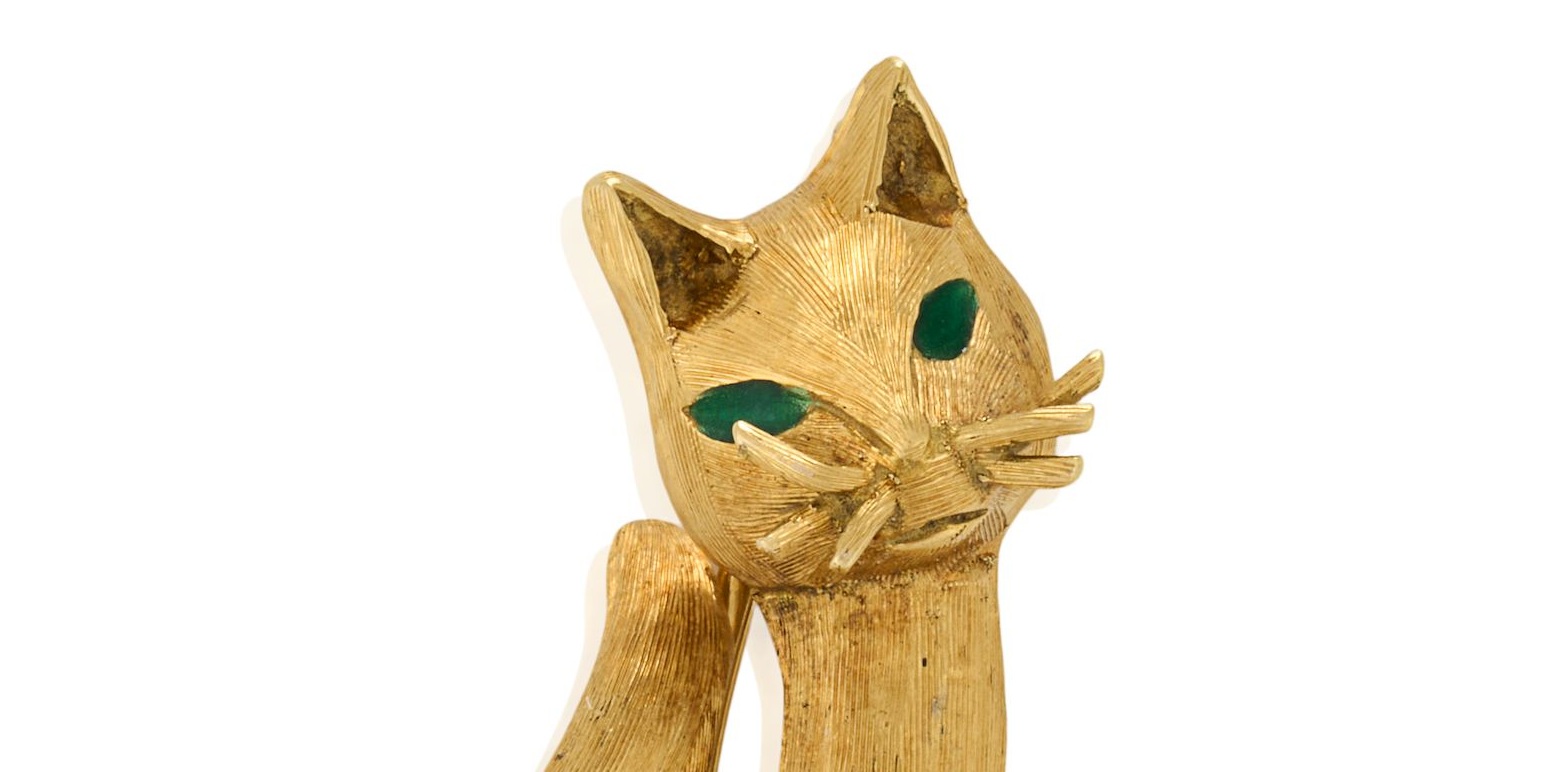
Sandy Lerner Is Rehoming Her Cats: A Tiffany Cat Brooch and Sixty-Five More
The Cisco co-founder spent four decades collecting cats in gold, enamel, amethyst and bronze. On 30 September 2026 Bonhams sells 66 of them in New York, from a $700 carved cat to a $120,000 bronze by the sculptor Rembrandt Bugatti. She is keeping the live ones.
Why Are Jewelry Prices Still Going Up?
Jewelry costs about 15% more than it did a year ago, and it is the gold accounting for most of it. The answer coming back from the jewelry trade and brands is less gold in the piece, which changes what you have to ask for at the counter.
Natural Diamond Prices Are Going Up Again, at Least for Now
Lab-grown stones pushed mined diamond prices down for years. The diamond trade's price index rose again in August, led by small stones. What that changes for you.
The newsletter.
One email when something is worth your attention. New essays, the buying calls behind them, and what we’re watching in the trade. No roundups, no affiliate dumps.