
Photo: Ron Lach / Pexels
A Stack Is a Language Out in the Open
The meaning of a layered fine jewelry stack, why stacking with restraint stays readable, and what goes into reading one across a room.
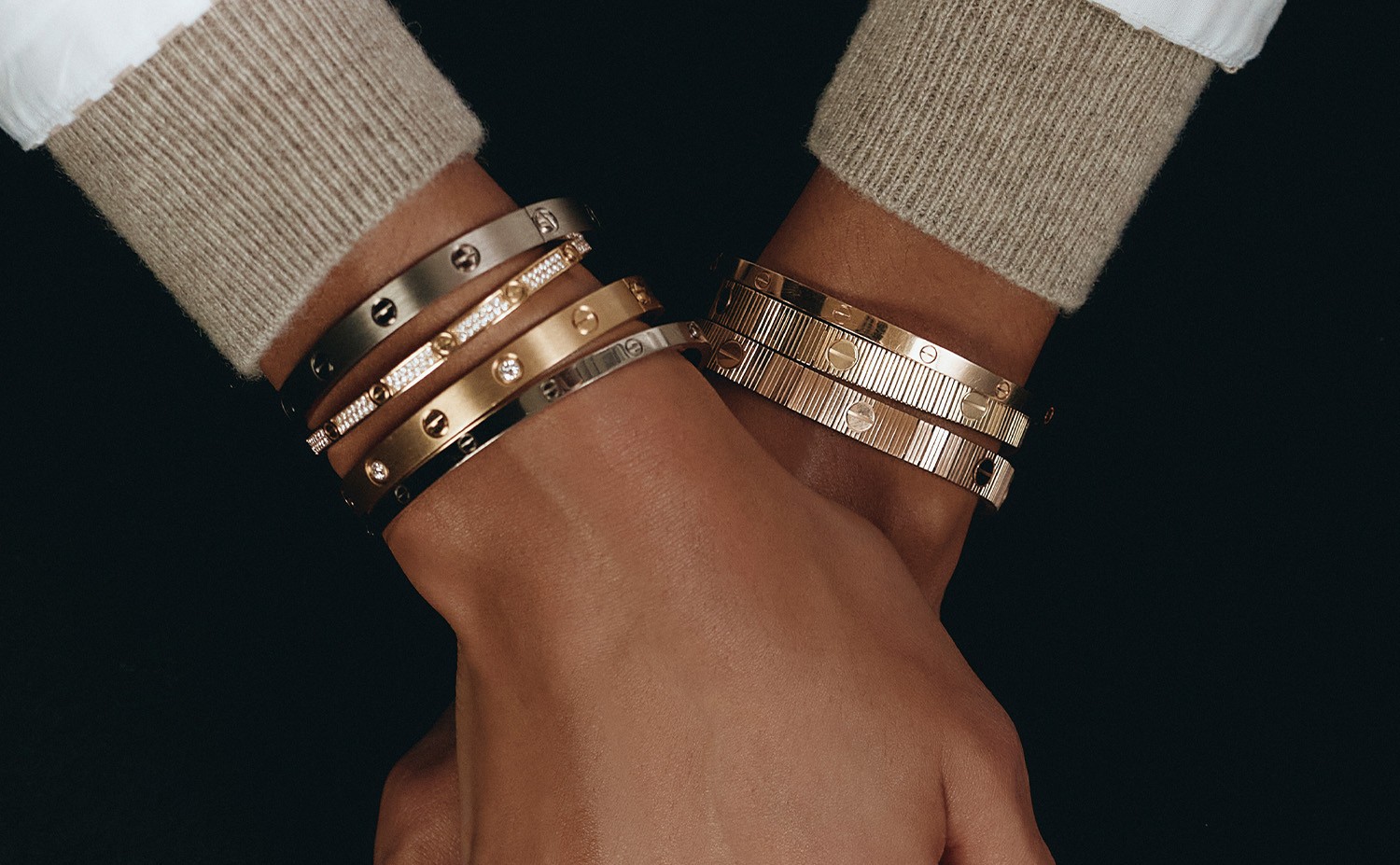
A thoughtfully built stack can be read across the room. A few recognizable pieces on one wrist, or layered at the neck, with enough restraint that none of them crowds the others, and someone who knows jewelry will read it from a distance the way you might recognize a car or a watch before you can see the brand. They see a gold bracelet ringed with screw heads, next to a simple metal band with a screwball, and know a couple of things about you before either of you has spoken. A Cartier LOVE next to a Cape Cod Screwball says something to someone else in the know.
A stack is a message, in a coded language. The pieces are the words, and restraint is what keeps it readable. If you cram 15 things on, to me that message reads loud and tacky. Maybe that’s what you are going for. For a properly planned stack, plenty of people will see nice jewelry and move on. But to one who knows the pieces, they and can read the message, it’s an opening to talk about it.
The bracelet you can read across a room
The clearest example isn’t necessarily fine jewelry at all. The Cape Cod Screwball is a sterling silver bangle from Eden Hand Arts, a small studio in Dennis, Massachusetts, fastened with a tiny ball that is the defining characteristic of the bracelet. It costs about $250. It has been made the same way since the 1960s, when John Carey designed it for his wife and business partner Eve, who by her own account kept losing the bracelets she owned, so he built one that stays on. The real ones carry a small dangling apple tag, which is how owners tell them from the copies.
People keep them on for decades. Wearers told the Boston Globe they expected to be buried in theirs and took them off only for surgery. And they read each other. Longtime Cape buyers said they would “shop each other’s wrists,” spotting the real bracelet across a room and knowing, before a word, that the other person belonged to the same place. Getting one used to be its own ordeal: a timed appointment, a drive out to Dennis, cash on the counter, and a wait that longtime buyers said rivaled scoring Taylor Swift tickets, until the studio went online-only in 2025. The difficulty was half the appeal. A $250 bangle is the opposite of an investment piece, but it does in miniature the whole thing a stack does: it is out in the open, and the people who can read it, read it. Wear one and you can be in a waiting room in California and someone might ask when you were last on the Cape.
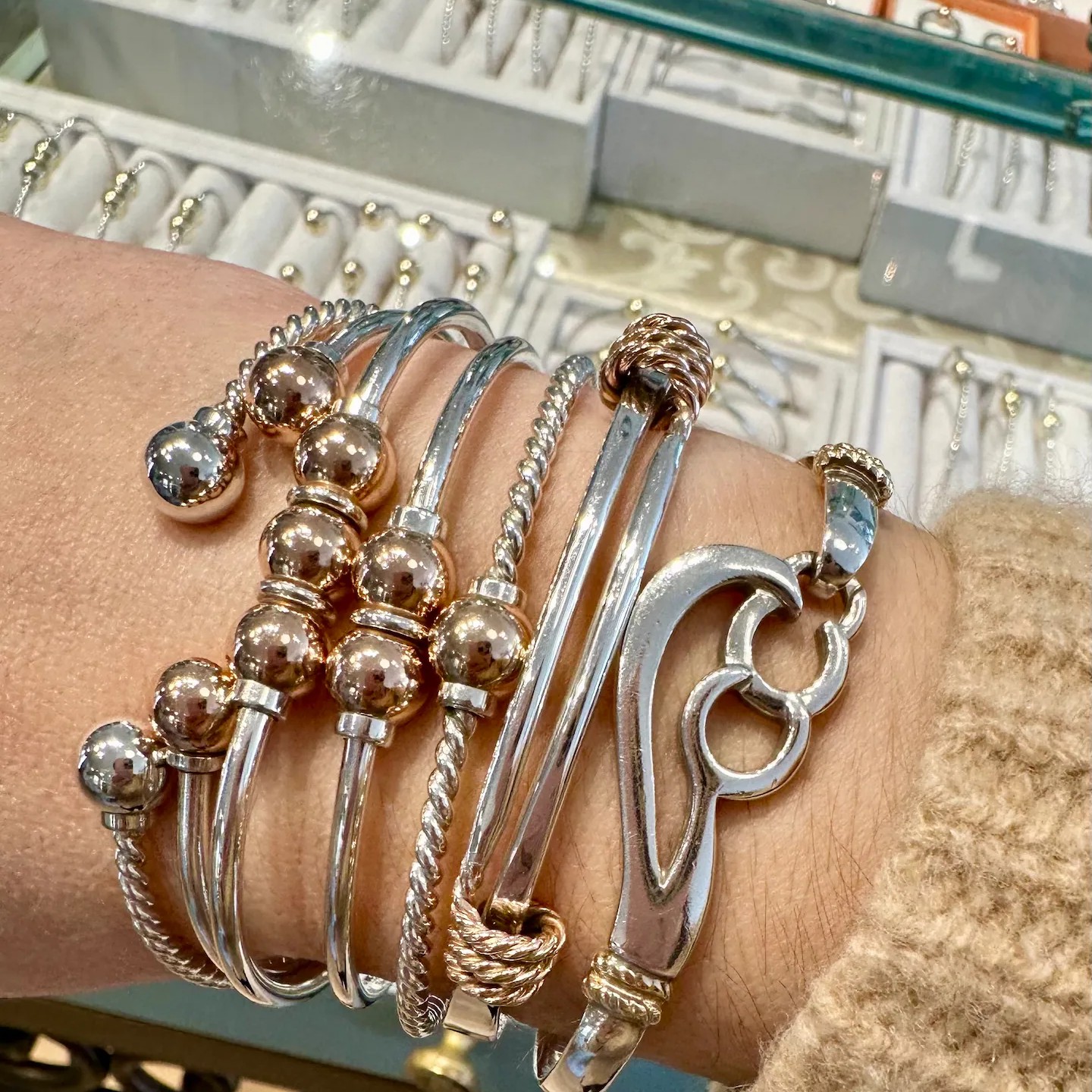
Anyone can see it. Not everyone can read it.
The distinction is worth being precise about, because it is easy to oversell. A stack is not a secret code, and it is not invisible to anyone outside a club. It is in plain sight. Anyone can see it. Most people will see nice jewelry and think nothing more, and there is nothing wrong with that.
What changes is whether you can read it. Reading is a literacy, the kind you build for anything you spend time on. Someone who knows jewelry sees the Cartier LOVE and the Cape Cod Screwball as two specific words, not as generic bracelets, and reads the sentence they make together. It is learnable. Nobody is locked out; some people have just spent more time looking.
The thing that makes a stack readable at all is restraint. A few recognizable pieces, with room around each one, read as a deliberate choice. Add too many and the eye can’t pick out the individual pieces, and the whole thing turns into a pleasant blur with nothing specific to say. Readability is the mechanism.
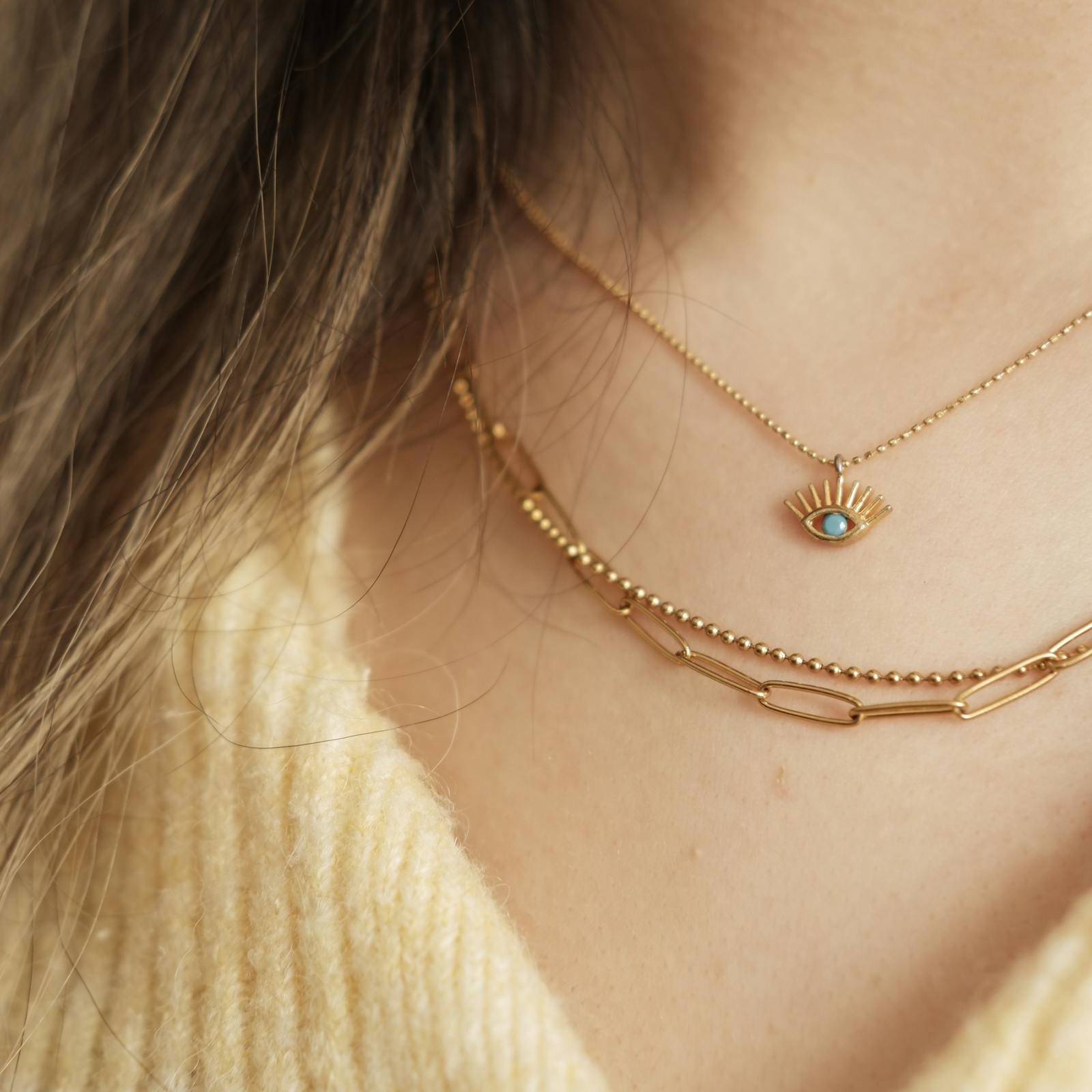
What a clean stack reads as
What it says depends on the pieces, and the easiest way to show that is with real ones.
On the wrist, Kylie Jenner stacks six Cartier LOVE bangles, three yellow gold and three white. The LOVE is the screw-banded bracelet Cartier introduced in 1969, recognizable from across a room by the row of screw heads. It locks on with a small screwdriver, the original idea being that a partner screws it onto you and keeps the screwdriver, which reads as romantic or controlling depending on who you ask. One LOVE says you know the LOVE. Six says you have committed to one house and you are not being subtle about it, which is its own clear and confident sentence. Put a single LOVE next to a Cape Cod Screwball instead and you have written something quieter and more specific: a person who belongs to one particular place and also wears one of the most recognized bracelets in the world, comfortable in both.
At the neck, Grace Kelly’s signature was layered Van Cleef Alhambra necklaces, the four-leaf-clover motif, in mixed stones like coral and malachite. Worn together they read as hers, an old-Hollywood ease with one of the most collected designs in jewelry. A simpler neck stack reads simpler: a Cartier LOVE pendant and a small cross on a separate chain, layered, says faith worn next to a recognizable house, two things the wearer wanted said at once.
And the medallion stack reads most literally of all. Foundrae, a house built on what it calls a “lexicon” of symbols, makes engraved gold medallions a wearer picks for their meaning. The founder, Beth Bugdaycay, layers her own and changes them daily, she has said, to tell a different level of her story each morning. The pieces are chosen words, and the stack is the sentence she writes that day. We’ve written about the medallion’s role as the anchor of a look; in a stack it is the piece carrying the meaning.
Reading is the pieces, not the price
Recognition doesn’t run on price, even though the assumption runs the other way. What gets read is whether a piece is recognizable, and recognizable and expensive are not the same thing. The Screwball is $250 and reads instantly to anyone who knows it. A thin unmarked gold chain can cost several times that and read as nothing in particular, because there is nothing specific to recognize. What the eye catches is form: the screw heads on the LOVE, the clover of the Alhambra, the apple tag on the Screwball, a shape someone has learned to attach to a particular maker or place. A logo helps less than people assume; plenty of logo-stamped pieces read as generic because the design under the logo is generic.
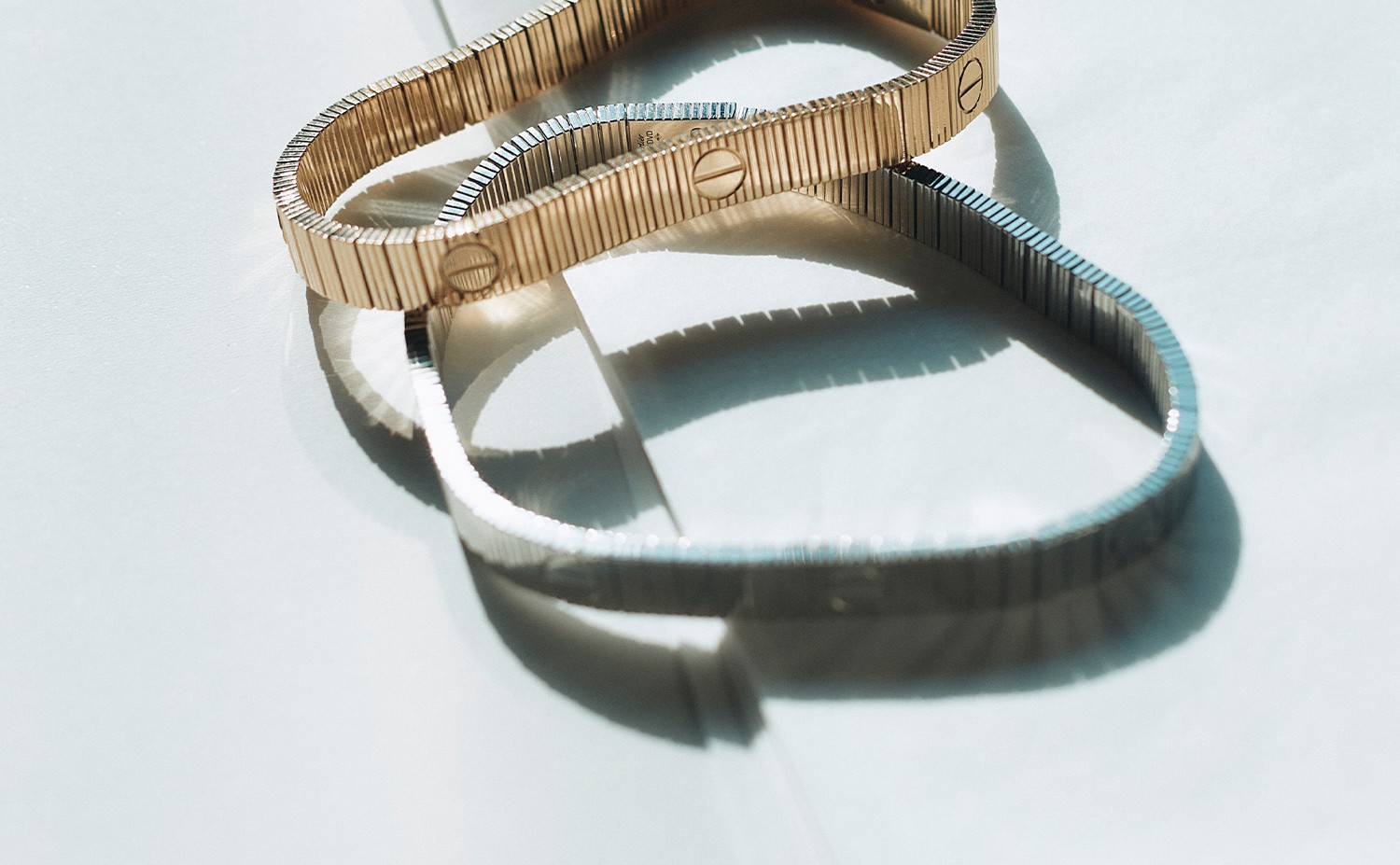
That is why the recognition is taste finding taste, not money finding money. Two people who read each other’s stacks across a room are not pricing each other. They are recognizing a set of choices, the same waiting and skipping and deciding they did themselves. It is a warmer thing than wealth spotting wealth, and a more durable one.
Writing it well is the hard part
Seeing a stack takes nothing. Reading one takes some time spent looking. Writing one well is the rare part.
A stack that reads clean is a small feat of restraint: recognizable pieces chosen so they say one clear thing together, with enough space that none of them crowds the others into noise. That is harder than it looks, and it is the opposite of the loudest version of layering right now. The charm-piled chain, hung with as many small pieces as a person can keep adding, is having a real moment; Fashionista described the 2026 mood as a move away from minimal toward pieces that feel collected and a little unexpected. It can be beautiful. But it is built to be felt rather than read, working the way a pile of autumn leaves works, through abundance and texture, with no single piece you are meant to pick out.
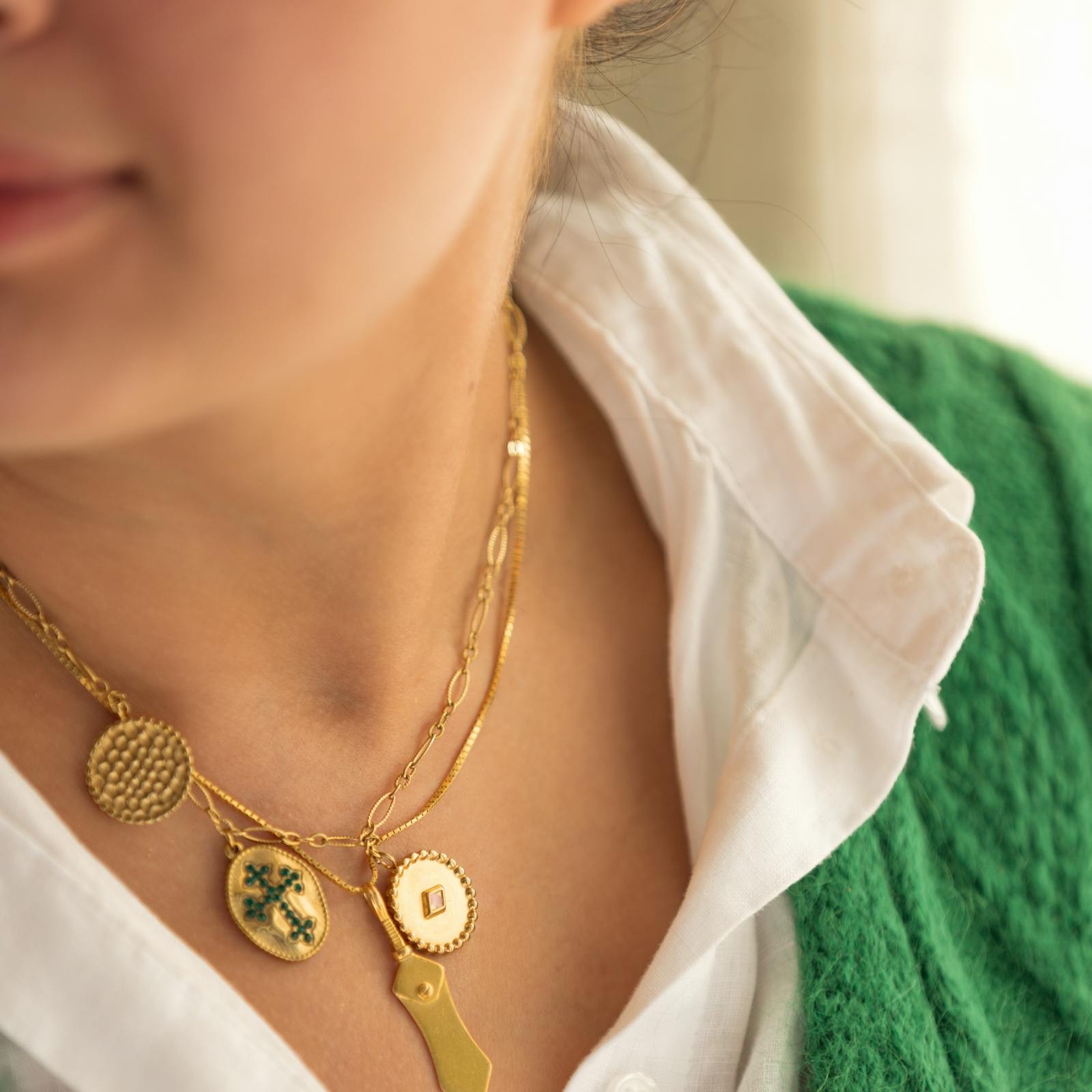
Both are real ways to wear jewelry, and the larger argument about proportion versus volume holds here too. They just can’t be the same look at once. Hang a volume layer over a careful stack and the careful one disappears; there is too much on the wrist or the neck for the eye to read any of it. Writing a stack well means knowing what to leave off.
What writing a stack well gets you
The point of a readable stack is not that it announces status to a room. Most of the room is not reading it, and that is fine. The point is that the one person who can read it now has a reason to talk to you. People comment on a good stack the way they comment on a good bag or a great pair of glasses, except jewelry sits closer to the body and the choices feel more personal, so the comment lands warmer.
Which brings it back to the wrist across the room. Two people, two readable stack messages, and the recognition that they speak the same language. Maybe it’s time to make a new friend?
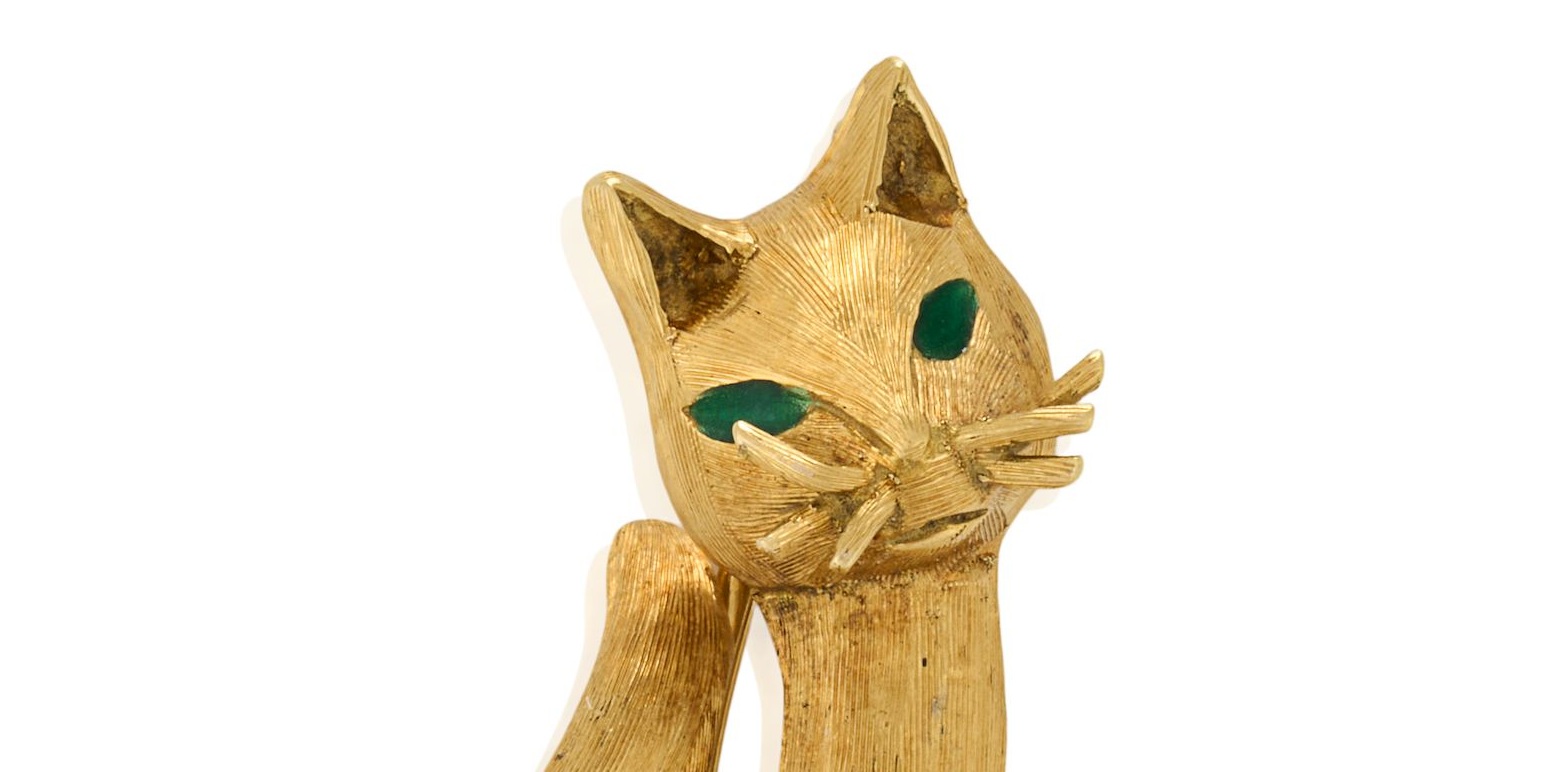
Sandy Lerner Is Rehoming Her Cats: A Tiffany Cat Brooch and Sixty-Five More
The Cisco co-founder spent four decades collecting cats in gold, enamel, amethyst and bronze. On 30 September 2026 Bonhams sells 66 of them in New York, from a $700 carved cat to a $120,000 bronze by the sculptor Rembrandt Bugatti. She is keeping the live ones.
Why Are Jewelry Prices Still Going Up?
Jewelry costs about 15% more than it did a year ago, and it is the gold accounting for most of it. The answer coming back from the jewelry trade and brands is less gold in the piece, which changes what you have to ask for at the counter.

Natural Diamond Prices Are Going Up Again, at Least for Now
Lab-grown stones pushed mined diamond prices down for years. The diamond trade's price index rose again in August, led by small stones. What that changes for you.
The newsletter.
One email when something is worth your attention. New essays, the buying calls behind them, and what we’re watching in the trade. No roundups, no affiliate dumps.