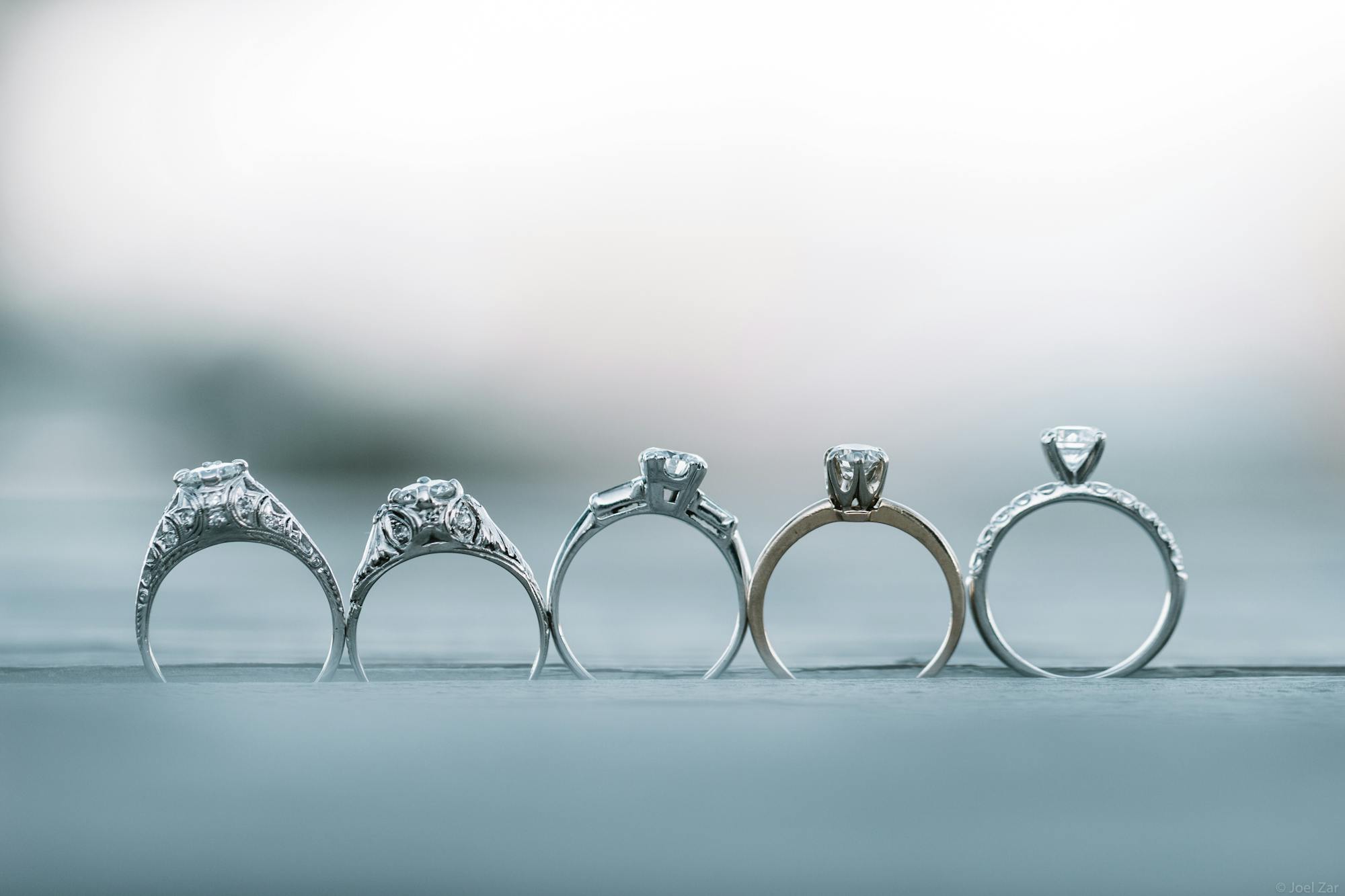
Engagement Ring Trends 2026: Cheaper Diamonds, Pricier Gold, and No Single Right Ring
Lab-grown diamonds now outsell natural ones in U.S. engagement rings, gold roughly doubled in five years, and the warm vintage look is everywhere. The old script for choosing a ring broke from three sides at once: here is what replaced it.
In 2019 lab-grown diamonds were around 3% of US engagement-ring center stones. In 2025 they became the clear majority, reaching about 61% of center stones. That is the single biggest structural change to the engagement ring category in a generation. What it showed is that customers cared more about the “price per beauty” than where the carbon came from. The lab-grown vs natural diamond question in 2026 is not really a question anymore, at least not about the stone itself. The economics on the engagement ring setting were also upended. Gold doubled in price, east-west and elongated cushion cut diamonds went from niche to everywhere, and warm vintage looks are being marketed hard by traditional diamond producers. If you are trying to figure out what kind of engagement ring to buy right now, the old safe answer no longer exists. The engagement ring trends of 2026 are not a list of looks to chase. They are the decisions you are left with once the stone stops being the hard part: the gold, the setting, and the shape it all takes.
For many years, an engagement ring buyer who knew very little could buy well by accident: stick with a round white natural diamond, a plain solitaire, and a budget anchored to some version of “three months’ salary.” It was a script. You could follow it without deciding anything and end up with a ring that read as correct. It’s almost as if it was planned by some marketing department. Oh wait…
As lab-created diamonds were perfected, the stone moved first and moved fastest, faster than gold prices or east-west or vintage faceting moved as aesthetics.
For years, an engagement ring buyer who knew nothing about the category could buy well by accident. That is much harder today.
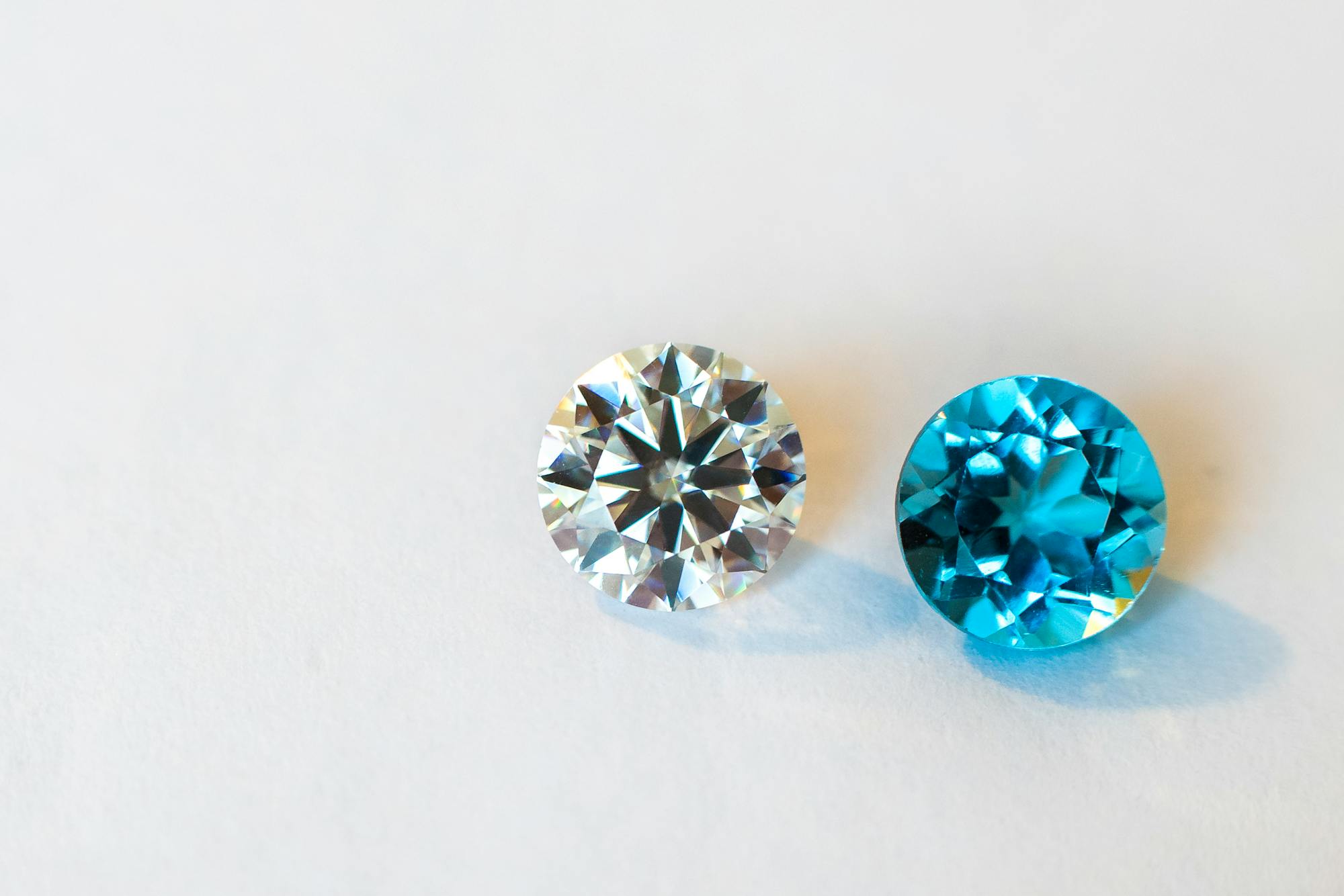
Lab-grown vs natural diamonds: two different products now, and two different decisions
Lab-grown went from rebel choice to majority because it is a different price universe now. A one-carat lab-grown diamond averaged around $1,000 in 2025 against roughly $4,000 for a natural one-carat. That gap is what made “bigger stone, same budget” the normal move rather than the clever one, and it reset what any given budget buys. The price of brilliance and clarity dropped dramatically when every gem could be made perfect.
The Knot, surveying recently married couples, puts lab-grown at 61% of center stones; BriteCo, drawing on appraisal and insurance data that skews more premium, puts it closer to half. The exact share probably is not knowable to the percentage point. The direction is the point: a stone that almost nobody chose six years ago is now what most people choose, and the line is still climbing.
For years that climb carried a quiet worry: if the stone keeps getting cheaper, what is it worth the day after you buy it? That fear is what kept some buyers reaching for natural as a value store. The price slide has slowed in 2026, with quarterly wholesale drops in single digits now instead of the cliffs of 2020 to 2023. But a lab-grown diamond is not an asset and never will be. If resale matters to you, that is a separate conversation entirely. If it doesn’t, what you buy in 2026 will be worth roughly the same a year from now, which was not true three years ago.
That distinction is what turned lab-grown and natural into two different products doing two different jobs. Natural is repositioning as the luxury-tier choice, the stone you buy for what it represents and what it holds rather than what it costs per carat. Natural-diamond specialty-retail sales grew modestly in 2025, and the growth came specifically at higher-tier banners like Jared and Diamonds Direct. The mass market saw none of it. That is a revenue story at the top, and it does not mean natural stones won back share at the center.
The two are settling into two different businesses: lab-grown diamond engagement rings as accessible luxury you buy for what they look like, natural diamonds as the exclusive symbol you buy for what they are and what they hold. That split is not a problem to solve. It is the first real decision the buyer now has to make on purpose, because the default that used to make it for her is the one that broke first.
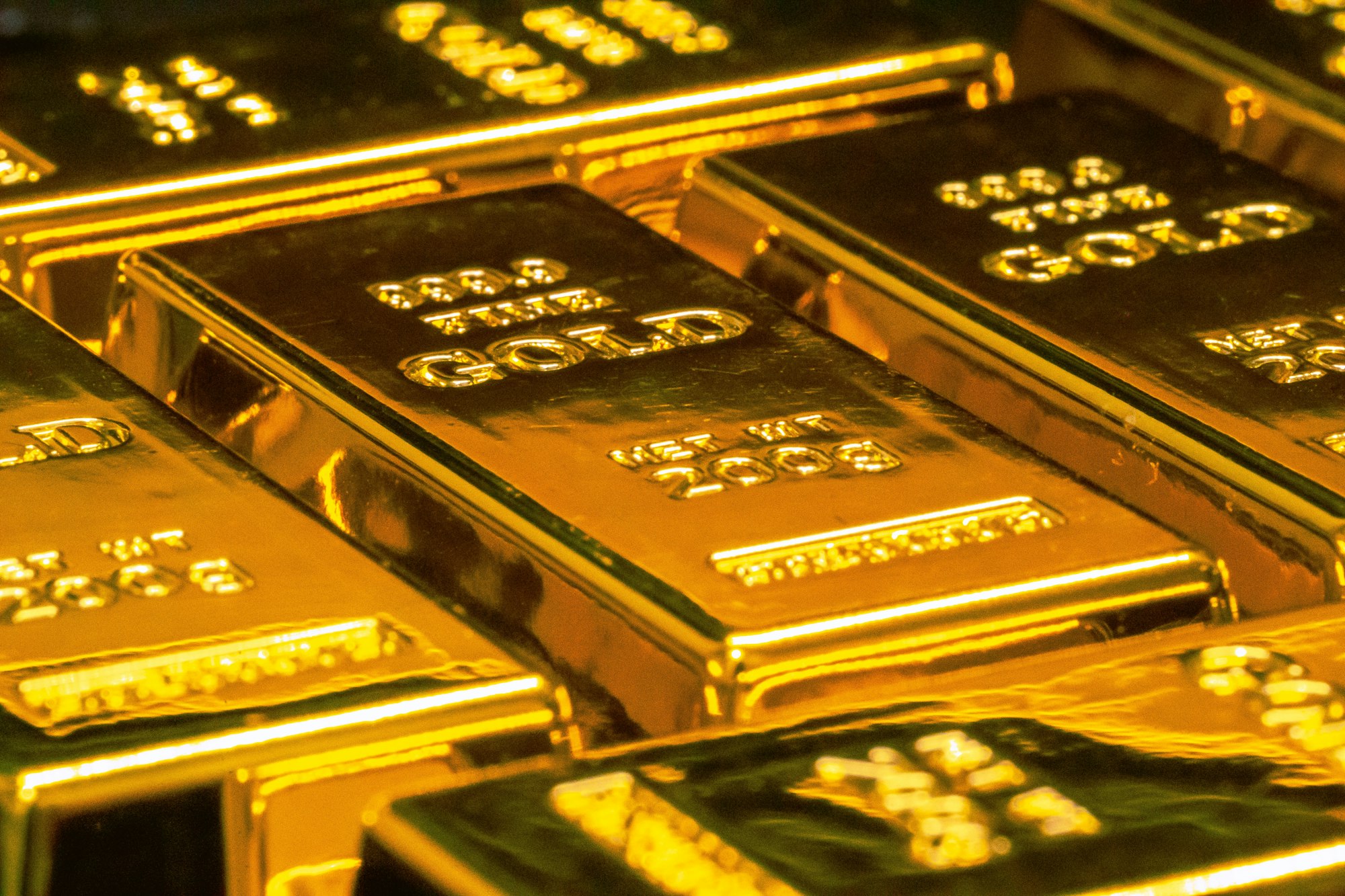
Gold doubled while diamonds got cheaper: the setting now carries the price
Over about five years, gold roughly doubled while diamonds did not, so inside the same ring the setting now carries far more of the price than it used to and deserves far more of your attention. Gold at $5,000 an ounce is its own story. What matters for the ring is the direction: stone down, metal up, pulling in opposite directions inside the same budget for the first time in a long time.
One retailer’s order book shows the swap cleanly. At bridal jeweler Ben Garelick, the average engagement ring with a lab-grown center cost $1,544 in 2023 and $2,408 in 2025, even though loose lab-grown diamond prices at the store fell nearly 40% over the same stretch, with the increase attributed mostly to gold. The stone got cheaper and the ring got more expensive, and the gap is the metal. A wider band, a heavier shank, an 18k versus 14k choice: these used to be rounding errors against the center stone. At spring 2026 gold, on a ring built between $1,000 and $5,000, especially with a lab-grown center, gold and design have become first-order budget decisions rather than background details.
A plain solitaire still works the old way, and that is useful to know if it is what you want. Strip the design back to a thin band and a lab-grown diamond and the stone can remain the largest line item; a natural-diamond ring stays stone-dominant more often still, because the gem simply costs more. The setting carries the price specifically where the design carries weight, which in 2026 is more rings than it used to be.
Across the whole market, buyers are reacting to the gold run by delaying, stepping down from 18k to 14k, resetting heirloom stones, or financing, with roughly a quarter to a third of shoppers delaying purchases. Those figures describe the market. They do not describe the reader who researches before she buys and does not need anyone’s permission to do it. Treat them as weather rather than as a description of you. The point the weather makes holds regardless: the question of where the money should go inside a ring used to answer itself, into the stone, and now it does not.
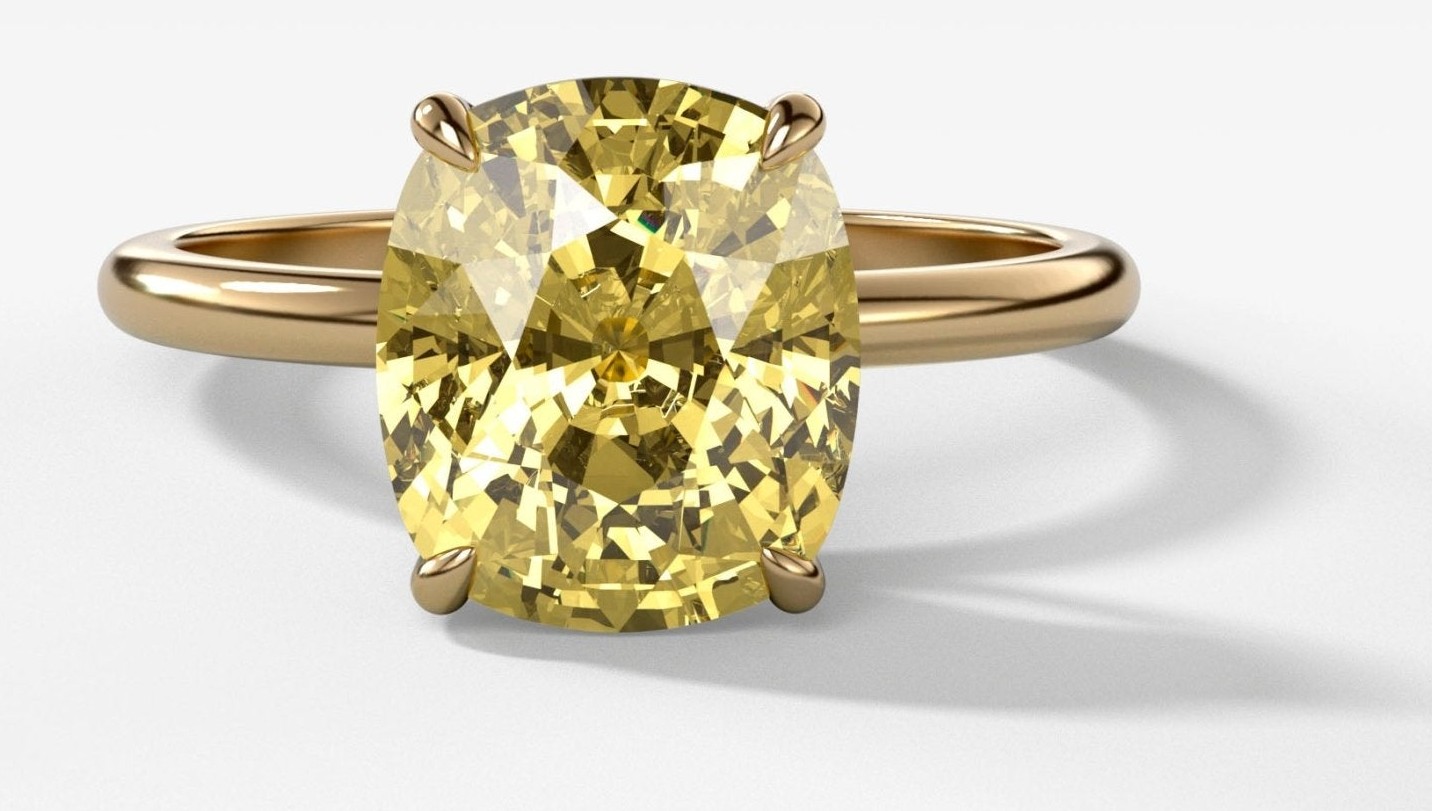
Warm, heavy, sideways looks: real and reachable, but not the new baseline
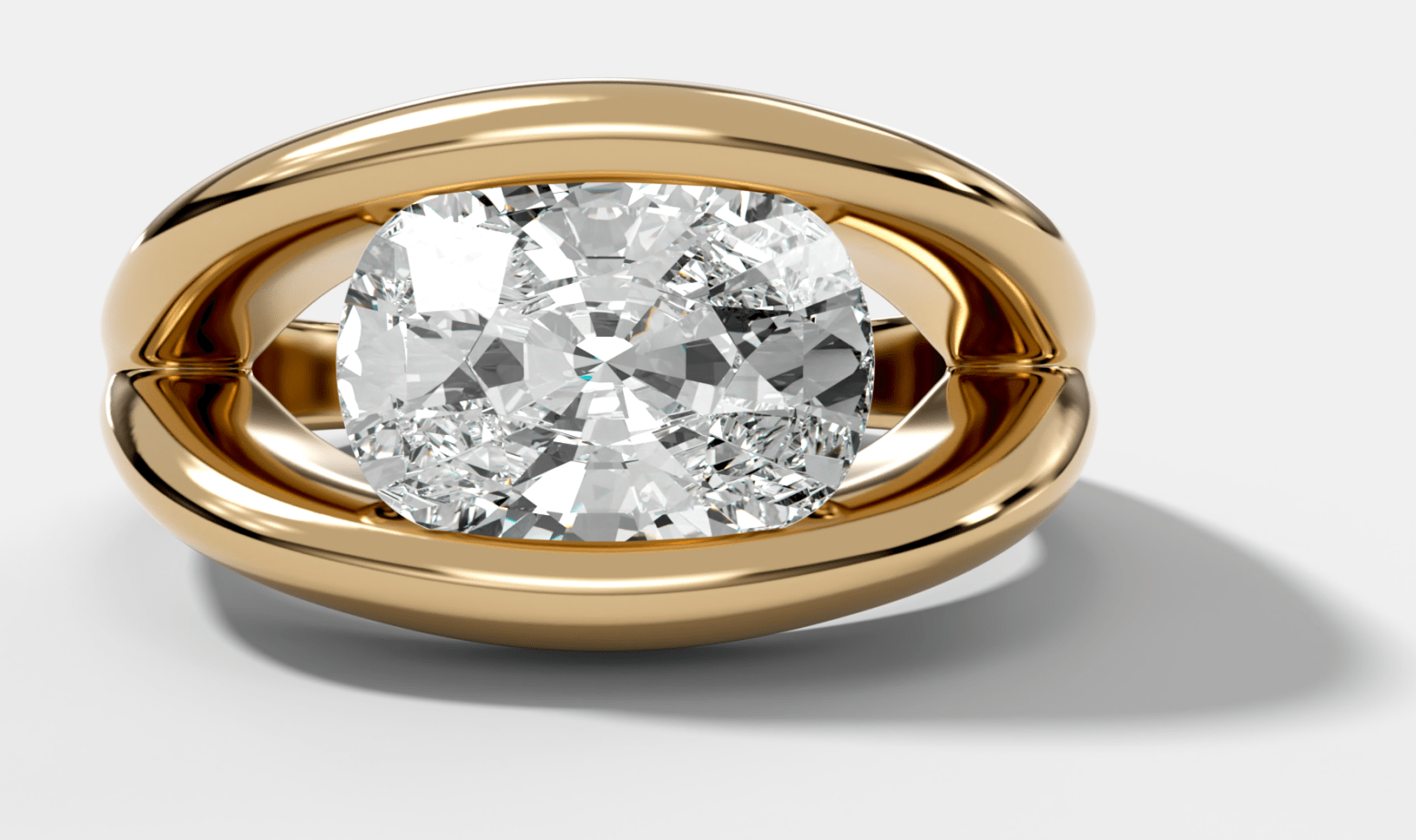
The warm, substantial, unconventionally oriented look is the most visible force of 2026 and the one the celebrity cycle made impossible to miss: yellow gold, thicker cigar and chunky bands, bezel- and burnish-set centers, east-west orientation, the two-stone toi et moi, elongated cuts like the elongated cushion cut diamond, oval, and marquise, and vintage-inspired faceting drawn from Victorian, Art Deco, and Georgian work. Trade coverage converges on this list, and search behavior tracks it, with vintage-style searches up around 700% and “1920s vintage wedding rings” up about 300%.
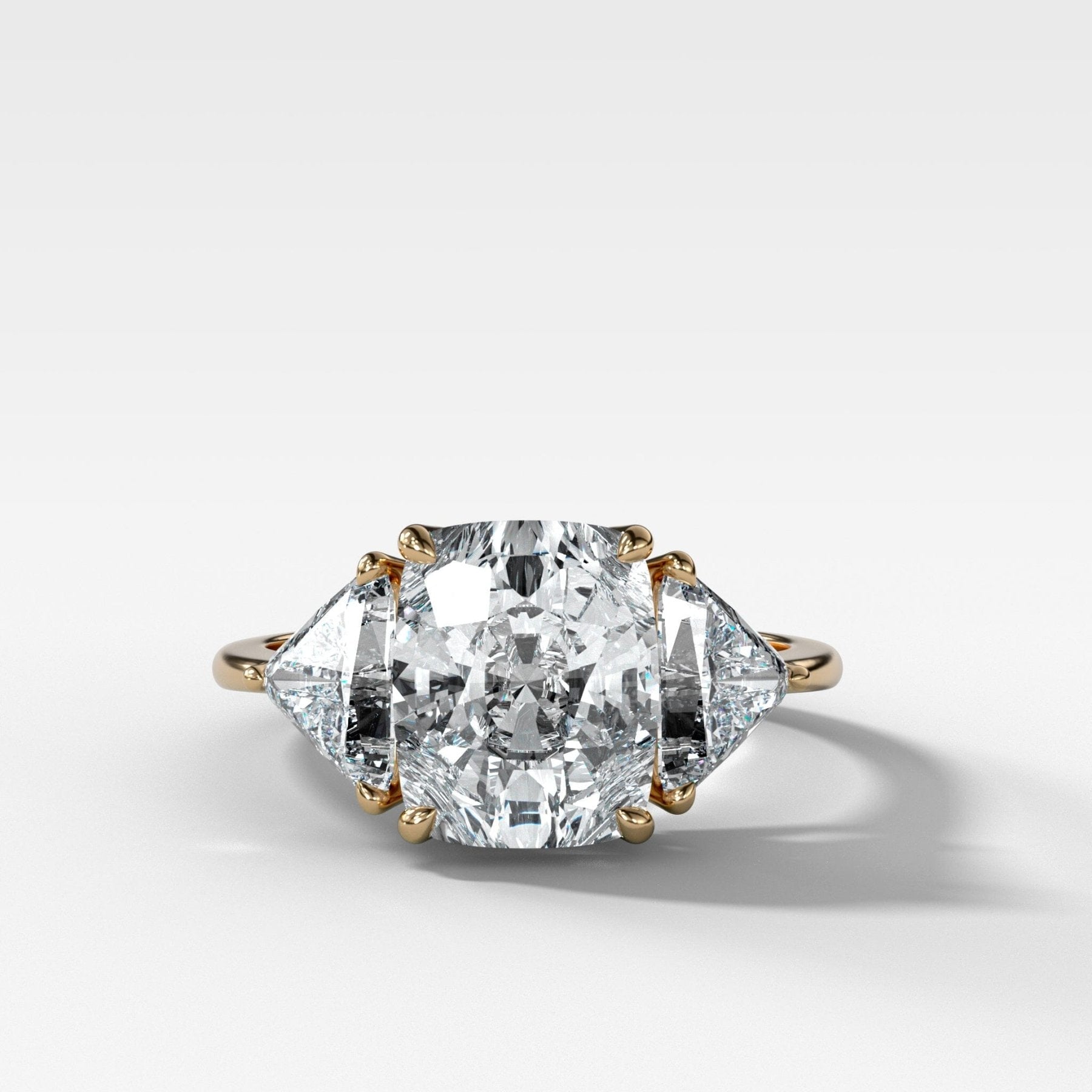
The useful distinction is between what is installed and what is loud. Yellow gold is survey-backed: The Knot’s 2026 data shows white metal still leading at 48%, but yellow gold reaching 39% and more than doubling over five years, with round (26%) and oval (25%) now nearly tied. East-west and toi et moi are a different case. They show up in search spikes, editorial coverage, and on famous hands, but not yet in nationwide sell-through. They are influential designs, not installed defaults, and that is the whole point: the warm direction is real, but it has not flipped the visual baseline the way lab-grown flipped the stone.
The famous rings read less like individual taste than like the same signal arriving three times. Taylor Swift’s ring, revealed in August 2025, is an old mine brilliant cut in a yellow-gold bezel setting designed by Kindred Lubeck, with her publicist confirming the cut to AP, the heirloom-warmth note in one object. Zendaya’s ring is widely identified as Jessica McCormack’s 5.02-carat east-west cushion in a Georgian-style cut-down setting, though the couple never confirmed it directly (McCormack’s product page lists the design), the sideways-orientation note. Dua Lipa’s, announced June 2025, is a round or old-European cut flush-set on a wide cigar band, with no jeweler named and the carat weight only believed to be around two (British Vogue), the chunky-band note. Three rings, three of the year’s loudest motifs, none of them a coincidence.
The institutions are pushing the same warm direction. De Beers extended its Desert Diamonds into bridal for 2026 in lighter and warmer hues, and the Natural Diamond Council is running a “Real. Rare. Responsible.” campaign with Lily James. Bridal is absorbing the warmth-and-weight move that already reshaped the rest of fine jewelry, the same current running through organic maximalism and warm-toned stones like brown diamonds. A white round brilliant on a fine band is not a wrong answer against any of this. The aesthetic rests and returns, the round still leads the field and will have its loud moment again; the only change is that the look is no longer the single safe default the way it was when it was the only thing anyone shot.
Every one of these shapes is reachable between $1,000 and $5,000. For the elongated cushion engagement ring silhouette, GOODSTONE prices lab-grown solitaires from about $1,925 for a thin canary setting up to about $5,025 for their Iris east-west design, with price driven mostly by whether you choose 14k, 18k, or platinum. National Jeweler flagged a 14k ring with a 2-carat old-mine-cut lab-grown diamond at $3,695. The warm vintage look is buyable, not aspirational, at this tier.
The toi et moi is the one silhouette that mostly slips the tier, because the most-designed version is the most expensive. The named independents who make the two-stone ring everyone screenshots run above this range, often the setting alone at the top of the tier with the stones extra, which pushes the finished ring past $5,000. That is a real and lovely category, and it sits above where a $1,000 to $5,000 budget lands a finished two-stone ring. The in-tier route to the look is a simpler two-stone built around lab-grown centers.
How to choose an engagement ring when the defaults disagree
The script split from three sides at once, which is more freedom than any buyer has had in living memory and also more uncertainty. The instinct under that kind of freedom is to keep adding options, researching more shapes and settings and comparisons until the choice gets harder rather than easier. The way out is fewer options, not more: collapse everything above into the two decisions that carry real weight at this tier.
The first decision is what the stone is for, in your life specifically. Lab-grown and natural diamonds are no longer a value-versus-virtue argument with a right answer; they are two different products that do two different jobs. If the stone is something you intend to wear and never convert back to cash, lab-grown buys more presence per dollar than anything else available, and the slowing decline means you are no longer buying a visibly depreciating object. If you want the stone to mean rarity, hold some resale floor, or carry the older symbolic weight, that is a natural stone, a signed piece, or a vintage cut like the old mine cut. Both are real purchases with real reasons behind them. They are simply not the same purchase, and the buyer now has to say which one she is making rather than letting the default decide.
The second decision is where the money sits, now that the stone and the metal have switched directions. The reflex inherited from the old script is to put the maximum into the center diamond and treat the setting as overhead. At spring 2026 gold, that reflex can leave you with a thin, light band that will not wear well, or push you toward more carat than the setting around it can carry. The more useful move is to decide the band first, because the band is where the gold run lands hardest, and then size the stone to what is left. A heavier shank, an 18k tone, a bezel that protects the stone: these read as substantial in 2026 and these are the things gold made expensive, and they are easier to plan for deliberately than to bolt on after the budget is gone to carat.
Make those two calls and the rest of the noise sorts itself. Shape, orientation, vintage versus modern, yellow versus white: that is taste, and taste does not need a default. It needs you to know whether you are buying a stone to wear or a stone to keep, and whether your money is going into the rock or the ring around it. The old script answered both of those for you without your noticing. It does not anymore, and the defaults that replaced it do not agree with each other, which is the whole change. Once you have made the two calls on purpose, an elongated cushion set east-west in warm gold is not a trend you are chasing. It is just the ring you decided on.
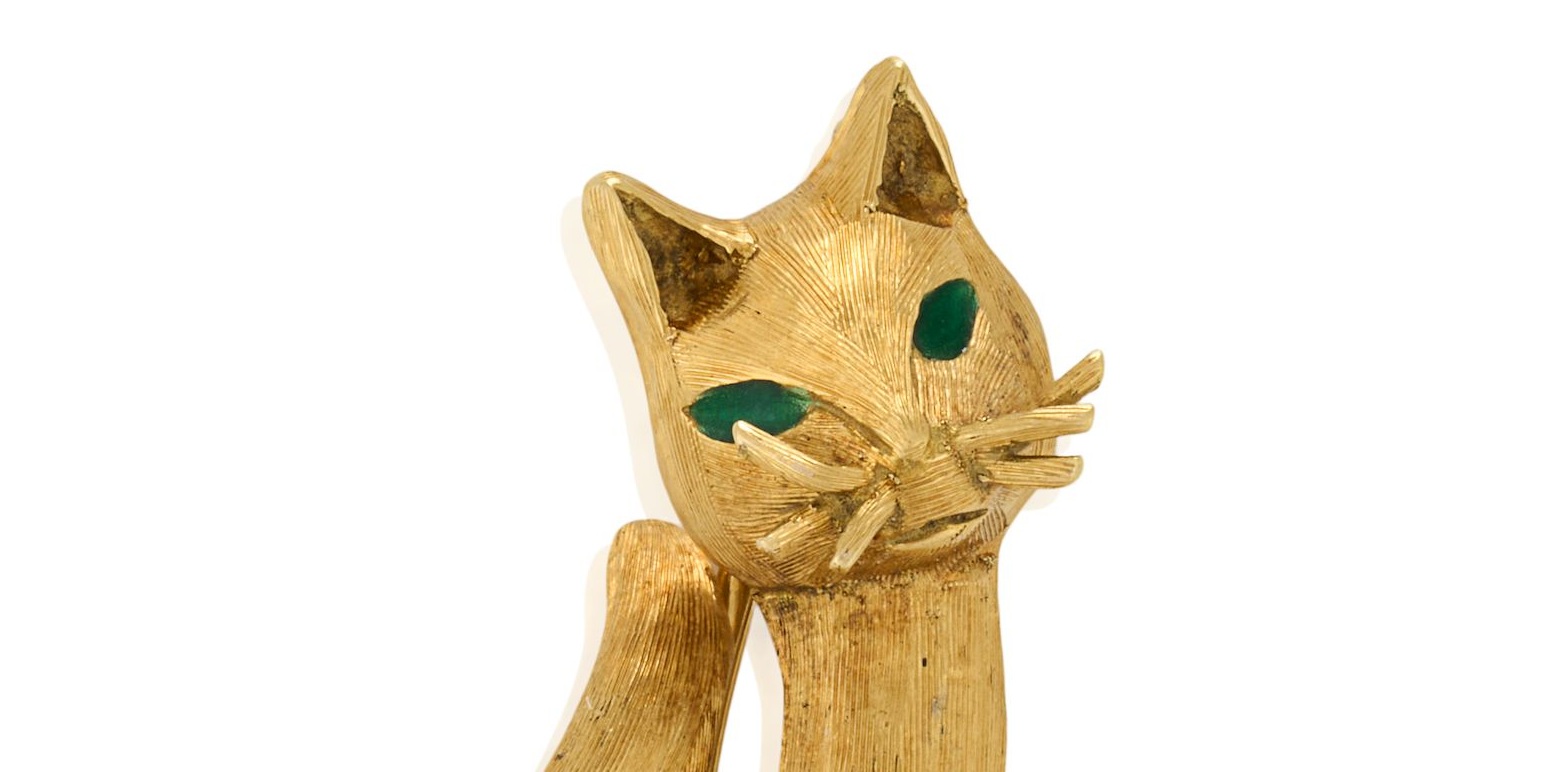
Sandy Lerner Is Rehoming Her Cats: A Tiffany Cat Brooch and Sixty-Five More
The Cisco co-founder spent four decades collecting cats in gold, enamel, amethyst and bronze. On 30 September 2026 Bonhams sells 66 of them in New York, from a $700 carved cat to a $120,000 bronze by the sculptor Rembrandt Bugatti. She is keeping the live ones.
Why Are Jewelry Prices Still Going Up?
Jewelry costs about 15% more than it did a year ago, and it is the gold accounting for most of it. The answer coming back from the jewelry trade and brands is less gold in the piece, which changes what you have to ask for at the counter.
Natural Diamond Prices Are Going Up Again, at Least for Now
Lab-grown stones pushed mined diamond prices down for years. The diamond trade's price index rose again in August, led by small stones. What that changes for you.
The newsletter.
One email when something is worth your attention. New essays, the buying calls behind them, and what we’re watching in the trade. No roundups, no affiliate dumps.