The Fine Jewelry Brooch: Where It Came From, Why It's Back, and Where It's Going
The brooch fastened clothing for thousands of years before it became pure ornament. The history of the clasp turned decorative shows where it's headed as jewelry, plus the COVID origin of its most recent return, what recent fashion shows added, and why brooches worth buying now are waiting for you in estate sales and dusty cases.
For most of its history the brooch was functional rather than decorative. From Bronze Age dress pins to Iron Age fibulae working on the same principle as a modern safety pin and medieval ring brooches holding cloaks shut: the brooch’s one job, for thousands of years, was keeping your clothes from falling off. The button took that job around the fourteenth century, and the brooch has spent the seven centuries since as pure ornament, rising and falling with the way people dress. Right now it is rising. Brooches are back in style: they ran through the fall shows at Chanel, Tory Burch, and Simone Rocha, men wore them to the Met Gala and the Oscars, and Pinterest built an annual trend forecast around them. Under the styling sits a plainer fact: estate dealers have watched demand for the fine jewelry brooch climb for six years, and both the climb and the question of where it goes next make more sense told from the beginning.
A short history of the brooch: fastener first, ornament after
The oldest brooches are functional metalwork. The Iron Age fibula that closed a cloak is, mechanically, a safety pin; medieval ring brooches cinched tunics; in Viking dress, both men and women wore brooches every day. The button ended that working life around the fourteenth century, and from then on the brooch was stitched or pinned in place as pure decoration, its fortunes tracking taste instead of necessity.
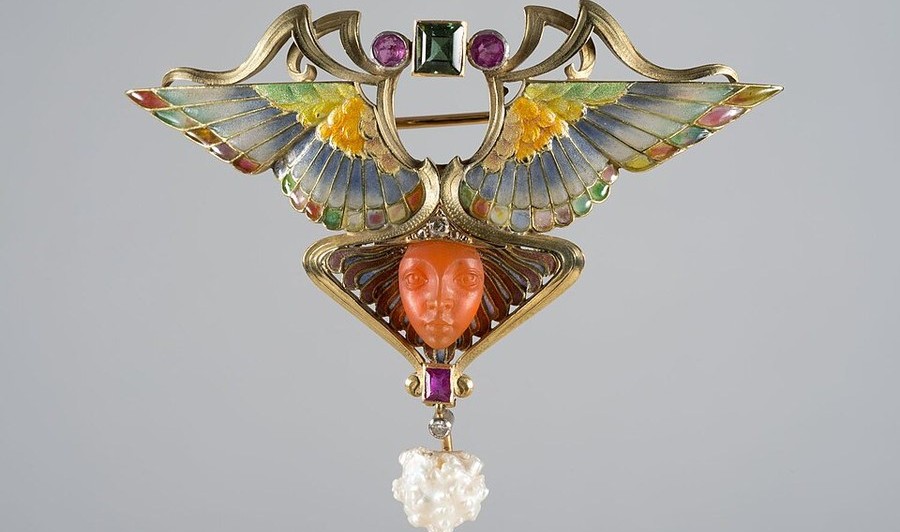
As decoration it has had two great runs. The Victorians made the brooch a default ornament, mourning brooches and cameos above all, and the high-jewelry houses of the decades around 1900 built pieces ambitious enough that the best of them now sit in museum collections. The second run came in the 1940s and 1950s, when structured tailoring, hats, and tweed supplied ideal surfaces: costume houses like Trifari and Mazer worked the category in base metal while Cartier, Van Cleef & Arpels, Verdura, and David Webb treated it as core fine jewelry. Both runs rode a dress code. The brooch thrives when clothes have structure.
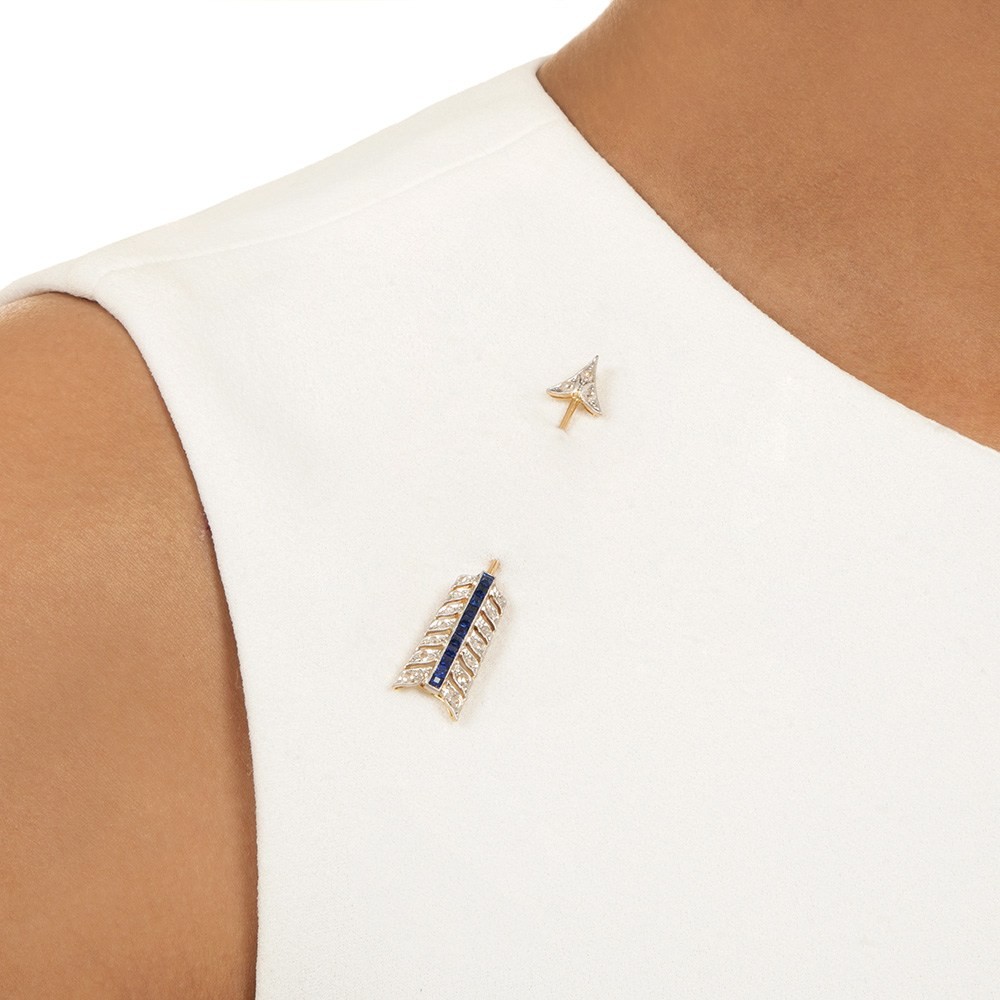
Men’s chests held jewelry through most of that history, at scale and for decades at a stretch. Around 1800, men’s dress went through what fashion historians call the Great Male Renunciation, surrendering color, embroidery, and most ornament to the dark suit. The pin was the exception that thrived. From about 1830 the stick pin was standard equipment for a well-dressed man, a pearl or a gemstone set in gold and pushed through the folds of a silk cravat to hold them in place, and by the 1870s the pins were mass-produced and getting strange: animal heads, horseshoes, insects. The boutonnière worked the same surface from another direction, since the lapel’s buttonhole existed to hold a flower. For roughly eighty years, ornament on a man’s chest was simply dressing properly.
An auction catalogue still treats all of it as one family. Sotheby’s files stick pins and jabot pins (long pins ornamented at the ends, made to show on both sides of a ruffle or a lapel) as subtypes of the brooch, one object class sized and coded differently era by era. A gem-set pin on a man’s lapel and a brooch on a woman’s coat are the same thing at auction.
The quiet century, and where the grandmother reflex was born
The quiet came in the 1910s, when the cravat collapsed and the pin faded with it, surviving mostly as the tuxedo’s vestigial formality. Women’s brooch wearing outlasted the men’s by decades, carried by mid-century suiting and hats, then followed the same road down: as daywear relaxed from the 1950s on, the brooch drifted from daily wear to occasional accent, and by the 1980s it read as professional-wardrobe formality more than everyday jewelry. Measured from the cravat’s collapse to the current red carpets, the men’s lapel sat quiet for about a century, which is longer than the prominent run that preceded it. A man pinning a jewel to his chest today is resuming an old habit.
The reflex that says brooches belong to somebody’s grandmother has a birth date, and it is more recent than most of the inventory. The image the reflex reaches for, the meaningful pin on the shoulder of a woman of a certain age and authority, is largely a 1990s artifact. Madeleine Albright ran what she called pin diplomacy as UN ambassador and then Secretary of State, famously wearing a snake pin after Saddam Hussein’s press called her a serpent, and her collection of more than 200 pins, most of them costume, later toured museums as an exhibition. That is the association doing the “old lady” work. It is costume-coded, it is younger than nearly every piece in a dealer’s case, and the object underneath it has a longer and far less gendered history than the reflex does.
The lapel sat quiet for about a century. The reflex that calls brooches grandmotherly is younger than the pieces it dismisses.
Why brooches came back: it started on video calls
The return has a start date years earlier than the fall shows. Rapaport, the diamond trade’s paper of record, dated it in January: brooches have “quietly but decisively” surged in popularity since the start of the pandemic, six years of it now, and the original reason was practical. Video calls cropped everyone to the shoulders, a necklace repeated day after day, and a brooch offered scale and variety inside the visible rectangle. What began as a Zoom accommodation kept going after the cameras turned off.
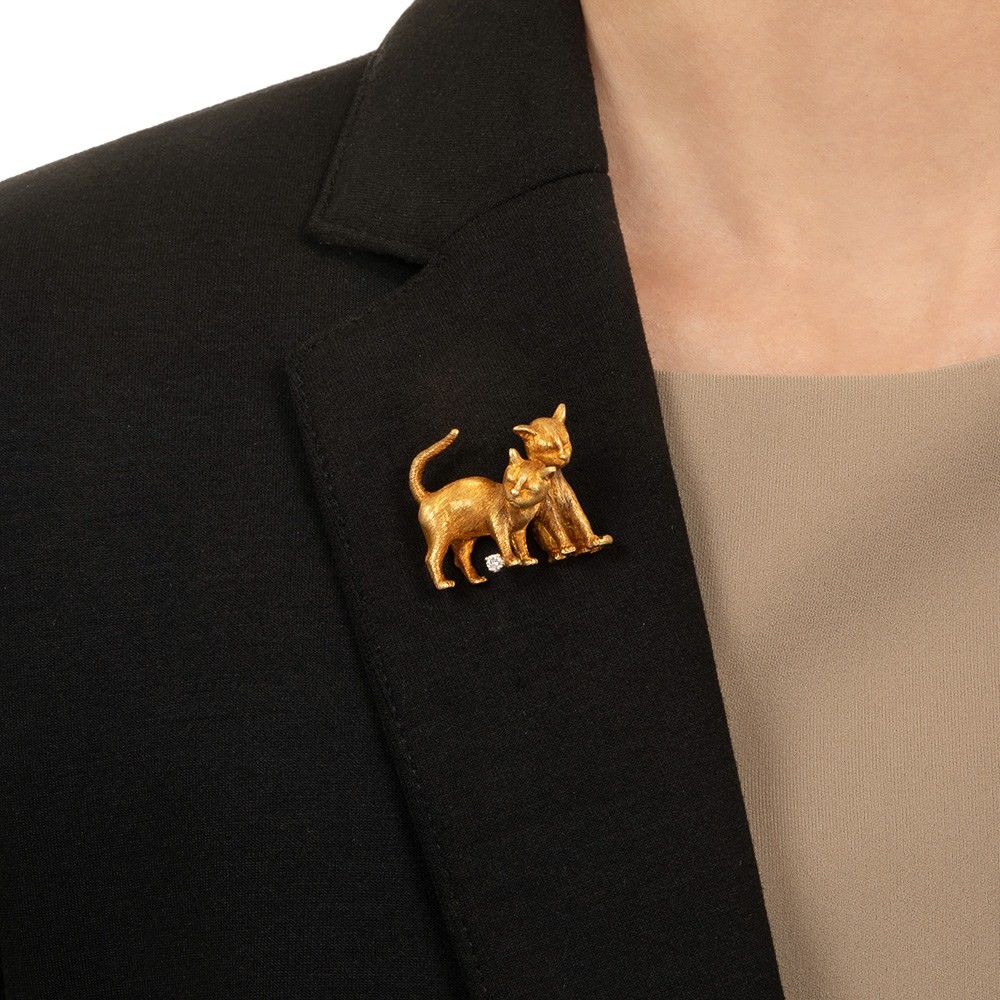
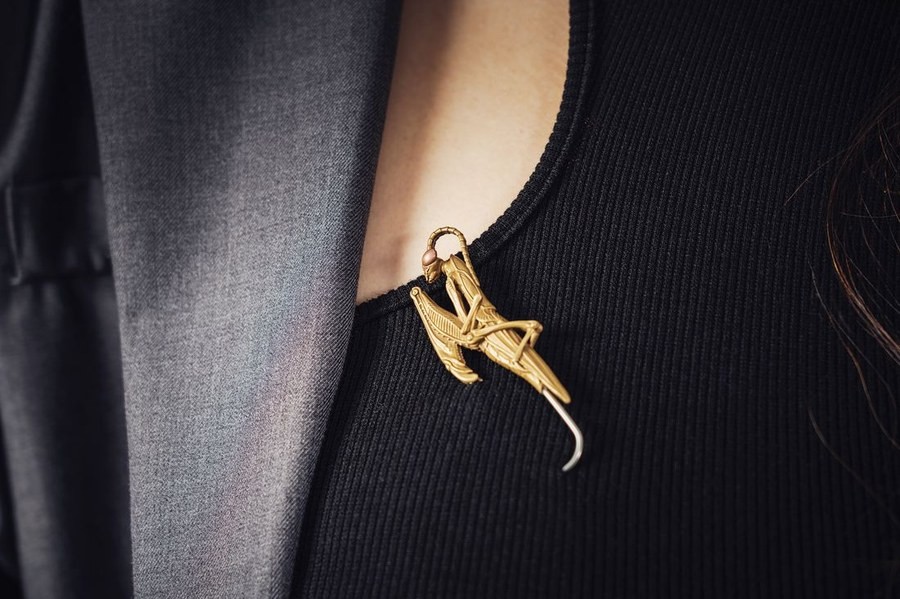
Estate dealers report the demand concentrating in specific, tasteful places: signed animal brooches first (signed meaning the maker’s name is stamped on the piece), lions and cats and birds, then whimsical figures and Art Deco clips, with auctions drawing first-time bidders into the category.
The RealReal reports brooch “obsessions” on its platform up 24 percent in a year and interest in Van Cleef & Arpels brooches up 223 percent. Both figures are one resale platform’s internal engagement metrics, measured off a base the platform does not disclose, so the most they can prove is direction. Direction is still direction, though. And about a quarter of the platform’s brooch sales, per the same report, are unbranded pieces: buyers are paying estate prices for design and workmanship with no label attached. Rapaport’s own conclusion is that this is “a convergence of history, fashion, and market pragmatism rather than a passing trend.”
Estate dealers have watched brooch demand climb for six years. The fall shows came later.
The brooch trend at the fall shows and on the red carpet
The fashion moment is easy to date and easy to name: a chrysanthemum brooch on a Chanel lapel in the fall shows, oversized sculptural pins anchoring cardigans at Tory Burch, animal-figurine brooches at Simone Rocha, men in jewels at the collar at this spring’s Met Gala, and Boucheron fastening a convertible high-jewelry set to both shoulders at Paris couture this month. Nearly all of it is house pieces and high jewelry. That object is magnificent, and it is not for sale in any sense that matters to a person with a budget.
Pinterest’s annual forecast named “Brooched” a trend of the year after platform searches for “brooch aesthetic” rose 110 percent year over year, and it is unusually specific about who is doing the searching: millennial men between 28 and 43 and boomer men over 60, predicted to reach for vintage pins, crystal clip-ons, and heirloom brooches. The forecast is built on search growth, and there is no sales data in it: what it measures is interest. Red-carpet moments have been supplying that interest in quantity. Connor Storrie arrived at this year’s Met Gala in Jean Schlumberger’s Fleurage brooch for Tiffany, platinum and 18k gold around a rubellite (a pink-red tourmaline) of more than three carats. A$AP Rocky put a Margot McKinney brooch built around a 119-carat aquamarine on the cover of Vogue’s May 2025 issue, and he has been wearing serious brooches for years, a Boucheron Edwardian piece at the 2023 Met Gala, a 1940s opal-and-diamond brooch at the 2025 CFDA Awards. Jeff Goldblum wore a Tiffany diamond brooch to the SAG Awards. Leonardo DiCaprio wore a 1964 Boucheron bee to this year’s Oscars. Bertrand Mak, founder of the jewelry house SAUVEREIGN, told Forbes late last year that brooches are now the go-to accessory for men on red carpets, and described men’s jewelry buying as emerging and accelerating rather than arrived.
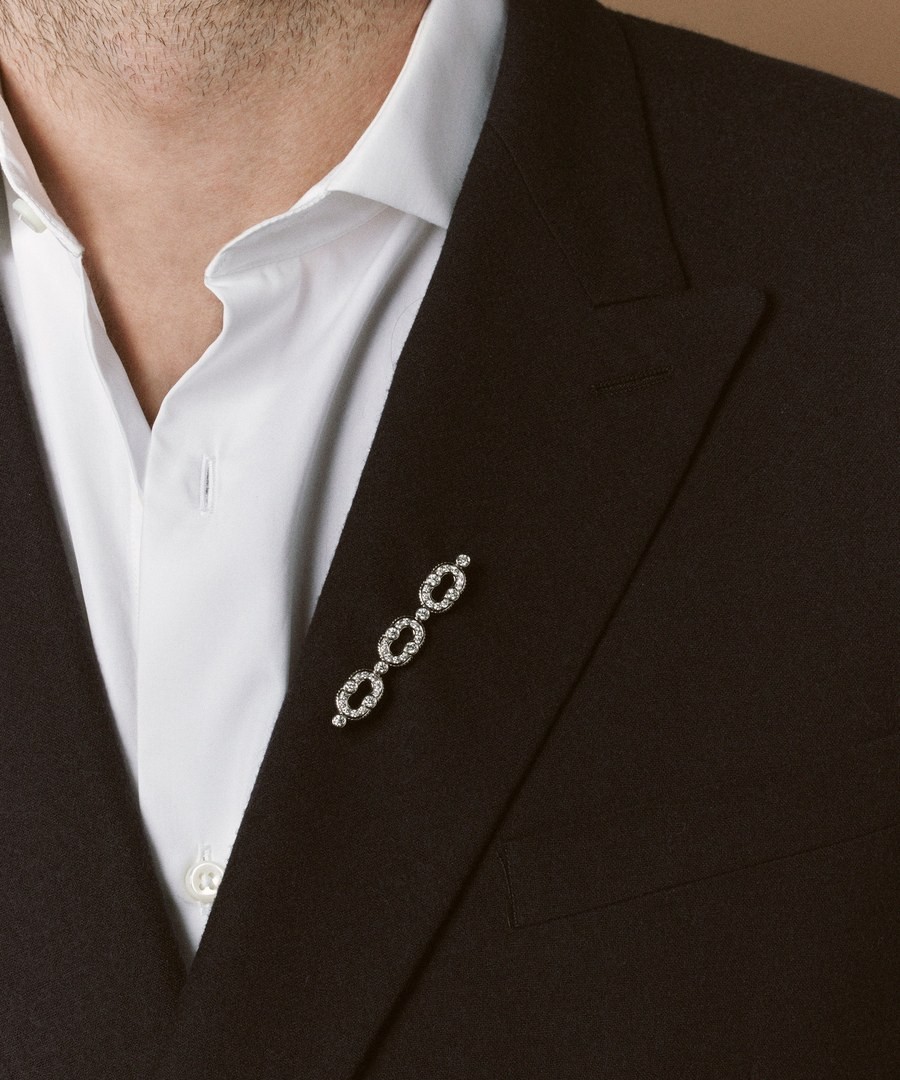
The searches and the sightings add up to interest, conspicuous and growing. Purchases are harder to see: none of the public trend reports splits brooch demand by gender, The RealReal’s report does not say who is buying, and none of the houses’ published numbers breaks brooches out. If you are a man circling this category, you have excellent company on the red carpet and in the search bar, and no published number yet shows that anyone has followed you to the register. Buy anyway, if the object earns it. The instinct will be familiar to anyone who watched the men’s medallion necklace come back: one substantial object, worn deliberately, doing the work of several. The same instinct runs through men’s fine jewelry generally; the brooch moves it from the chain to the lapel.
Where the brooch is going
Brooch seasons have come and gone before. The Jewellery Editor declared the brooch “the hottest ticket in jewellery” in the fall of 2016, pegged to a Paris couture week of wheat brooches at Chanel and Chaumet, and JCK’s list of that fall’s jewelry trends, written for the trade, did not include brooches at all; the moment passed. A smaller wave followed in 2018 and 2019, when Albright’s touring pin collection put brooch diplomacy back in the news for a season, and it passed too. If those seasons are a guide, the current styling interest will cycle out as well, and a buyer who missed the fall shows will have missed nothing that matters at the dealer’s case.
The estate demand is a different kind of signal. It has six years behind it, it outlasted the video-call era that started it, and Rapaport’s read is that it amounts to more than a passing trend. Whatever next season’s styling brings, the six-year estate wave underneath it is the part a buyer can verify, in dealers’ inventories and asking prices.
The open question is the men. Earlier brooch seasons ran through womenswear; a male buyer who turns up in sales numbers would be new, and would reshape what dealers stock and what houses make. The evidence for him so far is a search forecast and a run of red carpets, and the figure that would settle it, sell-through to male buyers, has not appeared in any of the public reports. New production is the other thing to watch: a house that expected a decade of brooch demand would be building a brooch line now, and few are. Among the independents the pin remains commission work, and the heritage houses keep the category mostly at collector prices. Until either of those changes, the depth a buyer can shop stays where it has spent the past six years, in the estate case.
Buying a fine jewelry brooch now: the estate case first
Start with the distinction that saves you money. Much of what the styling roundups photograph is costume: crystal or enamel, sometimes magnet-backed, priced like a dinner, made to decorate a blazer for one season. A fine jewelry brooch is real metal and real stones around a catch built to outlive its owner, and telling the seasonal pin from the keeper is most of the buying work. The same line between a season’s styling and a piece you live with runs through the wider shift from quiet luxury to maximalism in jewelry, and most buying decisions in this category come down to which side of it an object sits on.
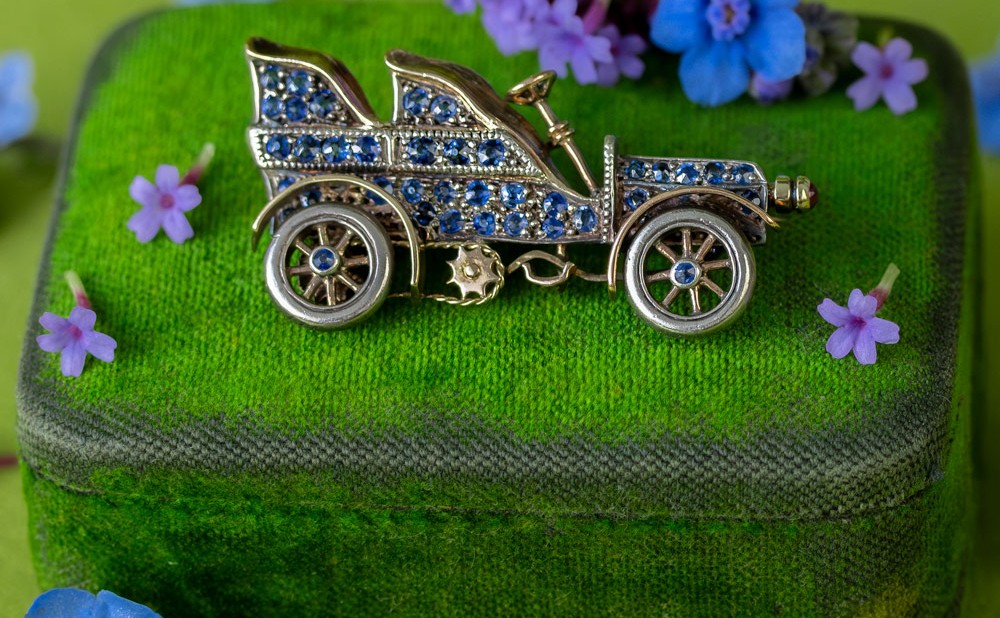
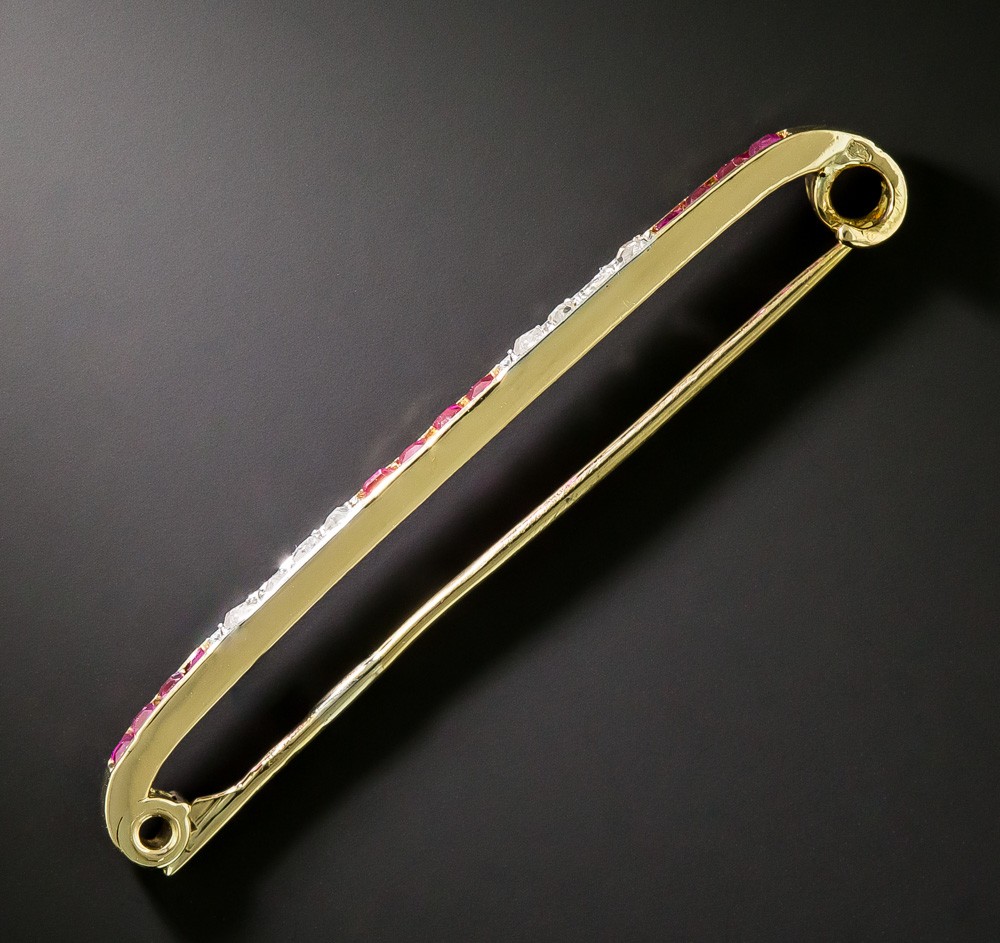
Estate, in dealer language, means previously owned; vintage means old enough to carry a period name. At these prices the two words cover most of what is worth a serious look. Lang Antiques, the San Francisco estate dealer, is a clean window into the category’s real price band: its brooch case today includes a Belle Époque diamond and ruby bar brooch at $1,275, an Italian 18k dachshund at $2,475, an Edwardian sapphire classic-car brooch at $3,875, and a mid-century carved amethyst and nephrite (a jade) flower with diamonds at $4,450. Doyle & Doyle in New York works the same territory. What those prices buy is era design, real metal, and hand work from the decades when the pin was a working category.
Many of the best pieces are two pieces. Georgian jewelers fitted brooches with loops on the reverse so a ribbon or chain could be threaded through, turning brooch into pendant, and the trick stuck: estate listings are still titled “Brooch/Pendant” two centuries later, and a piece that wears both ways counts twice in a rotation. On a lapel it reads as architecture; on a chain, the same object does the work of a statement pendant.
Gold has put a firm floor under the category. At roughly $4,075 an ounce this week, up more than a fifth over the past year, the metal alone in a substantial 18k piece accounts for a meaningful and rising share of the asking price, and Doyle & Doyle posts a standing notice that its prices move with the gold and silver markets. The estate case runs on the same math that is repricing new gold jewelry right now.
The check that matters most is mechanical, and it is the part of telling whether fine jewelry is well made that first-time buyers routinely skip. A brooch with a bad catch is a brooch you will not wear. The C-clasp, a simple open hook with no lock, was standard from roughly 1850 to 1910, and a worn one can release under sideways pressure, which on a moving lapel is a question of when rather than whether. The rollover safety catch, the locking kind still used today, was patented in 1901 and common from about 1910; the trombone clasp, a push-pull tube, ran on British pieces into the 1940s. The hardware dates a piece almost as reliably as its style does, and it decides whether you can trust it on a coat you leave the house in. The accepted repair is reversible: a jeweler solders a small secondary loop for a safety chain without disturbing the original catch, which keeps the piece correct for collectors and wearable for you.
Off the dealer route, the hazards multiply. On the big marketplaces and at regional auctions, a damaged, unsigned pin and a real keeper can sit side by side at similar prices with similar photography, and the auction results that get published skew to the collector tier, so the comparable sales a buyer would check a price against are scarce and self-serve. The auction route rewards a buyer who watches results for months; the dealer route charges a premium that mostly buys you a filter. Either way this is a vintage purchase first, and the wider discipline of buying vintage fine jewelry applies in full here, from choosing the dealer to reading the hallmarks, before any of the pin-specific checks.
The new brooches you can buy right now
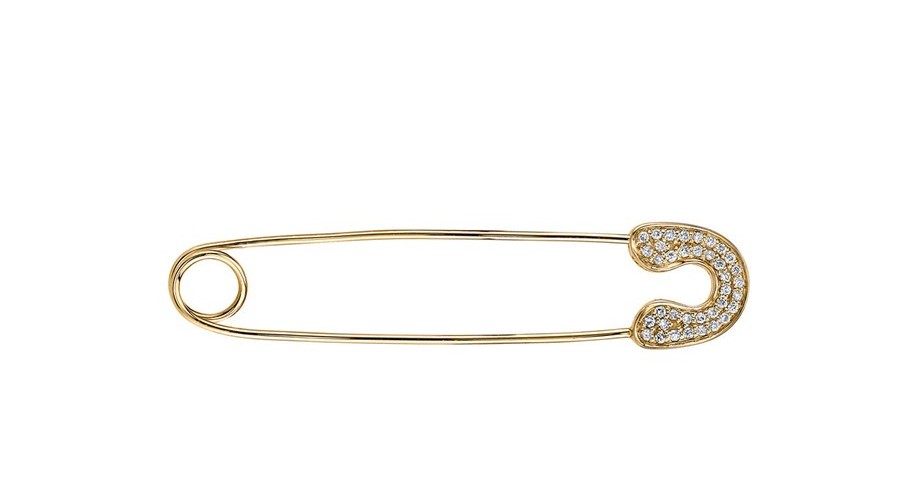
The new production that remains is specific. Sydney Evan keeps a named men’s-collection brooch in its line, a gold and diamond safety-pin brooch in 14k at $1,720, a contemporary fine jewelry house selling to exactly the buyer the search forecast describes. The same house’s Love Script brooch runs $4,205. David Webb still treats the brooch as a living category, though almost entirely at collector prices, with ribbons and clips priced from $40,000 up; the exception is a plain 18k Bar Brooch at $2,700, the one heritage-house piece within reach.
A rung above sit the pieces that show what new brooch design looks like when a house commits. Viltier’s Magnetic brooch, 18k white gold and diamonds at €8,900, is the clearest look at where new work has gone, architectural and modern, and Yvonne Léon’s customizable Vase brooch-pendant at €5,100 lands just past reach with the same convertible logic Georgian jewelers worked out two centuries ago. Below them, the independents have mostly declined the category: Foundrae, which owns so much of the men’s-object conversation, makes no brooch at all; neither Sorellina nor Jade Trau runs one; Brent Neale makes pins only as one-off commissions. At the independent level the brooch is commission work and small runs. That is why the buying answer keeps coming back to estate: dealers hold decades of depth from eras when the pin earned daily wear, and the new shelf holds a handful of pieces.
How to wear a brooch
Most of how to wear a brooch is decided by the garment. It wants fabric with some structure, a wool lapel, a coat collar, a blazer, a substantial knit, cloth that carries the piece without sagging, because thin silk holds a fine pin for about the length of a photo shoot. Placement reads best high, near the lapel notch, an inch or two below the shoulder seam, which is also where a jacket has the structure to take the weight; worn mid-chest, the same piece starts drifting toward costume. As for how many, one substantial piece is the current fine-jewelry fashion: the lapels stacked six and seven pins deep were a Met Gala styling exercise built for a camera, and a single piece with real scale runs on the same scale-with-intention logic that governs maximalist fine jewelry generally. That is a reading of where the fashion sits right now, though, and if your taste runs to a cluster, wear the cluster. A sculptural mid-century pin fits that logic already, which is part of why a seventy-year-old object reads current rather than costumed. On days with no lapel in sight, the convertible pieces answer the question themselves: thread the chain, wear the pendant.
The estate case was there before Pinterest noticed and will be there after the forecast cycles out, so the timing pressure is fake, and the permission question is the only real one left. On that, the record is unusually generous: the lapel spent eighty years holding jewels and a hundred sitting quiet, and if a reflex is standing between you and the case, it was born in the 1990s. Find a piece whose catch locks, whose maker or era you can name, and whose weight your coat can carry.
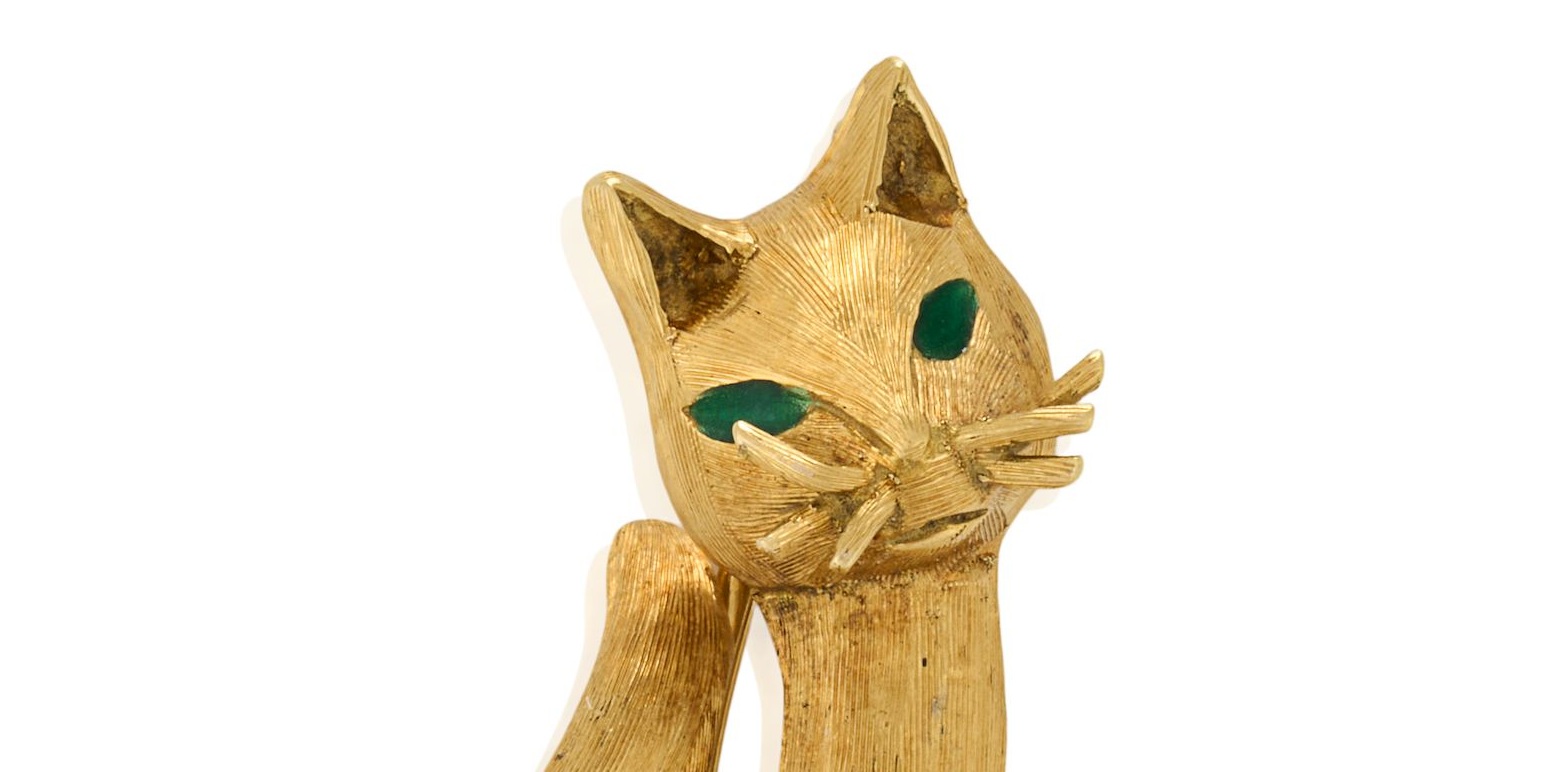
Sandy Lerner Is Rehoming Her Cats: A Tiffany Cat Brooch and Sixty-Five More
The Cisco co-founder spent four decades collecting cats in gold, enamel, amethyst and bronze. On 30 September 2026 Bonhams sells 66 of them in New York, from a $700 carved cat to a $120,000 bronze by the sculptor Rembrandt Bugatti. She is keeping the live ones.
Why Are Jewelry Prices Still Going Up?
Jewelry costs about 15% more than it did a year ago, and it is the gold accounting for most of it. The answer coming back from the jewelry trade and brands is less gold in the piece, which changes what you have to ask for at the counter.
Natural Diamond Prices Are Going Up Again, at Least for Now
Lab-grown stones pushed mined diamond prices down for years. The diamond trade's price index rose again in August, led by small stones. What that changes for you.
The newsletter.
One email when something is worth your attention. New essays, the buying calls behind them, and what we’re watching in the trade. No roundups, no affiliate dumps.