Photo: Miansai
The Men's Fine Jewelry Guide: What's Worth Buying in Solid Gold
A map of men's fine jewelry in solid gold, from the gold chain to the rings past the signet: why solid gold over coated steel, what each piece costs, and who makes the version worth buying.
You’ve decided to buy your first real piece of jewelry, something in solid gold, something to wear most days for years, and you’re in growing company: The Business of Fashion and McKinsey’s State of Fashion 2026 puts men’s jewelry growth at 7 to 8 percent a year through 2028, against 4 to 5 percent for women’s, off a small base that is mostly wedding bands, and Colman Domingo spent the 2026 awards season in Boucheron gold, stacked Serpent Bohème rings, a cuff, a brooch. Men’s fine jewelry from about $1,000 up, where solid gold and serious goldsmithing begin, comes down to five moves: the chain, the medallion, the bracelet, the single earring, and the rings past the signet. The men’s gold jewelry worth buying in each of them has a maker and a price you can check today, and all five start in the same place: the metal.
Why Solid Gold
The affordable end of men’s jewelry runs on stainless steel with a PVD coating, a vapor-deposited finish a few microns thick that keeps steel looking like gold, and at its price it’s an honest buy. Solid gold is a different object. The metal is the same the whole way through, and you notice that first as weight: gold is dense, far denser than steel, and a solid gold chain settles on the neck with a heft no coating can add.
The years treat the two differently. A coating is a surface, and daily wear happens to surfaces; when it thins at the high points, what shows through is steel. When solid gold scratches, what shows is more gold, and years of small scratches soften into the lived-in polish that old gold jewelry is loved for. The metal is also worth money by itself: a solid gold bracelet can be melted, reworked, or sold by weight on its worst day, whatever happens to the design or the brand, a floor coated steel doesn’t have. The stamp inside a gold band, 14k, 18k, is the hallmark, the piece declaring what it’s made of, and which karat to buy is the one decision solid gold still leaves you.
The Gold Chain Is the Piece That Works Everywhere
A solid gold chain works in more rooms than anything else in the category: under a collar at work, over a tee on Saturday, shown or tucked away on your own terms. Worn daily, it stops being an accessory decision and becomes part of how you look.
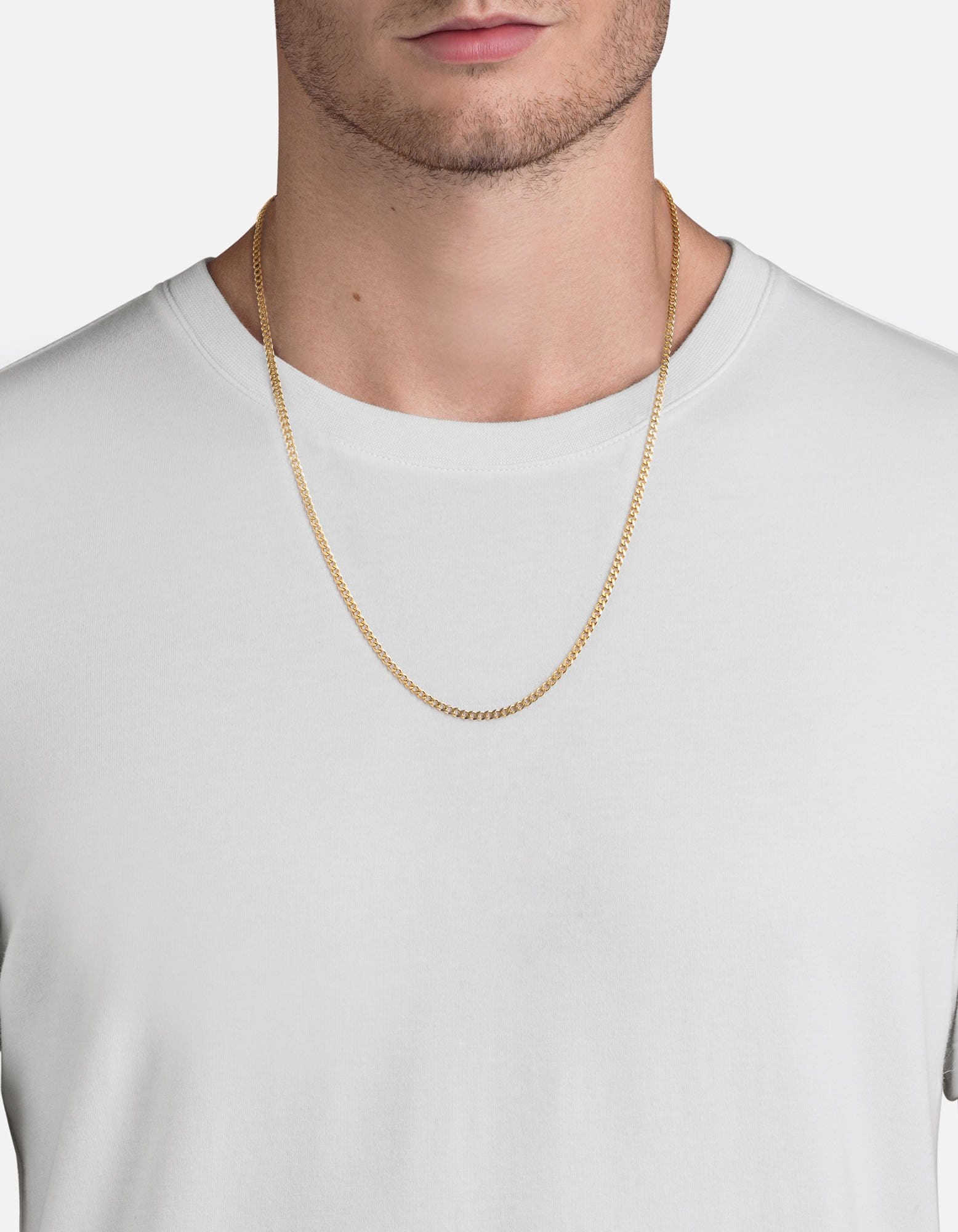
Buy the chain as a chain, not as a pendant delivery system. John Hardy’s gold curb chain (curb meaning flat, interlocking links) runs $3,050 at 2.1mm, and its wave-inspired Surf chain is $3,600 at 2.3mm; both are built to be worn alone.
Miansai works the same lane in 14k solid gold: at these prices you’re buying a decade of daily wear, and the price divides by every day of it.
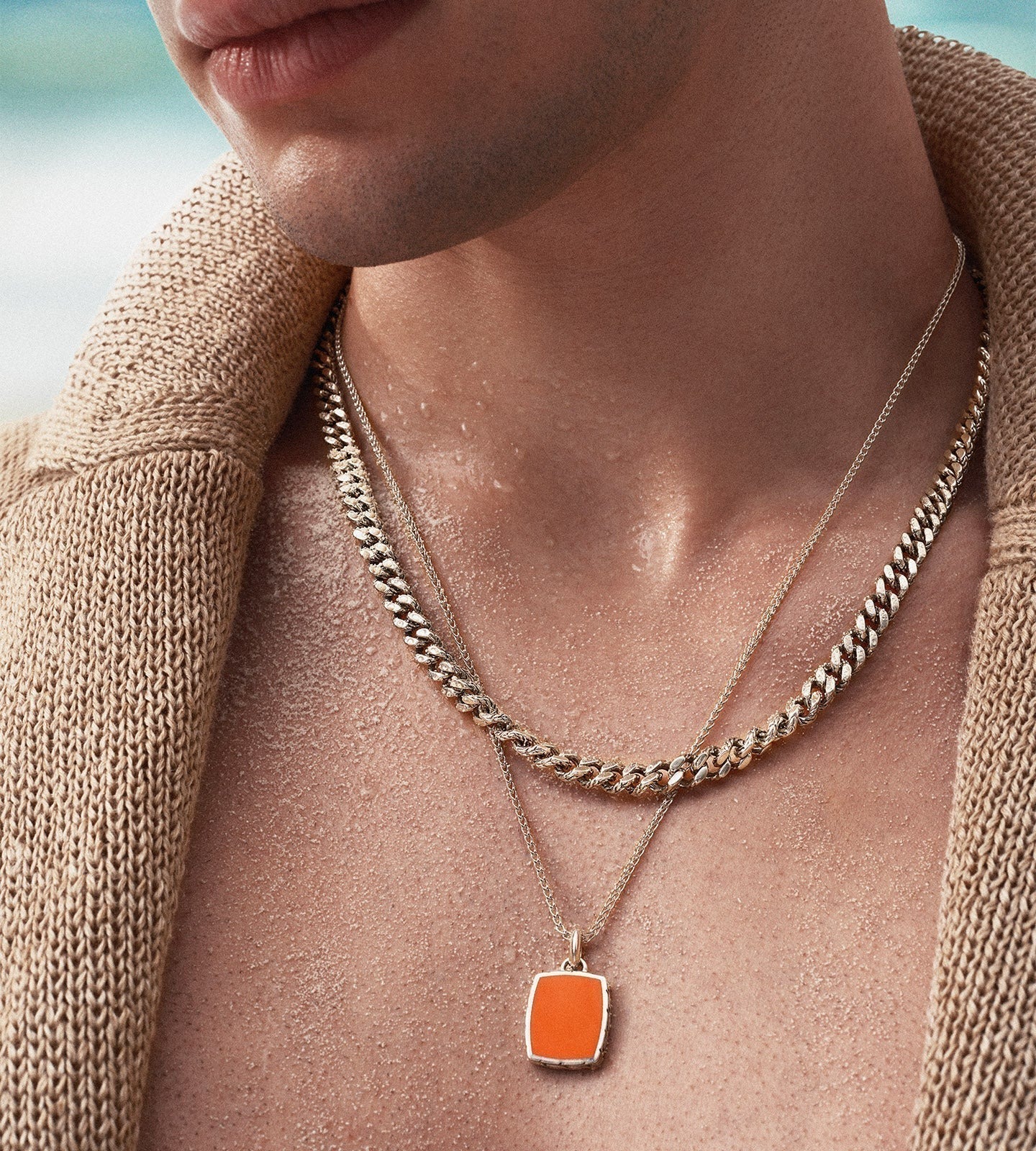
The chain is also the hanging point for the gold medallion, which made its return at this level already, single, substantial, worn close to the neck; choosing one as a first men’s fine jewelry piece is its own decision, size, motif, chain weight. If a pendant is the version of the chain you want, that’s the door in.
The Men’s Gold Bracelet Is the Category’s Open Move
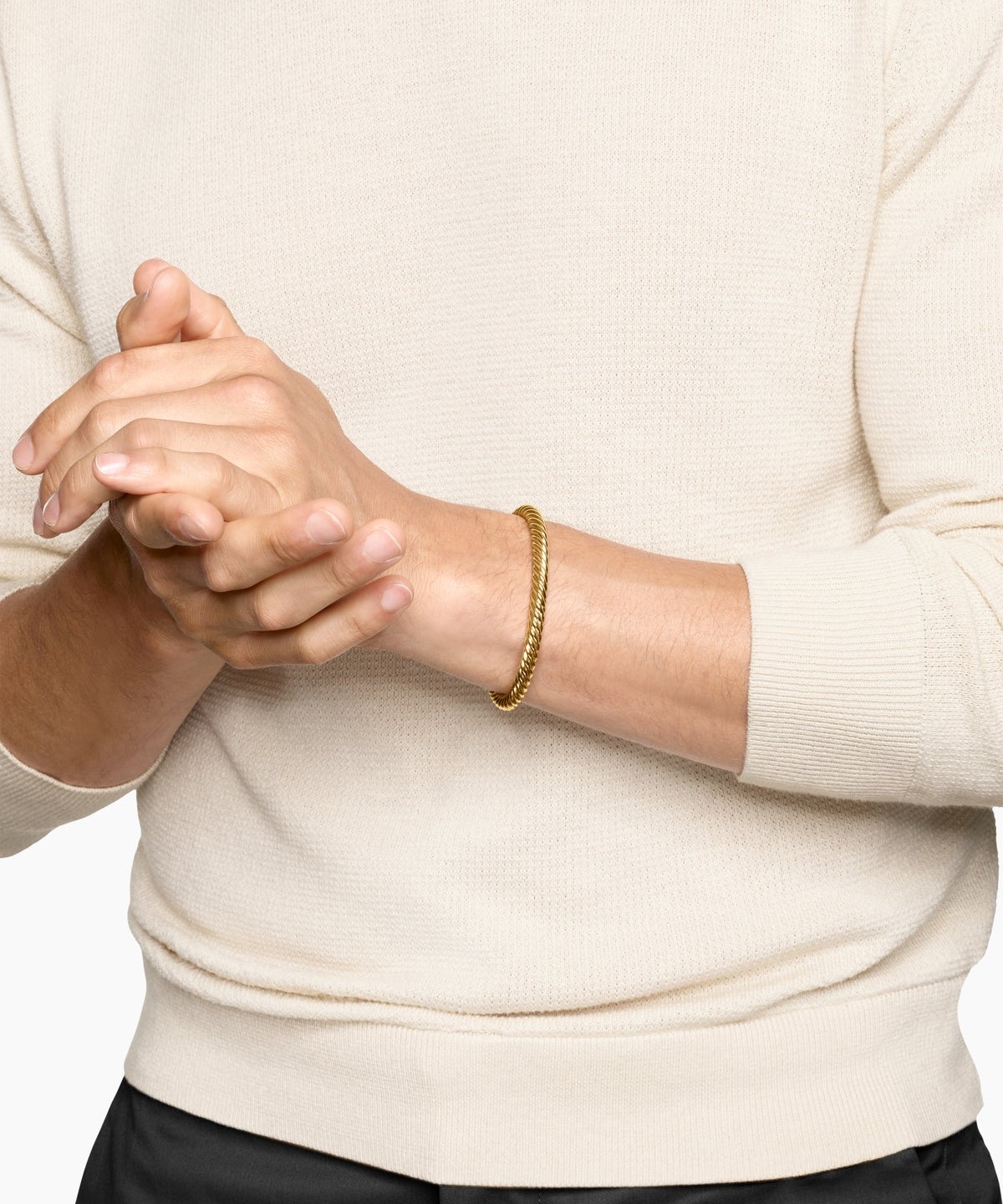
Nobody owns the men’s gold bracelet yet, which makes the wrist the one place in the category where your taste can get ahead of the market. The nearest thing to an incumbent is David Yurman’s Cable, a twisted-rope bracelet that starts life as fifty feet of hand-twisted wire, and the men’s line is useful beyond itself because its pricing lays the whole decision out flat: sterling silver from $575, sterling twisted with 14k gold from $675, sterling with 18k around $1,500, full 18k yellow gold from $5,200. One design, and one question: how much of it should be gold. The Cable keeps turning up on men, too, with the house putting Michael B. Jordan at the front of its first men’s high-jewelry collection in 2024, and Eiza González telling People she remembers seeing “the iconic Cable bracelet for the first time on a guy” and stealing it off his arm for the night.
The bracelet we’d argue for is the ID bracelet: a substantial curb-link chain with a polished plate across the top, built to carry a name. It’s a classic the way the signet ring is a classic, it ebbs and flows and it never goes out of style for men, and given where men’s jewelry is heading, toward solid gold worn daily and pieces personal enough to carry a name, we think its next run starts in 2026 or 2027. The form’s clearest historical expression is Cartier’s Gourmette (the house’s name for exactly this bracelet); Cartier’s current men’s bracelet page is Trinity, Juste un Clou, Love, and Santos territory these days, and the closest living relative on it is the Santos chain bracelet in yellow gold, $5,150. The market leaves the ID bracelet room to return, too: solid gold men’s bracelets between the sterling entry point and the five-figure statement are strangely scarce, and Miansai keeps its gold bracelets under $700 or at $10,000 with almost nothing between. Buy it now and you’re there before the crowd re-forms.
The ID bracelet is a classic the way the signet ring is a classic: it ebbs and flows, and it never goes out of style for men.
A Single Earring in Solid Gold

A single earring in solid gold has become a normal thing for a man to wear, and the houses have noticed. Maria Tash, the piercing house that made multiple-earring styling a fine jewelry discipline, keeps a dedicated men’s lane and sells its 18k pieces as singles on purpose: a diamond eternity hoop at $480, a five-diamond stud at $685, a baguette eternity hoop at $1,495. Charles Melton wore Maria Tash in early 2024, and single is the operative word; one earring in solid gold is the form the look has settled into.
Before you sit in the chair: Maria Tash’s posts and backings are proprietary, meaning they don’t interchange with other brands’ pieces, and buyers report gaps between in-store and website pricing, so confirm the number first.
If the stud scale feels slight, the move scales up. Foundrae’s For Him line runs single 18k pieces from $1,000, with its True Love baguette huggie (a huggie is a small hoop that sits tight against the lobe) starting at $1,350 with garnet and reaching $4,450 with diamonds, and Hoorsenbuhs makes solid 18k earrings with real weight at $3,000 to $5,000, the ear-sized expression of the wider appetite for bold, sculptural fine jewelry.
Rings Beyond the Signet
The signet needs one sentence: the oldest ring a man can wear is mid-revival, running on personalization, with engraving spreading from the face of the ring to its shoulders (the sides of the band), and whether a signet ring is worth it is a decision worth making on its own terms.
Spinelli Kilcollin is the Los Angeles house Yves Spinelli and Dwyer Kilcollin started in a garage in 2010 with no jewelry background between them, and its London flagship opened this past November. Their Galaxy rings are interconnected bands, two or three rings joined by small links so they move as one piece, worn stacked on a finger or spread across two. The Solarium starts at $390 as a single band and runs to $4,100 as a three-link, which means you can test the idea cheaply and commit to it seriously.
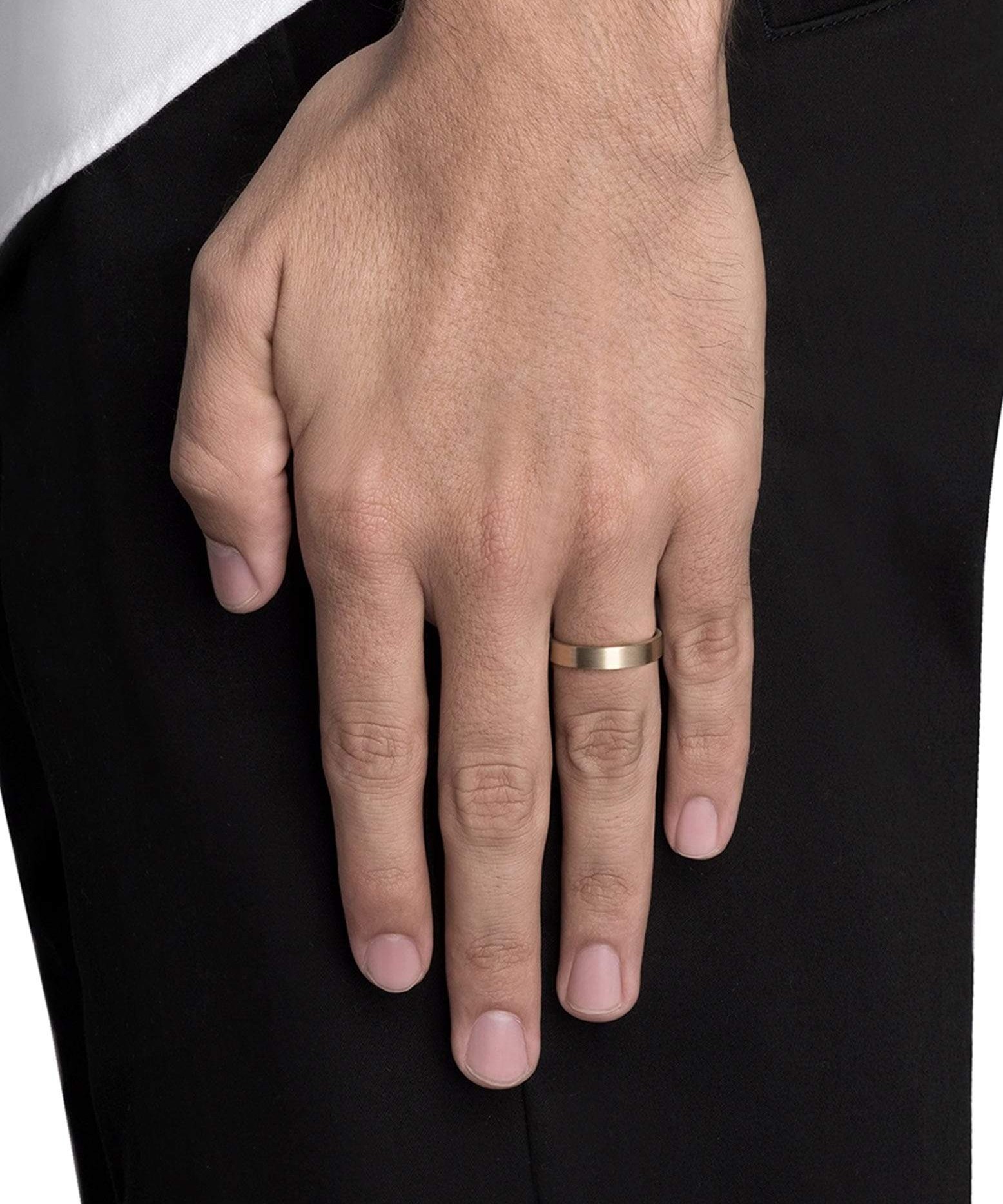
The sleeper is plainer than all of it: a solid gold band worn because you like it rather than because you’re married. The buying is easy, a properly weighted 5mm band in 18k yellow gold, Taylor & Hart’s Magnolia for one, runs $2,470.
The Part You Already Know
John Hardy, David Yurman, Foundrae, Spinelli Kilcollin: the houses here are fine jewelry brands worth knowing well beyond their men’s lanes, and the pieces are in their cases at real prices right now. The one to buy first is the one you’ve already pictured on yourself more than once. Go try it on. You’ve been making calls like this, what to wear, what to skip, what’s worth real money, your whole adult life. This one just comes with a hallmark.
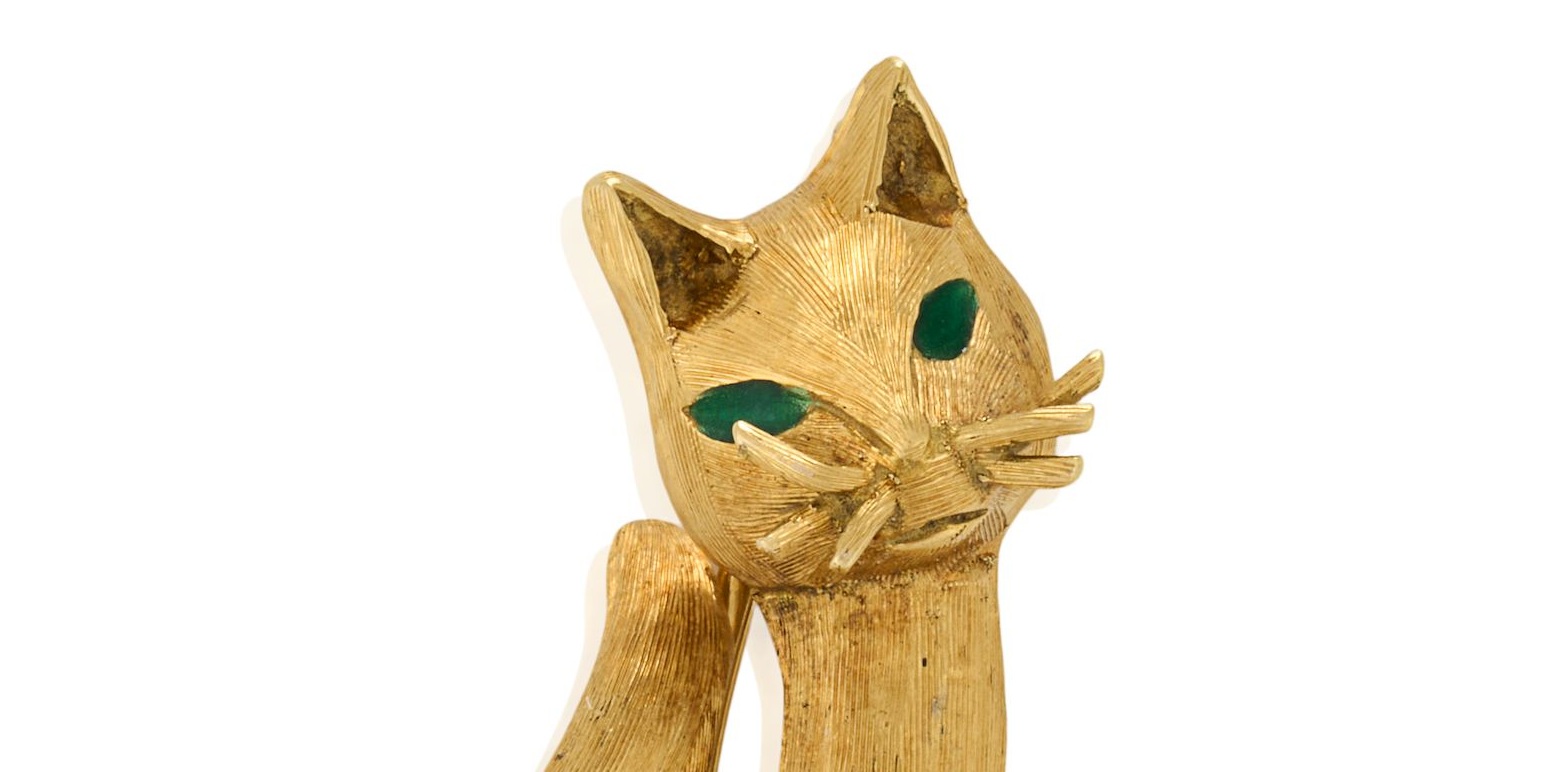
Sandy Lerner Is Rehoming Her Cats: A Tiffany Cat Brooch and Sixty-Five More
The Cisco co-founder spent four decades collecting cats in gold, enamel, amethyst and bronze. On 30 September 2026 Bonhams sells 66 of them in New York, from a $700 carved cat to a $120,000 bronze by the sculptor Rembrandt Bugatti. She is keeping the live ones.
Why Are Jewelry Prices Still Going Up?
Jewelry costs about 15% more than it did a year ago, and it is the gold accounting for most of it. The answer coming back from the jewelry trade and brands is less gold in the piece, which changes what you have to ask for at the counter.
Natural Diamond Prices Are Going Up Again, at Least for Now
Lab-grown stones pushed mined diamond prices down for years. The diamond trade's price index rose again in August, led by small stones. What that changes for you.
The newsletter.
One email when something is worth your attention. New essays, the buying calls behind them, and what we’re watching in the trade. No roundups, no affiliate dumps.