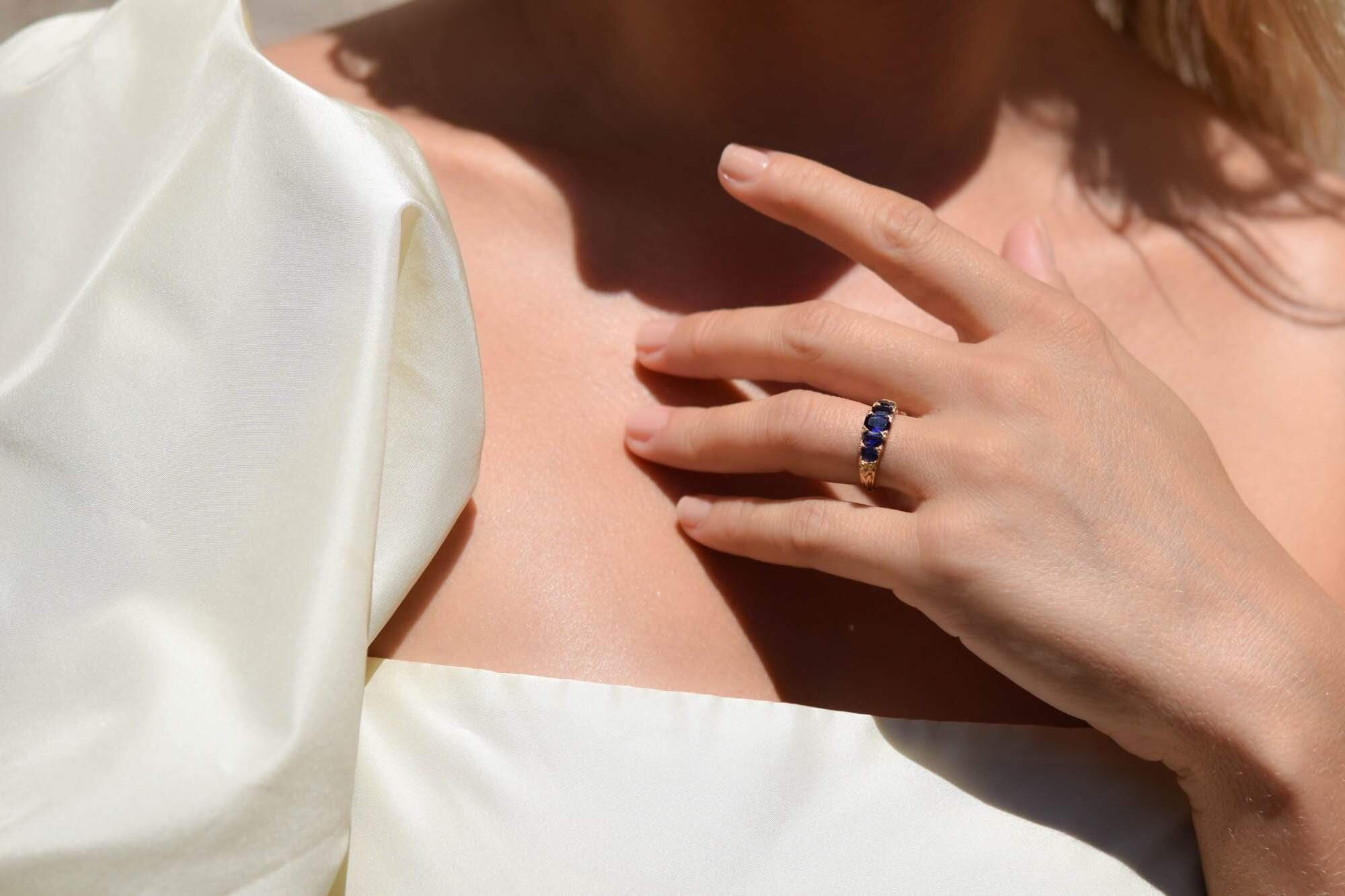
Photo: Erstwhile Jewelry
Buying Vintage Fine Jewelry: More Ring for Less Money
A guide to vintage and estate jewelry worth buying: why the unsigned mid-market is undervalued, how to tell good antique pieces from bad ones, and where to find them.
The smartest buy in a jeweler’s estate case is often the piece with no name on it: older, heavier, and better made than the new ring beside it, and priced below it too. This guide covers buying vintage, estate, and antique fine jewelry well: why the mid-market is so undervalued, how to tell a good piece from a bad one, and where to find it.
Take an Art Deco sapphire ring from the 1930s: platinum, a larger stone than most new rings carry, milgrain edging (the row of tiny metal beads worked along an edge) cut by hand ninety years ago. It can sit in an estate case priced below the slim new gold ring up front, and the reason it costs less is the name.
A signature is the maker’s mark, the small stamp that says which house or workshop made a piece, and it’s what collectors pay for. A Christie’s collecting guide puts the math plainly: a signature can add 50, 100, or even 300 percent to a piece’s value. The unsigned mid-market is where that premium never gets charged, so the gold, the stones, and the handwork all show up at a price that skips the name.
The signature premium is real money if you ever sell. So if you’re collecting, or you want to protect resale value, the name pays for itself and chasing signed pieces makes sense. If you’re buying for the look a solid estate piece gives, the weight of the gold and the character of an old stone, the name is beside the point. Buy from a reputable dealer or retailer who stands behind the gold content and the stone quality, and wear the shit out of it.
Going into 2026, JCK called antique and vintage jewelry a moment. “Moment” is a careful word, a step below “trend”: the trade betting this interest settles in and stays. The timing tracks with what happened to prices. Tariffs and record gold pushed new fine jewelry up across the board, while vintage already exists and carries no import duty, so it stayed where it was. Taste moved the same way: lab-grown stones made flawless sparkle cheap and ordinary, and the appetite swung toward pieces with some history worn into them. Taylor Swift’s engagement ring, an old-mine-cut diamond set in an engraved yellow gold band, crystallized something already building, enough that National Jeweler ran “The Taylor Swift Effect: Antique Diamonds Edition” in October 2025. The buyer who wants something with a past over something that arrived in a branded box has a lot of company now.
Estate, Vintage, Antique: A Quick Vocabulary
Estate jewelry is a fancy word for used. Anything that isn’t brand new qualifies: your grandmother’s ring, a piece from last year that someone resold, all of it. The word says nothing about age or quality, only that you’re not the first owner. Vintage means over 20 years old, so anything from roughly 2006 or earlier qualifies, which sweeps in a lot of good 1980s and 1990s work that tends to get overlooked. Antique means over 100 years old: Art Deco (1920s and 1930s), Edwardian (1900s and 1910s), Victorian (1837 to 1901), and Georgian (before 1837).
The categories overlap and dealers use them loosely, so the label tells you less than the piece in your hand does. Judge the object, whatever bin it was filed under.
Why the Unsigned Mid-Market Is Undervalued
The auction houses and high-end antique dealers work mostly above this range, in signed pieces, documented provenance, and museum-grade work. Below it sits costume jewelry and lower-grade gold. The middle is where you find pieces that are simply real: solid gold, real gemstones, handwork you can see under a loupe (a jeweler’s magnifier).
What you get for the money is physical quality the price doesn’t reflect: heavier gold, more interesting stonework, construction more labor-intensive than anything made today could afford to be. Labor cost less when these pieces were made, and they’ve already shed their original retail markup, so the value runs in the buyer’s favor.
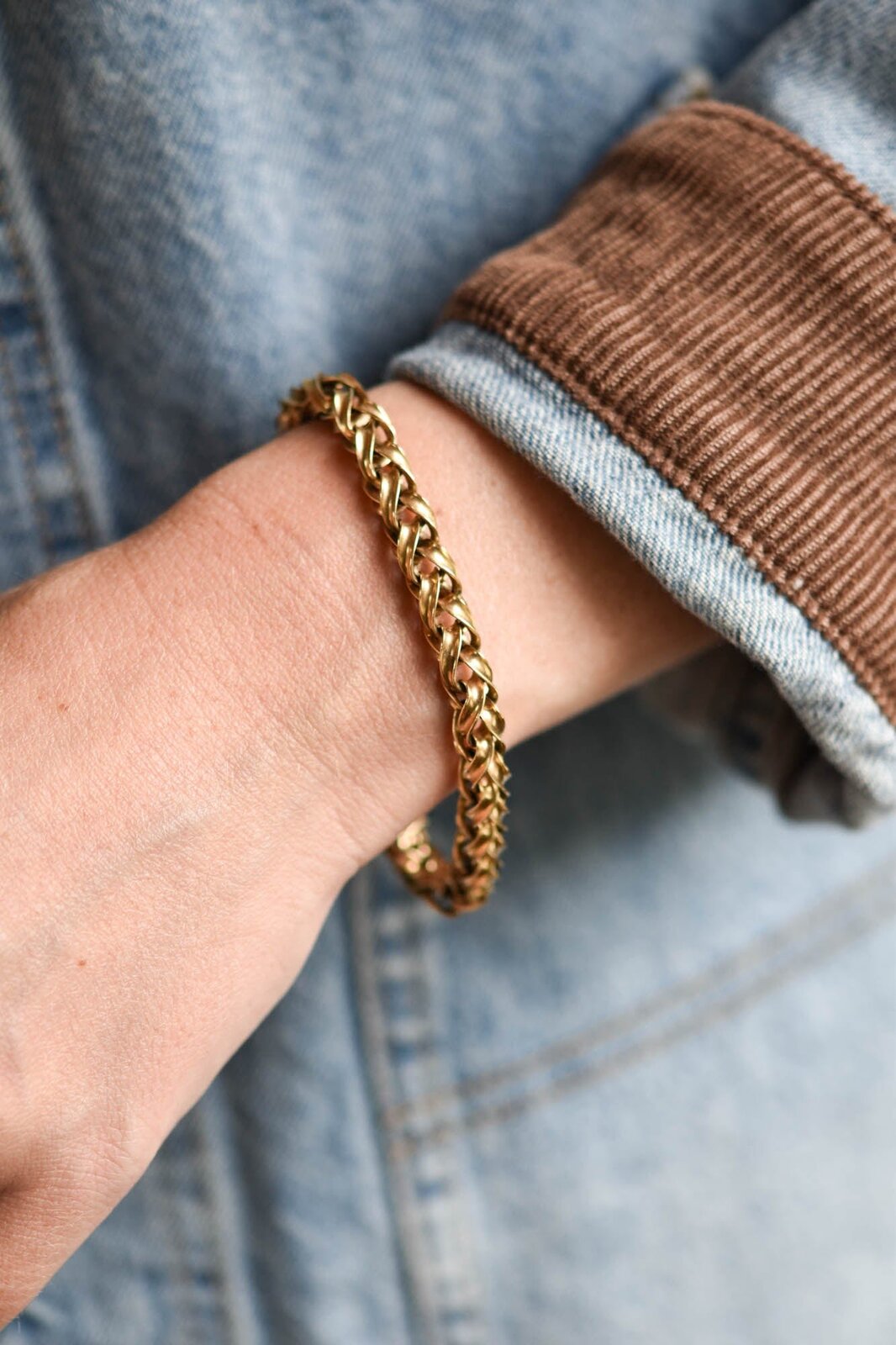
A Victorian gold locket for $1,200. An Art Deco diamond ring for $3,500. A mid-century sapphire cocktail ring for $2,800. These are the pieces sitting in estate cases right now, going up against new jewelry at the same price with less history, less handwork, and often less gold. Greenwich St. Jewelers launched its first estate capsule in September 2025 with 54 pieces, and the live collection currently lists a faceted oval chain bracelet at $3,700 and a set of three bangles at $4,300. That’s a working retailer with a return policy stocking pieces that make the case in real time. The same record gold and import duties lifting those new-jewelry prices are reshaping what a few thousand dollars buys across the board.
How to Tell a Good Piece From a Bad One
Estate cases reward attention more than expertise. Most of what you need to know about a piece is in your hand the moment you pick it up.
The back of the piece. This is the single best quality tell, because anyone cutting corners cuts them where you can’t see. Hold the piece, flip it over, and look. A well-made vintage piece has clean soldering, smooth settings, and a back that’s been finished rather than left rough. A beautiful front over a back that looks assembled in a hurry tells you what you need to know. The back is where you learn whether a piece was built to last.
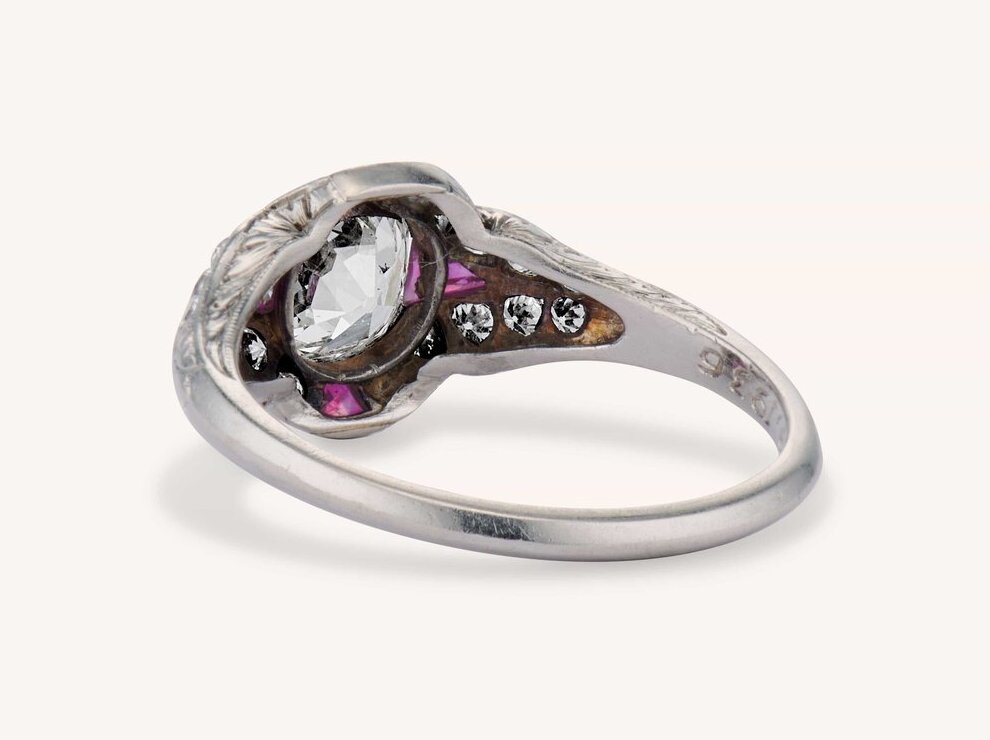
Gold content. Vintage pieces come in a range of karat weights and alloys: European vintage tends toward 18K, American toward 14K, and British pieces run across 9K, 15K, 18K, and 22K depending on era. The exceptions are common enough that the real move is to read the hallmark, the stamped mark of metal purity, and to ask about karat outright. A dealer who doesn’t know the gold content is telling you something.
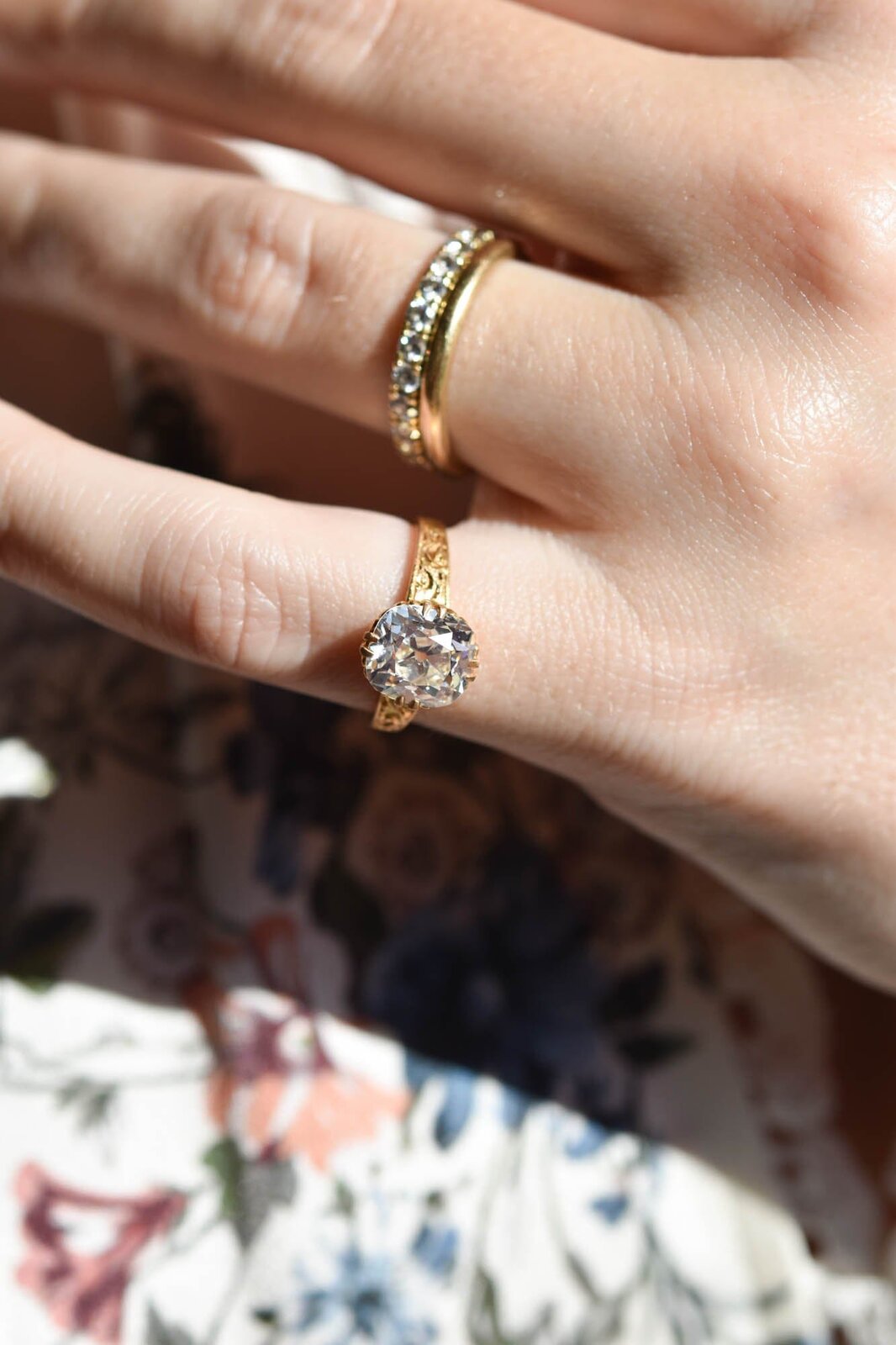
Stone integrity. Old stones were cut differently, especially old mine cut diamonds (an older, hand-cut style with chunkier facets), so the proportions and the way they throw light differ from modern stones. That difference is part of the character you’re paying for. Check that stones sit secure in their settings, that there are no chips or cracks, and that the color holds steady across the stone. A loupe helps, and most dealers will lend you one.
There’s one real risk worth your attention: lab-grown stones planted in antique settings. IGI documented a 2024 case where a 6.01-carat stone carried the inscription of a natural diamond but tested laboratory-grown. The payoff for that swap climbs with carat weight, which keeps a buyer in this range well clear of the prime targets, but the clean protection is the same either way: request a gemological report on any significant stone.
Wearability. Not all vintage jewelry was built for daily wear. Some pieces are fragile, some have settings that snag on clothing, and some were sized for smaller hands than the modern average. Try things on. Picture wearing the piece to work, to dinner, to the grocery store with a toddler pulling at your wrist. A piece that only works behind glass is a piece you’ll admire and never reach for. Delicate surface detail (milgrain, fine openwork filigree, engraving) gets vulnerable to resizing once the work has been redone a time or two, so ask whether a piece has been altered.
I find the romance of vintage shopping slightly intoxicating: the dealer with a story about the previous owner, the velvet case, the weight of holding something a stranger loved eighty years ago. All of that is real, and it’s also a selling mechanism. Let the romance pull you toward a piece, then make the call on whether it’s well-made, fairly priced, and something you’ll wear. The most expensive mistakes in vintage are the pieces people buy for the story instead of the jewelry.
The Dealers Selling You Vintage Through Your Phone
A lot of the vintage you’ll see now reaches you through a feed. Dealers like Erstwhile Jewelry and Maejean Vintage have built audiences in the hundreds of thousands between them, with houses like Lang Antiques and Estate Diamond Jewelry close behind, all of them filming the close-up craft video that does the selling: the back of a ring, the weight of a chain, the way an old cut throws light. Some run live sales and timed “drops,” where pieces are previewed in Stories and the first follower to claim one in the comments takes it home.
The move underneath the feed is worth understanding, because it’s where a lot of the markup comes from. A dealer sources a piece cheaply, often at the wholesale trade shows or from estate sales, and resells it to a follower audience the show-floor wholesaler doesn’t have. The wholesaler sells trade-to-trade because they move volume and have no retail buyers; the social dealer’s asset is the audience, the eye, and the trust. They’ve sorted the real from the junk, checked condition, written the story, and they carry the return risk if a piece comes back. The markup is mostly the price of that curation and access, and for a buyer who can’t or won’t work a show floor herself, it’s frequently a fair trade.
What’s not part of the trade is the urgency. The “claim it before it’s gone” energy of a live drop is a sell mechanism, the same family as the velvet-case romance, designed to turn browsing into a game you win by being fast. Let it speed up a yes you already had: the piece is well-made, fairly priced, and something you’ll wear. Never let it manufacture one. If you want to go upstream, the same piece-types turn up at the shows themselves and at local estate dealers, where the price is lower because you’re doing the sorting and carrying the risk yourself. That’s a real trade with a real cost, just a different one.
Where to Find Estate and Vintage Pieces
The major antique shows are the deep end. The NYC Jewelry, Antique & Object Show is the one to know: it has quadrupled its dealer count in two years, from roughly 40 at the inaugural show to 160-plus, set an attendance record in November 2025, and has since added a winter edition and stretched its spring run to four days at the Metropolitan Pavilion. A show adding dealers, editions, and days is the clearest read there is on demand rising to meet it. Local estate dealers in most cities often beat the online platforms on price, because their overhead is lower and they aren’t fighting the algorithmic pressure to inflate.
Mainstream retail has opened up too. For Future Reference Vintage, which deals in unsigned estate pieces from the 1940s through the 1980s, now sits at Bergdorf Goodman, Bloomingdale’s, Twist in Seattle, and Department in Nashville. Bloomingdale’s runs an active Pre-Owned Fine Jewelry section. These are full fine jewelry retailers putting vintage on the floor next to new work, with the practical upside of return windows: Greenwich St. Jewelers allows 10 days, Bloomingdale’s pre-owned 14, and Kentshire, on Bergdorf’s seventh floor, 7 days on non-customized items. Modest, but real.
Online, 1stDibs, Ruby Lane, and the dealer shops you found through their feeds are the established routes. Selection is the draw. The catch is that you can’t hold the piece or see it in natural light, and condition varies more in vintage than in new work, so what shows up in the box sometimes falls short of what glowed on your screen. Ask for close-up condition photos before any online purchase over a thousand dollars; a seller who won’t send them has told you to keep walking. Generalist consignment platforms like The RealReal surface fine jewelry at good prices now and then, with authentication looser than a specialist dealer’s, so the added risk should come straight off what you’re willing to pay.
Auction houses operate at this level too, though the buyer’s premium changes the math, and first-timers get caught by it. The winning bid is called the hammer price. On top of that, the buyer pays a buyer’s premium, a percentage the house adds to every sale, so the hammer price is never the final number. A $3,500 winning bid carries roughly $945 in premium at a major house, which makes it about $4,400 before tax, and closer to $4,800 once New York sales tax lands. Christie’s current rate is 27 percent on the hammer price up to $1.5 million; Sotheby’s runs 28 percent up to $2 million; regional houses tend to sit at 20 to 25 percent on their own platforms and 28 to 30 percent on third-party sites. Auction pays off when the estimate is soft and you’re ready to do the condition research yourself. The rest of the time a dealer is the cleaner buy, because you’re paying for the dealer’s eye and you get a real return window if something turns out wrong.
The vintage market rewards patience more than any other corner of jewelry shopping. The best finds keep quiet, sitting in a case between pieces that don’t interest you, waiting for the person who recognizes what they are. That recognition comes from handling a lot of jewelry and building an eye no guide can hand you whole.
The vintage end of the secondhand market is where the value runs most clearly in the buyer’s favor. The signed, branded end plays by different rules: which resale platform to trust, and how their fees and authentication compare.
Start by finding a case full of vintage and just looking. Pick up what catches your eye, ask questions, and notice who answers them well. The dealers worth buying from are the ones who light up explaining what they have.
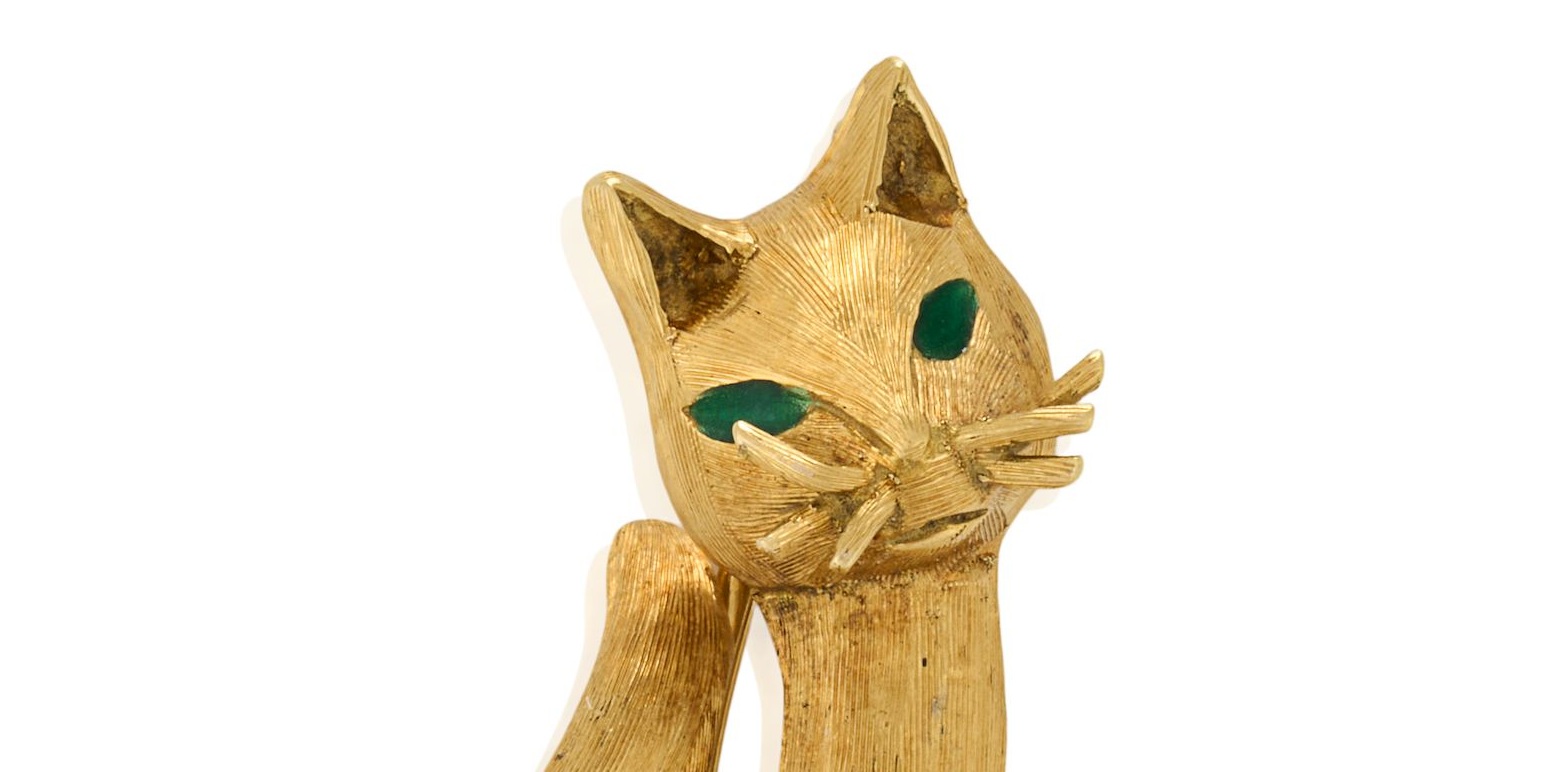
Sandy Lerner Is Rehoming Her Cats: A Tiffany Cat Brooch and Sixty-Five More
The Cisco co-founder spent four decades collecting cats in gold, enamel, amethyst and bronze. On 30 September 2026 Bonhams sells 66 of them in New York, from a $700 carved cat to a $120,000 bronze by the sculptor Rembrandt Bugatti. She is keeping the live ones.
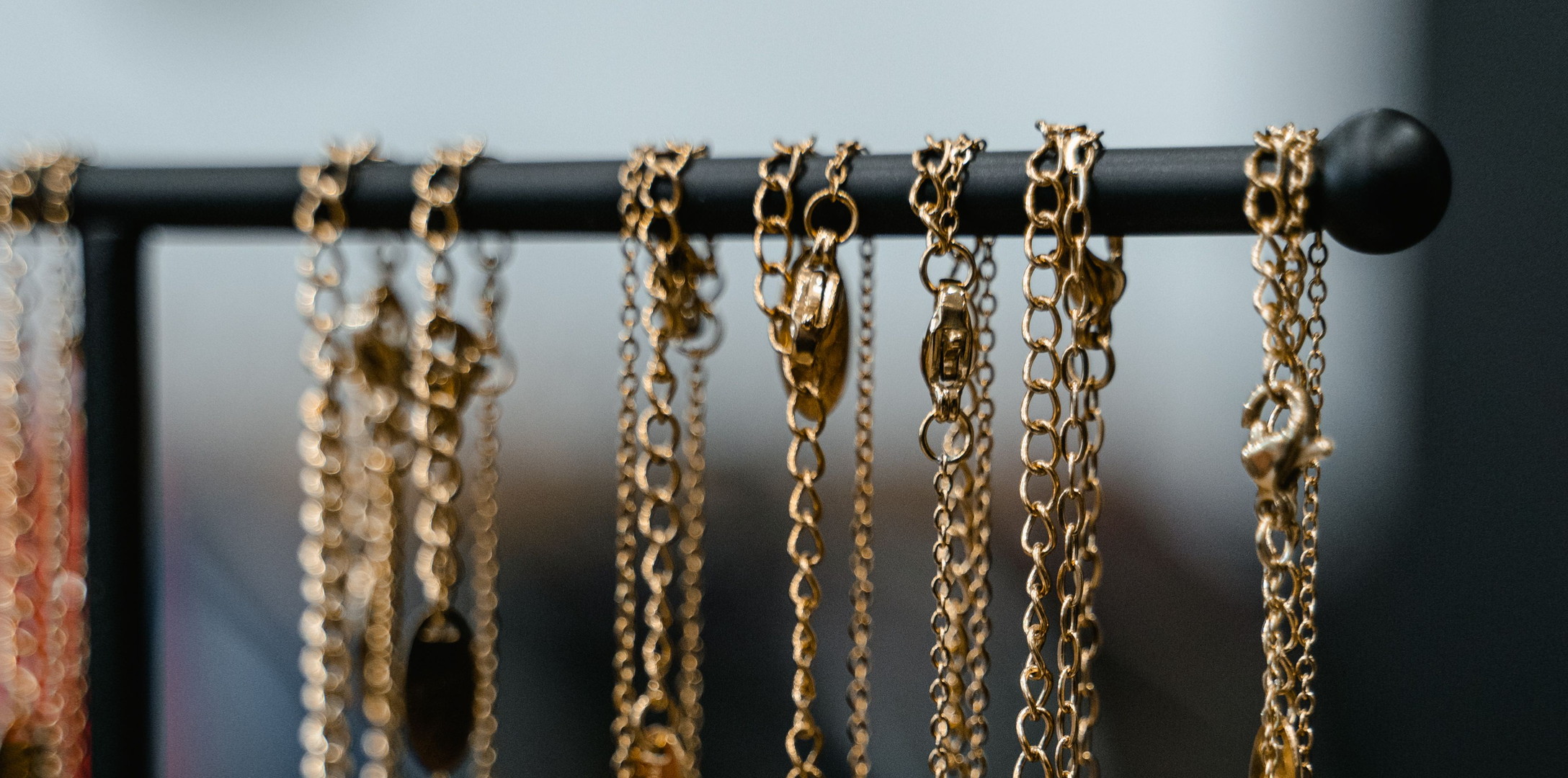
Why Are Jewelry Prices Still Going Up?
Jewelry costs about 15% more than it did a year ago, and it is the gold accounting for most of it. The answer coming back from the jewelry trade and brands is less gold in the piece, which changes what you have to ask for at the counter.

Natural Diamond Prices Are Going Up Again, at Least for Now
Lab-grown stones pushed mined diamond prices down for years. The diamond trade's price index rose again in August, led by small stones. What that changes for you.
The newsletter.
One email when something is worth your attention. New essays, the buying calls behind them, and what we’re watching in the trade. No roundups, no affiliate dumps.