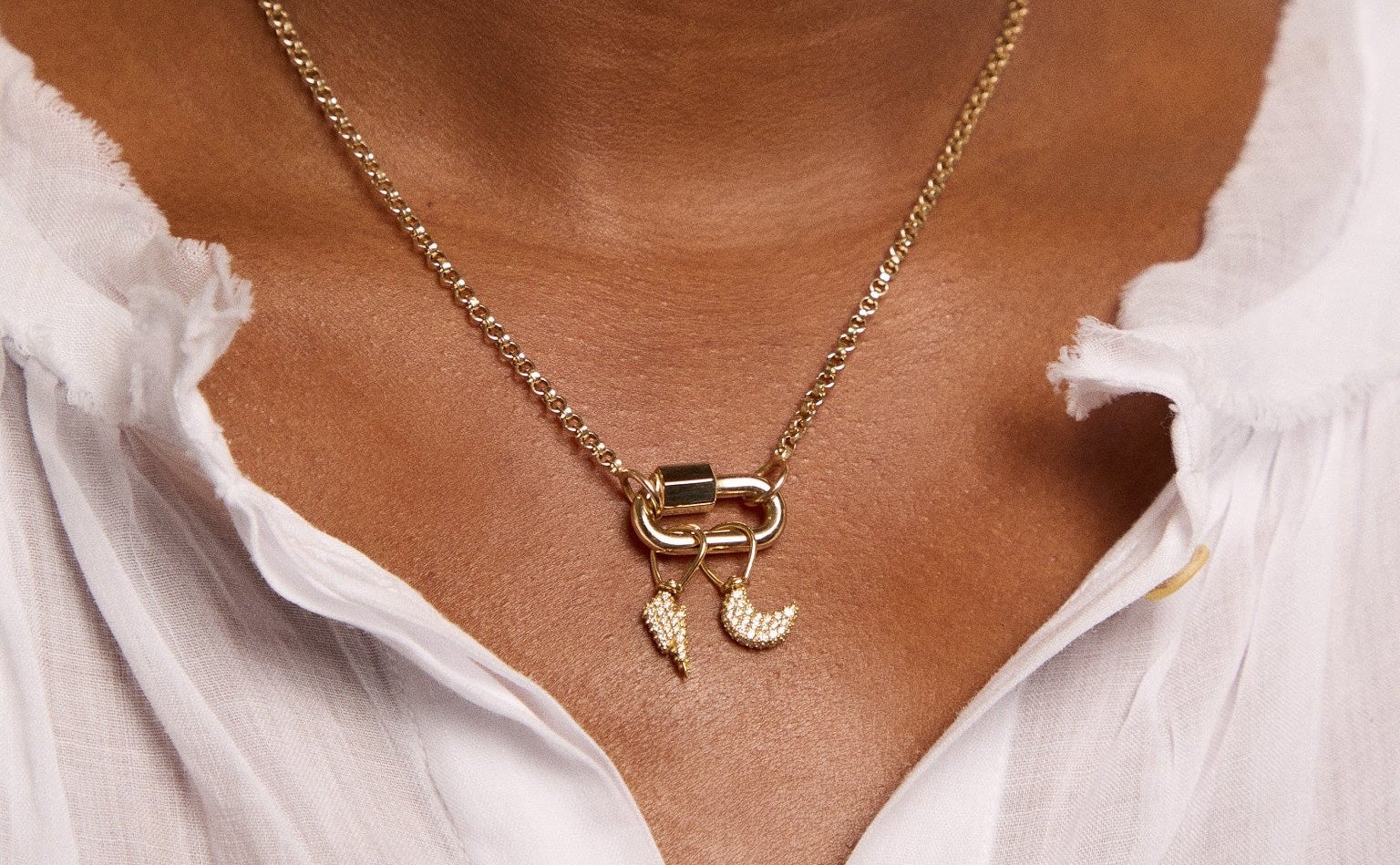
What Good Gold Jewelry Looks Like at $5,000 an Ounce
Good gold jewelry at $5,000 an ounce is getting lighter, and that can mean two completely different things. How to read a lighter piece in your hand: the construction signals that separate engineered-smarter from hollowed-out.
Gold hit $5,594.82 an ounce on January 29, and it’s been in the neighborhood of $4,500 to $5,000 ever since. At that price, the gold in a mid-weight solid ring accounts for roughly half the number on the tag. And designers, working from the same math, have been losing metal. Pieces are lighter than they were two years ago, light enough that the difference is in your hand before you see it on a spec sheet. That’s true of good gold jewelry and lighter gold jewelry alike, which is exactly the problem: lighter can mean a designer got smarter about where the metal goes, or it can mean a brand trimmed grams while the price held. Both look the same in a product photo.
The trade press has documented the shift exhaustively for jewelers. What’s missing is a reading guide for the buyer holding the piece.
Why Gold Is Getting Lighter Right Now, From Two Different Directions
Two real, simultaneous trends have been running in 2026, and they point opposite directions.
On one side, independent designers at the $1,000-to-$5,000 price level are losing metal deliberately, and saying so in plain language. Lauren Wolf of Esqueleto put it flatly: “Our designs are changing to be lighter. It’s just too expensive to continue doing what we’ve always done.” Marla Aaron launched her first 10k piece in March 2026, framing 10k gold not as a budget concession but as “a deliberate return to material intelligence,” citing Victorian-era mechanical jewelry as the lineage. Sarah Müllertz of Kinraden talks about pieces that “feel substantial, but are engineered with care and restraint,” in WWD’s November 2025 coverage. The vocabulary matters: these designers are describing what they chose. Affordability is a separate question.
On the other side, at the top of the market, the trade press is reporting the opposite. Coverage from the February 2026 Centurion Jewelry Show noted that retailers were seeing customers ask for heavier, chunkier gold “you can see,” on the theory that at this price, visible metal is valuable metal. The World Gold Council’s Q1 2026 demand data captures both at once: global jewelry volume dropped 23% year-over-year while spend rose 31%, which is what you’d expect from a market where price-constrained buyers buy less metal and wealthy buyers concentrate their spending into bigger pieces.
Both trends are honest reads of the same moment. The buyer holding a lighter piece at around $2,500 is standing somewhere between them, trying to figure out which one applies.
The Vocabulary for Reading It: What Legitimate Lighter Design Looks Like
The construction signals for engineered-lighter are different from the signals for cut-corner-lighter.
Electroforming. A 3D model is suspended in a gold-ion solution; gold deposits onto the surface electrolytically, the model is then removed, and what’s left is a hollow but structurally coherent gold shell. The result can be 99.9% pure gold by content. Stephen Webster has advocated 18k electroforming explicitly as a technique that produces “a lightweight piece that costs a fraction of the price of a solid gold one,” while still being real gold. Charles Garnier and Carla Corp use the technique. Electroforming sounds adjacent to electroplating (which is a thin coating over base metal and a completely different thing), and that sonic similarity has given it an unearned credibility problem. A correctly executed electroformed piece is substantially gold, designed to be light, and wearable in ways that solid gold of equivalent visual scale wouldn’t be. That’s an engineering decision, and it holds up as one. The brand tell is whether they say they use it and explain it, or don’t.
Negative-space construction. Open-frame designs and structural cut-outs started showing up in fine jewelry well before gold spiked, as an aesthetic choice. At $5,000 gold, the aesthetic and the economics align, which makes negative-space pieces worth reading carefully. The question is whether the open form was designed that way, or whether a previously solid silhouette developed holes. Pieces by Padis that JCK described as “leaning into smarter design, embracing negative space” fit the former. A solid signet that’s been hollowed from the back to reduce weight fits the latter. You often can’t tell from the front. Flip it over.
Texture and surface variation. Hammered finishes, milgrain edges, and engraving are historically aesthetic choices. They’re also metal-economical: a textured surface reads as substantial at lower gauge than a high-polish flat surface does. Marla Aaron’s Babylock engraving and 10k alloy choice follow the same logic: Victorian mechanical jewelry ran 9k to 15k gold precisely because harder alloys are more wear-resistant, making them the right material for a lock mechanism or a hinge. Retrouvai’s fully engraved bracelet backs and the Foundrae medallion vocabulary live here too. When texture is part of the design language from the start, it’s a legitimate engineering choice. When a previously plain piece got a hammered finish in the 2024 update, run the gram-weight comparison.
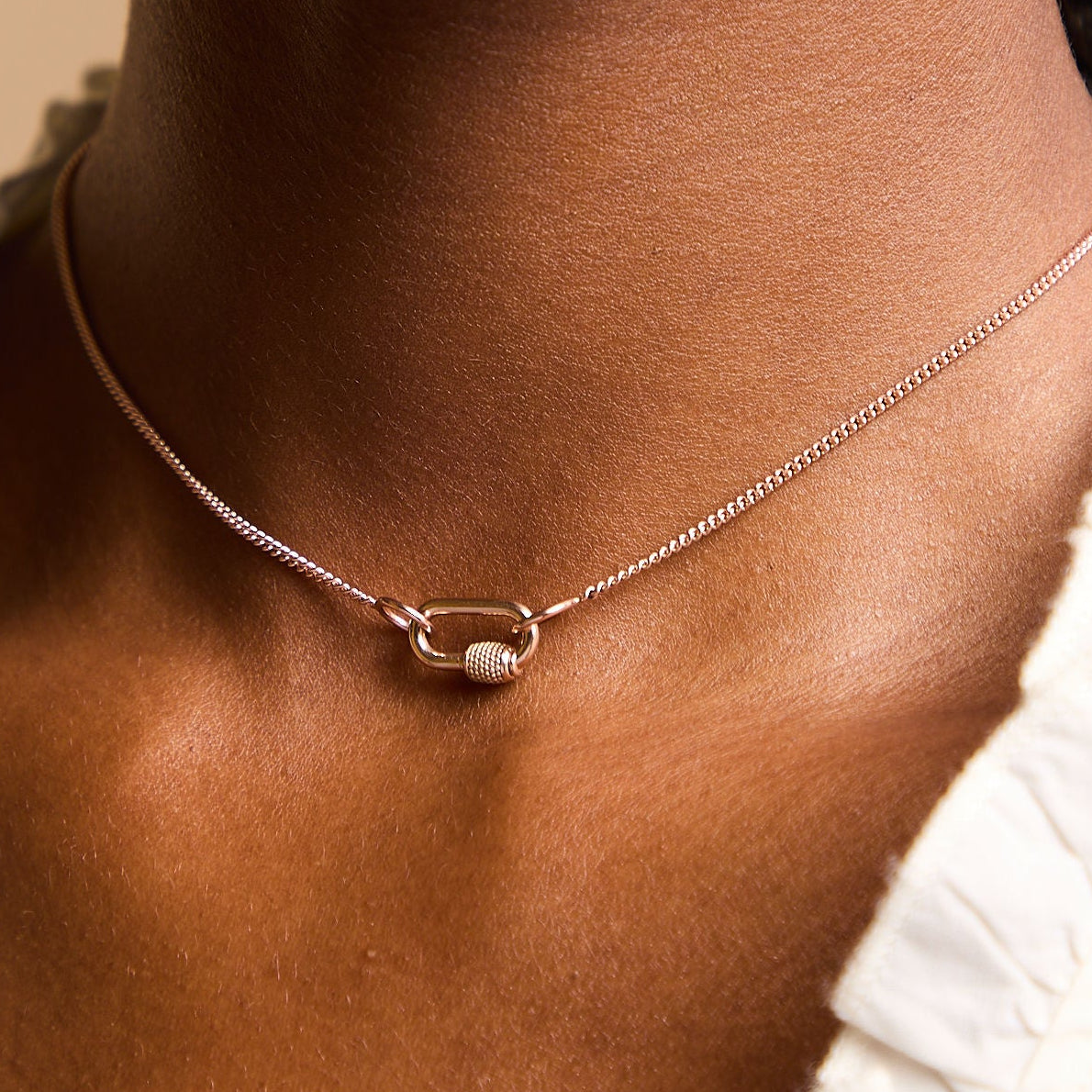
Bezel and tube settings. Bezel and tube settings use less metal than prong cages and are often more protective of stones for daily wear. WWAKE’s minimal thread earrings, which are small by design and made in solid 14k recycled gold, are an example of “the design wants less metal” as an honest aesthetic. Nothing was hollowed out to get there. The piece was designed minimal. The metal commitment follows the design.
The two-depth version of one silhouette. Solange Azagury-Partridge now offers her “Goldhenge” ring in two depths, same shape, lighter and heavier, and has said it’s “something I would never, ever have thought about doing in the past.” That transparency is the model: you’re seeing the trade clearly, choosing it deliberately. That’s different from buying what you thought was the original Goldhenge and discovering afterward that it weighed less than you expected.
There's no shame in a piece getting lighter. There's a real problem in a piece getting lighter without anyone saying so.
The Cost-Cutting Signals to Watch For
Legitimate lighter design has a characteristic posture: the brand can explain the construction choice, the technique name, and often publish the gram weight. The less honest version shares none of those.
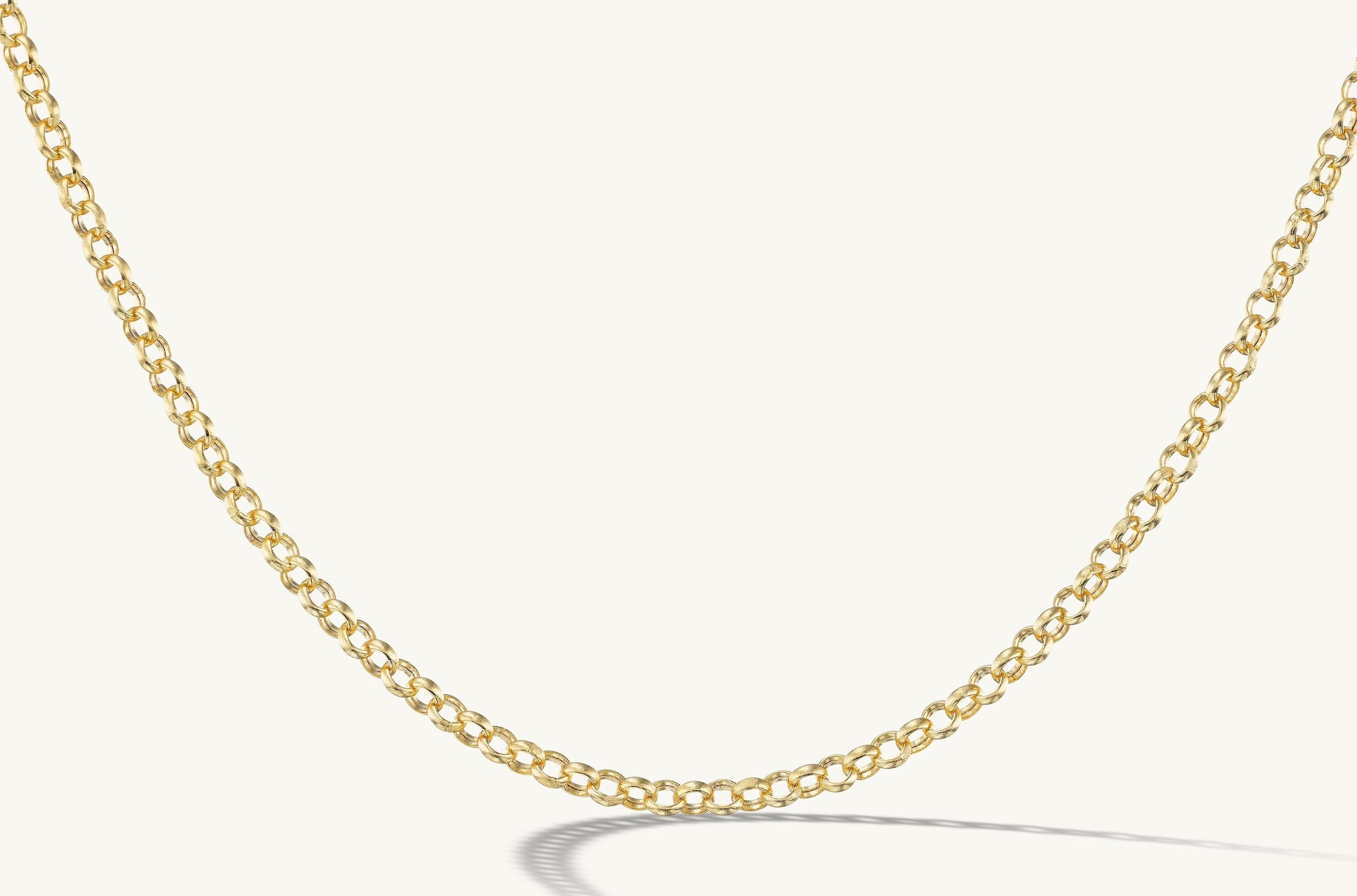
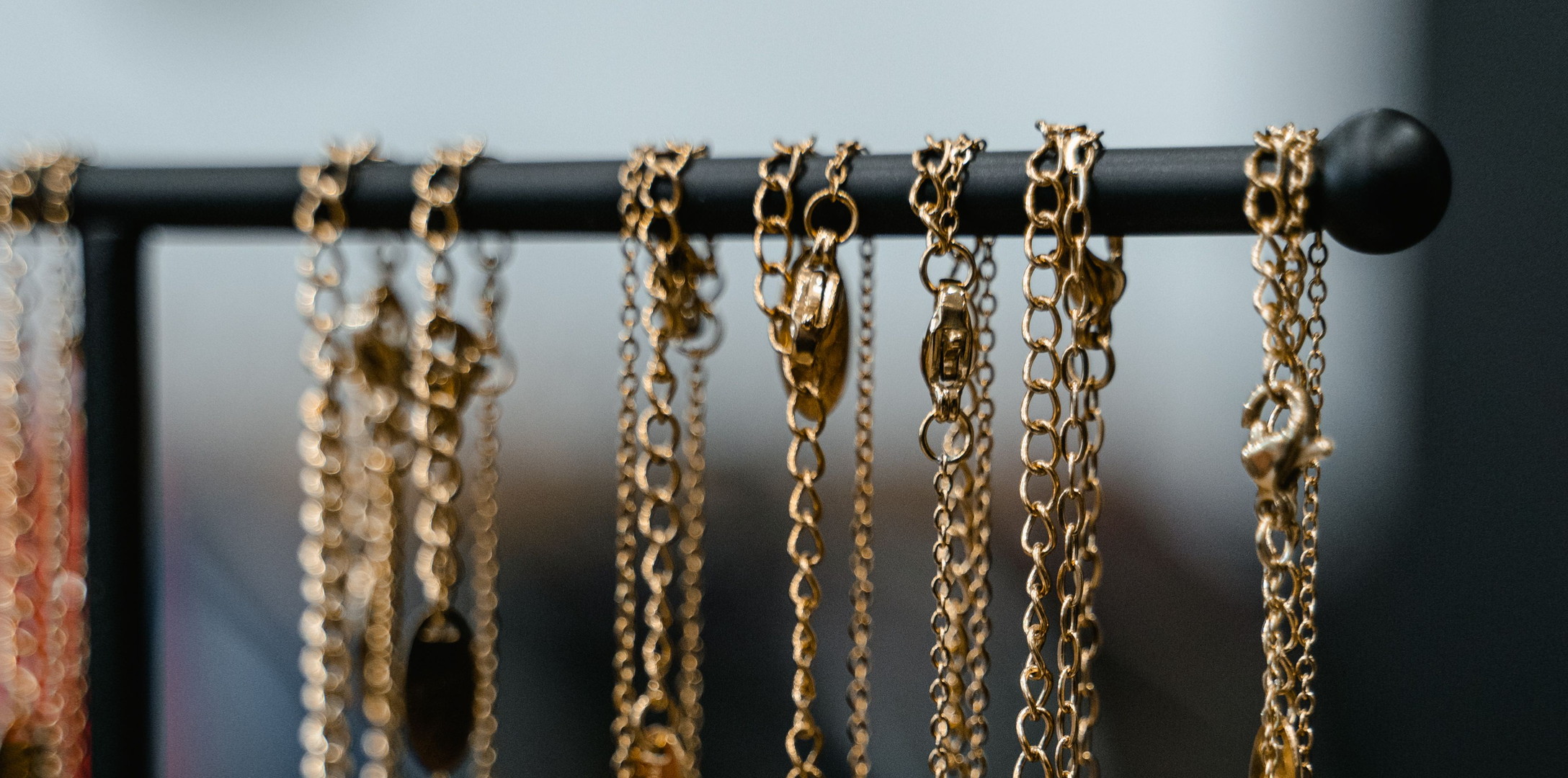
The hollow chain test. Hollow chains have a wide quality spread, and the construction signals separate the two ends of it fast. An engineered hollow chain has consistent wall thickness, no visible seams at the link soldering, a clasp whose connection points don’t show daylight between the body and the reinforcement, and enough structural integrity that you could put moderate pressure on it without collapse. A cost-cut hollow chain has disproportionate lightness for its visual size, visible seams at solder points, “breathing holes” (intentional pinpricks that manufacturers add to vent air during production, visible on cheap examples), and a feel that’s closer to foil than to metal. Chain buying guides written for retail buyers document the visual signs; what they don’t tell you is which construction is the legitimate one. Weight that matches the visual scale is the baseline tell. If the chain looks like it should weigh four grams and weighs two, that’s not engineering.
The finishing read. Finishing quality is the cross-everything signal, regardless of construction method. The general quality vocabulary for jewelry applies here, and the well-made piece goes into it in detail. What’s specific to the lighter-piece question is this: brushed and satin finishes are currently on-trend and they also hide thinning better than high-polish does. A high-polish piece shows every variance in wall thickness; a brushed piece doesn’t. The buyer’s move is to look at the edges and the clasp regardless of the body finish. Where the surface transitions to a structural element, a brand’s real commitment to the piece shows.
Gram weight on the page. At $5,000 gold, a brand that publishes the gram weight on the product page is doing something the market doesn’t require. Sophie Ratner’s Rolo Chain Necklace identifies itself as a “thinner and more lightweight version” of the chunky rolo, in 14k semi-hollow gold, on the product page. That is the brand naming its own construction choice. You can read that, factor it in, and decide. Foundrae’s mode is a different kind of shopping experience: you’re trusting the design and the name, with no math to check. Foundrae, whose medallion work is gorgeous and whose following is real, does not publish gram weights on its PDPs. At this gold price, the gap between those two modes of trust is worth being clear about.
The brand’s own vocabulary. Read how the brand talks about weight. Phrases like “engineered for everyday wear,” “mindful material use,” and “designed with intention” are in the neighborhood of honest. Silence on construction, while simultaneously pivoting the whole line lighter, is a different tell. The question to ask, on the phone or via email, is simple: what does this piece weigh in grams, and what’s the construction method? A brand with good answers gives them. A brand with something to hide either can’t or won’t.
What the Market Is Actually Doing Right Now
National Jeweler’s April 2026 read on the WGC data framed the market condition clearly: the headline “premium” story in jewelry (prices up, demand “strong”) is price-driven, with buying volume falling underneath it. The WGC’s US-specific Q1 2026 data shows the US at a record quarterly low in jewelry volume, with value mildly down: affordability pressure, documented.
The designers navigating that pressure most clearly are the ones building lighter pieces and naming the construction. Rapaport’s January 2025 piece on creative solutions named the split directly: price-conscious buyers going daintier, wealthier buyers going voluminous. Both are reasonable responses to the same gold price. The reading guide applies to both: heavier pieces at the top of the market still warrant asking about gram weight and construction method, because the signals for quality don’t change with the price tag.
Sheherazade Goldsmith of Loquet London took the opposite approach in 2025, moving her line upmarket toward 14k and 18k on the theory that making less and making better is a sounder strategy than thinning the line. That’s a real position too, and it produces pieces where the gram weight is a feature they advertise. Both positions can produce good jewelry. The transparency of the position is what distinguishes the brands doing it deliberately from the brands doing it without saying so.
How to Read a Lighter Piece Before You Buy
The practical sequence, in order of effort:
The product page first. Weight in grams, construction method (solid, hollow, semi-hollow, electroformed), and karat. If all three are there, you’re dealing with a brand that’s made a deliberate decision and is showing you the math. If none of them are there, you’re buying on trust.
The clasp and connection points second. On any hollow or lighter-gauge piece, the transition between the decorative body and the structural elements is where construction quality is most visible. A clean weld, no visible gap between body and closure, clasp action that feels mechanical and not flimsy. If the clasp moves like something that will break, that’s a tell about how the rest of the piece was built.
The edges third. Under good light, look at where surfaces meet. Are the transitions clean? On a ring, the inside of the band tells you more than the outside. On a pendant, the back tells you more than the front. If a brand finished the parts you can’t see, they finished everything.
The question directly, if you’re still uncertain. “What does this piece weigh in grams, and what’s the construction method?” A brand with good answers to that question is not threatened by it. How the answer sounds matters as much as the content: a confident response with a specific number is different from “let me check” that never resolves.
None of this is complicated. The math behind why these numbers matter at current gold prices is its own piece. The eye and hand test above is the version you can run at the counter or on your phone while you’re looking at the page. Lighter gold jewelry can be excellent at $5,000 an ounce. The piece that uses less metal and knows exactly why it uses less metal is often better designed than the piece that uses more metal and doesn’t.
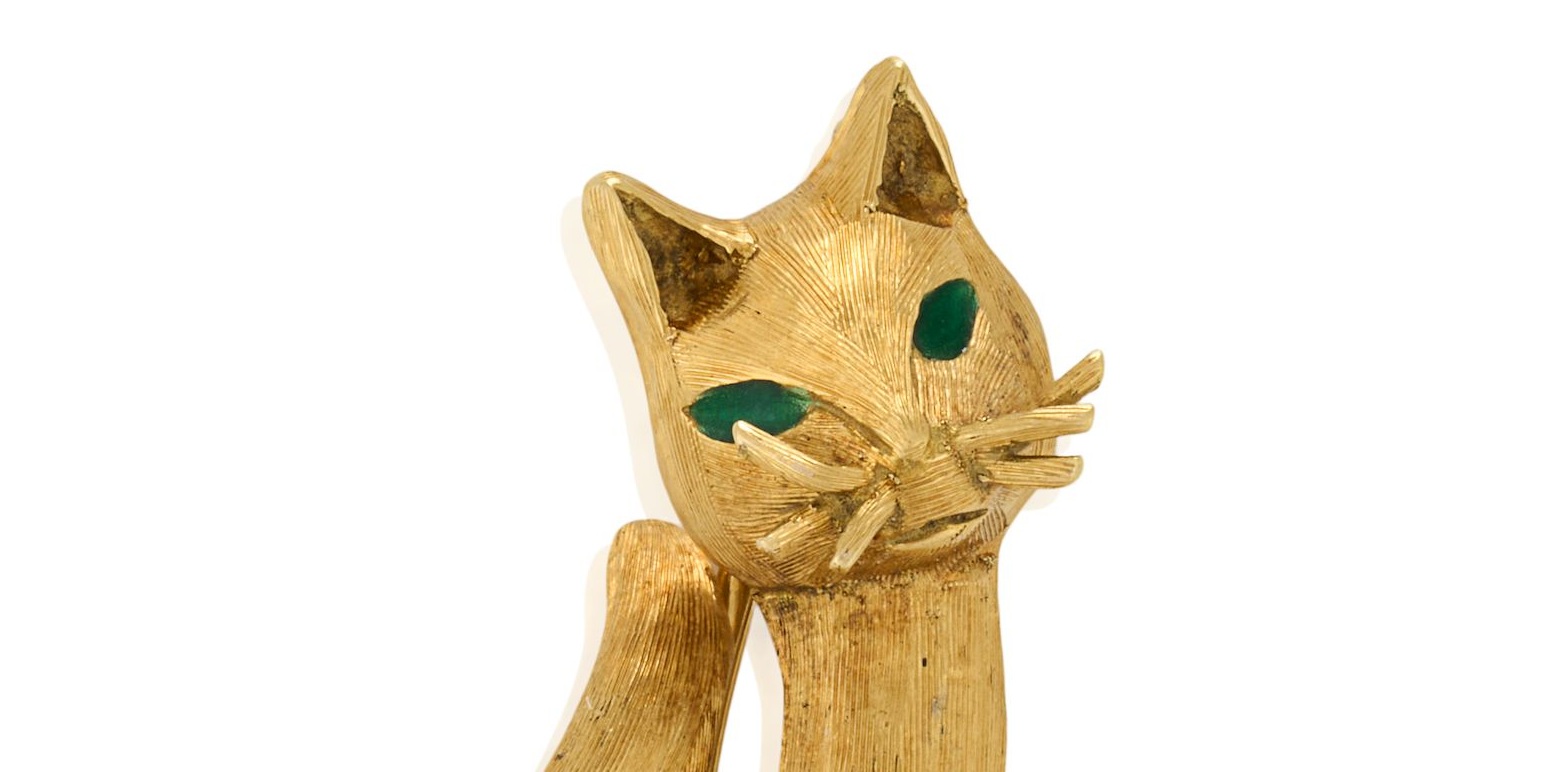
Sandy Lerner Is Rehoming Her Cats: A Tiffany Cat Brooch and Sixty-Five More
The Cisco co-founder spent four decades collecting cats in gold, enamel, amethyst and bronze. On 30 September 2026 Bonhams sells 66 of them in New York, from a $700 carved cat to a $120,000 bronze by the sculptor Rembrandt Bugatti. She is keeping the live ones.
Why Are Jewelry Prices Still Going Up?
Jewelry costs about 15% more than it did a year ago, and it is the gold accounting for most of it. The answer coming back from the jewelry trade and brands is less gold in the piece, which changes what you have to ask for at the counter.

Natural Diamond Prices Are Going Up Again, at Least for Now
Lab-grown stones pushed mined diamond prices down for years. The diamond trade's price index rose again in August, led by small stones. What that changes for you.
The newsletter.
One email when something is worth your attention. New essays, the buying calls behind them, and what we’re watching in the trade. No roundups, no affiliate dumps.