The Medallion Is the Piece That Brings Men Back to Jewelry
A practical guide for men returning to fine jewelry: why the medallion is the right re-entry, how to pick the scale, chain, metal, and finish, with the brands and estate route worth knowing in the $1,000 to $5,000 range.
A lot of men wore something once and stopped. A chain in college, a leather cord through their twenties, then the wardrobe got serious and the jewelry came off. Men’s jewelry is one of the fastest-growing categories in luxury right now, $48 billion in 2024 and growing close to 10 percent a year, and inside that growth, the piece bringing men back is one that barely existed as a men’s category a decade ago: the medallion.
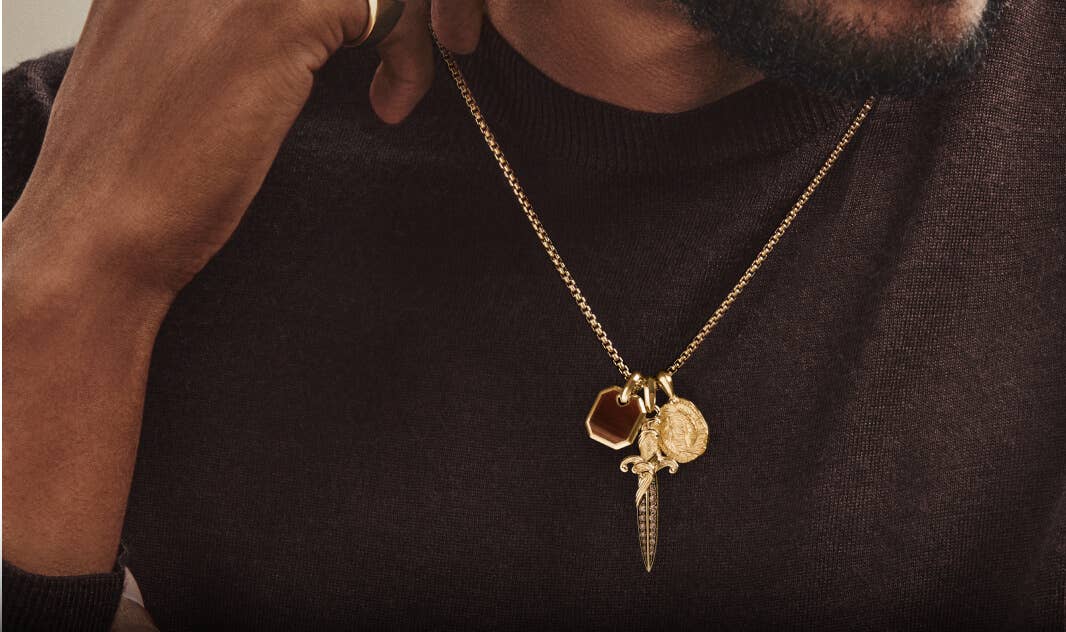
So if you’re going to come back to wearing one piece, make it a medallion on a solid gold chain. Not a thin chain on its own. Not a dog tag. Not a cross, unless that’s your thing. A medallion: round or shaped, with weight and texture, on a chain built to carry it.
The medallion is back as a category, and it works as a first serious piece to come back on for a practical reason: it’s the one piece of fine jewelry a man can wear with everything, every day, for years, without thinking about it. Watches come off. Rings come off. The medallion just stays on.
Scale is where most first medallions get decided, and the right answer is almost always one step bigger than it looks on a screen.
Why “start small” is the wrong instinct here
In almost every other category, the advice to ease in is correct. A first watch, a first suit, a first pair of good shoes: start modest, learn what you like, trade up. Medallions are the exception.
A medallion has to commit. Sized too small on a thin chain, it lands in a different category: a religious charm, or a delicate pendant from a different wardrobe. Neither is wrong in its own context, and plenty of people wear both beautifully. They’re just not what this piece is going for. The 2026 medallion works because it has weight and intent, and it needs a certain minimum scale for that to read.
This doesn’t mean buy something enormous. It means buy something correct, which is almost always a step larger and heavier than it looks on a screen. A 20 to 28mm pendant on a 3 to 4mm solid gold chain is where the range starts.
The chain is half the piece
The chain does more of the work than it looks like it’s doing. Most first medallions feel off a week in, and the reason is almost always the chain, not the pendant: too light, twisting on the skin, the pendant flipping backwards twelve times a day. The pendant is usually fine. The chain is where the piece decides whether it’s going to work.
Decide the chain before you decide the pendant. You will never see the pendant in isolation. You’ll see it hanging from a chain, about twelve hours a day, for years.
The thing to know up front: a lot of designer pendants ship without a chain. Foundrae’s entire system works this way. Their Small Open Belcher Chain starts at $2,550 for 18 inches, their Medium at $4,700. That’s before you’ve bought the pendant. David Yurman’s Amulet pages prompt you to “Add a signature chain” as a separate line. The houses where the chain is included (Miansai and Auvere) are the exception. Read each product page for “chain included” before you budget.
There are five chain styles that matter. They are not interchangeable.
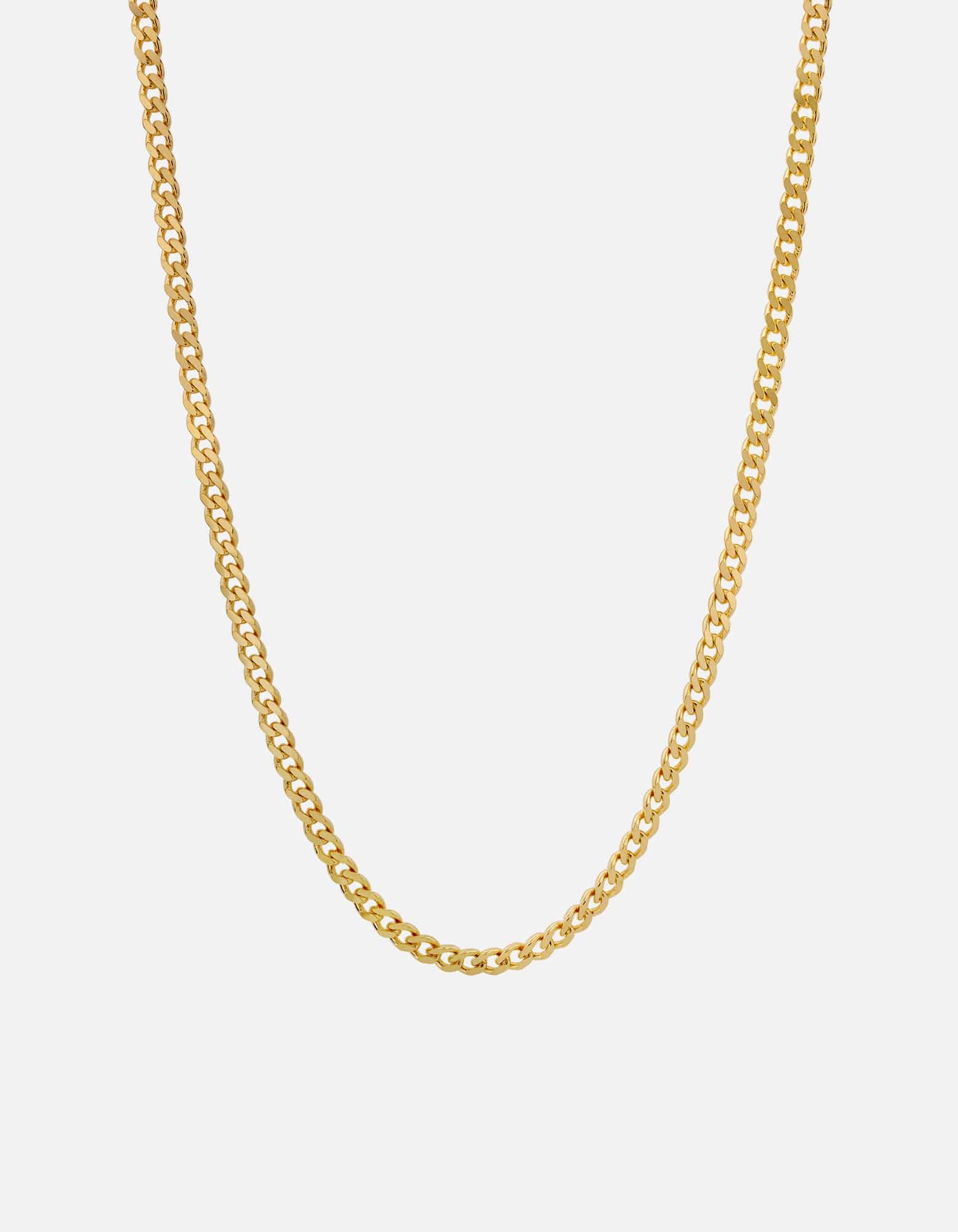
Curb, sometimes called Cuban, has flat interlocking links that lie close to the skin. It doesn’t twist. It reads modern and substantial. A solid 18k yellow gold curb at 3 to 4mm and 22 inches is the single most defensible answer for a first medallion, which is another way of saying that if you can’t decide, this is the chain.
Rope has twisted links that catch light in a way the curb doesn’t. It reads slightly dressier and slightly more delicate. The trap with rope is that it amplifies anything else that reads delicate, so a rope chain with a small pendant pushes the piece into religious-charm territory. Rope needs a larger, heavier medallion to balance.
Box is a square-link chain that reads clean and architectural. It can look thinner than it is because of the link profile, so at 3mm it often looks underweight. At 4mm or above, it’s a strong modern answer.
Figaro alternates long and short links and is the chain most associated with 1970s and 80s Italian men’s jewelry. Which is exactly the era the 2026 medallion is trying not to invoke. Figaro can work in the right hands, with the right pendant, for a man who knows what he’s doing. It is not a first-medallion chain. Skip it.
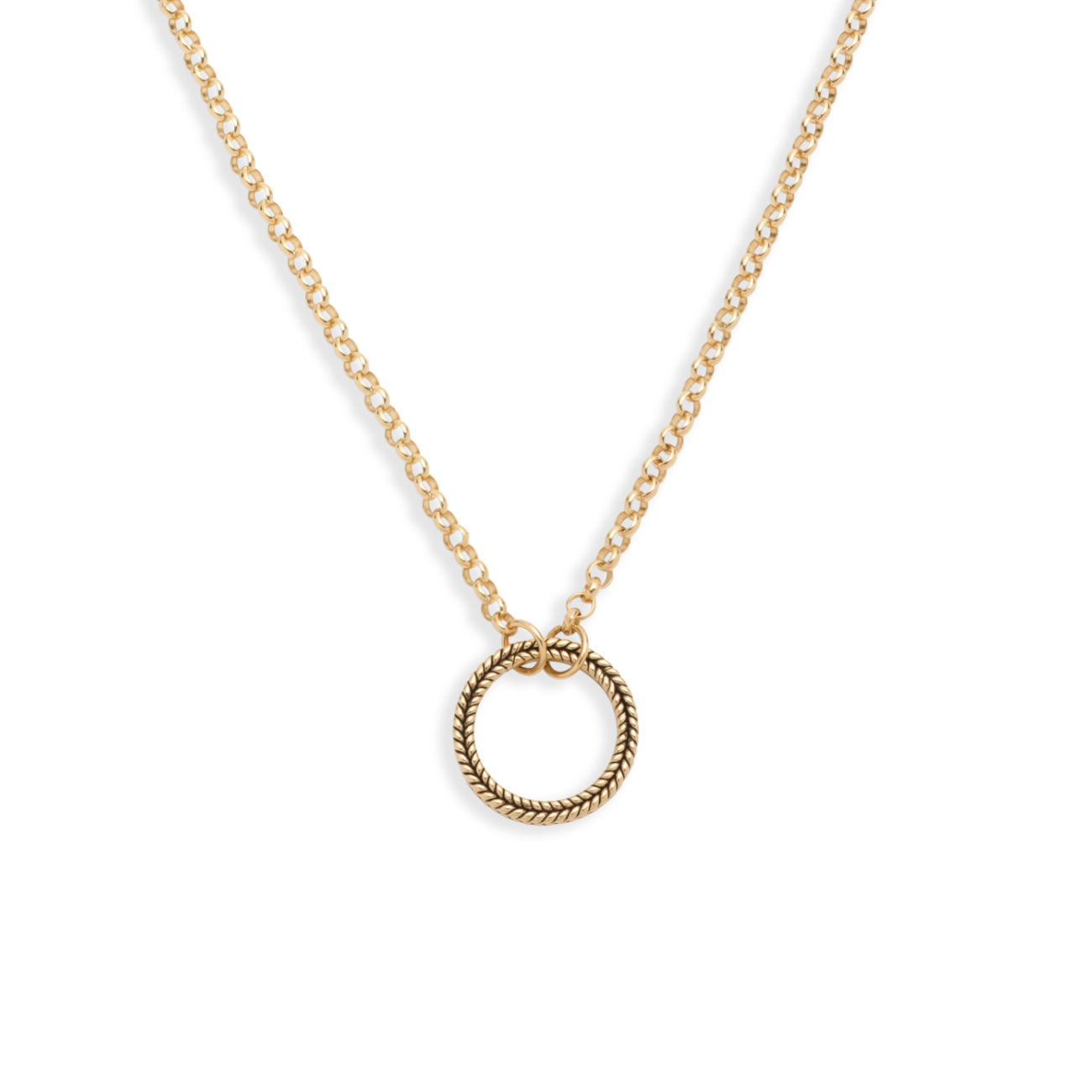
Rolo, also called belcher, is made of round links. It reads slightly casual and slightly vintage. Rolo is excellent with textured or estate medallions, less right with clean modern pendants. Foundrae’s signature chain is a belcher variant, which is part of why their pieces look the way they do.
The decision tree is simpler than it looks. Clean contemporary pendant: curb or box. Textured or estate pendant: rolo or heavy curb. If you still can’t decide: 4mm solid 18k curb, 22 inches.
Length, weight, and the things a counter mirror will lie about
Length is measured from clasp to clasp.
20 inches sits at the collarbone or just below, visible above an open collar, hidden under most crewnecks. Works for shorter frames or shorter torsos.
22 inches sits roughly at the sternum. This is the current default. It works over an open collar and under a crewneck, which is the range most men need it to cover.
24 inches sits below the sternum. On a 6’1” or taller, longer-torsoed man it can sit where 22 would on an average frame. On a shorter man it tips 1978. Miansai’s men’s fine pieces ship standard on a 24-inch chain, so if you buy from them you’re buying into that length by default.
Weight and gauge matter more than length. The same chain length in a heavier gauge sits better, moves less, and carries a pendant without dragging it forward on the link. Gauge (mm) is a shorthand for weight. The range on actual product pages is wider than most men realize: Miansai’s Mini Saints and Mini Dove chains are 1.3mm, Auvere’s Perigee chain is 1mm, Foundrae’s Small Belcher is 2mm, Miansai’s full Saints and Dove chains are 3mm. For a 20 to 28mm medallion, 3 to 4mm is the range that looks right. Thinner and the pendant overwhelms the chain. Thicker and it tips into rapper territory, which is a different aesthetic project.
One thing no counter will tell you: the mirror on a jewelry counter is lit to make gold look richer than it does in daylight. It also reflects at arm’s length, which flatters smaller pieces. Stand up with the medallion on, walk across the room, and look at yourself in a full-length mirror or your phone camera. That’s the distance that matters, because that’s the distance you’ll be seen at. Counter mirrors have sold more wrong-sized pendants than bad taste has.
Metal
18k yellow gold is the answer for most men.
The color is warmer and richer than 14k. 18k is slightly softer, which matters for rings that take direct abuse and doesn’t matter for pendants that just hang. For chains, 14k wins on durability by a meaningful margin. Chains see more friction than pendants do, which is why a 14k chain with an 18k pendant is a legitimate hybrid. It saves real money and the color difference at the link scale is almost invisible. (If record gold prices are making you flinch at the 18k number, this is the compromise that doesn’t show.)
22k is where a house like Auvere lives. The color is noticeably more orange-yellow, the gold content is 92 percent vs. 75 percent for 18k, and it is unmistakably rich. It is also softer, and it is a choice you make on purpose. If you like the color specifically, go 22k. If you’re unsure what you like, don’t.
24k, the purest gold available as jewelry, is essentially only Menē’s category. They price by gram weight plus a flat fee instead of the traditional retail markup, which makes them the most transparent pricing in fine jewelry and also the softest metal, and one you handle differently (they use “Crafted-on-Demand”; dimensions aren’t guaranteed because pieces are sold by weight). It’s a different buying proposition. Interesting. Not a first move unless the pricing logic is specifically what appeals.
White gold in the medallion category reads dressy and fights the piece’s casual-intentional posture. Rose gold can work with specific wardrobes (warm knits, earthy palettes, olive or tan skin) but belongs at your second or third medallion.
If price is the deciding factor between 14k and 18k for the whole setup, buy 18k in a smaller scale before you buy 14k in the scale you want. The color difference is visible. The gauge difference is not.
Finish, and the thing that tips a medallion into costume
There are four finishes worth knowing.
Hand-engraved pendants read considered and almost always work. Hand-hammered or hand-textured reads artisanal and is the single most forgiving finish, because the texture masks minor scale mistakes and catches light at conversation distance. Brushed or matte reads architectural and modern.
Mirror polish is the risky one. A high-polish 18k yellow gold medallion in a smaller scale, on a thinner chain, is the exact visual recipe for 1978. Mirror polish needs weight under it: a heavier chain, a larger pendant. Without that, the finish can flip from confident to costume fast.
Default to anything except mirror polish. If you want polish, scale it up.
Where to buy one
Six routes, in roughly ascending order of how confident you should be before trying each.
Foundrae is the house that made this whole category current. Beth Bugdaycay’s studio has been turning symbolic medallions into a language since 2015, and the medallions come with vocabulary: karma, passion, protection, strength, and so on. In-band right now: the Internal Compass London Blue Topaz pendant from $1,500, the Vivacity Petite ceramic medallion from $2,700, the Protection Medium medallion (20mm) from $3,000, the Internal Compass Medium (20mm) from $4,550. All 18k. The catch is the system: Foundrae pendants ship without chains, and adding their signature Small Belcher (from $2,550) or Medium Belcher (from $4,700) puts most pendant-plus-chain builds above the $5,000 line. Plan the pairing before you click. The trade-off with Foundrae is the thing that makes it distinct. A Foundrae medallion reads as a Foundrae medallion to anyone who knows the brand, which is either the appeal or the reason to go somewhere else. The symbolic language is not optional.
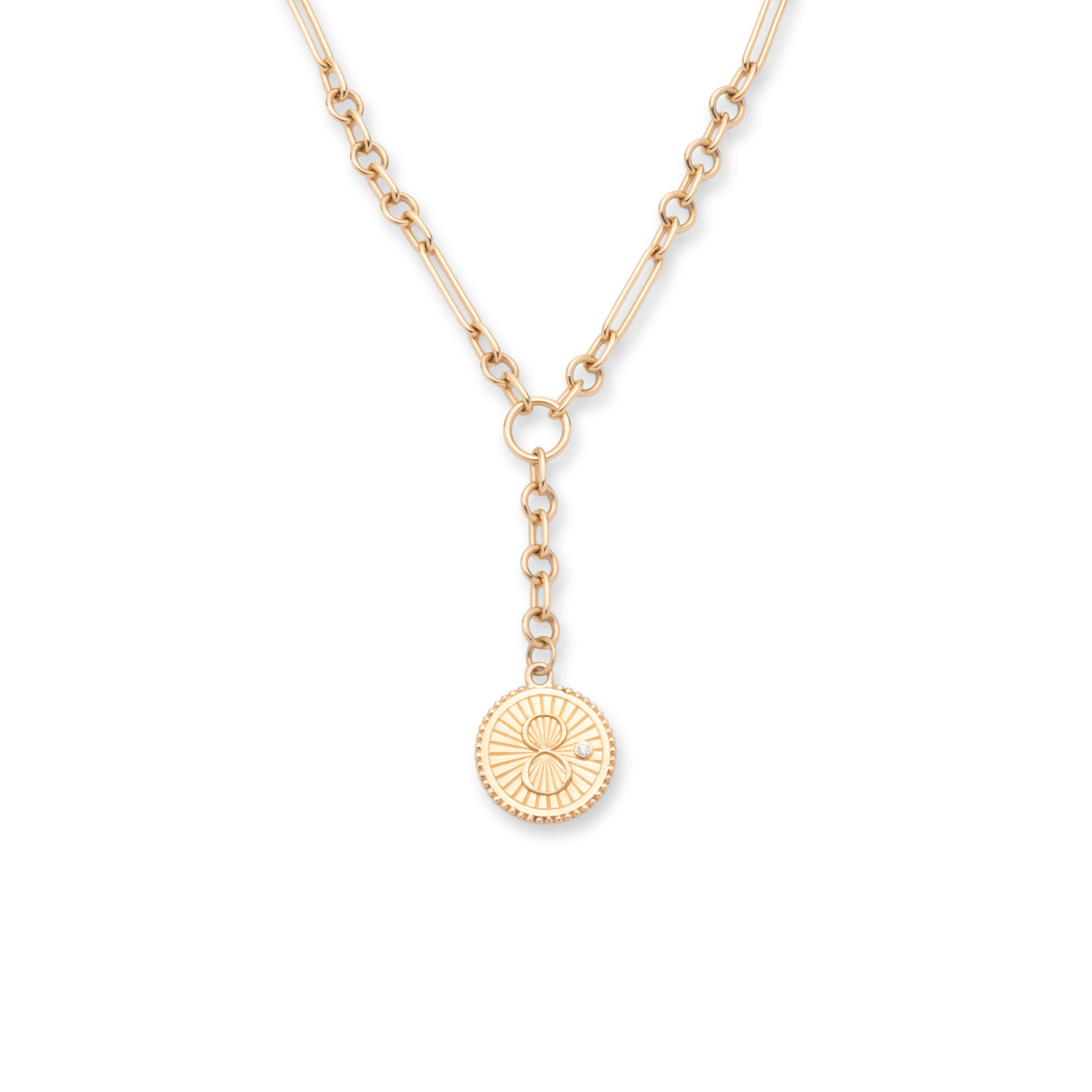
Miansai, founded by Michael Saiger in 2008 out of Miami, is the cleaner architectural answer and the most chain-inclusive of the bunch. The Mini Saints Necklace is $1,500 (pendant 13.8 × 21.1mm on a 1.3mm 24-inch chain). The full Saints Necklace is $1,950 (19.4 × 23.6mm on a 3mm chain). The Dove Necklace is also $1,950 (16.1 × 24.8mm, 3mm chain). Everything in the “men’s fine” line is solid 14k with the chain included, which makes it the cleanest price comparison. Two watch-outs. First, the sterling-and-vermeil versions sit alongside the solid gold in the catalog and it takes attention to sort what’s what. Read the product descriptions closely. Second, many fine pieces are made-to-order with a two-week ship window, and monogrammed pieces are final sale.
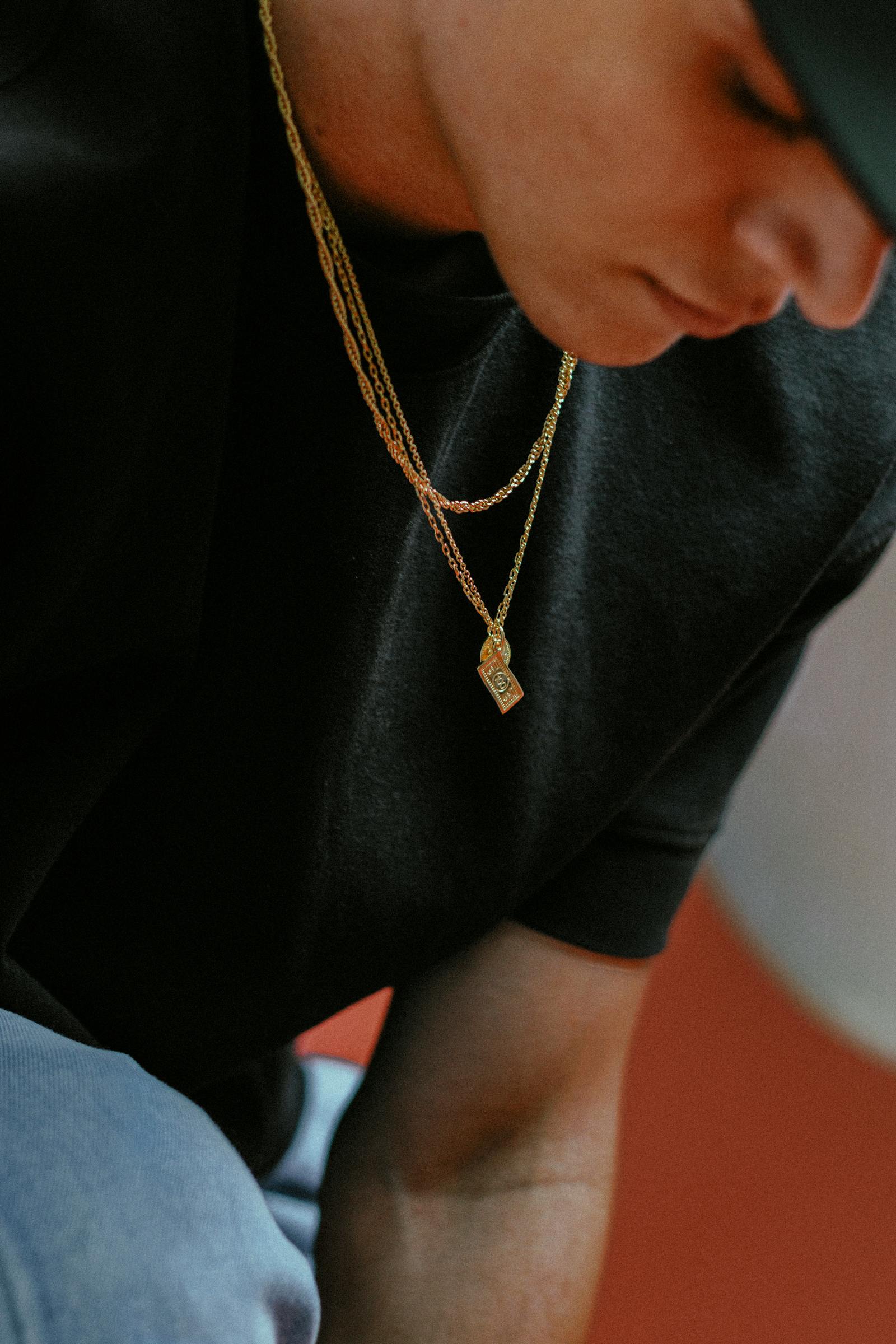
David Yurman’s Amulet line is the big-house answer. In-band: the Octagonal Amulet in 18k with meteorite at $1,350 (15mm), the Gemini Amulet in 18k at $2,500 (17mm), the Streamline Amulet in 18k with diamonds at $4,500 (28mm). The advantage is availability: you can try them on in person at a counter in most major cities, which is a real advantage for a category where trying it on matters more than reading about it. Two trade-offs. Yurman’s distribution is so wide that any given piece is visible on a lot of other men. And many of the solid 18k amulets on the category page sit $5,500 to $5,900, so the in-band selection is thinner than it looks at first. Chain sold separately.
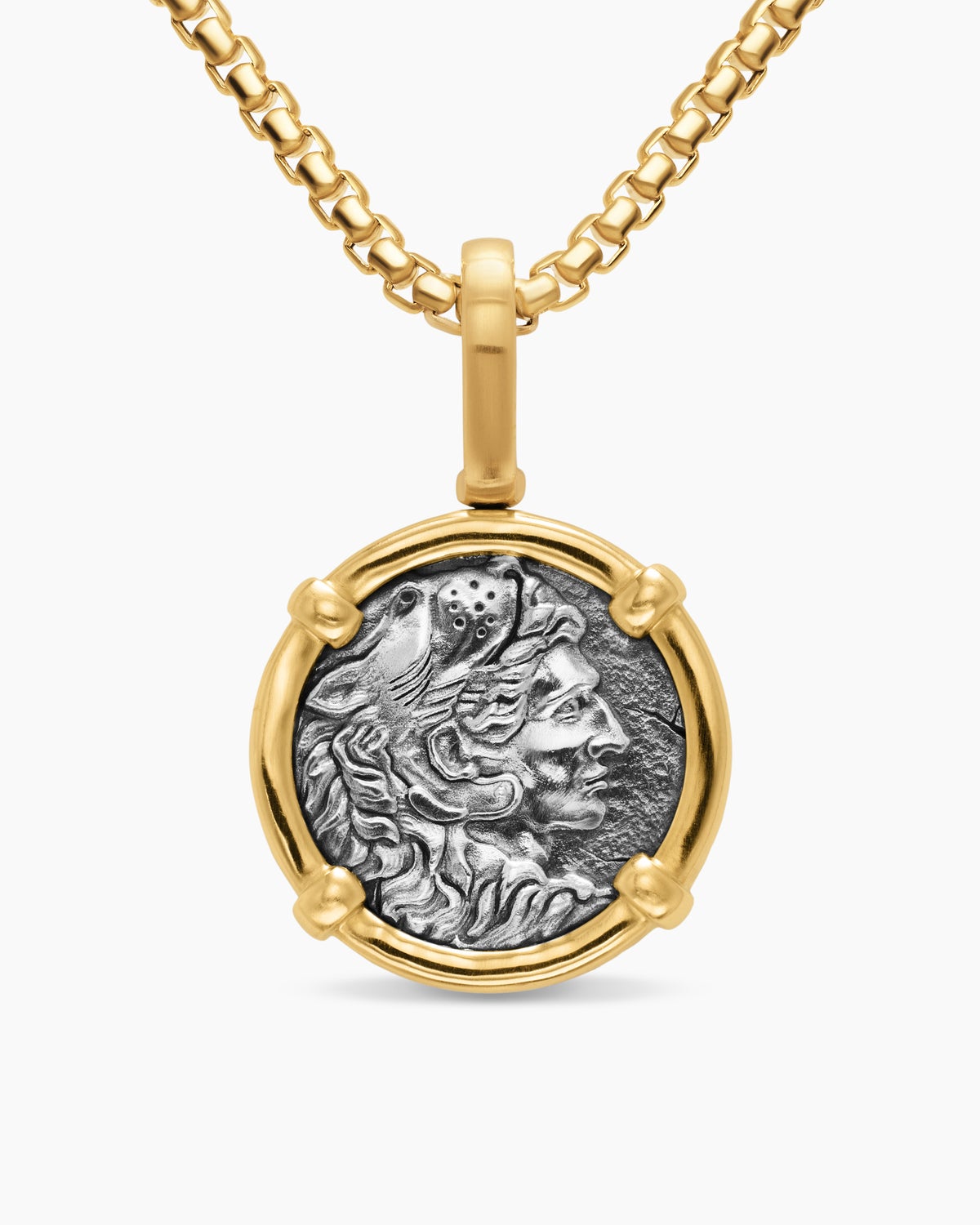
Lionheart is the discovery pick: smaller, more sculptural, heavier at similar price points. The Gemini Diamond Bead Zodiac Medallion in 14k is $2,850 (17mm, 0.15 ct diamonds, satin and polished). Other zodiac signs on the same page run $3,750. Founded by two sisters, NYC craftsmanship, Italian chains, no symbolic vocabulary, which suits men who want the object and not the language. The catch is the lead time: pieces are made to order with a one-to-six-week production window. Not a next-week buy. Nordstrom carries some Lionheart pieces if you want to skip the wait and use their return window.
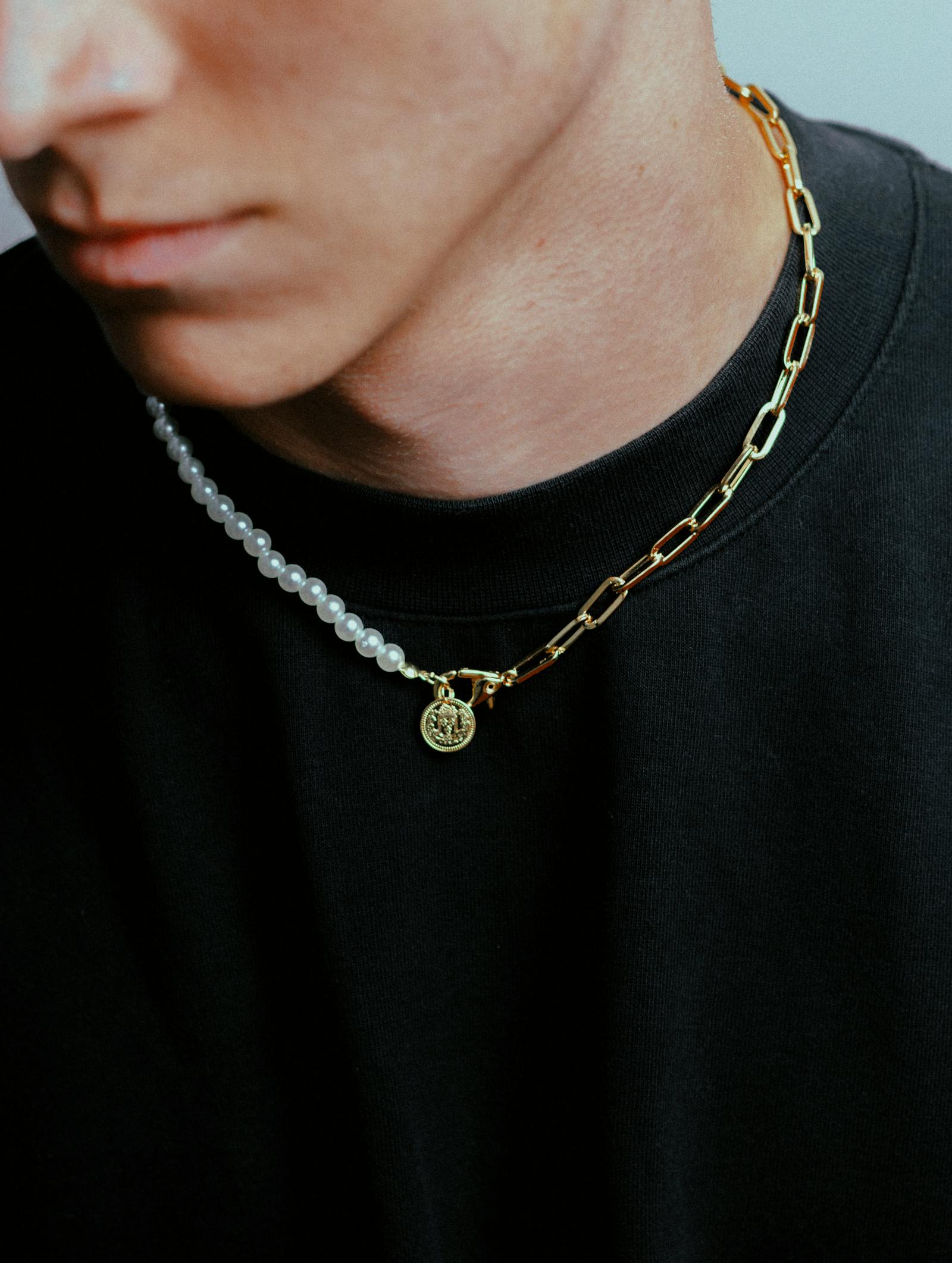
Auvere is the 22k specialist and the house to look at if you want more gold per dollar in an honest way. The Perigee Pendant & Chain at $2,700 is a minimal round pendant (15.9mm) on a 1mm chain, sold as a set. The Indomitable Medallion & Chain at $4,700 is a 30.2mm disc on a 22-inch chain, also sold as a set. The “medallion and chain” framing is useful for a first buyer: the pairing is made for you, the karat is higher, and the pricing includes everything. The catch is that sale pieces are often final sale, and 22k’s softness is real.
Menē is the weight-priced outlier: 24k gold, priced by the gram plus a roughly 30 percent fee over the daily gold value. The Gemini Medallion runs around $1,420 at current gold prices (pricing is dynamic). The category page shows St. Michael and Miraculous Medallions in the $1,600 to $1,700 band, and larger Éternité medallions around $4,400. Everything is sold by weight, not size, so the exact dimensions vary. It’s the most transparent pricing in the category and the softest metal in the category.
Then there’s the estate route, which is the one men keep underrating. (If you’ve read the secondhand guide, the logic is the same here.) A reputable dealer like Pamono is currently listing an 1890s French 18k rose gold Virgin Mary medal at $689. 1stDibs surfaces 19th-century French 18k saint medals commonly from roughly $400 to $2,000, signed examples trending higher. Victorian medallions of various kinds sit in similar territory. The reason estate might be the best answer for a first piece is that old medallions were sized and weighted correctly by default. They were made to be worn, long before anyone photographed them. The texture on a Napoleon III saint medal, 160 years of wear baked into the surface, is impossible to replicate in new work at any price. The catch: the chain almost never comes with the piece you want. Buy the medallion from a reputable dealer and source the chain separately from a local jeweler. Budget for both.
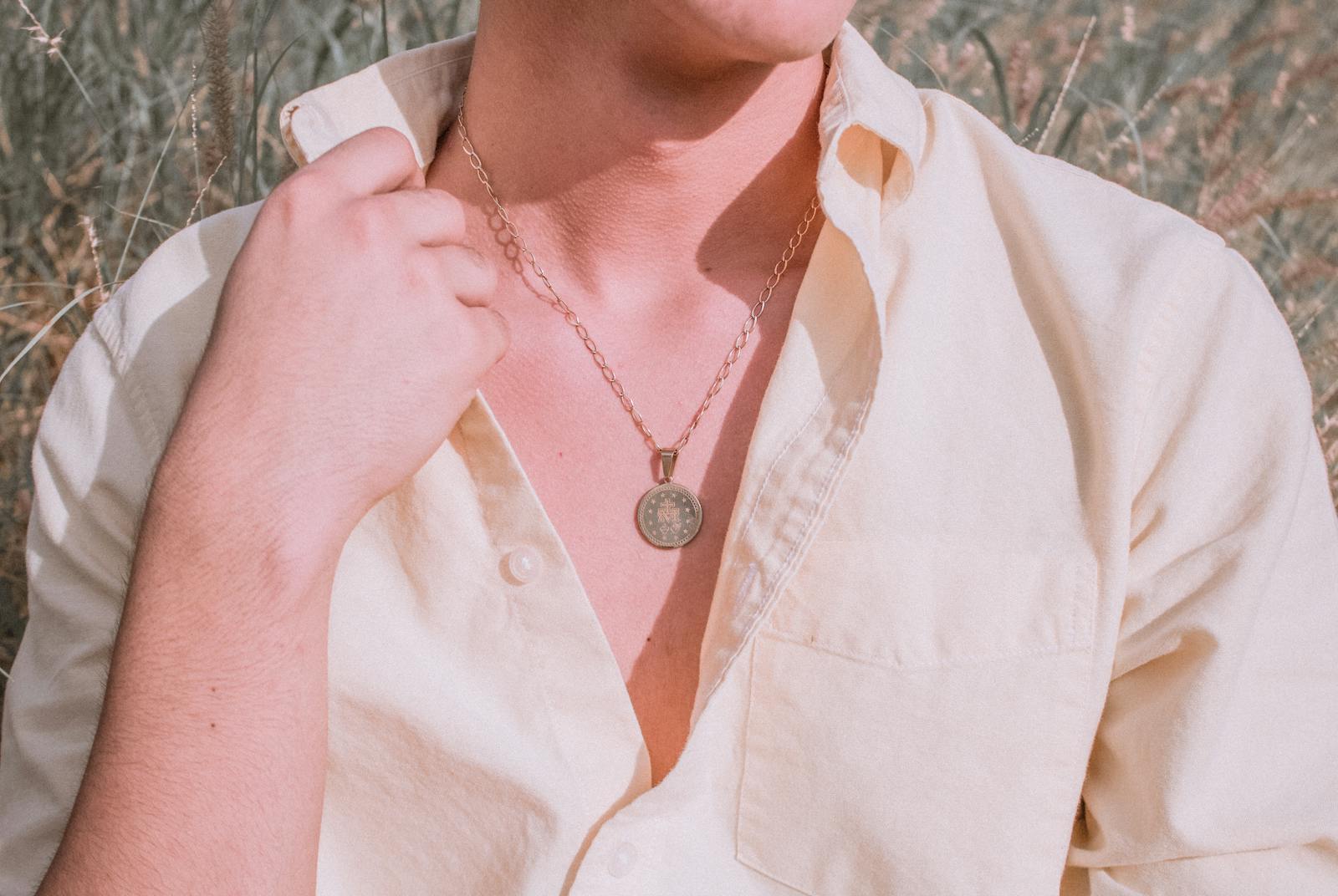
A custom goldsmith, the eighth route, is not a first-medallion move. Custom is for the second one, once you know what you like. The cognitive overhead of designing the thing and the months-long timeline are not what a first-time buyer needs.
The try-on, and the one rule about engraving
The single most useful thing you can do before spending the money is this: wear the clothes you actually wear, not a dress shirt, to the counter or the fitting. If your daily rotation is cashmere crewnecks, go in a cashmere crewneck. Salespeople will dress you up by default, because a medallion over an open-collar poplin photographs well under counter lighting. You don’t live in counter lighting. You live in natural light, around your kitchen, in the shirts that are on your back most days.
Try at least two chain weights with the same pendant, if the shop will let you. The difference between 3mm and 4mm at the same length is larger than it sounds on paper.
Sit down while looking. Standing changes where the medallion falls. Lean forward, then back. The piece should not flip or swing in a way that’s going to annoy you twenty times a day.
Then take a photograph with your phone from across the room. It’s the step that’s easy to skip and the one that makes the decision. A pendant that looks correctly scaled at counter distance very often reads too small from eight feet away, which is the distance most people will see it at.
One rule about engraving and monograms: every major house treats personalized pieces as final sale. Foundrae’s engraved medallions ship in about three weeks and can’t be returned. Miansai’s monogrammed pieces are final. Auvere’s sale pieces are often exchange-only. If there’s any chance you’re unsure about the scale or the chain, buy the pendant first, wear it for a month, then decide about engraving. Not the other way around.
The first week
A medallion does not arrive feeling normal. It arrives feeling visible.
Give it a week of daily wear before making any judgment. Rotate it through the shirts you wear: a crewneck, an open-collar shirt, a t-shirt under a knit, a button-down partially buttoned, a blazer. Photograph it in each. The medallion that felt slightly too bold on day one almost always feels correct by day seven, because the thing you’re calibrating is not the medallion. It’s your own self-consciousness about wearing jewelry.
Then know the return clock. Foundrae’s domestic return window is fourteen days from receipt, returns required to be insured for full value. Miansai is thirty days on non-customized full-price items, with a handling fee. Lionheart’s one-to-six-week production window means you’ve already waited to get it, so factor that lead time into your decision discipline. If you want a real “try at home and decide” buffer, Nordstrom carries some Lionheart pieces with a ninety-day window.
If after a week it still feels costume, the most likely cause is scale: the pendant is too small for your frame, or the chain is too thin for the pendant. Return it and re-buy bigger while the window is open.
If after a week it feels invisible to you, that’s the signal that it’s working. A medallion you notice constantly is a medallion you’re still performing. A medallion that’s become part of getting dressed, the way a watch does, has moved from costume to wardrobe.
Buy it
The medallion is the piece men who’d stopped wearing jewelry are wearing again. If you’ve been out for a while, this is the piece worth coming back on. That’s a real moment, and moments are the right time to buy into a category: the brands are doing their most interesting work, the estate market is still underpriced, and the independents are still small enough to talk to.
Pick the chain carefully. Don’t undersize. The rest is easier than it looks.
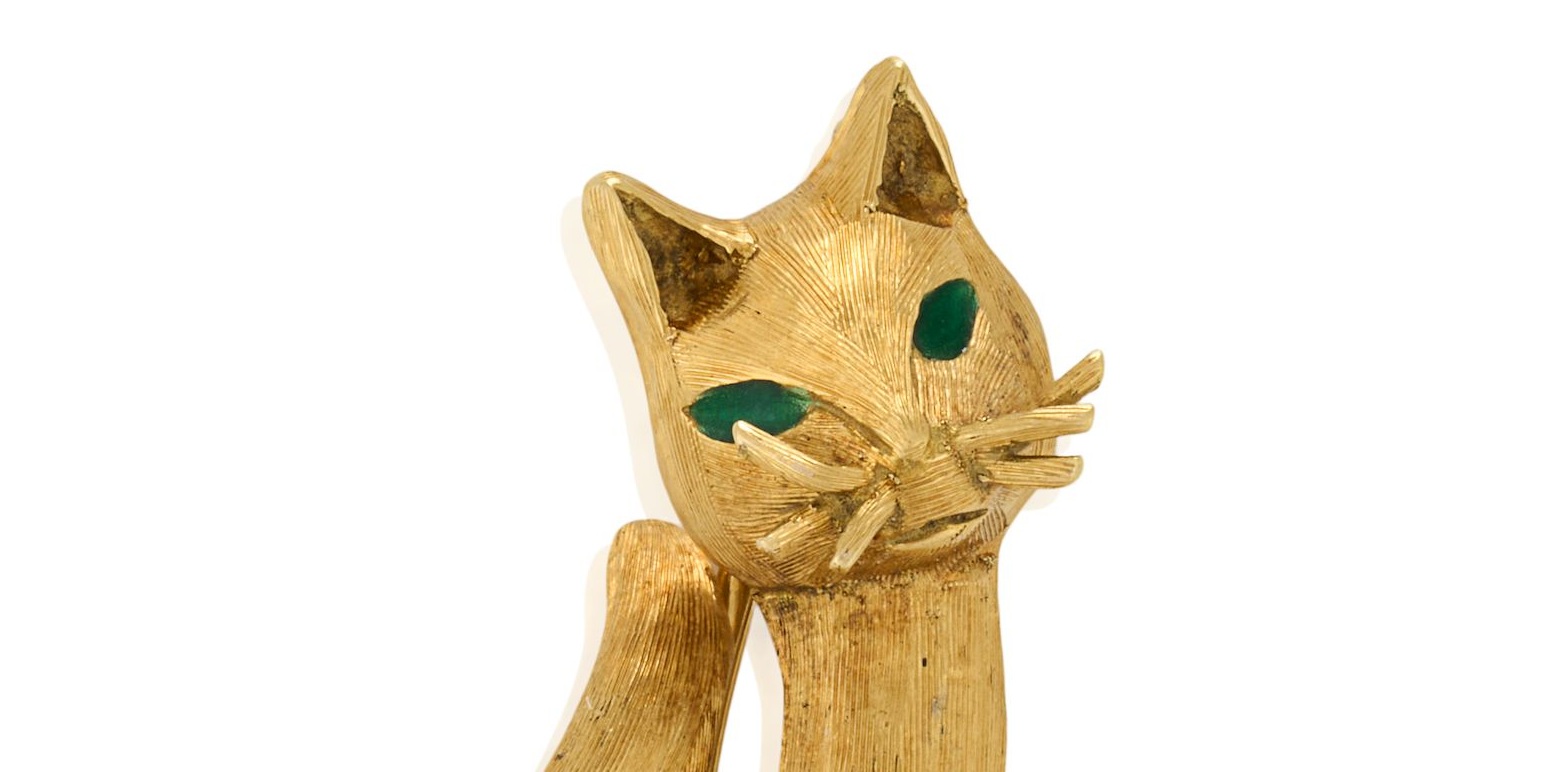
Sandy Lerner Is Rehoming Her Cats: A Tiffany Cat Brooch and Sixty-Five More
The Cisco co-founder spent four decades collecting cats in gold, enamel, amethyst and bronze. On 30 September 2026 Bonhams sells 66 of them in New York, from a $700 carved cat to a $120,000 bronze by the sculptor Rembrandt Bugatti. She is keeping the live ones.
Why Are Jewelry Prices Still Going Up?
Jewelry costs about 15% more than it did a year ago, and it is the gold accounting for most of it. The answer coming back from the jewelry trade and brands is less gold in the piece, which changes what you have to ask for at the counter.
Natural Diamond Prices Are Going Up Again, at Least for Now
Lab-grown stones pushed mined diamond prices down for years. The diamond trade's price index rose again in August, led by small stones. What that changes for you.
The newsletter.
One email when something is worth your attention. New essays, the buying calls behind them, and what we’re watching in the trade. No roundups, no affiliate dumps.