One Pendant. Nothing Competing.
The pendant is the offramp from layering fatigue. How to pick the right one from Foundrae medallions to estate coin finds, with real brands and prices at every level.
Maybe you’ve been layering necklaces for years. You have a system that works for you with the pieces you own. The choker, the mid-length, the long one. Maybe a fourth if you’re feeling ambitious. You adjust them in the mirror before you leave. You readjust them in the car. One of them twists, and now they’re all tangled, and you’re standing in a parking lot separating gold chains like fishing line.
Quiet luxury slammed into maximalism and now you’re trying to min/max the stack.
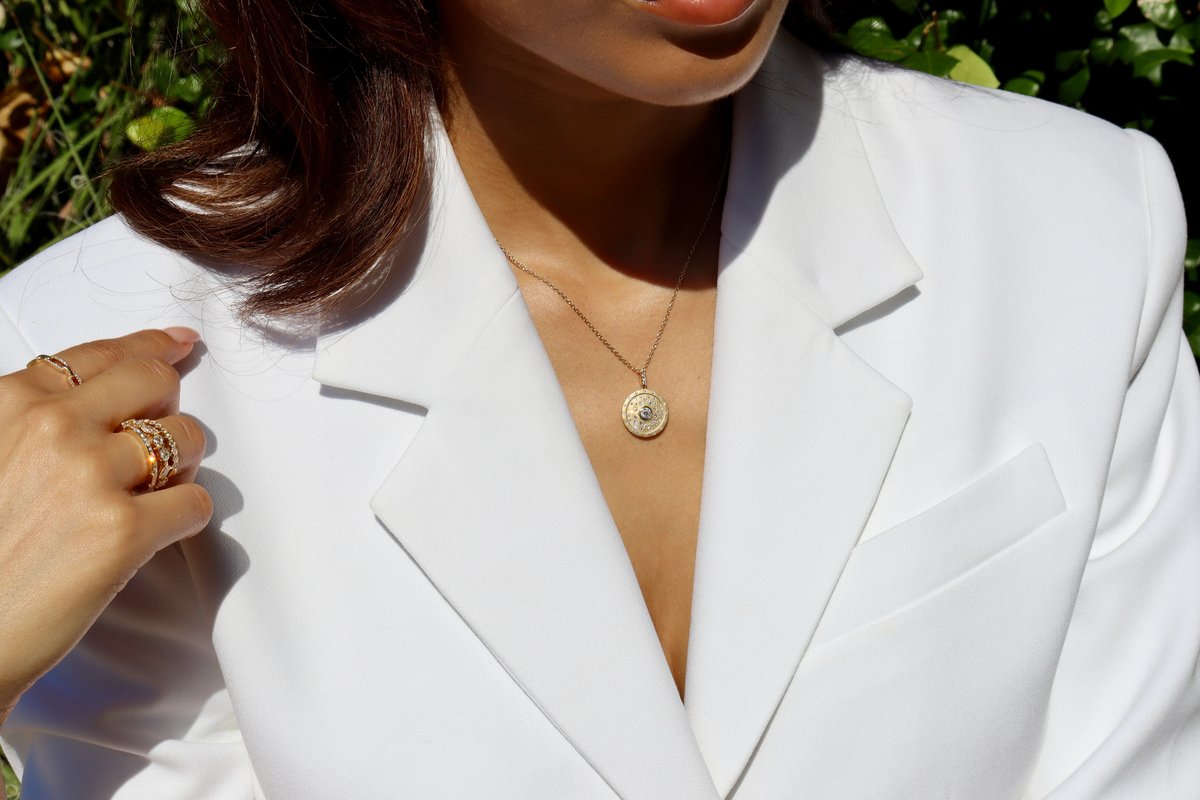
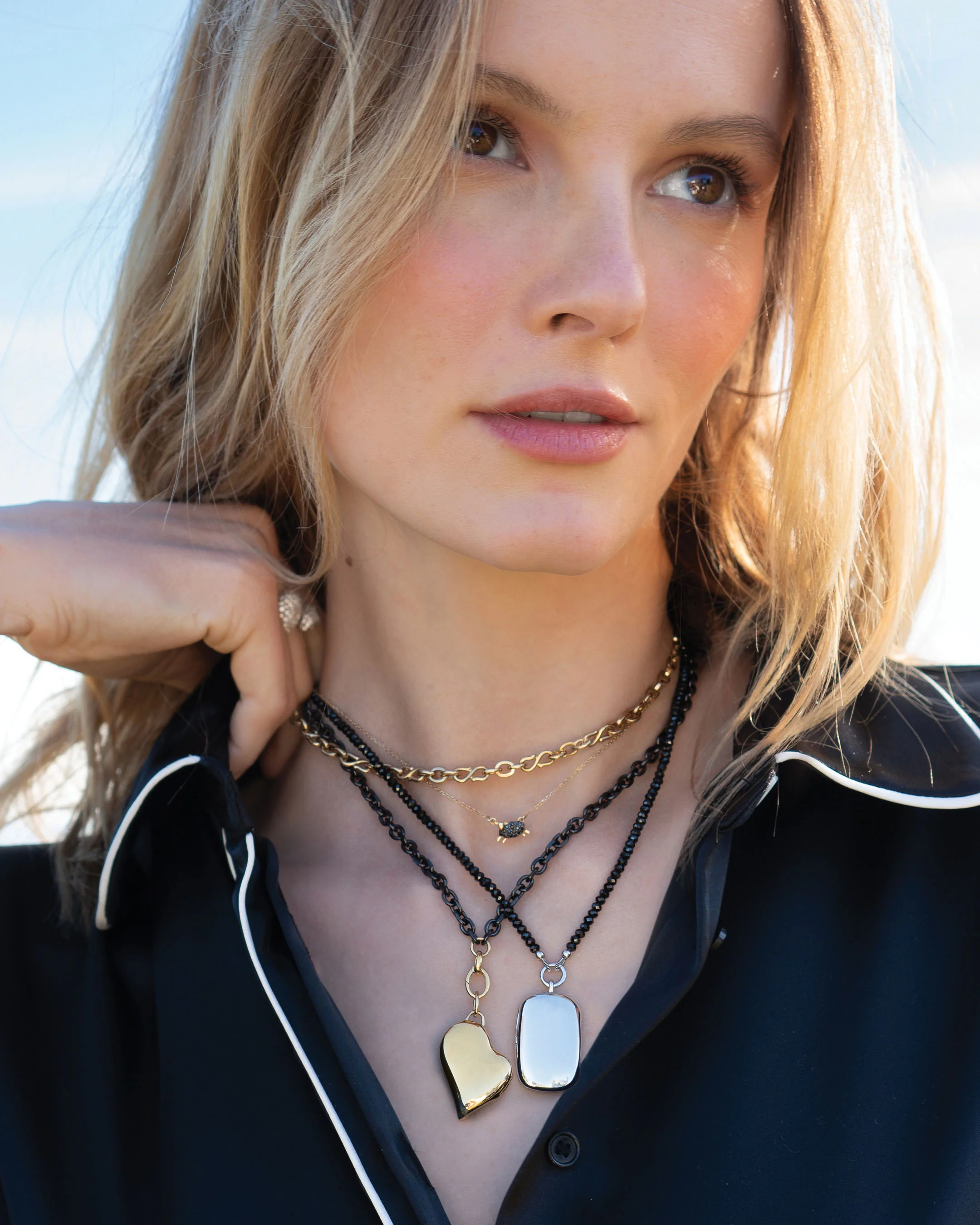
In 2026 the pendant answers that question by eliminating it. One chain, one object, nothing competing. One target for your neck. JCK framed the spring/summer 2026 statement pendant as a “protective or sentimental totem,” styled over crisp white tops and sporty tees. It’s been named the jewel trend of spring/summer with pieces called “pillars of totemic strength.” Tory Burch, Hermès, Ralph Lauren, Michael Kors, Dries Van Noten, Isabel Marant all landed in the same place: a single pendant on a long chain, over a simple top, no layering. Dua Lipa has been the style reference for the dressed-up version.
The pendant is here because it brings a focal point.
Why One Piece Beats Three
In a layered look, the pendant is one of several things happening in balance. In the 2026 version, the pendant is the thing happening, or at least the primary thing. Everything else, if there’s anything else at all, supports it.
This simplification is the move. One pendant on one chain creates a vertical line from neck to mid-chest that anchors the entire outfit. It does more work alone than three layered chains do together, because there’s no competition for the eye. Your attention goes to the pendant. Full stop.
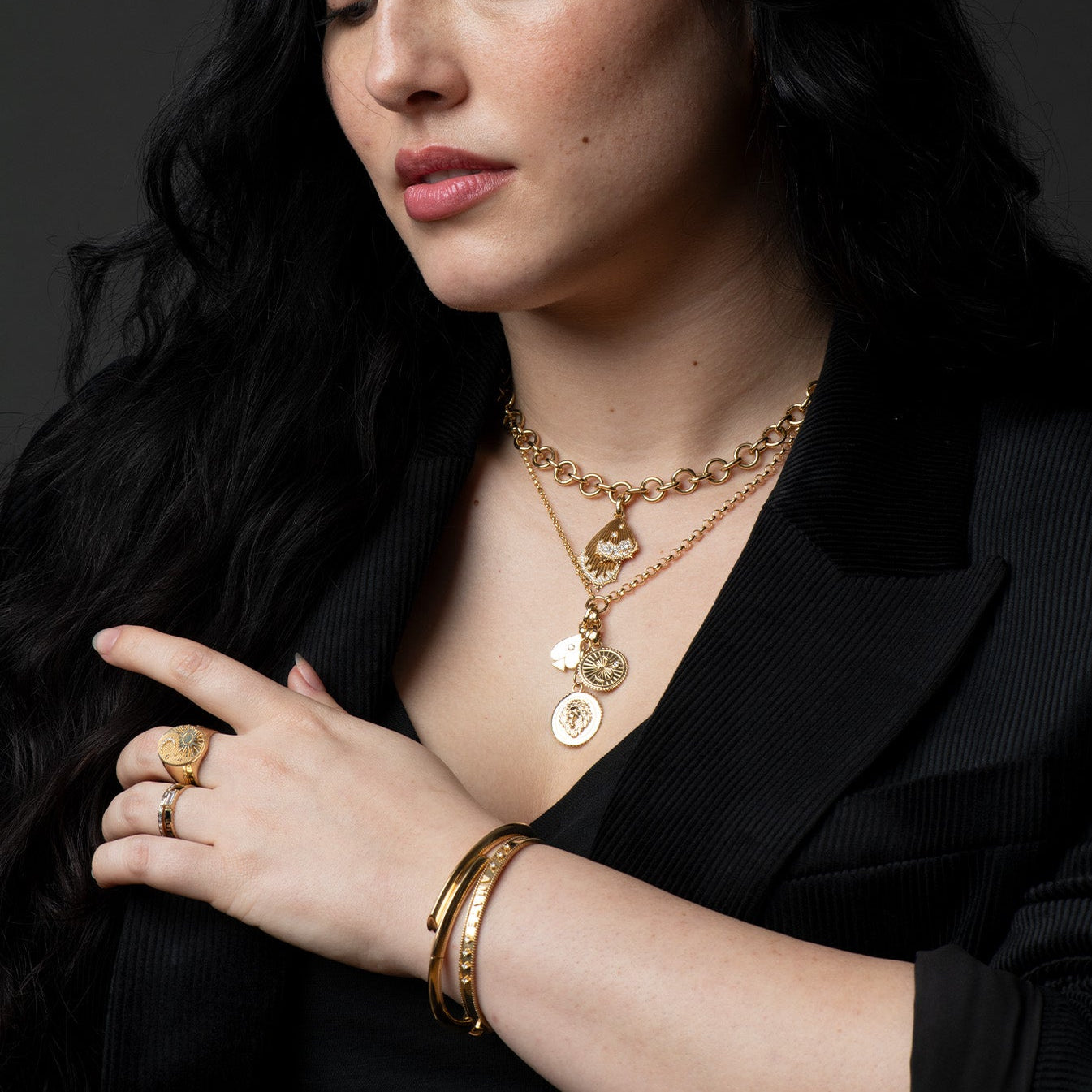
The practical effect: wearing a statement pendant reduces your necklace decisions to two. Which pendant, and how long the chain. If you’ve been overwhelmed by layering logic (which chain goes where, what lengths work together, is the spacing even, does this one keep flipping backwards), the pendant is the exit. Even mainstream stylists are pointing the same direction. Parade’s current layering advice leads with “choose one necklace as the anchor.” Once you follow that advice, the layering project tends to end on its own.
It’s also the documented countercurrent to three years of quiet luxury. Who What Wear’s spring 2026 jewelry read opens with “after several seasons of pared-back polish and quiet luxury restraint” before pivoting into pendants, sculpture, and color. Pinterest’s 2026 trend data tracks with that: searches for “maximalist accessories” up 105% and “heirloom jewelry” up 45% year over year, per National Jeweler’s breakdown of the Pinterest Predicts report. The same editors who were writing minimalism think pieces in 2023 are now writing “minimalism fatigue” ones. The pendant is what they reach for when they want a single piece of jewelry to do what a quiet outfit used to do: carry the whole look.
What “Statement” Means at This Price
A statement pendant at this level is distinct before it is large. It has visual weight, whether that’s a bezel-set stone, a sculptural form, or a medallion with detail, and it has something that makes a person’s eye stop. It may be time to go digging through your mother and grandmother’s jewelry boxes.
A few forms that work:
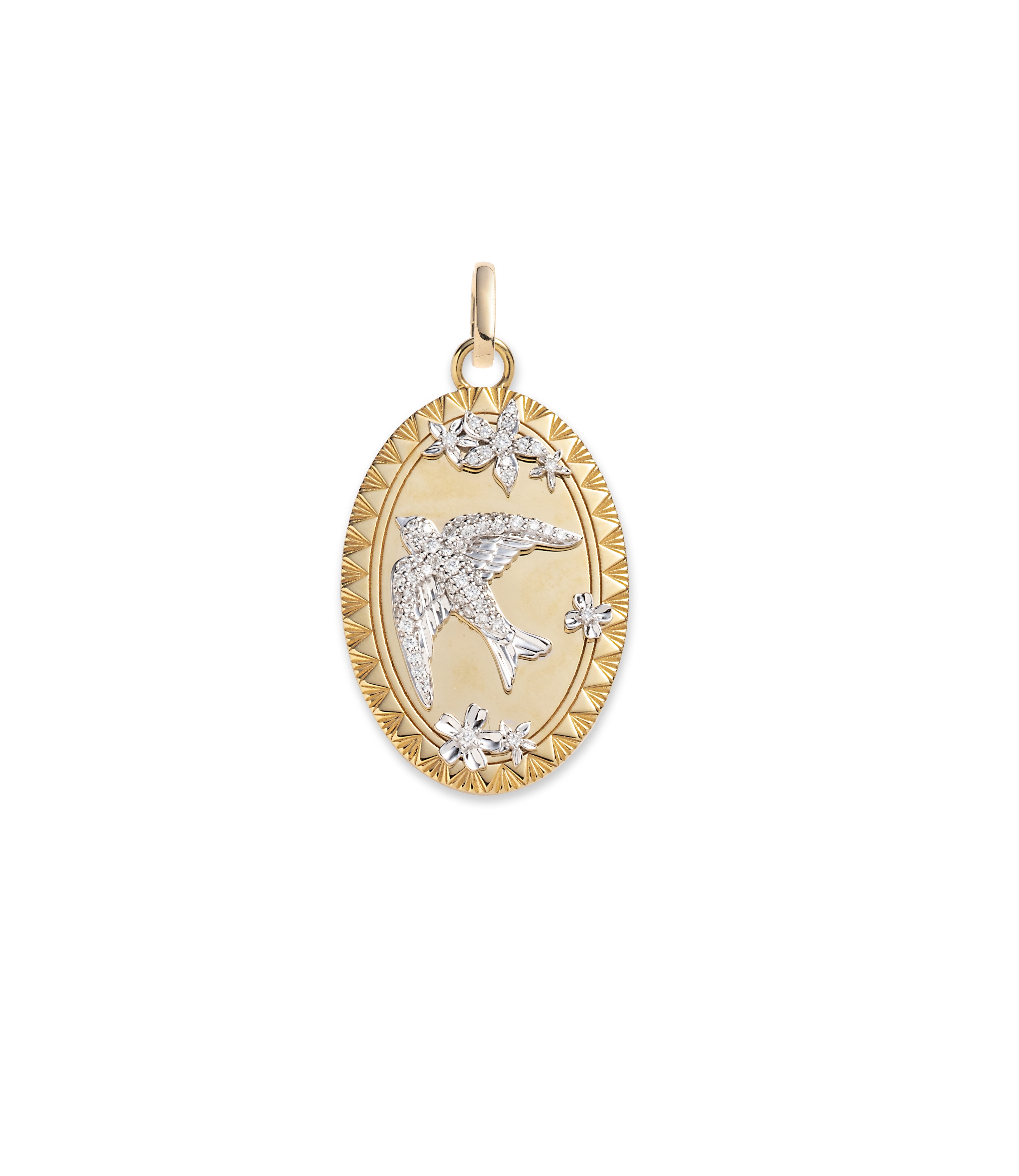
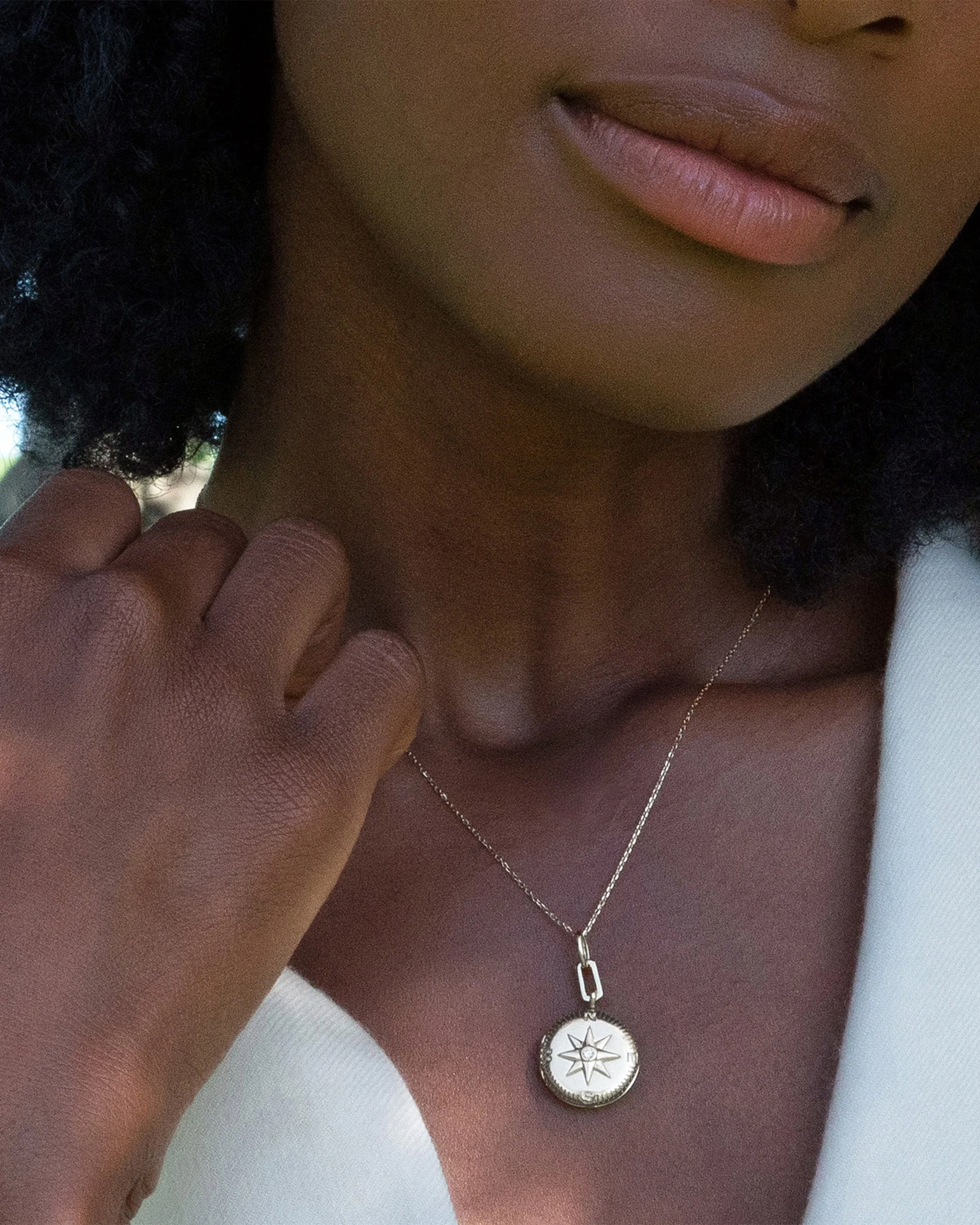
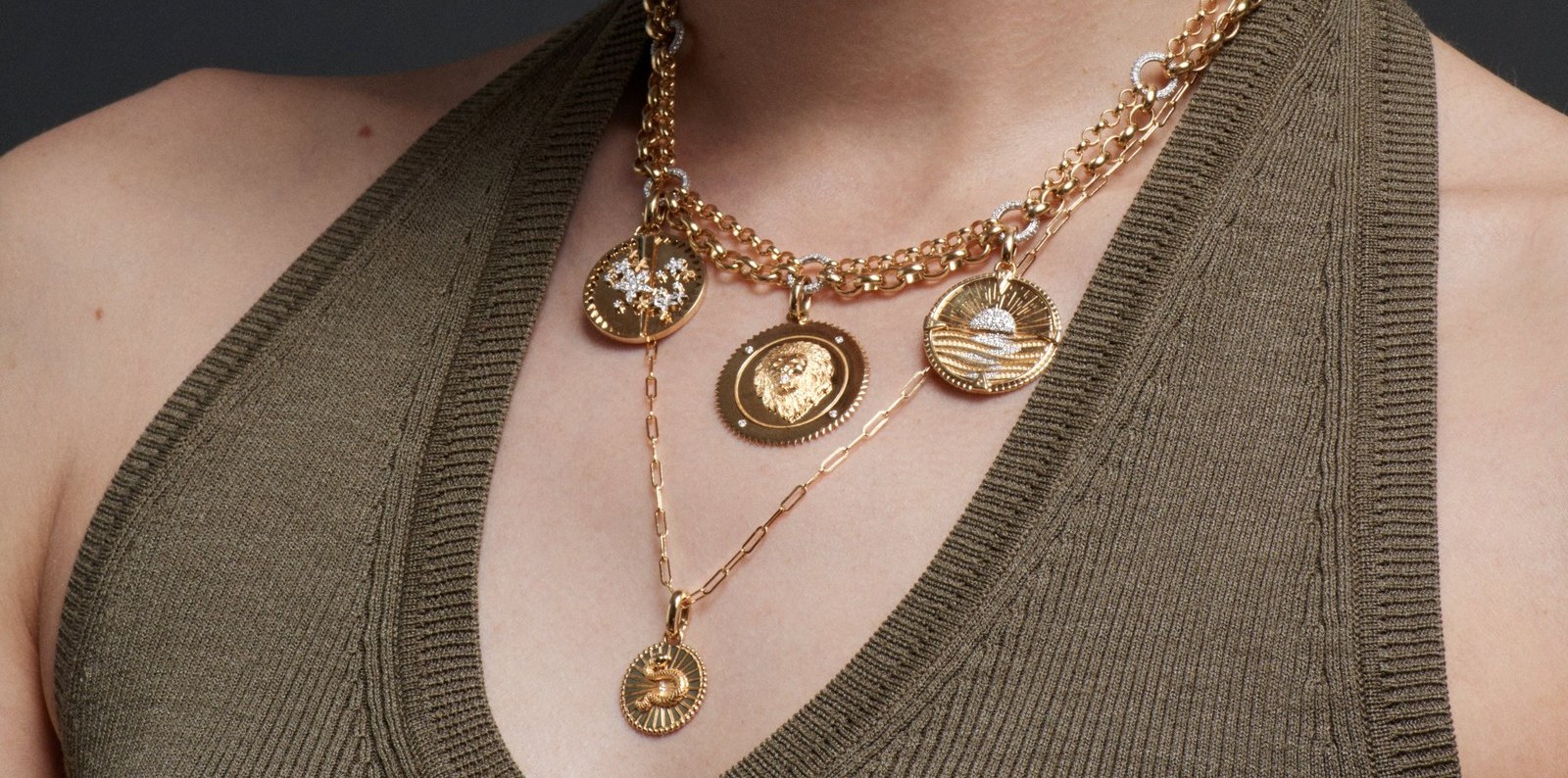
The medallion. Flat, round or oval, gold, with detail. Texture, an image, an engraving. Foundrae is the brand that defined the category: their 18K Diamond Mind/Body/Soul Wholeness Medallion runs $2,995, the Medium Wholeness sits at $3,250, and the Resilience Medium is $4,000. Monica Rich Kosann works the same territory with more literal imagery: a Sun, Moon, and Stars 18K medallion with diamonds starts around $3,850, and her Loyal Dog Intaglio starts at $4,120. If you want in closer to the floor, her Mother of Pearl “Mini Adventure” Compass medallion starts around $1,700. Medallions carry historical weight (religious medals, portrait pendants, commemorative pieces) and they read as collected rather than purchased. A gold medallion on a simple chain is one of the oldest jewelry combinations that exists. It reads now the same way it read a hundred years ago, which is the definition of not being a trend.
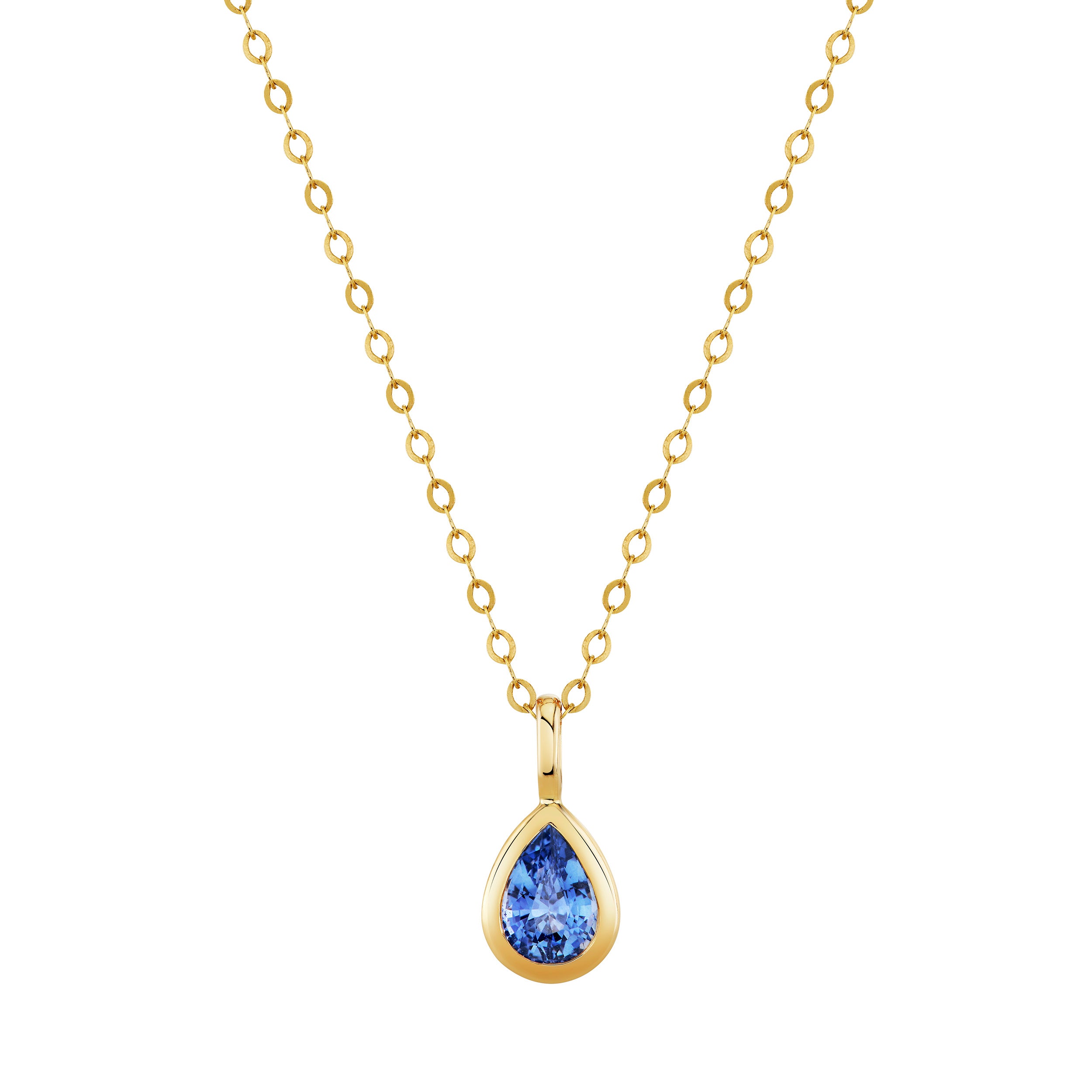
The bezel-set stone. A single colored gemstone, framed in gold, on a chain. Jade Trau’s Poppy 2-Stone Pendant runs $3,475 and is the clean version of this idea. Nicole Mera does a Montana sapphire bezel-set in 18K yellow gold on a paperclip chain that sits in the $2,000 to $3,000 range and has the right weight-to-visual-interest ratio. Page Sargisson is a quieter entry point: her 18K Oval Slider in emerald is $1,400 and a Teardrop Slider in pink sapphire is around $1,080, both sitting comfortably under the two-thousand line without reading starter. Teal sapphire. Deep garnet. A piece of labradorite that shifts color in light. The stone is the personality. The bezel protects it and gives it a finished frame.
The organic form. A sculptural shape in gold that doesn’t represent anything specific but has enough visual interest to hold attention. Brent Neale is the reference. Her smaller pendants start around $1,625, and the line reads distinctive without reading costume, which is the hard part at this price. A handful of other independents live in the same neighborhood: Pamela Love’s Molten Raindrop Pendant ($1,210) reads like liquified gold around an opal drop, Marion Cage’s tiny pave totem ($1,150) is built as small-scale wearable sculpture, and Retrouvaí’s Petite Bonded Flora ($1,830) has a kintsugi-adjacent bonded floral motif that’s organic and imperfect by design. These connect to the organic maximalism movement: gold as form rather than frame. At the higher end of this band, the quality of the sculpting is what separates a piece that looks intentional from a piece that looks like a blob.
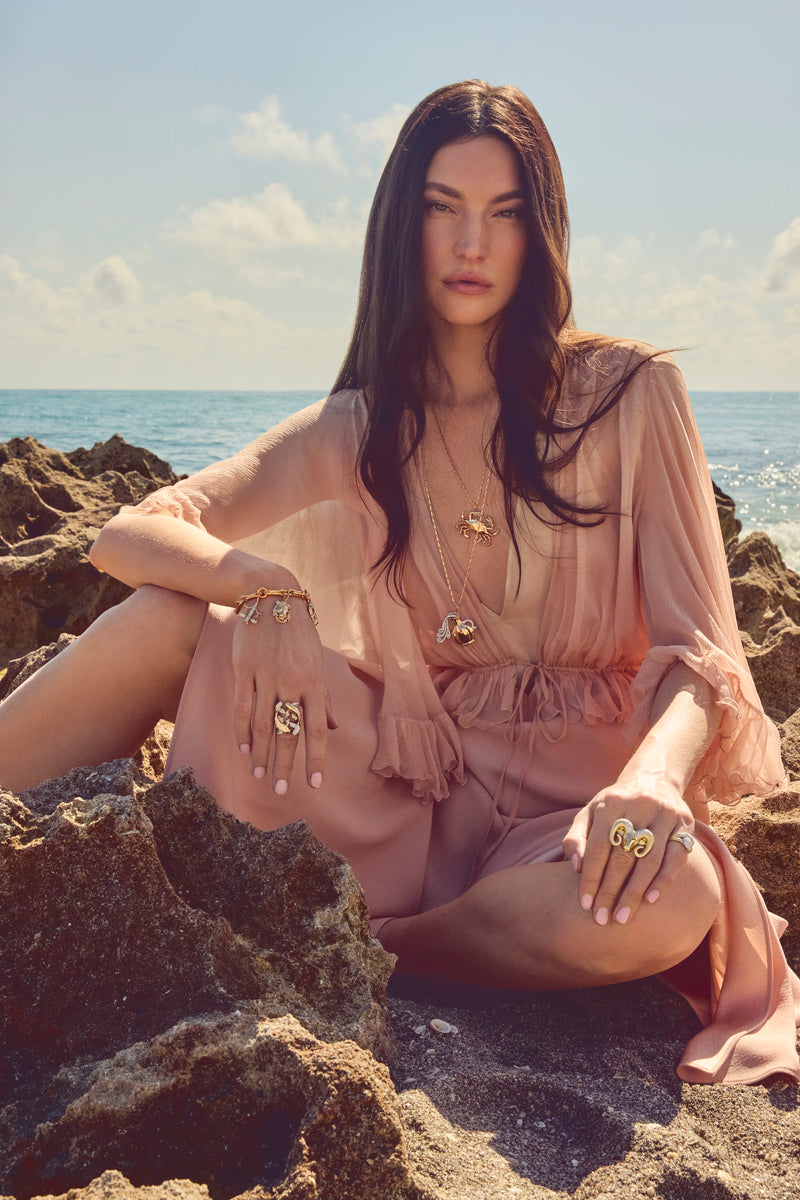
The found object. A coin, a seal, a vintage element incorporated into a modern setting. These pieces have built-in history even if that history isn’t yours, and they carry a different energy than something designed from scratch. Azlee’s coin pendant sits around $3,100 and is the polished modern take; Retrouvaí’s Mini Compass pendant, sold through boutique Tiny Gods, is $1,670 and reads antique without being one. Estate pendant finds in the $500 to $2,000 range are real, but the good ones take hunting. 1stDibs is the obvious hunting ground: vintage sterling coin necklaces average around $500, antique coin pendants sit closer to $2,500, and the interesting pieces in the lower band require patience and a saved search.
I should mention that “found object” pendants may be a gateway drug to buying vintage jewelry. When you buy a used Victorian coin pendant on a modern chain you have, without knowing it, started shopping estate cases. And estate cases are where the interesting finds live. But that’s a different conversation.
The Chain Is Infrastructure
The chain determines how the pendant reads. Jewelers have names for the lengths: Blue Nile’s chart (mirrored across Tiffany and most retailers) calls 18 inches “princess,” 20 to 24 inches “matinee,” and 24 to 30 inches “opera.” You don’t need to use the words, but the placements matter.
Short (16 inches) places the pendant at the collarbone, above most necklines, always visible. This is the traditional position and the one that works best when the pendant is small or delicate. Angara’s length guide puts 16-inch chains “just above the collarbone,” which is the look you’re after if you want the pendant to sit against skin.
Long (24 to 30 inches, matinee into opera) drops the pendant to mid-chest or below, which is the current position. Long creates a dramatic vertical line. It also means the pendant sits over your clothing rather than against your skin, which changes the visual from intimate to architectural. A pendant on a long chain becomes part of the outfit. A pendant on a short chain becomes part of your body. Those are different relationships.
The 2026 move is long. The editorial coverage, the runway styling, the editorial spreads: they’re all showing long-line pendants over simple tops. But “long” only works if you’re comfortable with the pendant moving as you move, swinging when you walk, and occasionally getting in the way when you lean over a table. If that sounds more annoying than dramatic, stay shorter. The principle (one pendant, no competition) works at any length.
The chain itself should be thinner and simpler than the pendant. A heavy chain with a heavy pendant creates visual competition. A thin cable or box chain lets the pendant do the talking. This sounds like a minor detail. It is not. I’ve seen beautiful pendants destroyed by chains that were trying too hard to be interesting on their own. The chain is infrastructure. Let the pendant do the decorating. Spend the budget on the pendant and keep the chain functional.
Don’t overthink it
Not every pendant read works right now. Who What Wear’s 2026 “dated trends” list flags logo pendants as “a little too loud” for the current mood and directs readers toward “artistic pendants” instead. The house-monogram-on-a-chain look from 2021 isn’t the 2026 pendant. The 2026 pendant is quieter in its branding and louder in its object.
There’s also the opposite dissent. Marie Claire ran a piece this spring arguing that “if 2010 was the year of the statement necklace, 2026 is the year of no necklace at all.” The anti-jewelry read exists but I’m not buying it. If your wardrobe is doing the work and you’d rather wear nothing on your neck, that’s a defensible position too. The pendant argument is narrower than everyone needs one: if you’re going to wear a necklace this year, the single-pendant version is the one doing the most with the least.
The Totem Question
JCK used the word “totem” directly when they named the trend, Vogue echoed it as “totemic strength,” and the language has crystallized: Marion Cage’s entire current collection is named Totem and positioned as “wearable sculpture.” When the trade press, the fashion press, and the brands themselves all land on the same word, it may be worth a look.
A totem is something you carry because it means something beyond its materials. A piece of jade your mother wore. A coin from a country you lived in. A symbol that connects to something in your life that you want to keep close.
Not every pendant needs to be a totem. A beautiful gold medallion doesn’t need a backstory to justify itself. But the shift in the conversation, from pendant-as-accessory to pendant-as-personal-object, has opened up space for pieces that mean more than they cost. At the lower end of this tier, you can commission or find a pendant that carries real personal significance while being a real piece of fine jewelry. That combination, personal meaning in an object that’s also well-made, is rarer than it should be.
And there’s a practical angle to the meaning question. A pendant that means something to you is the piece you reach for on days when you don’t feel like thinking about what to wear. It goes on first, automatically, before you’ve made any other decisions. It becomes a default. And defaults, in jewelry, are the pieces that define your look more than any considered choice does, because they’re the ones you wear the most.
Fine Jewelry Started Ungendered And Never Stopped
Jewelry was sorted by rank for five thousand years and by gender for about one century. The men's and women's split is commercial noise rather than a property of the adornment: where gendered jewelry came from, and what it should and should not change about what you buy.
The Independent Jewelry Brands That Hold Their Value
Spending real money with an independent jewelry designer means trusting your own eye instead of a famous name. The used market is where that trust gets tested, because nobody pays most of retail for a secondhand piece as a favor. Seven designers pass that test on their signature pieces, and have for years.
The Fine Jewelry Brooch: Where It Came From, Why It's Back, and Where It's Going
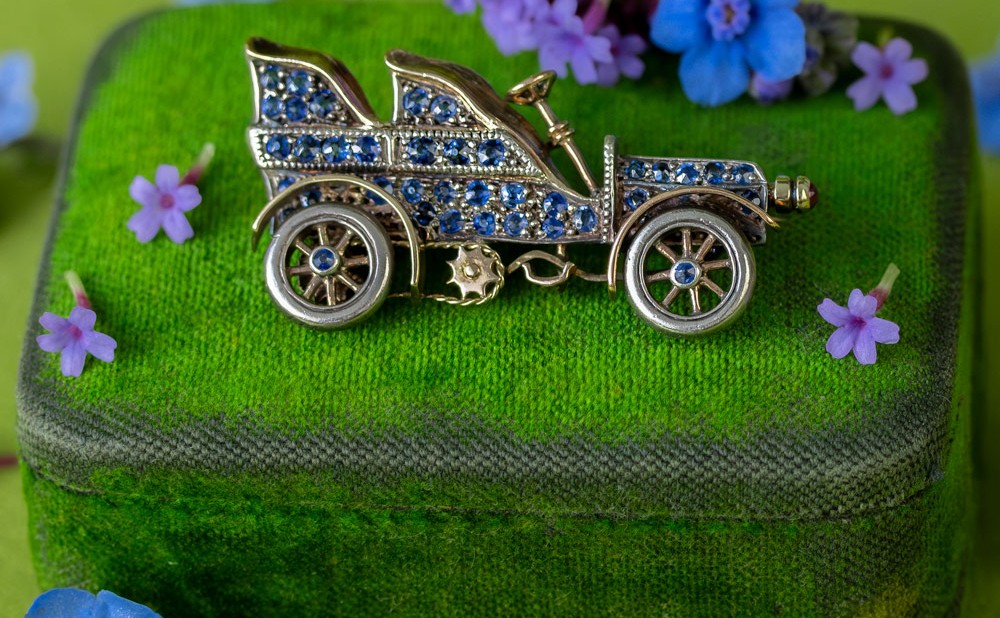
The brooch fastened clothing for thousands of years before it became pure ornament. The history of the clasp turned decorative shows where it's headed as jewelry, plus the COVID origin of its most recent return, what recent fashion shows added, and why brooches worth buying now are waiting for you in estate sales and dusty cases.
The newsletter.
One email when something is worth your attention. New essays, the buying calls behind them, and what we’re watching in the trade. No roundups, no affiliate dumps.