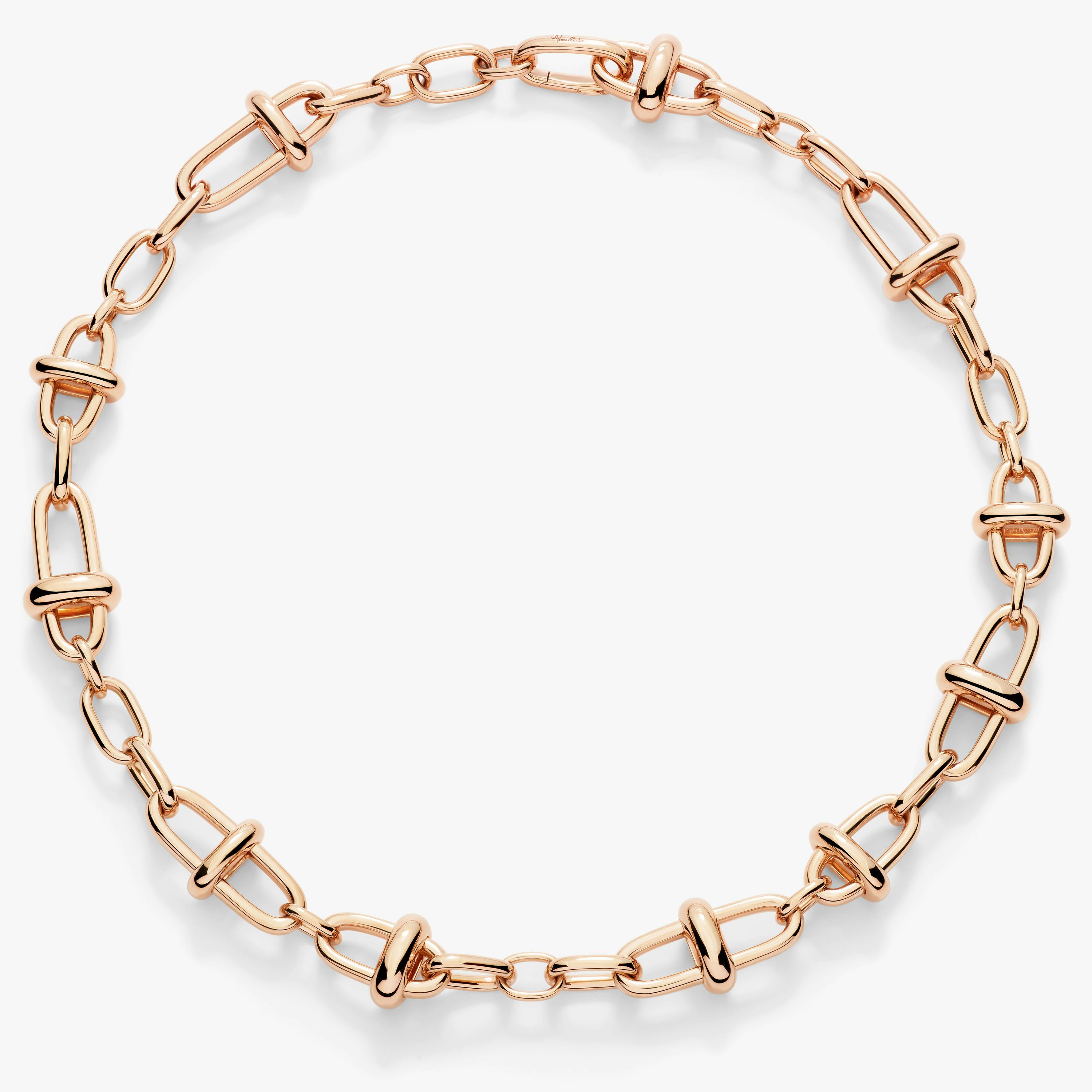
Photo: Pomellato
The Tariff on Your Jewelry Got Refunded. Who's Getting the Refund?
The US Supreme Court struck down the tariffs that jewelry brands blamed for last year's price hikes, and the jewelry tariff refund is now flowing by the billions. It goes back to whoever paid the duty at the border, which was never the buyer who paid the higher price. Where the money goes, why it can't reach you, and how to read what a brand does next.
Through 2025, jewelry brands raised their prices and named tariffs as the reason. In February 2026 the US Supreme Court ruled those tariffs illegal, and the government began refunding them, about $20.6 billion paid back so far and far more still owed. The refund goes to whoever paid the duty at the border, the brand or the importer that shipped the piece. The buyer who paid the marked-up price gets none of it. So if you bought fine jewelry in the last year or so, the tariff refund on it is real, it is large, and it is going to someone else. Whether any jewelry brand passes a cent of it back to the customer is the question nobody in the business is answering.
The Tariff That Justified Your Price Was Struck Down
The piece that ran here in the spring treated the refund as an open question. It isn’t one anymore. In Learning Resources, Inc. v. Trump, the US Supreme Court ruled that IEEPA, the emergency-powers law the tariffs were built on, never gave the president the authority to impose them. The steep duties that brands had cited through late 2025, the basis for nearly every price-increase notice that went out last fall, lost their legal footing in a single morning.
The court struck the tariffs and sent the question of refunds to the US Court of International Trade, which ordered Customs to pay the money back to every importer that had paid it, including those that never sued. The first checks have gone out. But the government is now appealing whether the refund really has to reach all of them, with a hearing set for June 9, so even the brands cannot fully count on the money yet. A smaller 10% duty replaced the struck-down tariff under a separate law and is still being collected, though the refunds are only for the original.
Where the Money Goes, and Why It Isn’t You
The refund goes to the importer of record, the company that paid Customs when the goods crossed the border. For a piece made in Italy and sold by a heritage house, that is the brand or its shipping broker. For a small online label, it might be a third party that handled the freight. In every case it is a business that filed paperwork with a customs broker, never the person who later stood at the counter and paid the marked-up price. NPR put it in a headline that doubles as your question: the refund process has begun for businesses, what about customers? One shopper, Edwin Martinez, gave NPR the plain version: “I paid this extra tax, man. Can I just have my money back?”
Martinez probably won’t see that money, and the reason has more to do with plumbing than with greed. The tariff was paid once, in a lump, at the border, on a whole shipment. By the time that cost reached you it had been spread across hundreds of pieces, folded into a wholesale price, marked up, and rung up months later with no line on the receipt that names it. Reconstructing what any single buyer paid in tariff, on one necklace, is somewhere between guesswork and impossible. The few companies that can refund their customers are the ones that itemized the fee on a bill, like FedEx, UPS, and DHL, where it sat on the shipping invoice in plain sight. A fine jewelry purchase carries no such line, so there is nothing to trace and nothing to hand back.
The money is also moving slowly. The checks are landing in pieces, a fraction of what is owed, and the part of the order that made the refund universal is itself under appeal. A brand that simply applied and waited is not sitting on your money yet either. The refund has a clear path back to the importer, and no path back to you.
How Much of the Price Was Ever the Tariff
Even where a brand does collect its refund, it owes you less than the whole price increase, because the tariff was never the whole increase. Brands raised on gold, which roughly doubled over two years through late 2025, and on labor and margin, on top of a tariff that may now come back to them. The earlier tariffs piece and the one on gold walked through that math. The metal moved on its own, and it has not come down.
So the tariff was always one slice of what you paid, and it is the slice no brand will name. Pandora is the clearest case: it called tariffs a drag on its margin, but pointed at silver, which roughly quadrupled in about eighteen months, as the far bigger cost. (Pandora sells silver charms, below the tier we cover here, but the proportion holds.) At the gold end of the market, one designer’s entry piece went from about $600 to about $1,200 over the same stretch, the same metal and twice the price, almost none of it tariff. When a brand holds last year’s price now that the tariff is gone, what holds that price up is gold and margin. The brand owes you, at most, that tariff slice, and it is the one figure it will never print on a tag.
What a Sale or a Refund Email Tells You
None of this gets your money back. It does change how you read what a brand does next.
A sale is not a price cut you can count on. Brands raise fast and cut slow, and when they do give ground it comes as a promotion, a trunk-show price, a holiday event, the kind of discount they can run one week and pull the next. Take it if the piece is worth it to you. It is a temporary discount. Your refund is somewhere else entirely.
A refund email is its own tell. The trade press is already coaching jewelers to treat any refund as a reason to contact the customer and turn it into the next sale, money owed repackaged as marketing. A brand that emails you about its refund as a reason to buy again has answered, without meaning to, the question of what it thinks it owes you. None of this is unique to jewelry. The same season the refunds started flowing, consumers filed class actions against Costco, FedEx, and Lululemon, arguing that the buyers who paid the inflated prices, not only the brands now collecting the refunds, are owed something. That argument is real enough to put in front of a judge, and a long way from a check.
What to Do
Before you buy anything this season, ask where the piece was made, because that single fact decides whether a tariff was ever paid on it. If you already own something you bought in the price-hike year, it is worth checking whether your insurance still covers what the piece would cost to replace now that gold has moved so far. And the surest way to step around the whole question is to buy a piece that never paid the tariff to begin with: a vintage or estate piece priced under an older regime, or a US-made independent priced for metal and labor.
The number on the tag is doing the same work it always did, holding metal and margin and a brand’s nerve about the next quarter. The one line in it that lost its reason was the tariff, and the tariff is the one line being refunded. It ended in February. The money is going back to the seller, and your price is not coming down to meet it. The refund is going somewhere else.
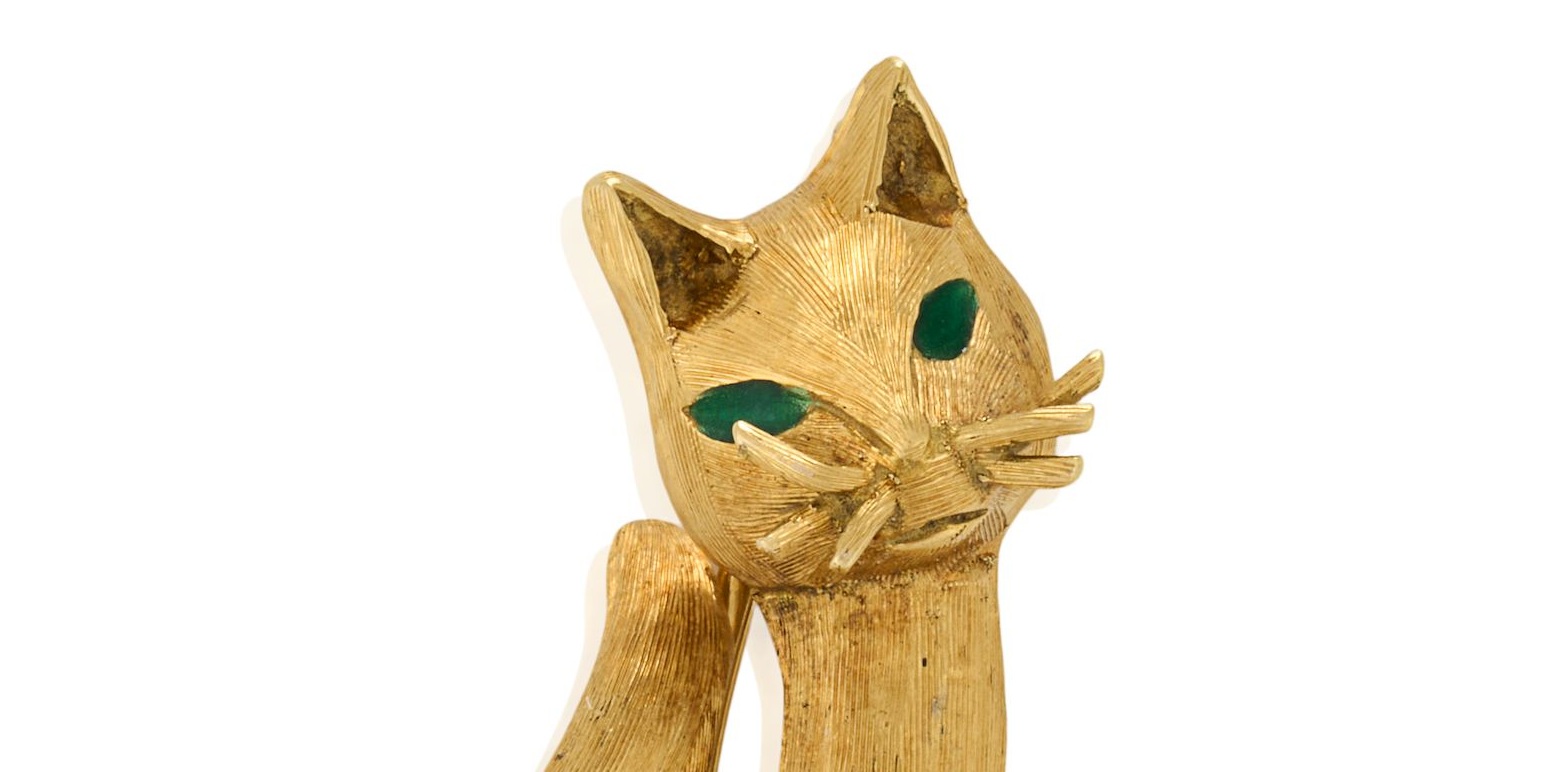
Sandy Lerner Is Rehoming Her Cats: A Tiffany Cat Brooch and Sixty-Five More
The Cisco co-founder spent four decades collecting cats in gold, enamel, amethyst and bronze. On 30 September 2026 Bonhams sells 66 of them in New York, from a $700 carved cat to a $120,000 bronze by the sculptor Rembrandt Bugatti. She is keeping the live ones.
Why Are Jewelry Prices Still Going Up?
Jewelry costs about 15% more than it did a year ago, and it is the gold accounting for most of it. The answer coming back from the jewelry trade and brands is less gold in the piece, which changes what you have to ask for at the counter.

Natural Diamond Prices Are Going Up Again, at Least for Now
Lab-grown stones pushed mined diamond prices down for years. The diamond trade's price index rose again in August, led by small stones. What that changes for you.
The newsletter.
One email when something is worth your attention. New essays, the buying calls behind them, and what we’re watching in the trade. No roundups, no affiliate dumps.