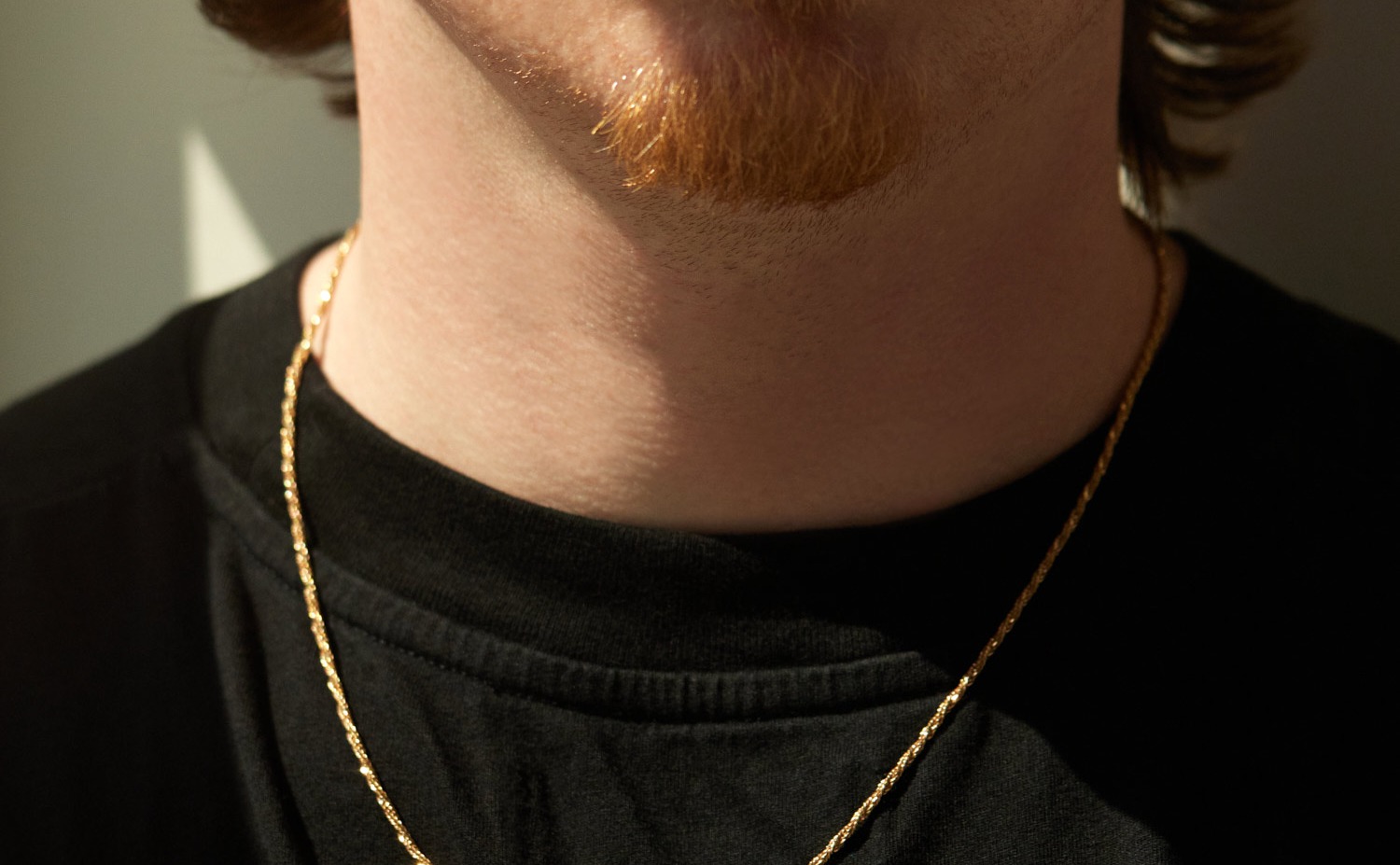
Photo: Catbird
14k vs 18k Gold: What the Karat Number Buys, and What 'Solid Gold' Really Means
A solid gold jewelry buying guide for the karat decision: what 14k and 18k gold each change about color, tarnish, and hardness, what the law lets 'solid gold' promise, and the clasp question worth asking before you buy.
Somewhere between deciding a chain should be solid gold and paying for it, you pick a number to put in front of the word. 14k vs 18k gold is the usual form of the question, and the menu is widening: Catbird now offers select classics in solid 10k as well as 14k, with its chain category retitled to read “14k & 10k.” The number deserves more attention than the phrase it precedes, because the two make very different promises. The karat states exactly how much gold is in the metal, and that single ratio drives the color, the tarnish chemistry, and a good part of whether 18k is worth it over 14k for the piece you’re buying. “Solid gold” has a legal meaning too, and it’s thinner than it sounds: it rules out hollow construction and plating, and since 2018 it hasn’t guaranteed any karat at all. So the skill worth having is reading the number everywhere it appears, and noticing where it doesn’t: the clasp, the rest of the small working parts the trade calls findings, and a corner of gold vermeil now priced in four figures.
What the Karat Number Changes: Color, Tarnish, and Aging
The percentages are the entire mechanism, so they earn thirty seconds. 18k is 75% gold by weight. 14k is 58.3%. The 10k newly headlining chain pages is 41.7%. The rest is alloy, the copper and silver and zinc mixed in by recipe, and recipes vary by maker and by color. Jewelers of America’s metals guide carries the full table, but those three numbers are the working set, because nearly everything else in the karat decision flows from them.
In yellow gold the ratio is visible. GIA’s buying guidance puts it in one line: generally, the purer the gold, the more yellow the color. The trade has engineered around the same fact for decades. A 1998 Santa Fe Symposium paper on alloy development recommends one master alloy for 14k and 18k because the higher gold content “gives a much better yellow colour.” In practice, 18k yellow reads warm and saturated, the tone you picture when someone says gold and stops talking. 14k runs a touch lighter and cooler, and Catbird describes its own 10k as slightly lighter still. They’re different temperatures of the same metal, and the quieter one has its partisans for good reason.
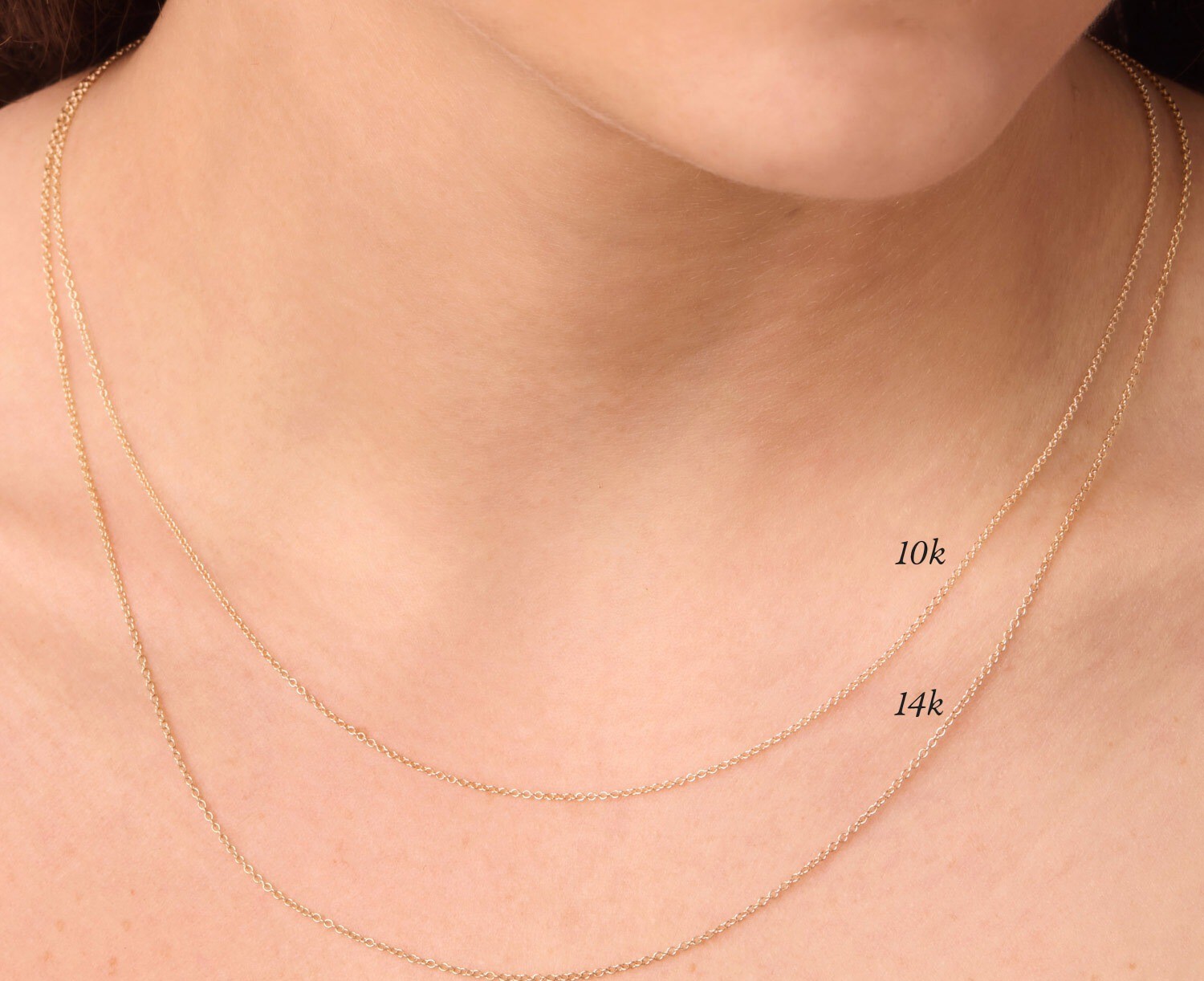
The tarnish difference is chemistry. Chris Corti’s survey of gold tarnishing for Ganoksin, the metalsmithing archive, finds that colored golds hold their tarnish resistance “as long as the gold content is high enough, i.e. about 18 carat (75% gold) and above,” with tarnish “generally seen only in the lower carat golds (8-10 ct), occasionally in 14 and 18 ct.” Hold on to that second clause, because it says even 18k occasionally tarnishes. The romantic version of the karat story, in which 18k mellows into patina while 14k goes dull and shows its alloy, runs well past what the chemistry supports. More gold means less base metal sitting at the surface waiting to react. The rest is folklore with good lighting.
Wear is measurable too, and smaller than the worry. A peer-reviewed study in Gold Bulletin weighed an 18k wedding ring weekly for a year and recorded 6.15 milligrams lost to abrasion, with the steepest drops landing during a beach vacation and gardening and skiing contributing their share. On a ring of several grams, that’s well under 1% of its mass for a year of constant wear. You are leaving your gold on doorknobs and beaches, at a rate that rounds to sentiment.
And the ratio moves the price, since 75% gold plainly contains more gold than 58.3%. What that means on a price tag right now is its own subject. For this decision it’s enough to know that the gap between karats starts in the metal itself.
Whether 14k Is Harder Than 18k Depends on the Alloy
Ask in any jewelry forum and the answer arrives fast and confident: 14k for every day, 18k for occasions. “14k lasts a lifetime and you can wear it everyday” is how a typical r/jewelry answer puts it. The folklore is directionally reasonable and specifically wrong, because hardness in gold belongs to the alloy recipe.
Stuller, the big American jewelry supplier, publishes Vickers hardness values for every gold alloy it sells (an indentation test: higher means harder to scratch and dent), and the current chart refuses to behave. Stuller’s standard 14k yellow sits at HV 134. An 18k yellow in the rich formulation runs 160, comfortably harder. Another 18k yellow, the Euro alloy, runs 115, softer than every 14k yellow on the chart. And out at the edges the folklore collapses completely: 18k red, which takes its color from a heavy copper load, is the hardest gold on the whole chart at 257, while 18k green sits near the bottom at 95. Two pieces, both honestly stamped 750, can land more than a hundred Vickers points apart.
The number on the stamp tells you gold content; the recipe behind it sets the behavior. The same logic is now pulling the karat menu downward: when Marla Aaron released her first 10k piece this spring, she told JCK that “the primary reason for using 10k was its hardness.” More alloy in the mix generally buys more resistance to dents and scratches, which is why the folk rule survives as an average. But the karat decision in front of you is one piece, in one alloy, and the chart says the alloy is where the hardness lives. A jeweler who warns you 18k is too soft to wear daily is describing some 18k, and there are formulations built for exactly that work.
What “Solid Gold” Legally Promises
“Solid gold” is the phrase product pages lean on hardest, and what it promises in the United States fits in two clauses. The FTC’s Jewelry Guides police composition: the word “gold,” unqualified, belongs to a product “composed throughout of an alloy of gold,” and only when “a correct designation of the karat fineness of the alloy immediately precedes the word,” at “at least equal conspicuousness.” And they police structure: a hollow product “should not be marked or described as ‘solid,’” with the Guides offering the example that a hollow 14k piece can’t be sold as “14 Kt. Solid Gold.”
Gold throughout, and no air in the middle. That’s the entire promise. Which karat is a separate disclosure, and since August 2018 the phrase can’t even imply a floor. That summer the FTC removed the Guides’ old 10-karat minimum, advising that marketers “may use gold terms to describe a product or part thereof composed throughout of gold alloy—whether above or below 10 karats—if they qualify the term with an equally conspicuous, accurate karat fineness disclosure.” Jewelers of America translates the change for its members without drama: jewelers may now sell gold under 10k. Other markets settled the question long ago. In the UK, 9 carat gold (375 parts per thousand) has been a legal standard of fineness under the Hallmarking Act since 1973.
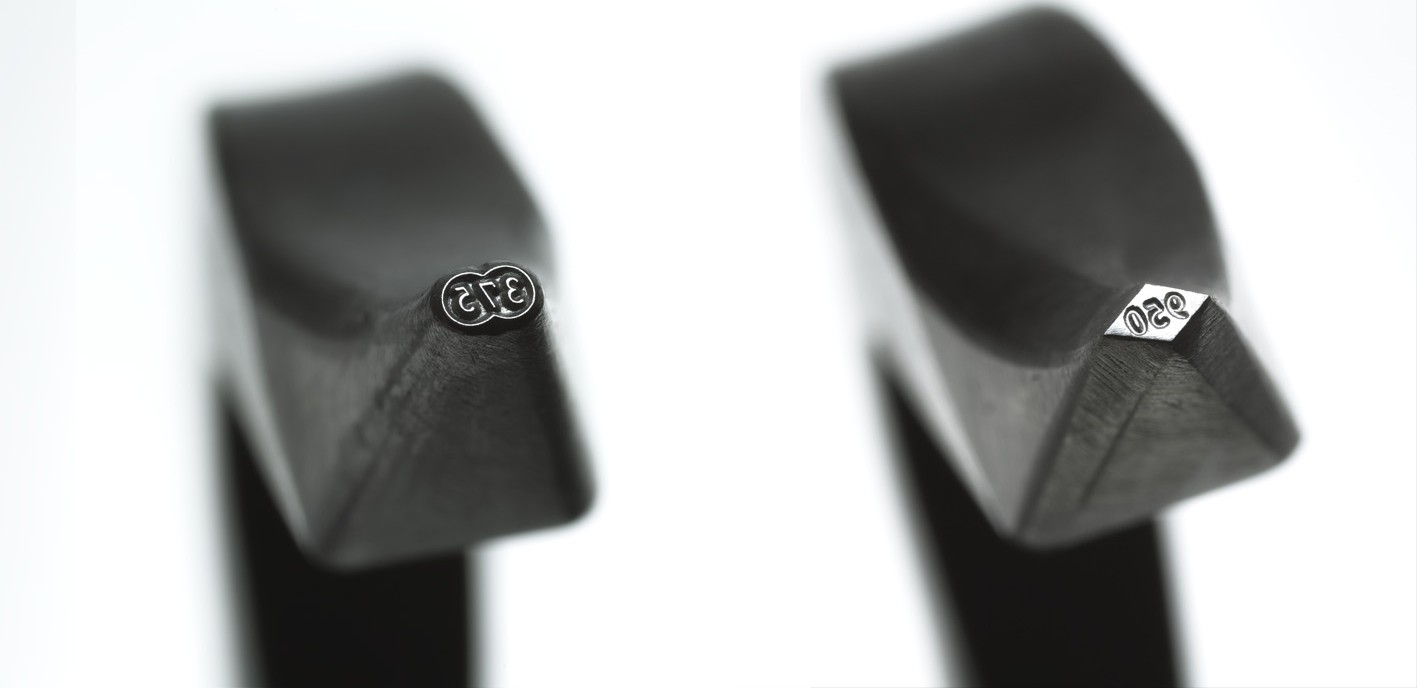
“Solid gold” rules out the things a first-time buyer worries about, plating that wears through and hollow links that dent, and at the level where you’re choosing between karats, those were rarely in doubt. The karat number carries everything else: content, color, chemistry, and the starting point for hardness. That’s worth keeping straight right now because the menu under the phrase is moving. The American norm runs 10, 14 or 18 karat, with 14k the most common per Jewelers of America, and the lower rungs are getting prime placement under expensive gold, a shift we’ve covered from the design side. The phrase on the page will keep sounding exactly the same while the number underneath it moves.
The Clasp Question: How Far the Karat Standard Runs
A chain is mostly chain, but the part you handle every day is the clasp, and the findings (clasps, jump rings, ear posts) are where a karat standard either runs the length of the piece or stops. The clasp flexes, carries the full weight of whatever it closes, and gets operated more than everything else combined. It’s also, on most product pages, the one component whose metal goes unmentioned.
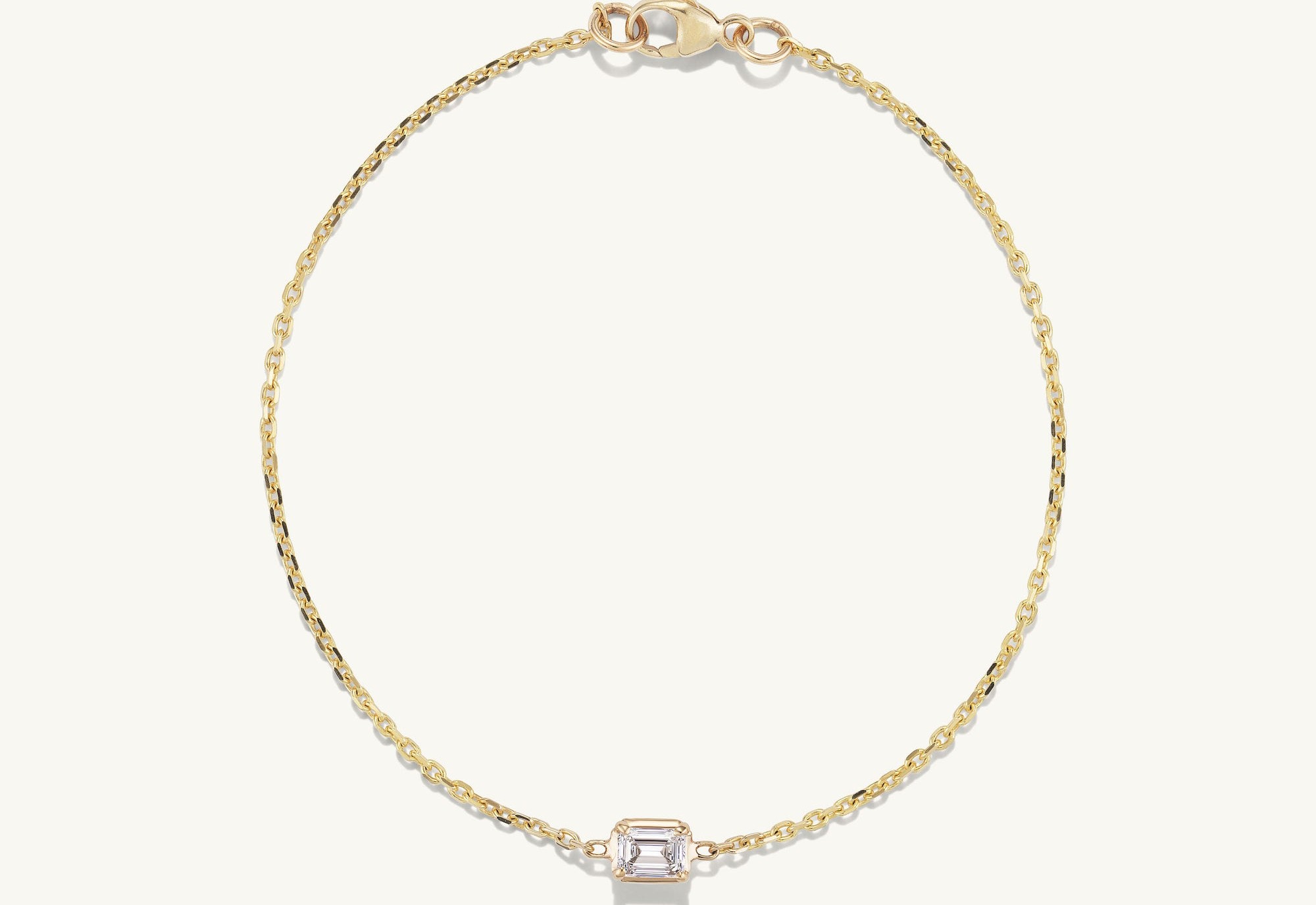
Read the range off the pages themselves. Catbird’s Lover’s Chain, $1,370, names the metal twice: “solid 14k yellow gold” for the chain, “solid 14k yellow gold clasp” for the closure, with a standing line under both: “Solid gold always, never plated.” Sophie Ratner’s Woven Chain Necklace, $1,500, writes the closure into the same sentence as the metal, a “solid 14k gold woven double strand diamond cut chain attached to a lobster clasp.” That’s one end of the range, chain and clasp specified together. The broad middle looks like David Yurman’s box chain in 18k yellow gold, about $1,425 through authorized retailers, where the spec list gives the piece’s karat and the clasp’s type, lobster, and stops there. Tiffany states 18k at the piece level while its marketing celebrates clasp engineering: the Titan collection includes a necklace named for its clasp. Cartier specs a Love pendant as 18k yellow gold, 750/1000 (the millesimal way of writing 75%), and says nothing separate about the findings.
Every brand on that list is meeting the market’s norm, which is that nobody asks about findings. Asking costs one line. “What metal is the clasp?” is a fair question to send any brand selling a serious chain, and the pages that answer it before it’s asked have decided the answer belongs in the product description. How to tell if jewelry is well made covers the wider version of the skill, the finishing and the backs and the joins. The clasp line is the two-second version: one spec that shows whether the standard extends past the parts that photograph well.
Gold Vermeil at Four Figures: Reading the Spec
Gold vermeil is usually a first-jewelry word, the territory of demi-fine brands selling gold-coated sterling at entry prices. At certain design-led houses it now runs well into four figures. Sophie Buhai’s Large Barbara Chain goes for $2,150 to $2,450, sterling silver under gold, made to order in vermeil, and her page is blunt about the material in a way worth respecting: “Tarnishing of vermeil is natural and should be expected to occur.” Charlotte Chesnais specs hers more precisely than many solid gold pages spec their clasps: “Silver 925 coated with 18 Karat gold (Vermeil 5 microns).”
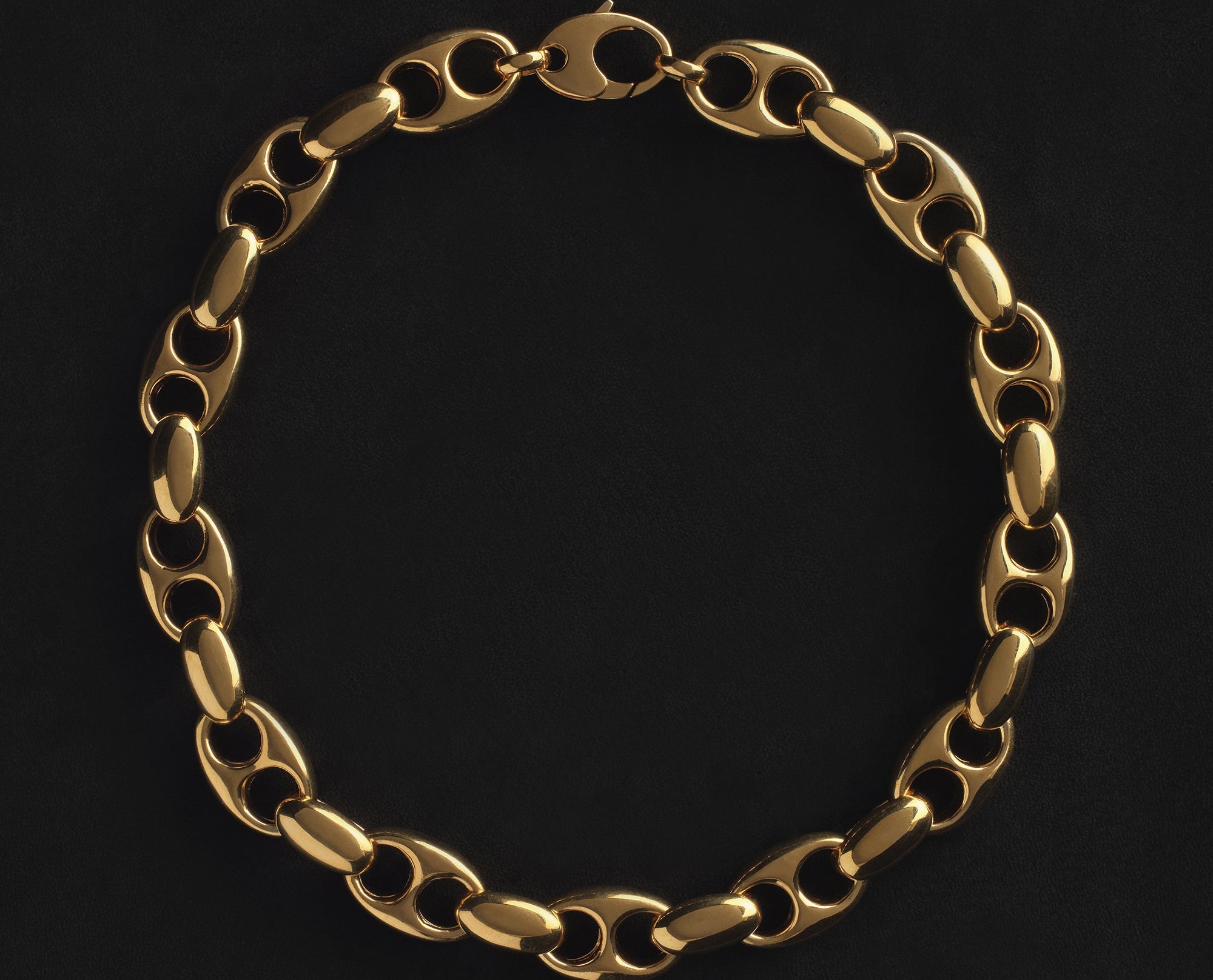
Vermeil, of all the terms in play, carries the most demanding legal definition. Under the same FTC Guides, the word means a base of sterling silver coated on all significant surfaces with gold of at least 10 karat fineness, at “a minimum thickness throughout equivalent to two and one half (2½) microns” of fine gold. A micron is a thousandth of a millimeter, so the floor is thin. It is also an enforceable number, which is more than “solid gold” ever tells you about karat, and the Guides even cover the sandwich: a base-metal layer slipped between the silver and the gold has to be disclosed. Chesnais’ five microns is double the floor, and printing the figure is the move of a brand treating plating as a spec.
A four-figure vermeil chain, then, is a design purchase: sterling’s metal value, a gold surface the brand itself tells you will tarnish, and a price carried by the sculpture. Nothing in that is a trick when the page says what it is. The reading skill is the clasp skill moved one layer down: find the karat of the gold layer, find the microns, find what’s underneath.
How to Read a Solid Gold Product Page
The reading order: karat first, because the number is what guarantees the gold content. Alloy second, if the brand will name it, because the recipe is where hardness and color temperature were decided. The clasp line third, because it shows how far the standard travels. And on anything vermeil, the microns and the base, because that’s where the honest pages put their pride.
One requirement in the FTC’s gold rule doubles as a reading instruction: the karat number in front of the word “gold” must be at least as conspicuous as the word itself. The instruction scales. The words on a product page are there to reassure you. The number is there because somebody was required to put it there. Give it at least equal conspicuousness.
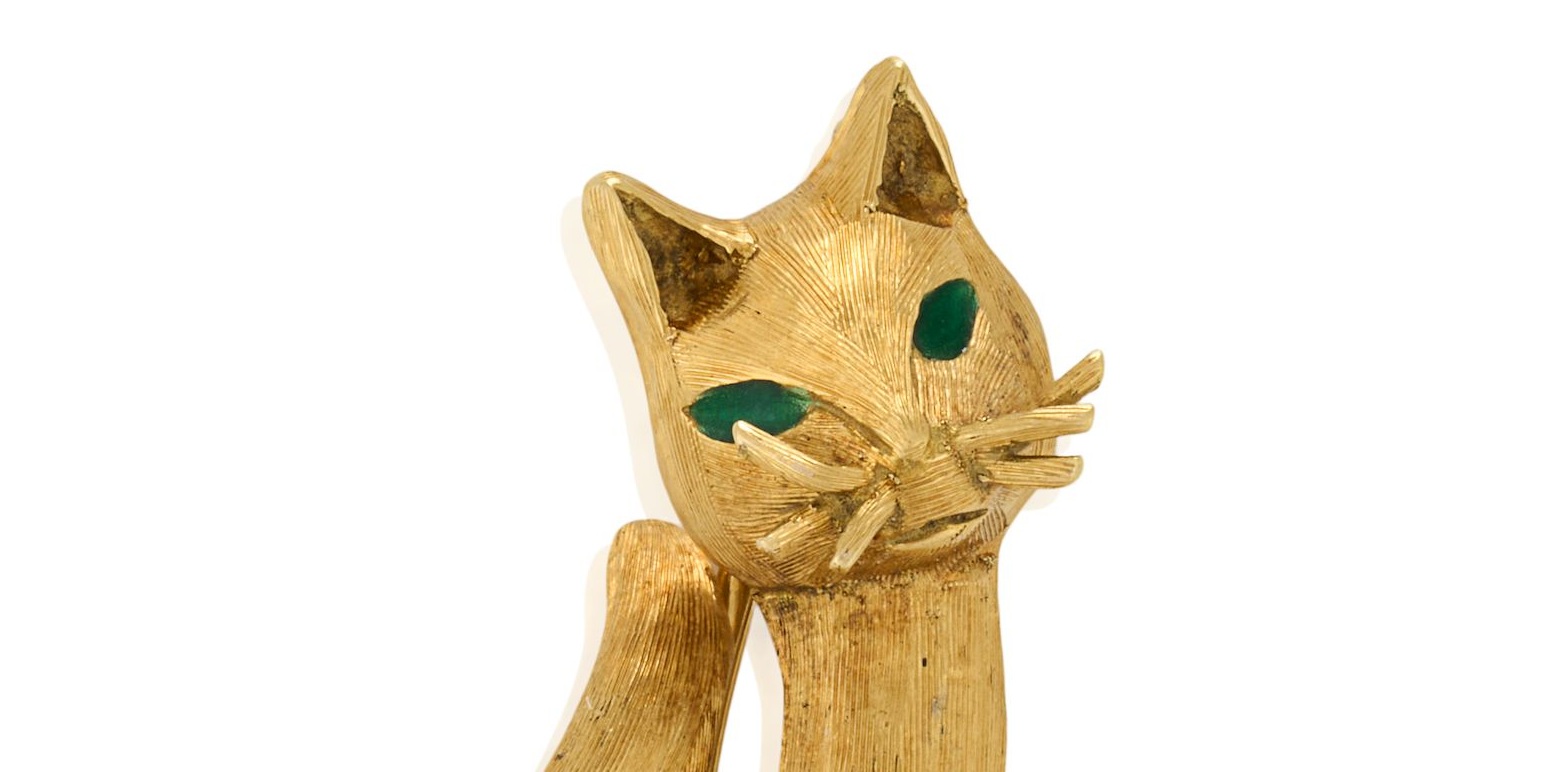
Sandy Lerner Is Rehoming Her Cats: A Tiffany Cat Brooch and Sixty-Five More
The Cisco co-founder spent four decades collecting cats in gold, enamel, amethyst and bronze. On 30 September 2026 Bonhams sells 66 of them in New York, from a $700 carved cat to a $120,000 bronze by the sculptor Rembrandt Bugatti. She is keeping the live ones.
Why Are Jewelry Prices Still Going Up?
Jewelry costs about 15% more than it did a year ago, and it is the gold accounting for most of it. The answer coming back from the jewelry trade and brands is less gold in the piece, which changes what you have to ask for at the counter.

Natural Diamond Prices Are Going Up Again, at Least for Now
Lab-grown stones pushed mined diamond prices down for years. The diamond trade's price index rose again in August, led by small stones. What that changes for you.
The newsletter.
One email when something is worth your attention. New essays, the buying calls behind them, and what we’re watching in the trade. No roundups, no affiliate dumps.