How to Build a Curated Ear in Fine Jewelry
Which spots to fill first, what fine jewelry goes in the upper ear, and why sourcing and healing decide the result as much as styling.
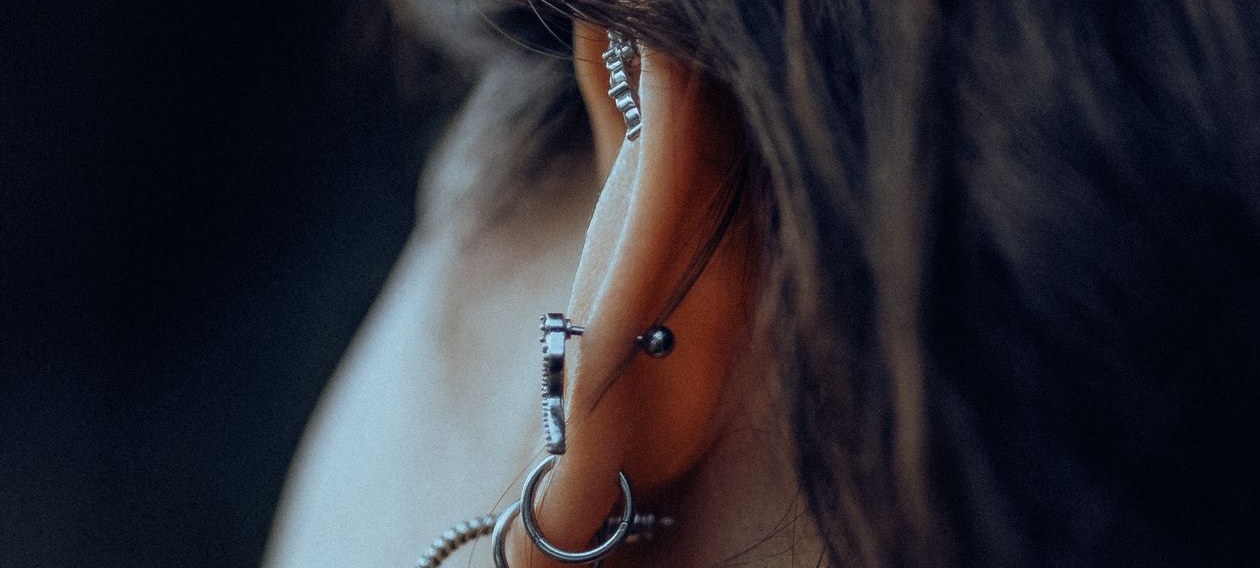
A curated ear is a few earrings worn up one ear, chosen and spaced so they read together as one composed look, each with enough room that none of them competes with the rest. It is the layered-necklace idea moved to the ear, and the reason to want one is the same: a few considered pieces say more than a single pair, and they put the jewelry you already own to work.
Building that look with real fine jewelry, the kind most second and third piercings never get, changes what the project involves. Styling is only part of it. Just as much of the work is sourcing and planning: what to put in each spot, why so much of the good stuff is sold one earring at a time, how the pieces balance across two inches of ear, and how long cartilage takes to heal before you can swap anything in. Get those right and the ear looks collected over years instead of assembled in an afternoon.
An Old Idea, Now in Fine Jewelry
Wearing more than one earring per ear, on purpose, is not new at all; people have done it for thousands of years. What changed is what you can put in the second and third piercings. It used to be mall studs and street-vendor hoops, the afterthought jewelry that lived above your real earrings. Now a fifth-generation diamond house will sell you a single flat-back stud (the kind with a flat disc behind the ear instead of a butterfly clasp) built for a healed piercing, and the upper ear does the same compositional work your necklace layering does, on a smaller stage.
The studios that coined “the curated ear” sell it mostly as a styling service, and that gets you a long way. For someone who already buys good jewelry, the more useful frame is the layered stack you would build at the neck: the composition logic of a layered necklace stack ports almost directly to the ear, the same hierarchy and restraint and negative space. The ear is the harder version, because the canvas is smaller and you cannot restyle it in the mirror every morning. You commit at the piercing.

Fill the Piercings You Already Have First
Most people have two lobe piercings. Plenty have three, or a helix (the upper rim of cartilage), a tragus (the little nub in front of the ear canal), or a conch (the flat inner shell) from a decade ago that has been sitting empty since.
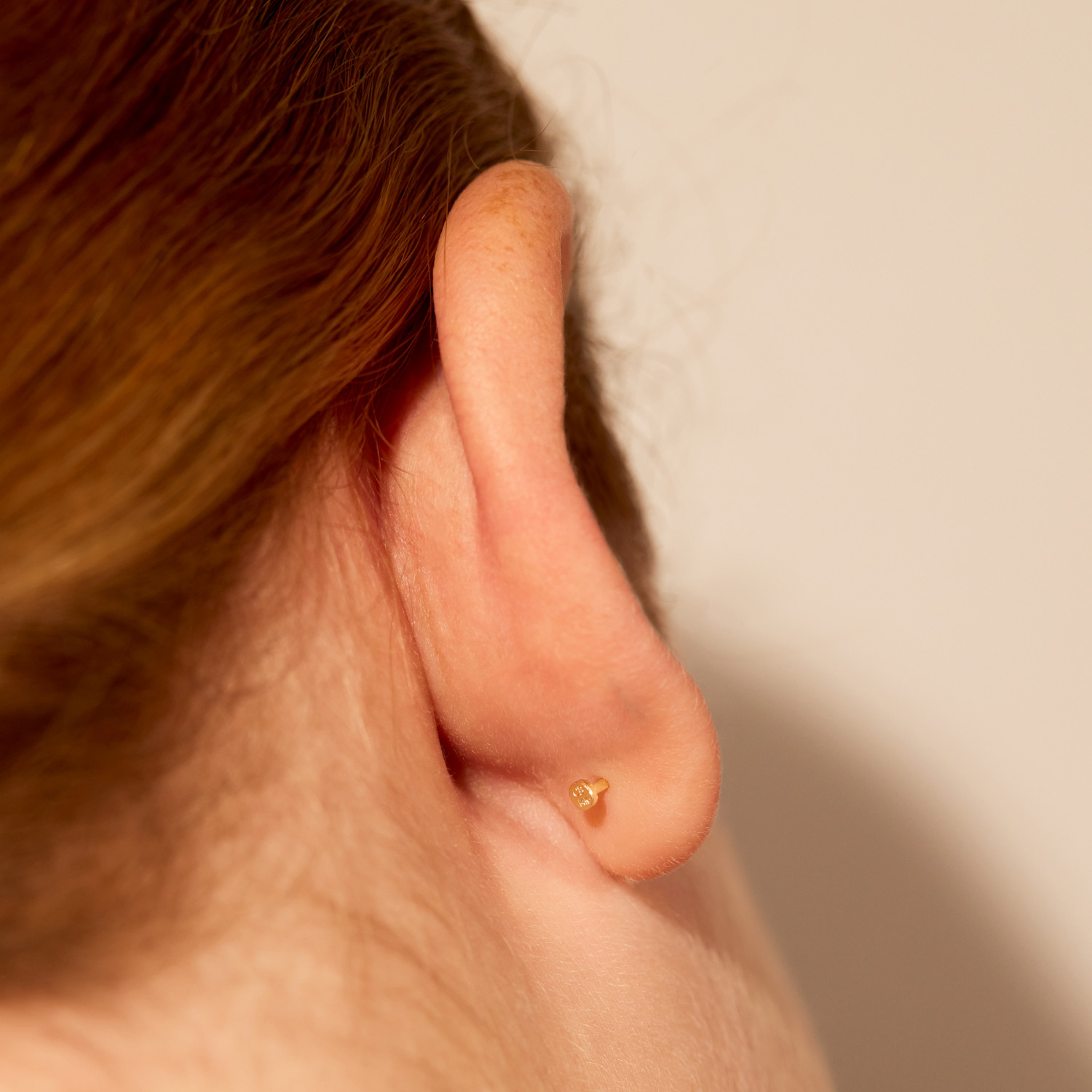
Before booking a new piercing, fill the ones you own. A new piercing is exciting and swapping out the studs you already have is errand-grade boring, so the upgrade usually waits. Do it first anyway: the piercings you already have are the foundation of the composition, and putting good jewelry in them before you add more is the difference between building a look and just accumulating piercings. Take the inventory honestly: which piercings are empty, which ones still hold the cheap studs you meant to upgrade two years ago. Then swap, say, the forgettable seconds for 14k gold huggies (small hinged hoops that hug the lobe) that talk to your first-lobe earrings. That one upgrade will change how the whole ear reads more than another piercing would, and it costs you a jewelry purchase instead of a wound.
Look past the front-facing spots while you are at it. The back of the lobe, the second piercing tucked behind the first, the placements you only really see when you turn your head: these get neglected because they do not show up in a quick mirror check. Other people catch them anyway, from the side and from behind. A small diamond sitting where you forgot you had a piercing reads as considered precisely because most people leave it empty.
One Ear, One Focal Point
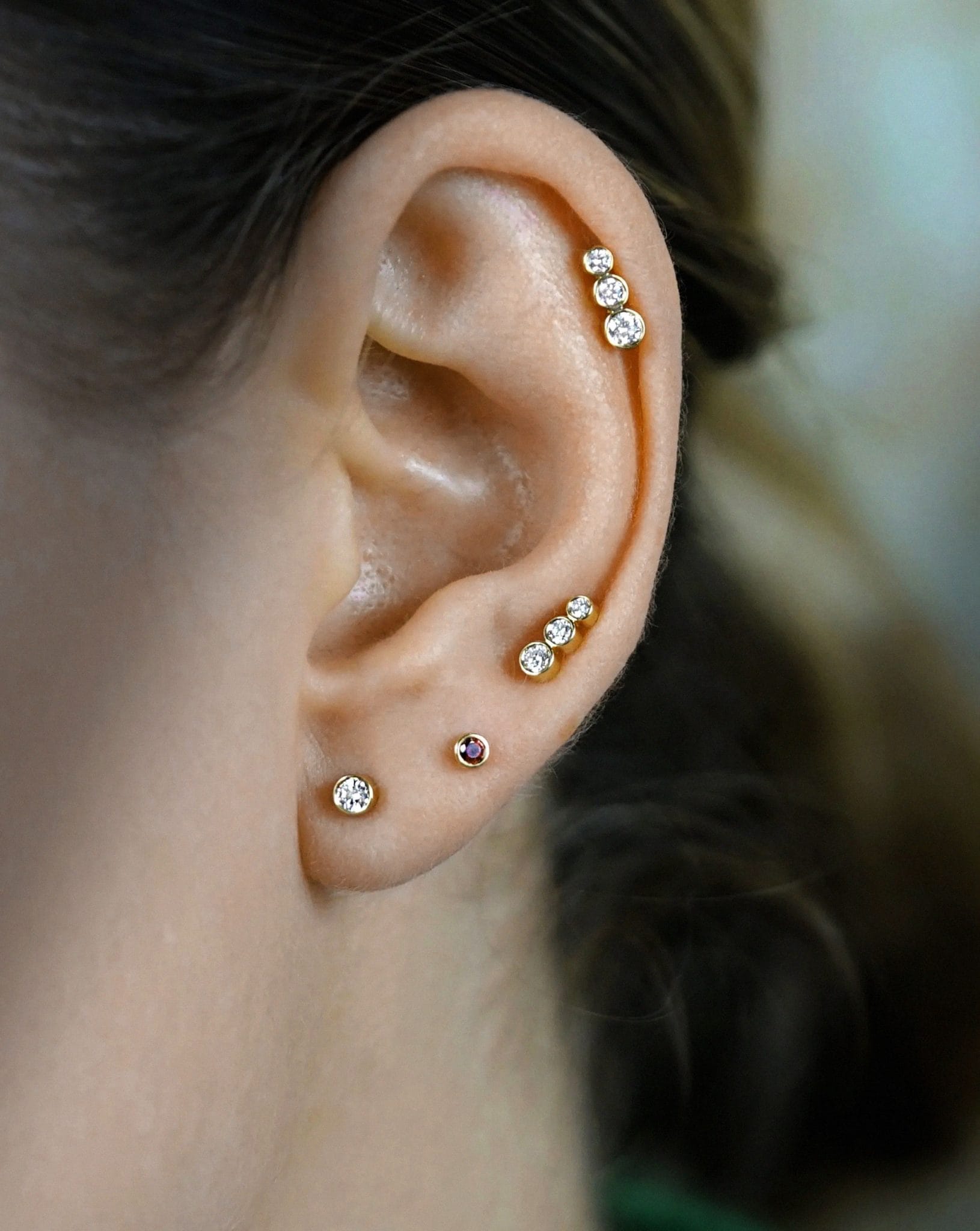
Think of the ear in three zones. The lower lobe carries your primary earrings, the largest and most prominent. The upper lobe and mid-ear take smaller, connective pieces. The cartilage up top takes accents that add height. The hierarchy runs exactly like a necklace stack or a ring stack: the lower-lobe piece leads, it is the largest and the first thing the eye lands on, and everything above it plays a supporting role, smaller and lighter.
The common early mistake is a statement piece in every zone. A big hoop in the first lobe, a medium hoop in the second, a fat stud in the helix, three things all shouting on a surface about two inches tall. You can fit three focal points; they just fight each other and the whole ear reads as noise. Give it one. A medium gold hoop anchors the first lobe, a small diamond stud answers in the second, and a tiny flat-back or a micro huggie punctuates the helix if you have one. Three pieces, one clear lead, enough space between them that each registers as itself instead of as noise.
Several focal points on one ear just fight each other. Give it one.
What Fine Jewelry Buys You in the Upper Ear
At this tier the quality of what goes in the ear shifts the whole exercise. Fashion earrings are designed for the first lobe and treat everything above it as an afterthought. The fine jewelers who built the piercing category design for the upper lobe, the helix, the tragus, in solid 14k and 18k gold with real stones, and they sell those pieces one at a time on purpose.
Maria Tash is the house that made this a category, opening in the East Village in 1993 and bringing delicate fine jewelry to a field then dominated by heavy industrial body jewelry, pieces meant to be piled on together. Her floating diamond charms for the helix start around the 4mm pear, about $1,030, which is only the charm and needs its own $140 gold hoop to hang from; they climb to a 5mm around $2,050 at Harrods, and a 2mm Diamond Princess Hoop runs $510. Jade Trau, a fifth-generation diamond house, reworked its core silhouettes into flat-backs built for piercings: below its $1,675 Maverick sits the line’s entry, the Small Sophisticate, at $495. Catbird is the accessible door in, its 14k flat-backs around $148 and sold one at a time, in the brand’s words, “to mix-and-match, and scatter in your piercings like stars.” Selling them singly is the point: the whole category is built to be composed piece by piece. Each is a house worth knowing in its own right, designing for the ear the way it designs everything else.
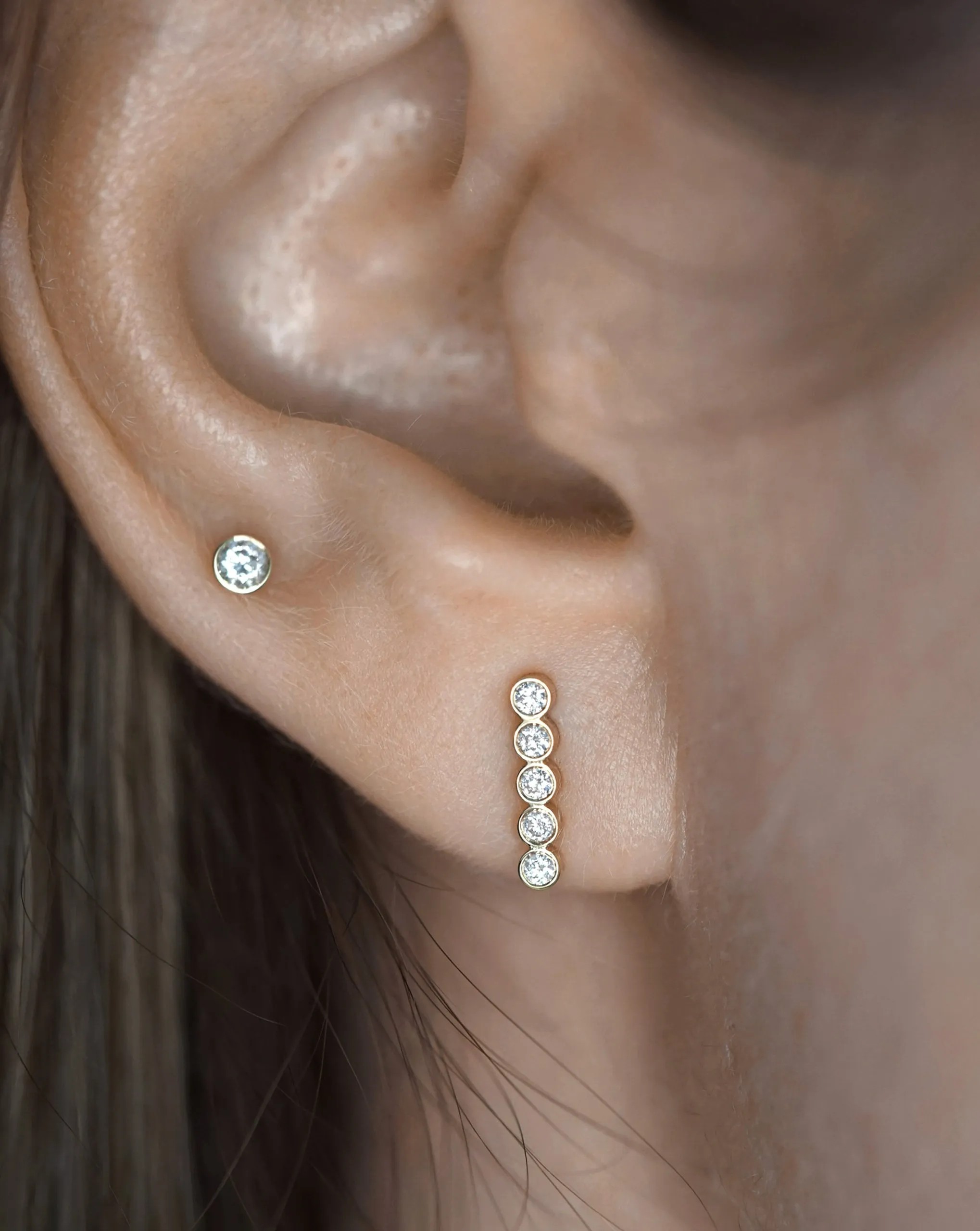
The materials are the argument. You wear these pieces all day, every day, often sleeping in them, and cheap metal makes itself known: plating wears off, alloys irritate, the skin around a piercing you never take an earring out of is unforgiving. Solid gold catches light differently in a second-lobe huggie than plating does, a bezel-set diamond flat-back has a depth a cubic zirconia stud cannot fake, and over years the gold takes on a worn-in presence that reads like the piece was always there. The Association of Professional Piercers sets the floor for what belongs in a piercing: solid 14k gold or higher, nickel-free, cadmium-free, smooth enough and built to be sterilized. Gold above 18k is generally too soft for body jewelry, so 14k and 18k are the two practical categories, and both clear the bar. If you are going to wear multiple earrings every day, the metal pays you back in comfort as much as in looks. (This is the same buy-the-construction logic that separates jewelry that is well made from jewelry that only photographs well.)
There is an honest counterargument worth putting on the table: you may not need solid gold at all, at least not while you are healing. Implant-grade titanium is arguably more biocompatible than gold for a fresh piercing and costs a fraction as much, and many “gold” setups are really a titanium post with a gold decorative end. If you are still healing, titanium is worth asking your piercer about. The fine-jewelry case is an aesthetics-and-longevity case for an ear that is already healed and being built out on purpose. Heal in titanium, then spend once the piercing and your taste have both settled.
The Studio Will Not Pierce You With the Piece You Bought
One thing worth knowing before you book: the jewelry you want and the studio doing the piercing are usually two different businesses, and most reputable studios will not put jewelry you brought from outside into a fresh piercing. The reason is sterilization. Everything that goes into a new piercing has to run through the studio’s own autoclave (the pressurized steam sterilizer that kills everything on the metal), and a studio cannot verify the metal certification or the chain of custody on a piece that arrived in your bag. Some refuse outside jewelry flatly. A few will accept fine jewelry with its original packaging and receipts and their own pre-sterilization, but that is rare. A studio that agrees to pierce you with your own $1,675 flat-back is doing you a favor, and a rare one.
The workaround that works: get pierced with whatever the studio stocks that meets the spec (solid 14k or higher; threadless or internally threaded, so the post has no exposed screw thread to drag through the wound; the right gauge, meaning post thickness, for the placement), let it heal, then swap your fine jewelry in. Less romantic than walking in with the piece already chosen, and it protects both the piercing and the piece.
Healing is where the timeline turns patient on you whether you like it or not. Lobes often feel fine at six to eight weeks but are not fully healed until closer to two or three months. Ear cartilage, the helix and tragus and conch, generally takes six to twelve months, with a lot of uncomplicated piercings landing around six to nine. Tissue heals from the outside in, so a piercing that looks done frequently is not, and changing the jewelry in a cartilage piercing before it has fully closed in carries real risk: fresh swelling, an irritated channel, a higher chance of scarring, sometimes enough trouble getting the new piece back in that the piercing closes on you. The practical version: map the whole ear now, do it in phases, and resist three or four fresh cartilage piercings in one sitting, which is a reliable way to inflame the ear and undermine the look you were planning. The tissue sets the schedule, and how patient you are has nothing to do with it.
The Maria Tash model is the clean way around all of this. When the studio is also the jeweler, the sterilization and sourcing problems collapse into one transaction, which is part of what the premium pays for: the service as much as the charm. Outside that system you are managing two relationships, and the plan has to account for both.
Your Two Ears Do Not Have to Match
Symmetry is optional, and breaking it on purpose is where the composition starts to read as yours. Build different arrangements on each ear: three graduated pieces on the left, two and a different earring style on the right. Or anchor both first lobes with the same earring so the ears register as a pair, and let everything above diverge. Perfect mirroring tends to read as a set straight off the shelf; deliberate asymmetry reads as a series of choices, the same way a wall of art hung slightly off-center looks composed where dead-centered looks safe.
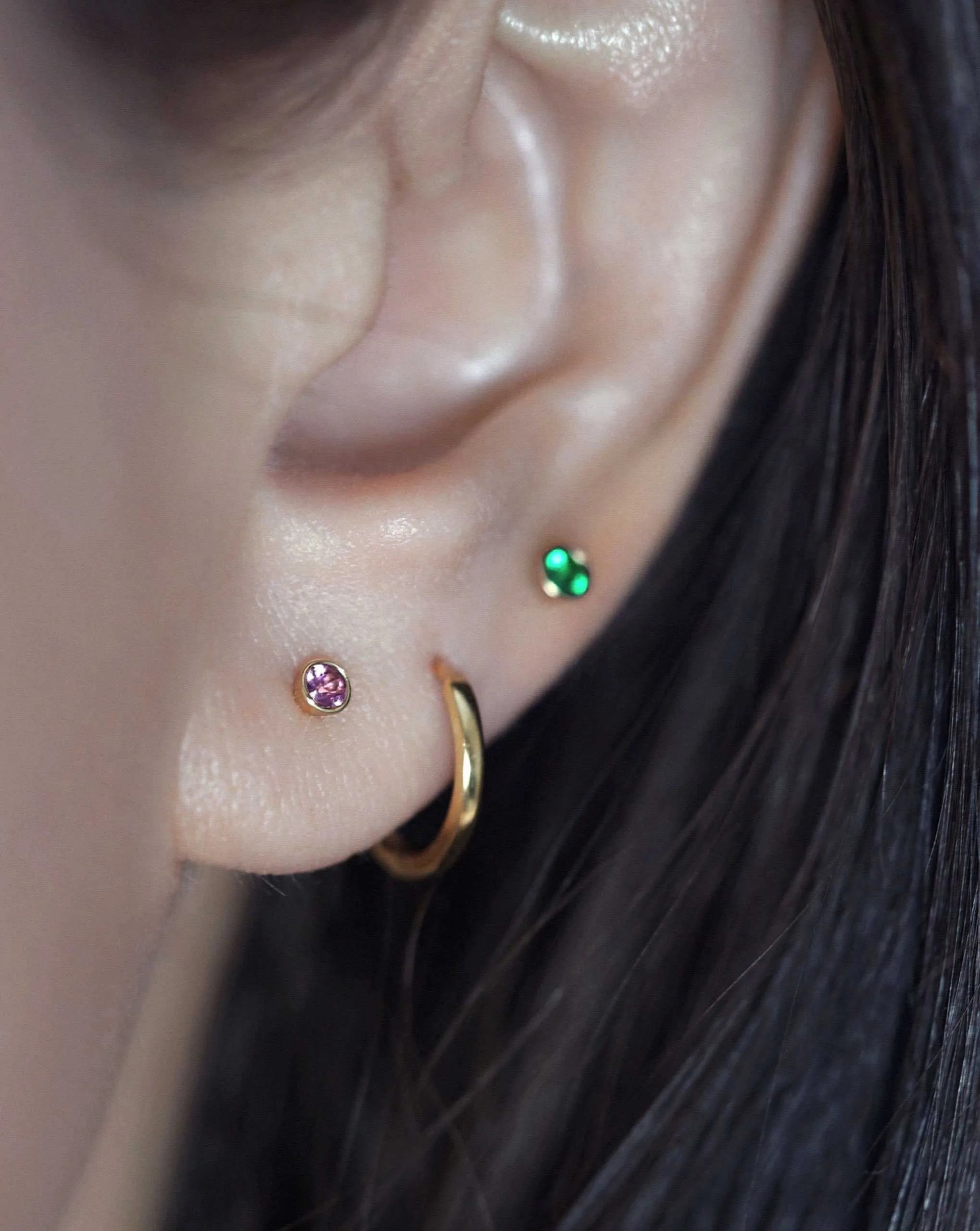
The market is built for this. The serious brands sell their piercing pieces one at a time, which fits how the look comes together: composed over time, one piece at a time. A matched pair in a box is a different product for a different shopper, the one who wants the whole answer settled in a single purchase. A drawer of singles is the working material of an ear you keep building.
Build It Over Time, Because the Time Is the Point
The best of these ears were not built in one appointment. They were assembled over months or years, one piercing and one piece at a time, each addition answering what was already there. That is partly forced on you, since piercings have to heal before you can judge the composition and a new piece will sometimes reveal that an older one needs upgrading or moving. But it is also the whole aesthetic. Build slowly, let each addition settle, live with it in the mirror for a few weeks before deciding what comes next.
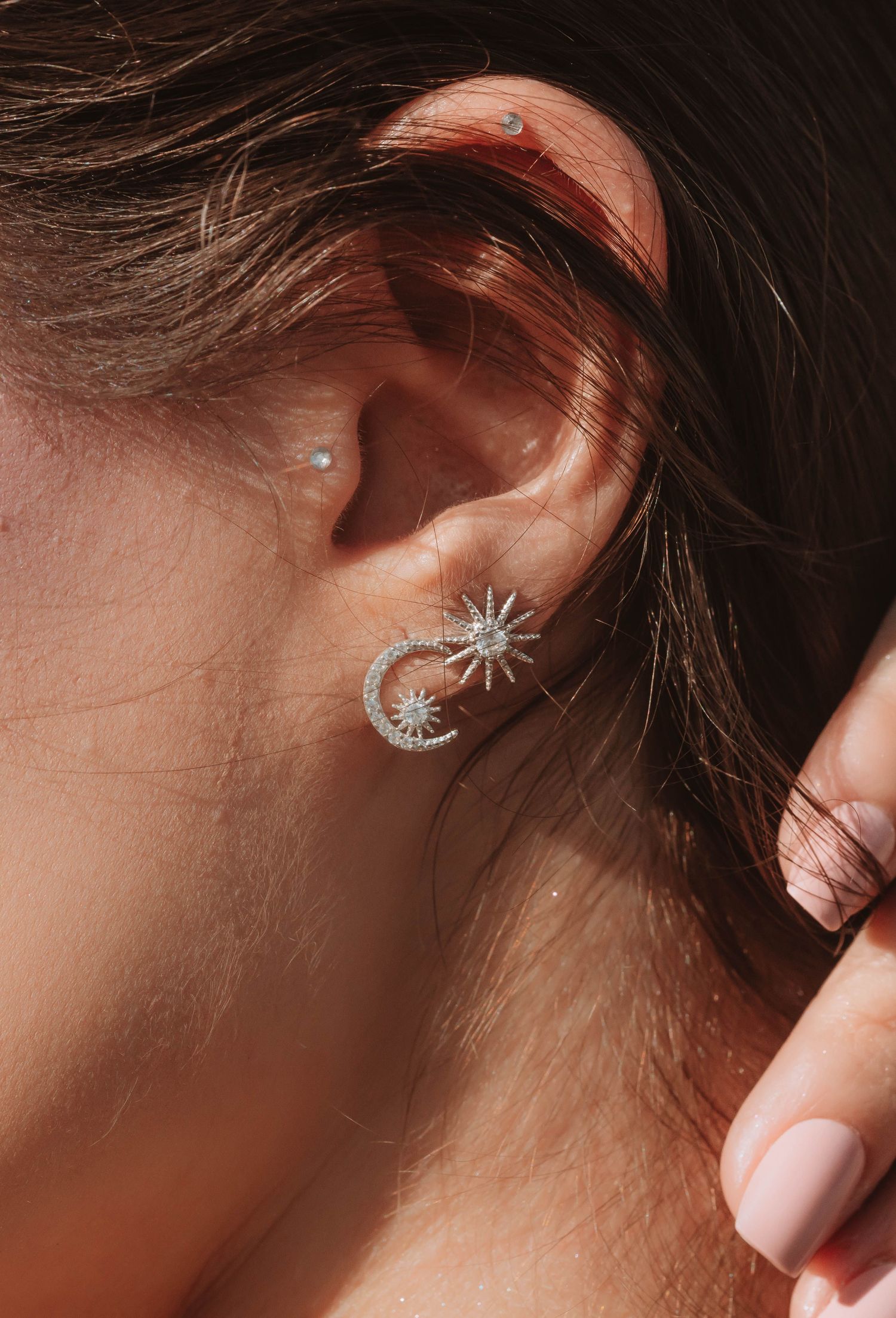
The budget is higher than the look implies, so it helps to do the math up front. A mid-tier build, a Jade Trau Maverick at $1,675 plus a Maria Tash pear charm and its hoop base at $1,170 together plus a third placement, lands somewhere around $3,000 to $4,000 before piercing and install fees. Reach for the larger Maria Tash charms and it climbs past that. For comparison, a single pair of Tiffany Knot earrings in white gold with diamonds is $4,700. You can spend one luxury-house pair of earrings and walk out with either the matched set everyone recognizes or a multi-piece ear built à la carte across designers that nobody else at the table is wearing.
The arrangement is entirely yours, and that is the part that holds. No house designed it and no box came with all of it; you chose the pieces and the order and the spacing, one decision at a time.
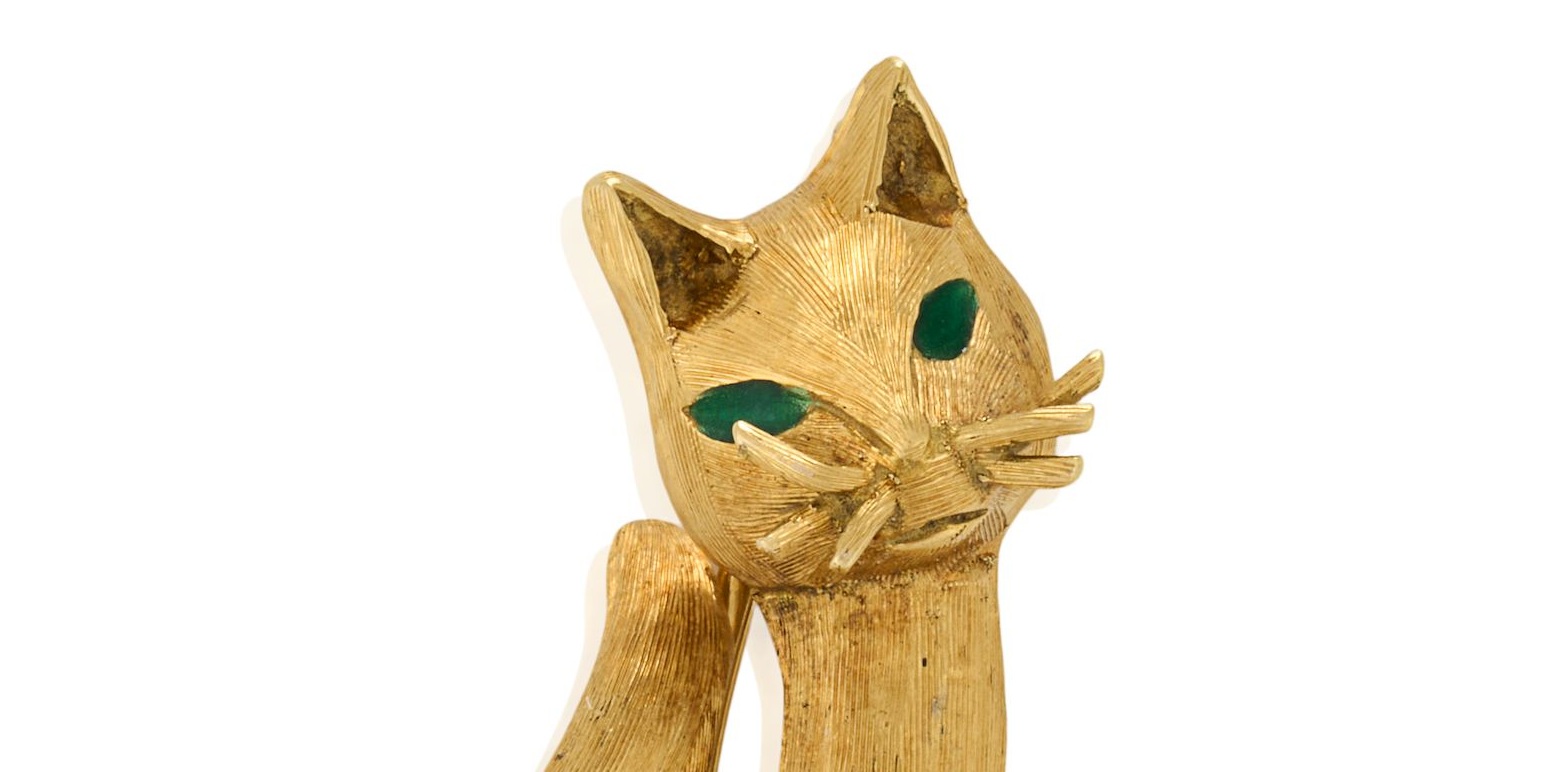
Sandy Lerner Is Rehoming Her Cats: A Tiffany Cat Brooch and Sixty-Five More
The Cisco co-founder spent four decades collecting cats in gold, enamel, amethyst and bronze. On 30 September 2026 Bonhams sells 66 of them in New York, from a $700 carved cat to a $120,000 bronze by the sculptor Rembrandt Bugatti. She is keeping the live ones.
Why Are Jewelry Prices Still Going Up?
Jewelry costs about 15% more than it did a year ago, and it is the gold accounting for most of it. The answer coming back from the jewelry trade and brands is less gold in the piece, which changes what you have to ask for at the counter.
Natural Diamond Prices Are Going Up Again, at Least for Now
Lab-grown stones pushed mined diamond prices down for years. The diamond trade's price index rose again in August, led by small stones. What that changes for you.
The newsletter.
One email when something is worth your attention. New essays, the buying calls behind them, and what we’re watching in the trade. No roundups, no affiliate dumps.