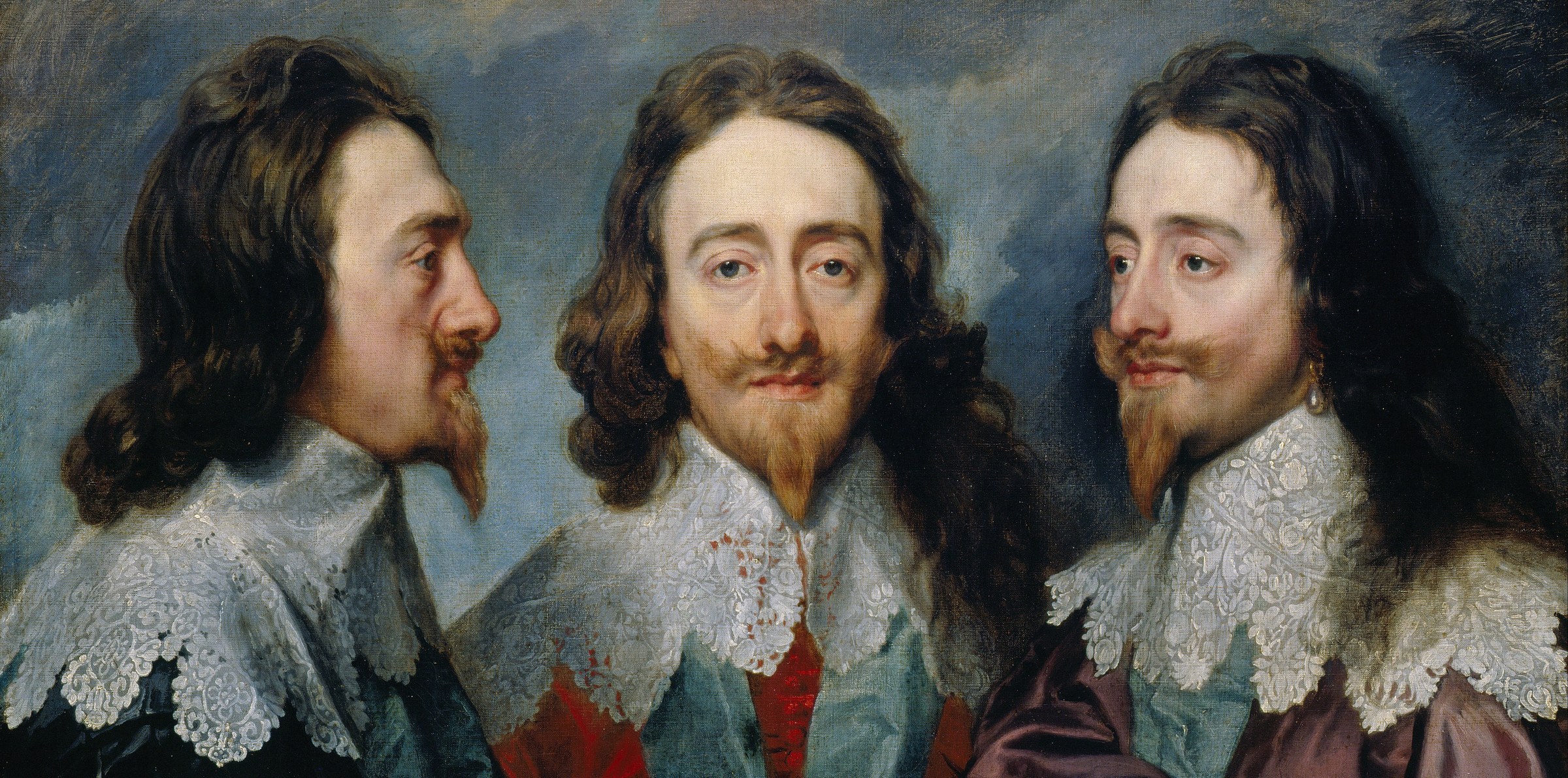
Anthony van Dyck, Charles I in Three Positions (1636), Royal Collection, via Wikimedia Commons
Fine Jewelry Started Ungendered And Never Stopped
Jewelry was sorted by rank for five thousand years and by gender for about one century. The men's and women's split is commercial noise rather than a property of the adornment: where gendered jewelry came from, and what it should and should not change about what you buy.
Open a top jeweler’s ring page, say Cartier for example, then open its rings for men page. See if you aren’t just looking at the same rings. For Cartier, it’s the same LOVE, the same Trinity, the same Juste un Clou, at the same prices: the LOVE in small yellow gold is ~$1,500 right now, whichever page you found it on. Pretty much nothing on the men’s page is named or described as a men’s ring anywhere on Cartier’s site.
So the difference between men’s and women’s rings, at the house most people would name first, is really only which page you opened. Whether gold chains are unisex, whether a man can wear a pearl necklace, why jewelry is gendered at all: the answer to all three sits in the same place, and it is not any intrinsic feature in the jewelry. At some point in the recent past, a marketing department attempted to draw a gendered line across the jewelry market, barely a century ago, and tries to turn us against five thousand years of everyone wearing everything. Let’s look at how we got here.
Jewelry Was Sorted By Rank Long Before It Was Sorted By Sex
For most of the history of fine jewelry, the rule about who wore what ran on rank. In Egypt, men and women wore jewelry across thirty centuries and every level of society, and it was the material rather than the form that marked who you were. Rome fixed the metal of a man’s ring by the office he held, under a right that successive emperors kept widening. The V&A’s history of jewellery puts the medieval position plainly: royalty and the nobility wore gold, silver and precious gems, and the lower ranks wore base metals like copper and pewter. English sumptuary law, the statutes governing what you were allowed to put on your body, reserved gold chains, heavy pearls and precious stones to the nobility and wrote those limits into men’s and women’s clothing alike, and Elizabeth I’s Act of Apparel in 1574 specified permitted materials by standing.
Those laws sorted people as a group, not by gender.
Some particular forms did carry gender markers, and people argued about them: in 1583 an English pamphleteer went after men wearing jewels of gold and precious stones in the ear, which tells you how many men were wearing them. Charles I wore a pearl drop in his ear for more than thirty years, up to the morning of his execution in 1649, because he was a king and kings wore pearls. The European convention was a single earring rather than a pair, and both sexes wore it. In the same decades a Flemish diamond dealer described the Mughal emperor Jahangir as covered in stones, spinels and emeralds and pearls on his arms, diamonds hanging from his turban.
Nobody sorted the objects into a men’s collection and a women’s collection, because nobody but royalty had collections.
Men’s Ornament Thinned Out, And What Survived Had A Job
Somewhere between the late 1700s and the middle of the 1800s, elaborate ornament on Western men thinned out. Historians argue about when it started and about whether it happened at all. What nobody disputes is the outcome around that time period: the more elaborate jewelry was by then worn almost exclusively by women.
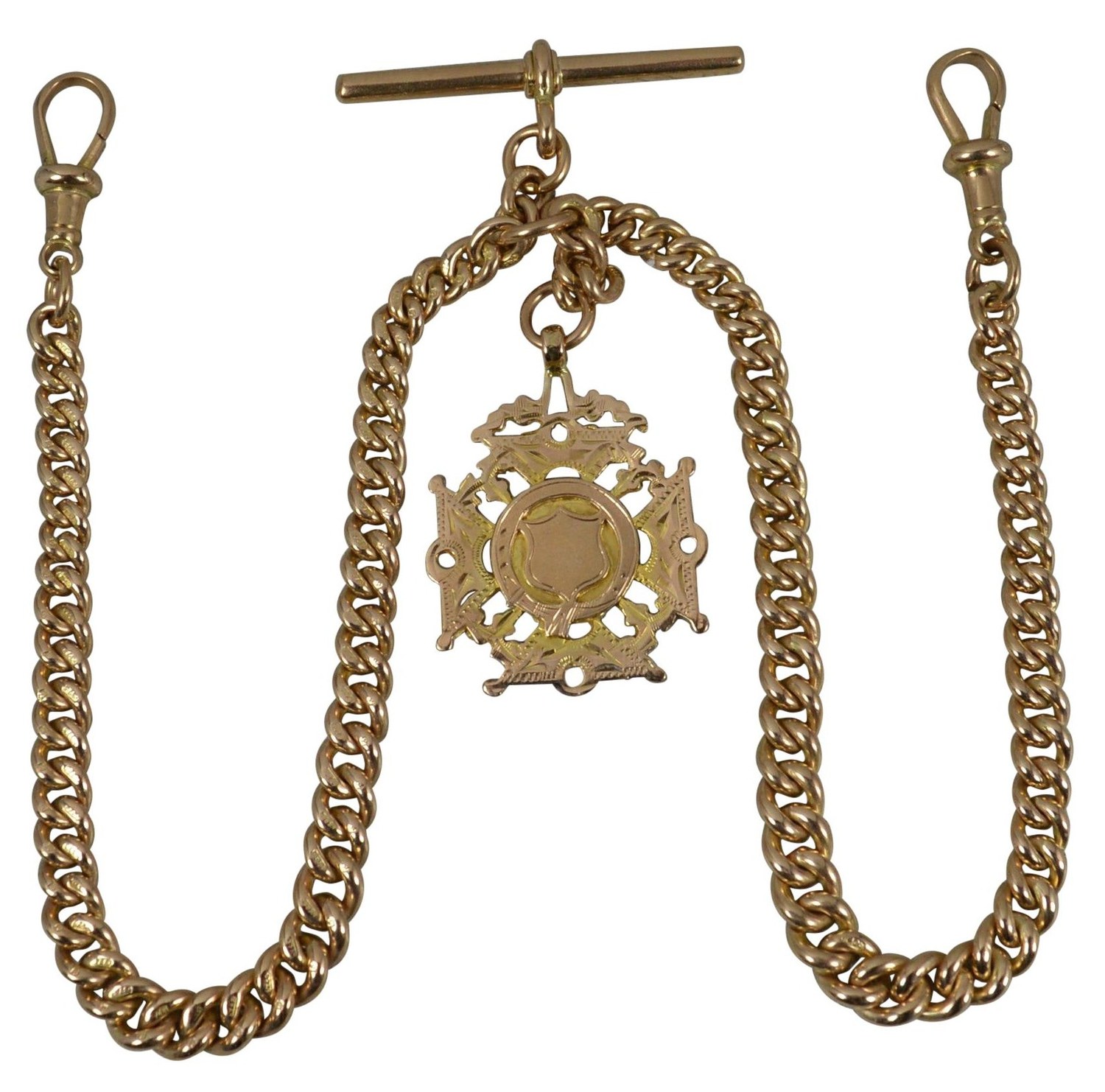
Men kept wearing jewelry through all of it, under a rule. What survived was jewelry with a job: a watch chain that held a watch, studs that held a shirt, a signet that pressed a seal, cufflinks, a tie pin. A man’s ornament needed a reason.
Why Jewelry Is Gendered: A Floor Plan And Two Advertising Campaigns
The shopping came next. Department stores were built for women, and men’s departments were added afterward. Lord & Taylor’s 1914 flagship advertised that a male customer could get in and out without passing through any of the departments where women’s goods were sold.
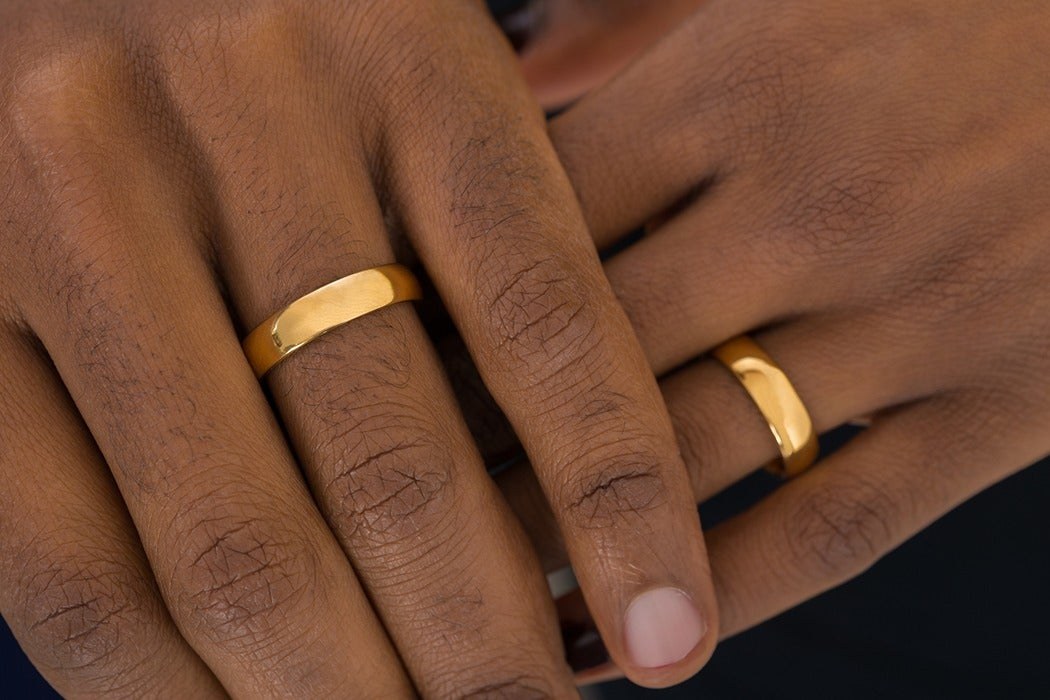
Then the trade tried to invent men’s jewelry outright. In 1926 jewelry manufacturers and retailers ran an industry-wide push for the male engagement ring, with plans for advertising that pictured he-men wearing them. It failed. In the 1940s the Jewelry Industry Publicity Board switched to the men’s wedding ring and worked the media, the trade publications, the home economics departments, the clubs and the factories, and that one landed. Double-ring ceremonies, where both the bride and the groom get a ring, went from about 15 percent of marrying couples in the United States at the end of the Depression to about 80 percent by the late 1940s. The scholarship is Vicki Howard’s, and the version we read is JSTOR Daily’s summary of it. One of the most traditional-feeling pieces of men’s jewelry in the West was advertised into existence inside a few generations.
The named men’s collection arrived later still. Tiffany launched what it called its first full men’s jewelry collection in October 2019, with its own floor space, explicitly distinguished from the cufflinks and rings the house had been selling all along. Reed Krakoff of Tiffany told Fortune that half the company’s global customers were already men, most of them buying women’s jewelry.
So why is jewelry gendered? Is it even?
One of the most traditional-feeling pieces of men's jewelry in the West was advertised into existence inside a few generations.
The Men’s Page And The Women’s Page Hold The Same Jewelry
Jewelry is gendered where a house says it is: Cartier’s rings page carries a filter labelled Selection for, and its two options are Her and Him. It is a view over one catalogue: the rings for men page returns LOVE, Juste un Clou, Trinity and Clash, in the small models and the classic ones, and every piece on it sits on the main rings page too, at the same price. The page’s own subheading calls the collection men’s. That subheading is the whole of the gendering.

De Beers heads a page Men’s Diamond Jewelry, and what sits on it is Talisman and RVL, house lines that run through the rest of the site carrying no gender at all. Chopard’s men’s page is Ice Cube and Happy Diamonds, which sell through the general categories too. Unisex fine jewelry, once you are in solid gold, is the house’s own catalogue with a men’s label on one view of it.
The men’s page is not going anywhere. No house we checked has retired one.
Band Width Is A Convention, And The Number Is Yours To Pick
There is one real difference: wedding bands run roughly 2mm to 4mm wide on the women’s side and roughly 5mm to 8mm on the men’s. That is retailer buying-guide consensus rather than a trade standard, and every guide we looked at gives the range and then says there is no rule. Chains sold as men’s run a heavier gauge, meaning thicker wire. A 6mm band sits on a hand differently from a 2mm one. Men do tend to have bigger fingers, so it makes some sense.
Jade Trau’s Tatum collection, described on the brand’s own site as a versatile foundation, for him or her, runs that whole range under one heading, its bands priced $2,200 to $3,500. Inside one profile, meaning one band shape like knife edge or flat edge, the price tracks how much gold is in it. Nothing about the wider band is filed as a man’s, and nothing about the narrower one is filed as a woman’s.
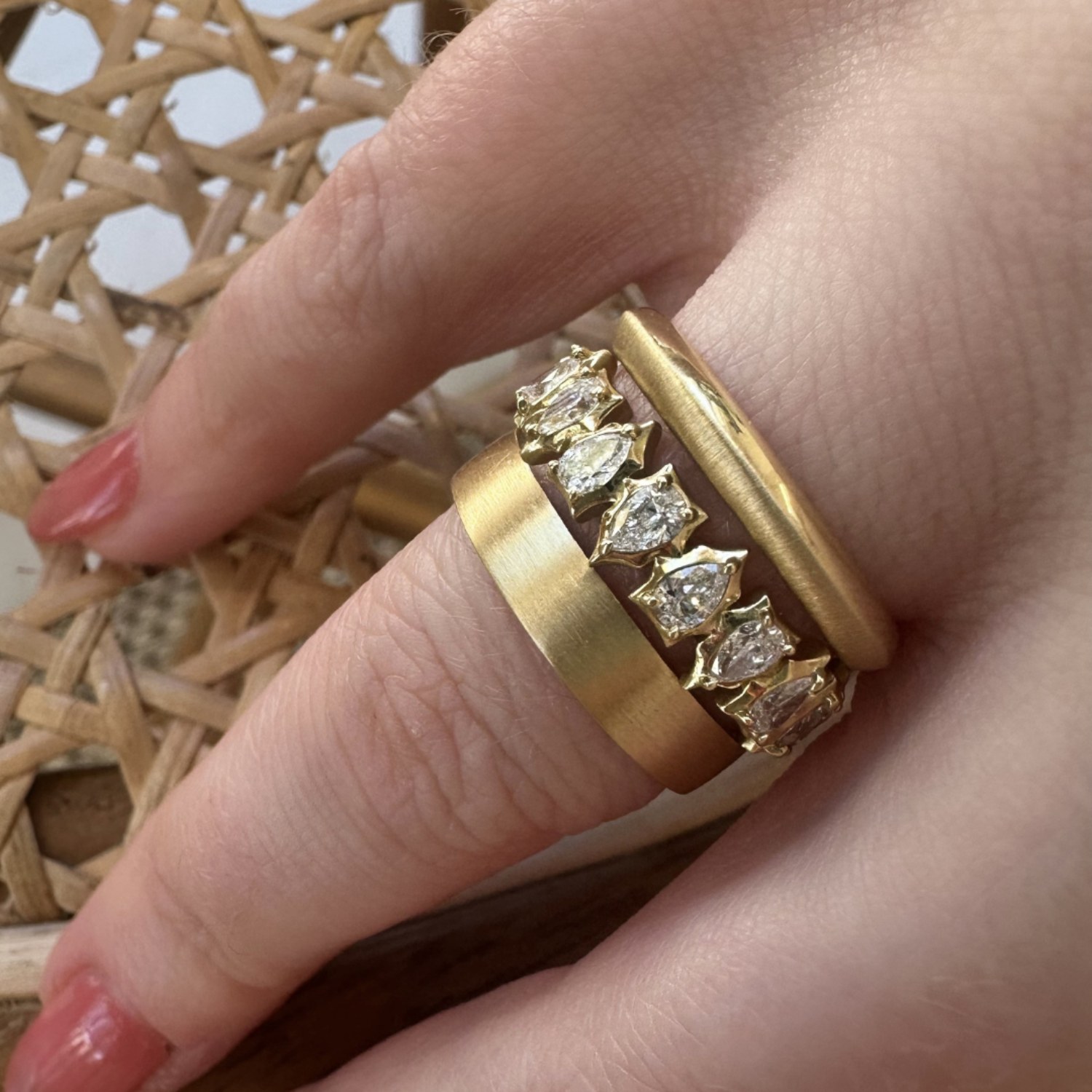
Are gold chains unisex? A chain is a chain, and the decisions in front of you are gauge and length. Men’s gold jewelry worth buying is a list of solid-gold pieces with nothing on it that is off-limits to anyone. How much metal you want on your hand, and how much you want it seen, is the same kind of call as a heel height or a lapel width.
Buying Across The Men’s And Women’s Line
Can a man wear a pearl necklace? Teddy Swims wore a pearl-covered suit and pearl jewelry to the 2025 Grammys, and the reason he gave was that his child was due in June and June’s birthstone is a pearl. If you want the object more than the story, what modern pearl jewelry looks like now is large, hardware-adjacent and mostly baroque, meaning irregular in shape rather than round.
A woman can wear a signet ring, and the question worth her time is whether a signet ring is worth buying at all.
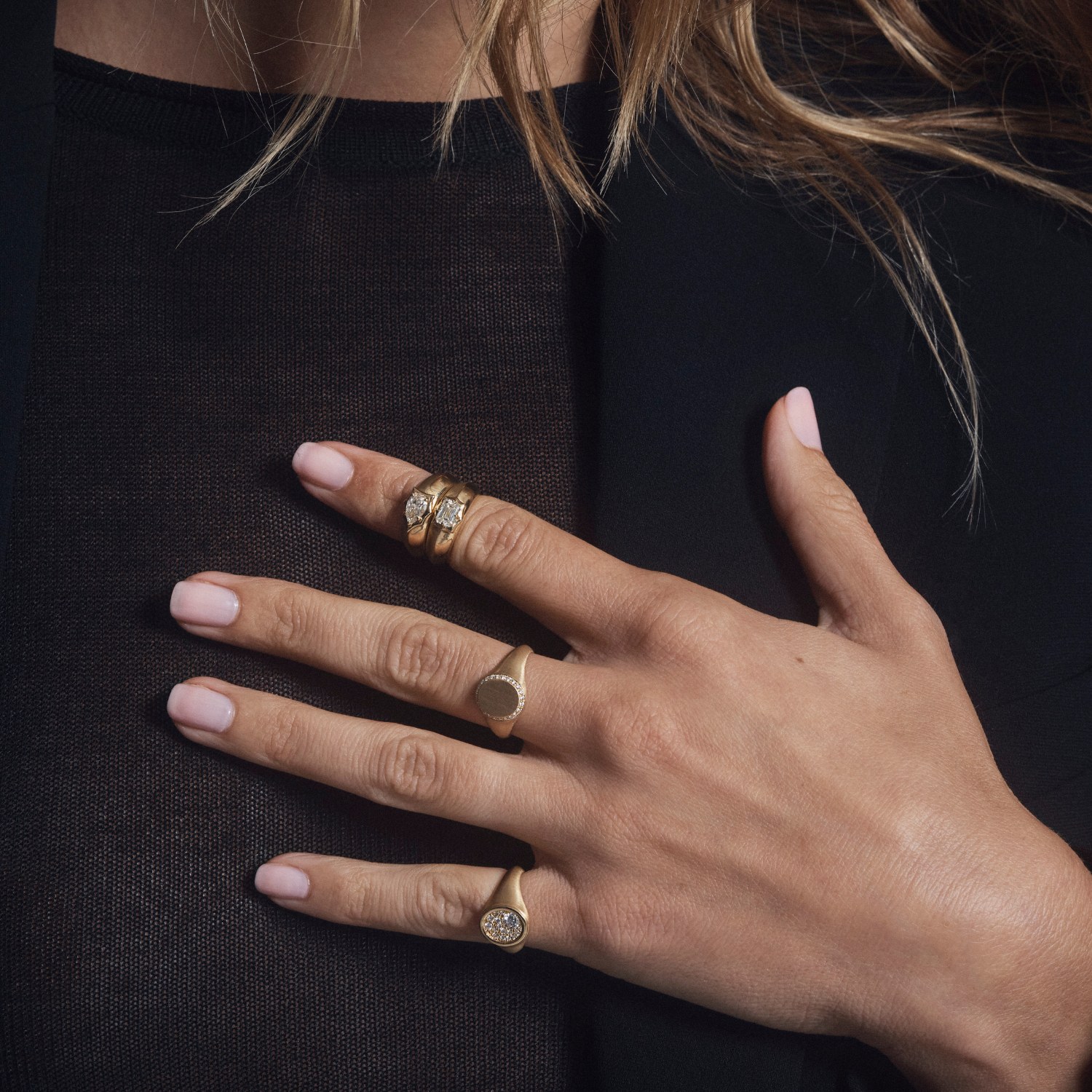
Paul Mescal wore a single Juste un Clou hoop earring to the 2026 Oscars. Cartier sells those hoops one at a time, the mini model at $1,080, out of the same catalogue as everything else. The house will tell you what a piece is made of and what it costs. It will not tell you whose gender it must be, because that house does not know, and there is no point restricting anyone. Wear what you want. Wear what you like.
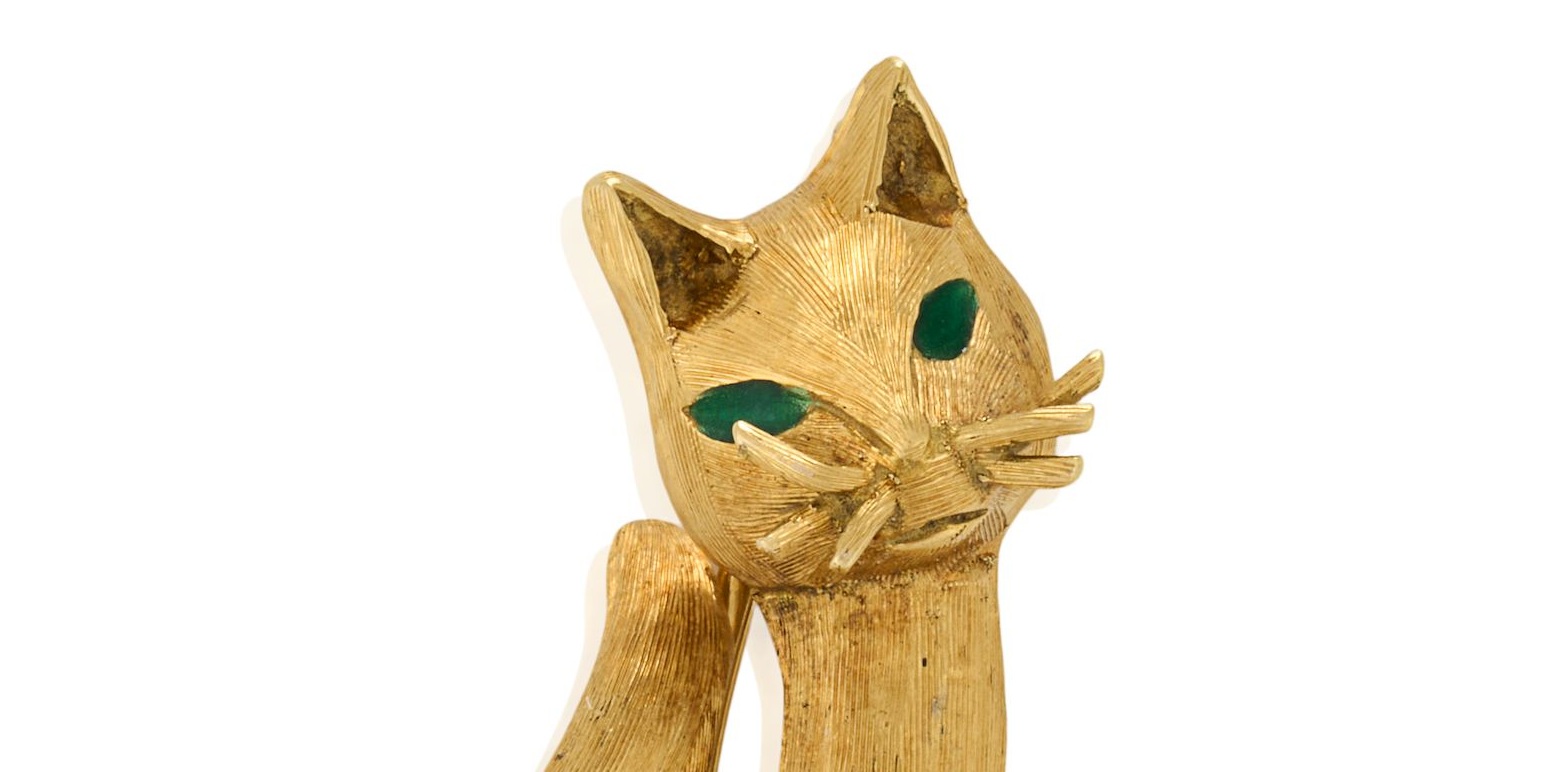
Sandy Lerner Is Rehoming Her Cats: A Tiffany Cat Brooch and Sixty-Five More
The Cisco co-founder spent four decades collecting cats in gold, enamel, amethyst and bronze. On 30 September 2026 Bonhams sells 66 of them in New York, from a $700 carved cat to a $120,000 bronze by the sculptor Rembrandt Bugatti. She is keeping the live ones.
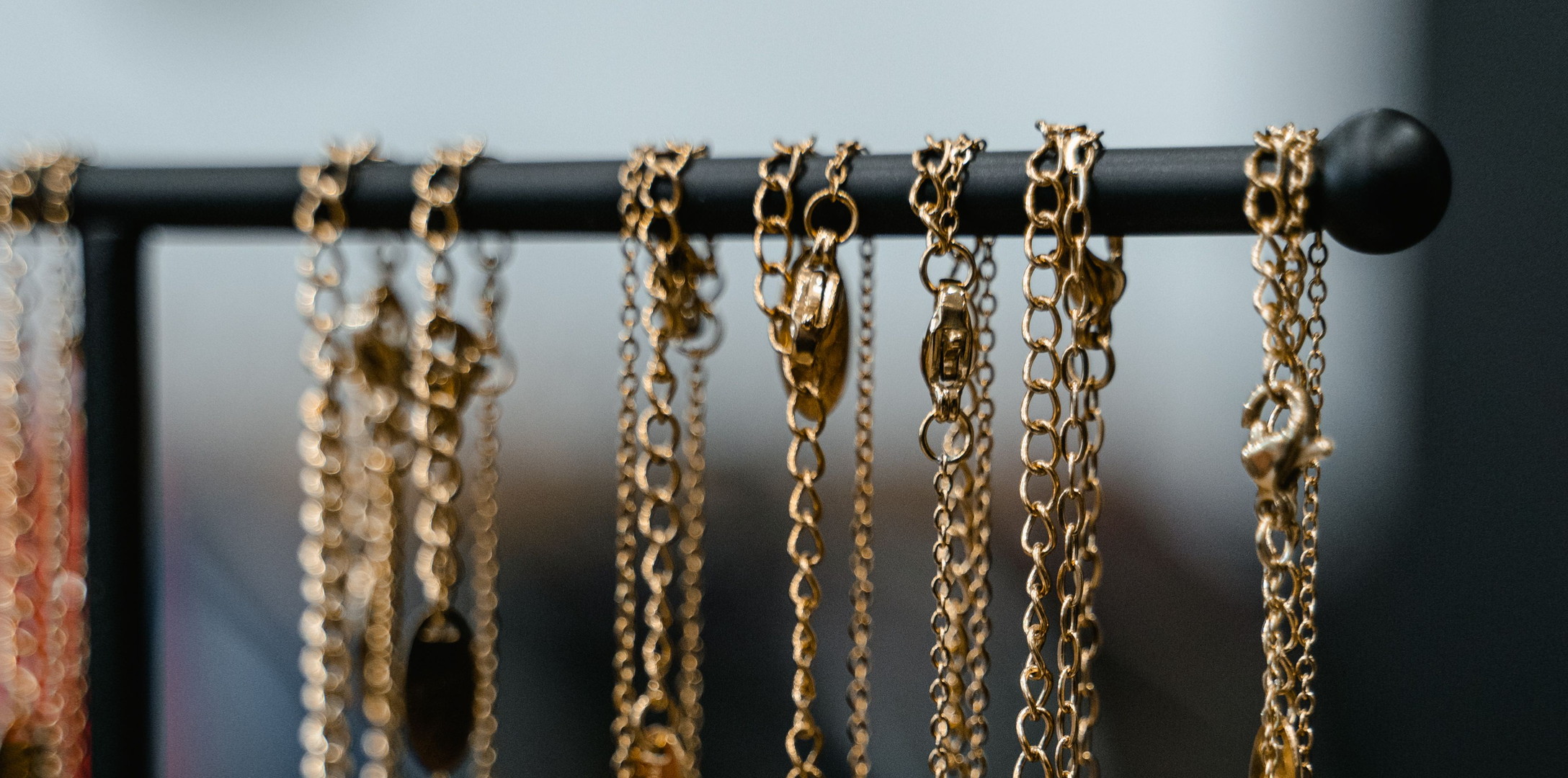
Why Are Jewelry Prices Still Going Up?
Jewelry costs about 15% more than it did a year ago, and it is the gold accounting for most of it. The answer coming back from the jewelry trade and brands is less gold in the piece, which changes what you have to ask for at the counter.

Natural Diamond Prices Are Going Up Again, at Least for Now
Lab-grown stones pushed mined diamond prices down for years. The diamond trade's price index rose again in August, led by small stones. What that changes for you.
The newsletter.
One email when something is worth your attention. New essays, the buying calls behind them, and what we’re watching in the trade. No roundups, no affiliate dumps.