Pearl Jewelry Doesn't Look Like That Anymore
What modern pearl jewelry looks like at the fine jewelry tier in 2026: baroque, oversized, on chunky gold. The trend, and what's worth buying.
You’re picturing your grandmother’s strand. Perfectly round, perfectly matched, perfectly even, clasped at the neck, worn with a blouse that buttons to the collarbone. That strand exists. It’s beautiful. And it has almost nothing to do with what’s happening in pearl jewelry right now.
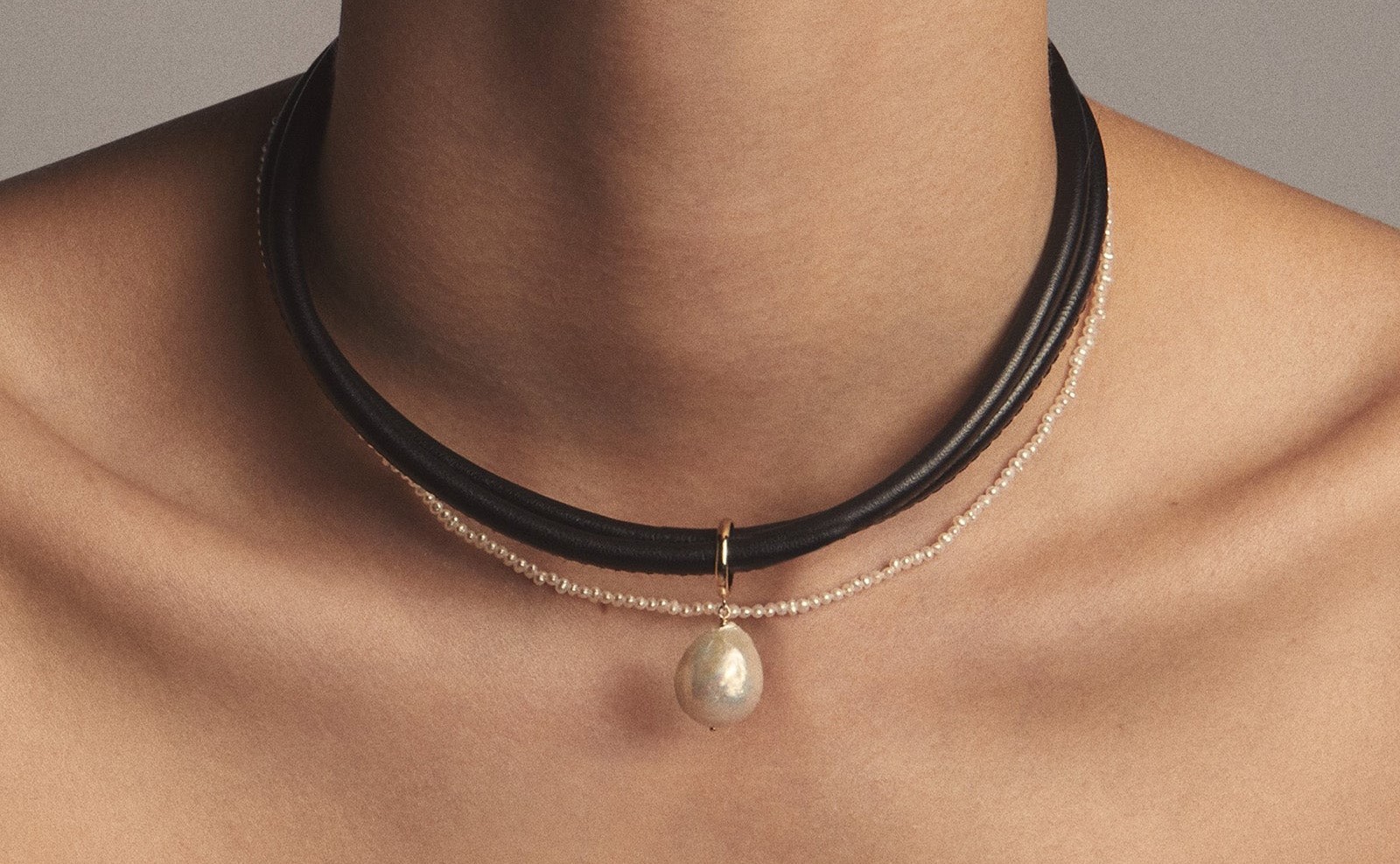
The pearls of 2026 are baroque: irregular, organic, shaped like small sculptures rather than perfect spheres. They’re oversized, hung on chunky gold chains, paired with hardware that would look more at home on a handbag than a necklace. They’re strung on leather cord. They’re set in thick gold bezels. They’re mixed with diamonds. Who What Wear’s spring 2026 jewelry round-up has a dedicated section on the category, and the conclusion is direct: “Pearl necklaces are definitely back for the long run.” Designers stopped treating pearls like heirlooms and started treating them like a material.
If you dismissed pearls as traditional, conservative, or aging, the 2026 version is designed to make you reconsider. And the price point, particularly for baroque and freshwater pearls, puts interesting pieces well within reach.
How We Got Here
Two things happened at once. Designers figured out that pairing pearls with industrial-weight metal creates a visual tension that reads as modern rather than classic. And the pearl market itself shifted, with baroque and oddly-shaped pearls moving from the “imperfect” discount bin to the “characterful” premium shelf.
The baroque pearl is the key to the whole movement. A perfectly round pearl invites comparison. Is it large enough? Lustrous enough? Is it Mikimoto? A round pearl places itself on a grading scale, and you spend half your time wondering where on that scale your pearl falls. A baroque pearl rejects comparison because there’s nothing to compare it to. Each one is shaped differently. The irregularity is the design. That refusal to be graded on a standard scale is what makes them feel contemporary in a way that round pearls don’t right now.
Pairing these organic shapes with hard metal, thick gold chains, oversized links, visible clasps, creates a soft-hard contrast that has become one of the defining aesthetic moves of 2026. The pearl provides the warmth and the luster. The metal provides the edge and the weight. Together they produce something that neither element achieves alone.
What Designers Are Actually Making
Most of the interesting pieces in this space are built on freshwater pearls. That’s not a compromise. GIA research on cultured pearl structure describes tissue-nucleated freshwater pearls as “composed almost entirely of nacre,” which means more nacre, usually, than the classic Akoya strand your grandmother wore. Akoya is the reference pearl: white, round, high-luster, typically with nacre around 0.15 to 0.50mm over a bead nucleus. Freshwater is often nearly solid crystalline nacre all the way through. Freshwater carries less prestige. On a durability basis, though, it’s often the more forgiving one for daily wear.
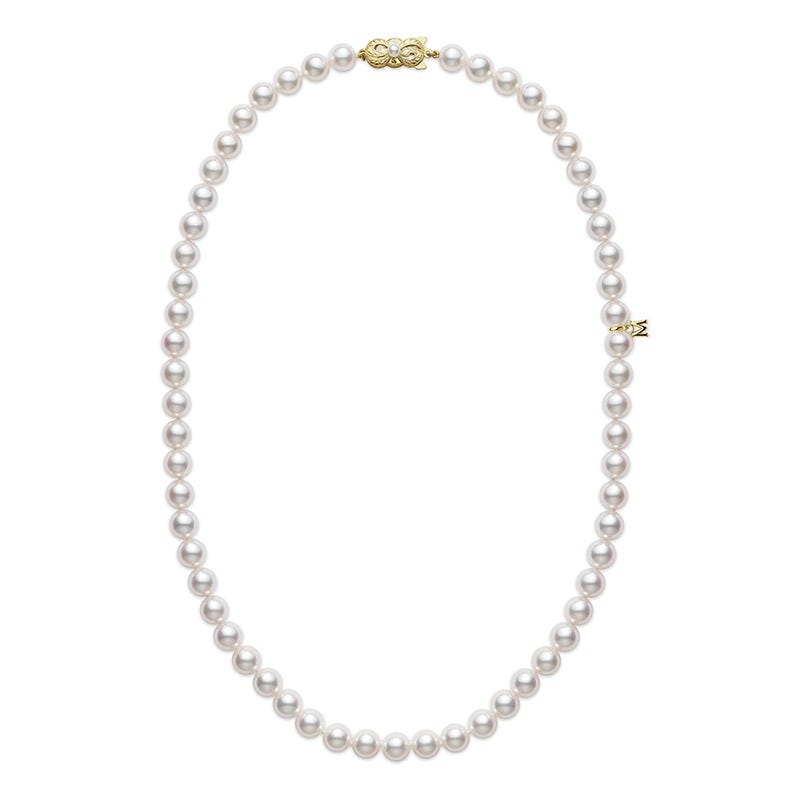
The Mikimoto 18-inch Akoya strand is $5,100. That’s what the traditional reference looks like right now. What designers are doing with baroque freshwater pearls at a fraction of that price looks nothing like it, and the gap comes down to setting, silhouette, and a completely different answer to the question of what pearl jewelry is for.
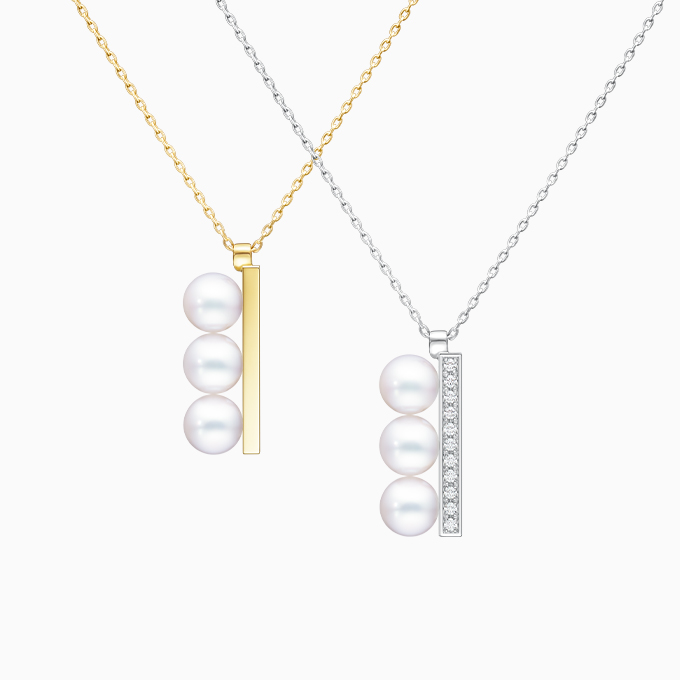
Tasaki Balance Neo. The Tasaki Balance line was introduced in 2010 by designer Thakoon Panichgul as a minimalist composition setting pearls against a straight bar. That’s the soft-hard contrast the whole editorial conversation keeps echoing, and it started here. The Balance Neo pendant in 18kt white gold runs $3,290. Other designers play variations on it.
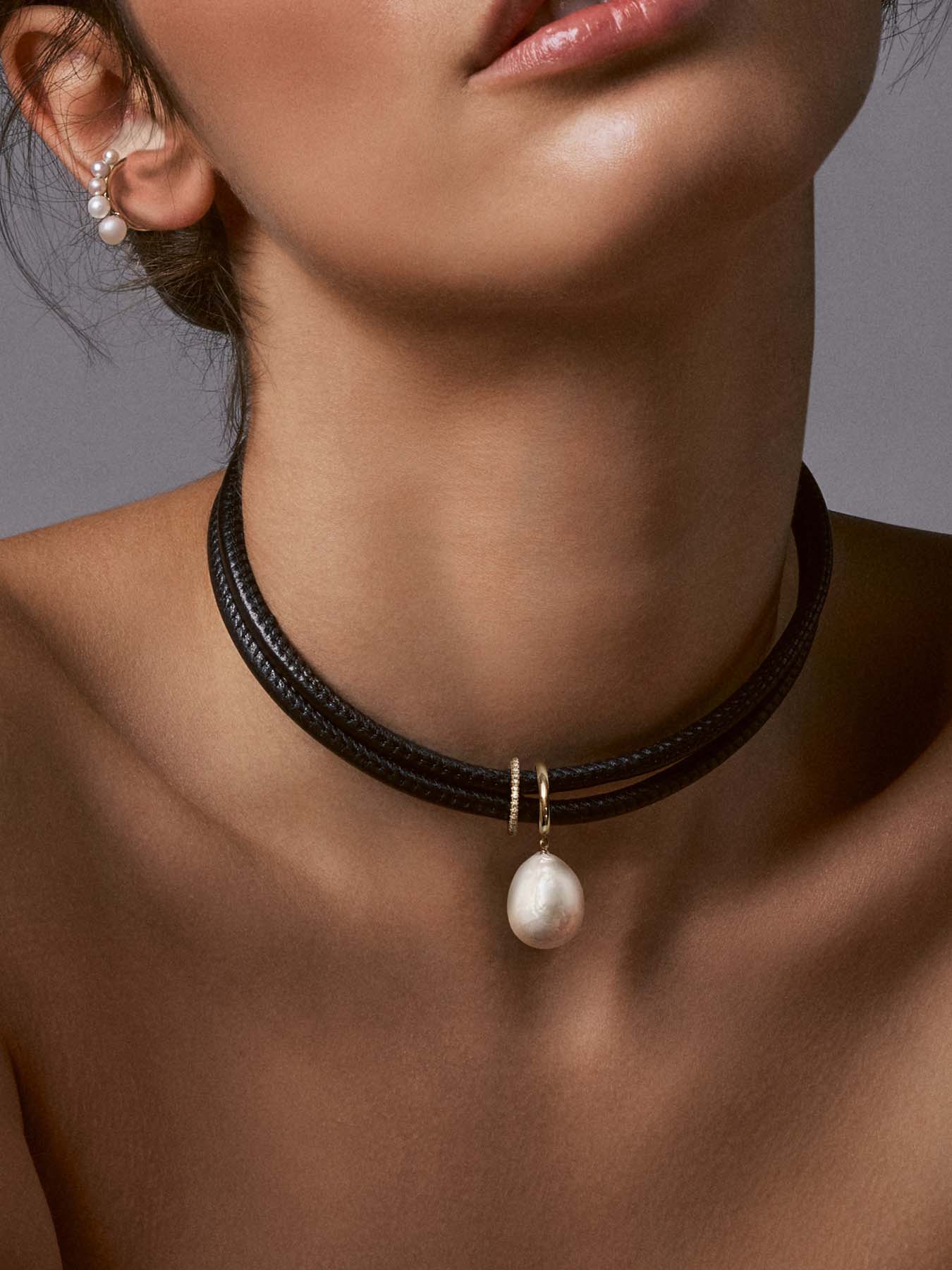
Mizuki. Mizuki Goltz is Tokyo-born, New York-raised, trained as a sculptor. Her Sea of Beauty leather-wrap pieces treat the pearl as one element in a modern line, sharing the composition instead of dominating it. The Large Pearl and Diamond Slider on leather is $2,395 and converts from necklace to bracelet at a fixed 15.5 inches. The leather format is specific in fit in a way a conventional chain isn’t. The simpler non-diamond version is $910.
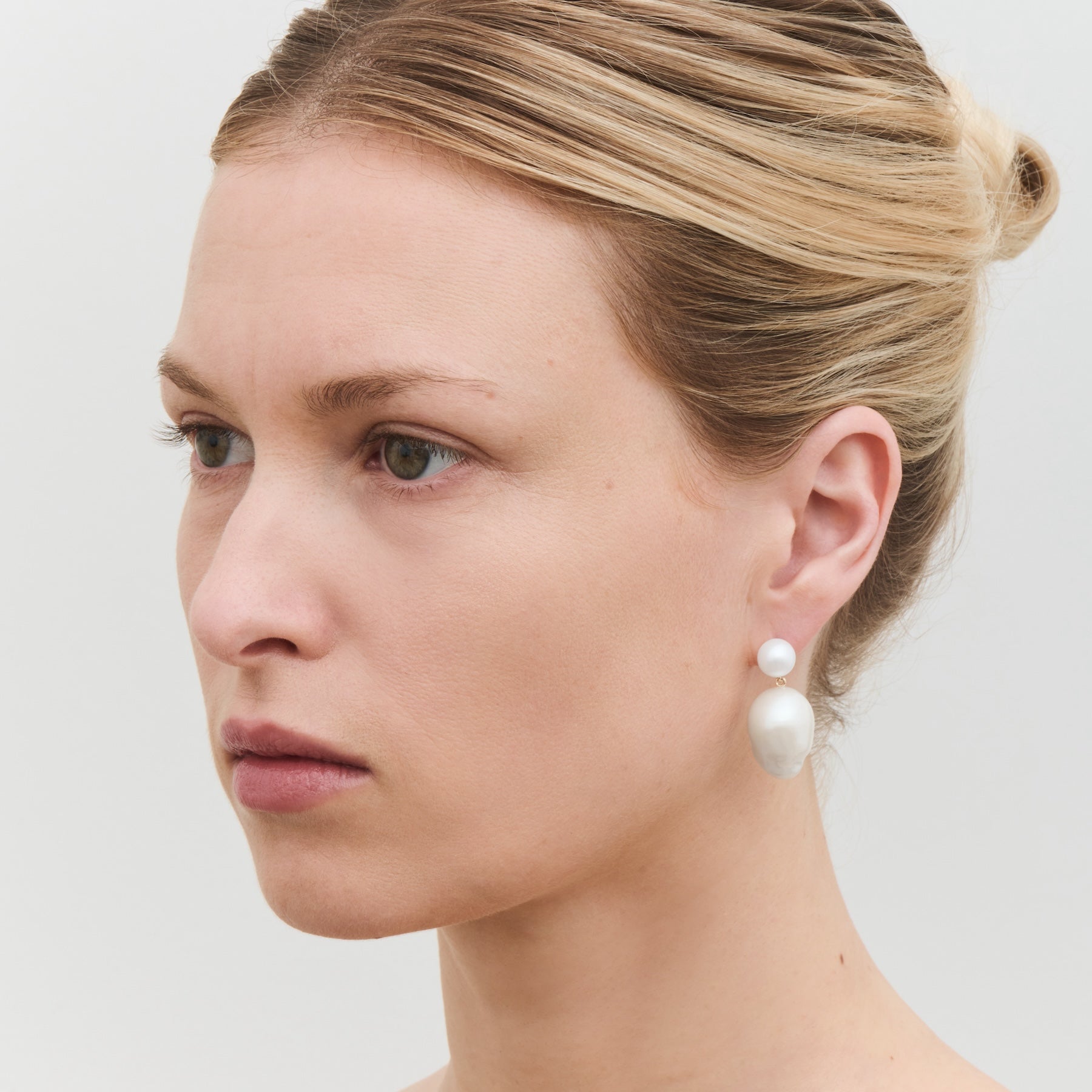
Sophie Bille Brahe’s Venus Blanc earrings, made with natural freshwater and baroque pearls, are $1,725. Copenhagen-based, trained as a goldsmith, master’s from the Royal College of Art: her pearl language is modern clustering and spacing, well away from the classic strand. Product pages note variation explicitly because they’re working with natural baroque material. Each pair differs slightly. Worth knowing upfront if you’re someone who wants two perfectly matched earrings.
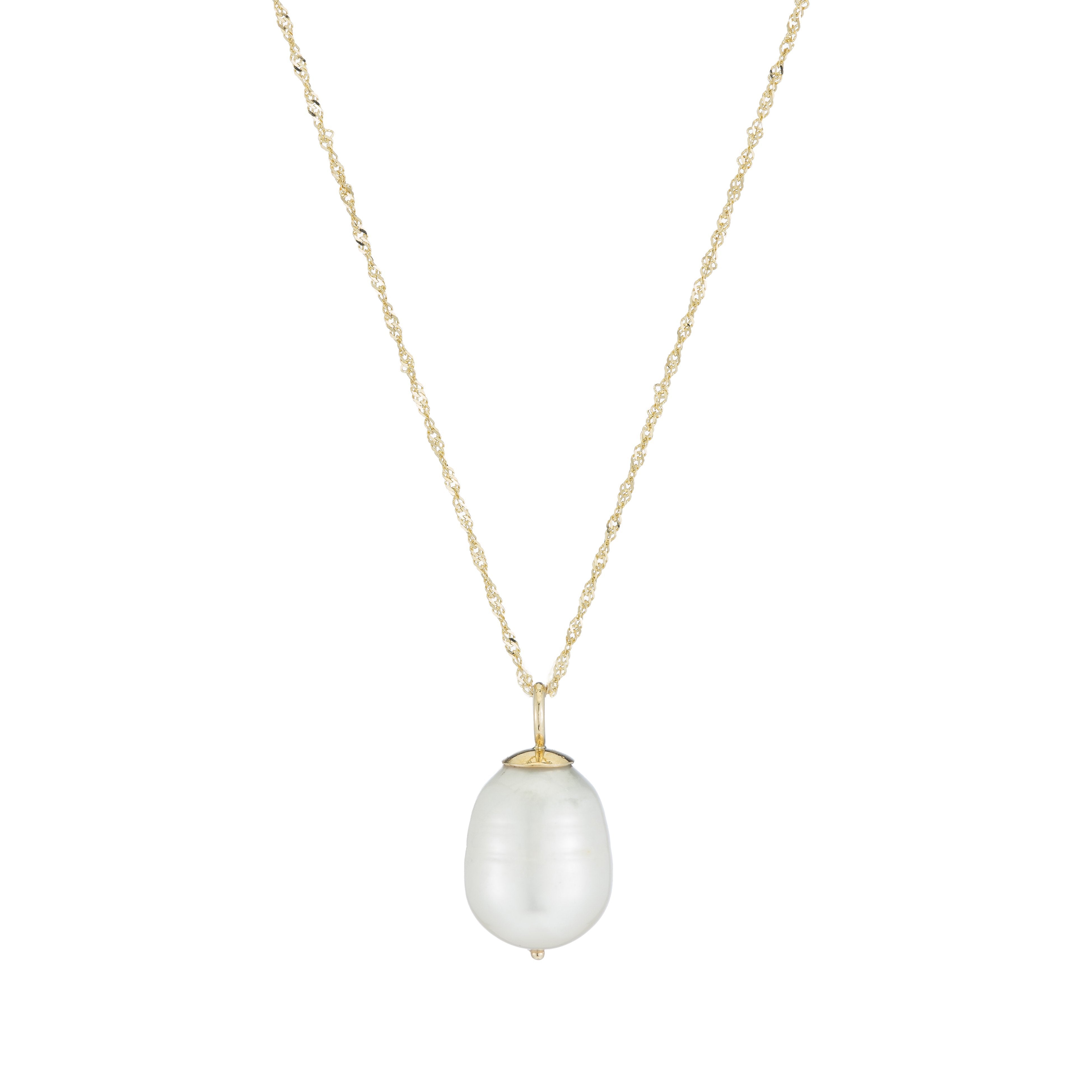
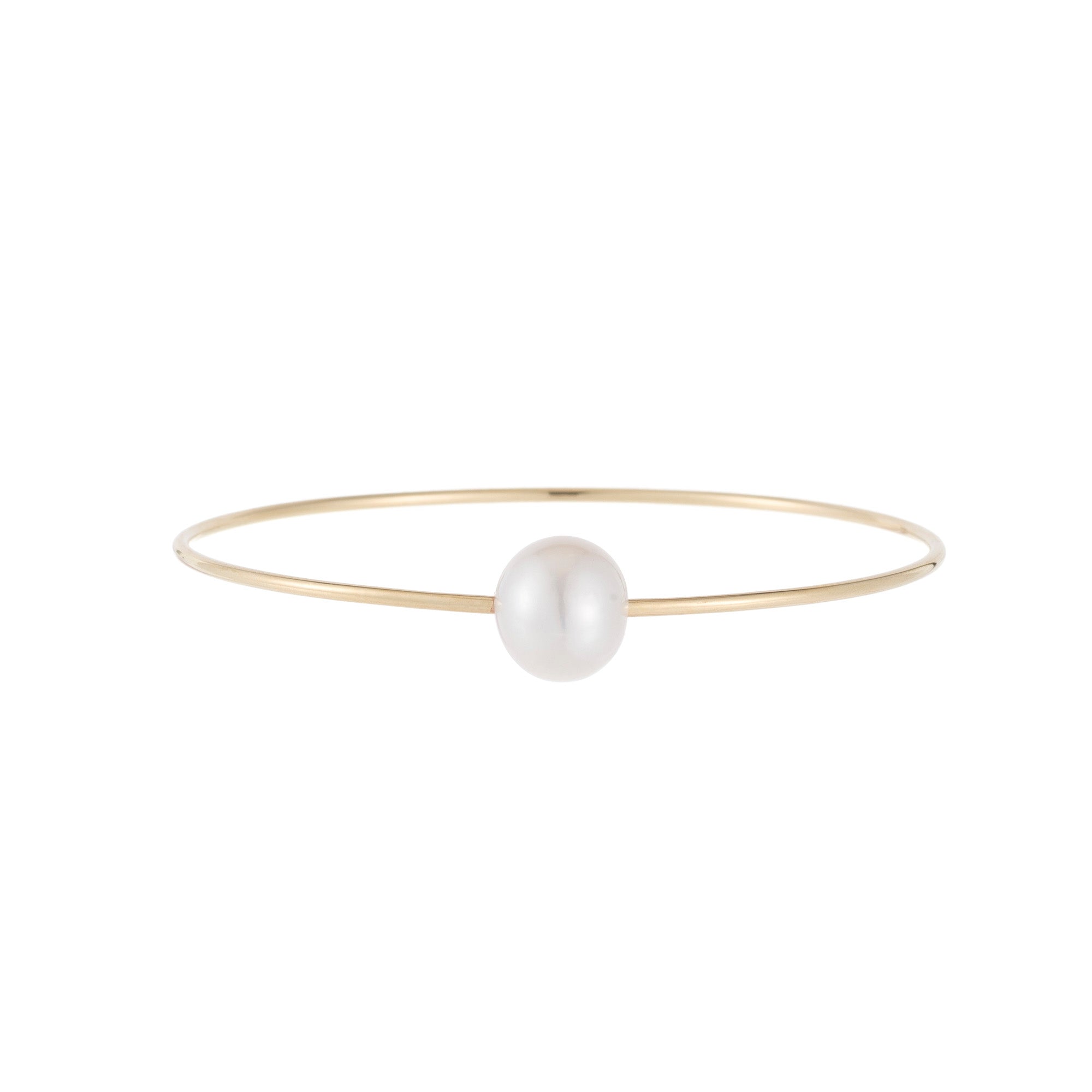
For an entry point, Ariel Gordon. Handmade in Los Angeles, 14k gold, natural baroque variation. The Baroque Pearl Drop Necklace runs $310–$735. The Pearl Orbit Bangle, a single natural baroque pearl in a gold cuff, is $1,095. Key baroque pieces are made to order with a 4–6 week lead time. Plan accordingly.
The Image Problem
The biggest barrier to buying modern pearl jewelry is the mental image of what pearl jewelry “is.” Price and availability have stopped being the problem. If pearls, in your mind, still live in the realm of twin sets and formal occasions and the kind of woman who carries a clutch that matches her shoes, nothing on this list is going to sound right until you see it in person.
Go to a jeweler who carries contemporary pearl pieces. Or search Instagram for #baroquepearl and look at what independent designers are doing with irregular shapes and heavy metal. The distance between your mental image and the current reality is probably wider than you think, and closing that gap requires seeing the pieces in person. Words can describe the aesthetic. They can’t replicate the experience of seeing a baroque pearl on a chain and thinking: oh. That’s not what I expected.
Living With Pearls
Pearls are soft. Roughly 2.5 to 3.0 on the Mohs hardness scale, softer than gold, softer than diamonds, softer than most gemstones. They can be scratched by other jewelry and damaged by perfume, hairspray, and body oils over time.
GIA’s pearl care guidance is explicit: pearls go on after perfume, hair products, and cosmetics. Put them on last. Take them off first. Store them separately from metal pieces. Wipe with a soft cloth after wearing. Store in fabric or breathable material. Plastic traps moisture against the nacre. That’s the whole list.
One construction difference worth knowing: a baroque pendant on a gold chain doesn’t need restringing. Maintain it like any pendant, with surface care and periodic checks on the bail and clasp. A knotted silk strand is a different animal. If you have one and wear it often, restringing every one to two years is a reasonable cycle; moderate wear, every two to five years. Current jeweler quotes for a standard necklace run $80–$150.
The care requirement is, in some ways, part of the appeal. A gold chain goes in a drawer and comes out fine. A pearl asks you to pay attention to it, which means you’re more likely to think about it, which means you’re more likely to wear it. The slight extra effort keeps it in your rotation.
What This Means for Your Collection
If you already own jewelry in this price range and you’ve never considered pearls, this is the moment to look. Pearls are having a moment is the wrong frame (that implies the moment will end and the pearl goes back in the drawer). What designers are doing with pearls right now has expanded what the material can be in a way that isn’t going to reverse.
A baroque pearl pendant on a gold chain sits comfortably next to your gold hoops and your layered chains and your first serious pieces. It’s an addition that introduces a new texture, a new kind of light, and a visual softness that gold alone doesn’t provide.
The round strand might come back into fashion. It might not. But the baroque pearl, the one that looks like nothing else in your jewelry box, is the one that’s going to age the best. It was never following a trend. It was following a shape that an oyster decided on, and most oysters don’t read Vogue.
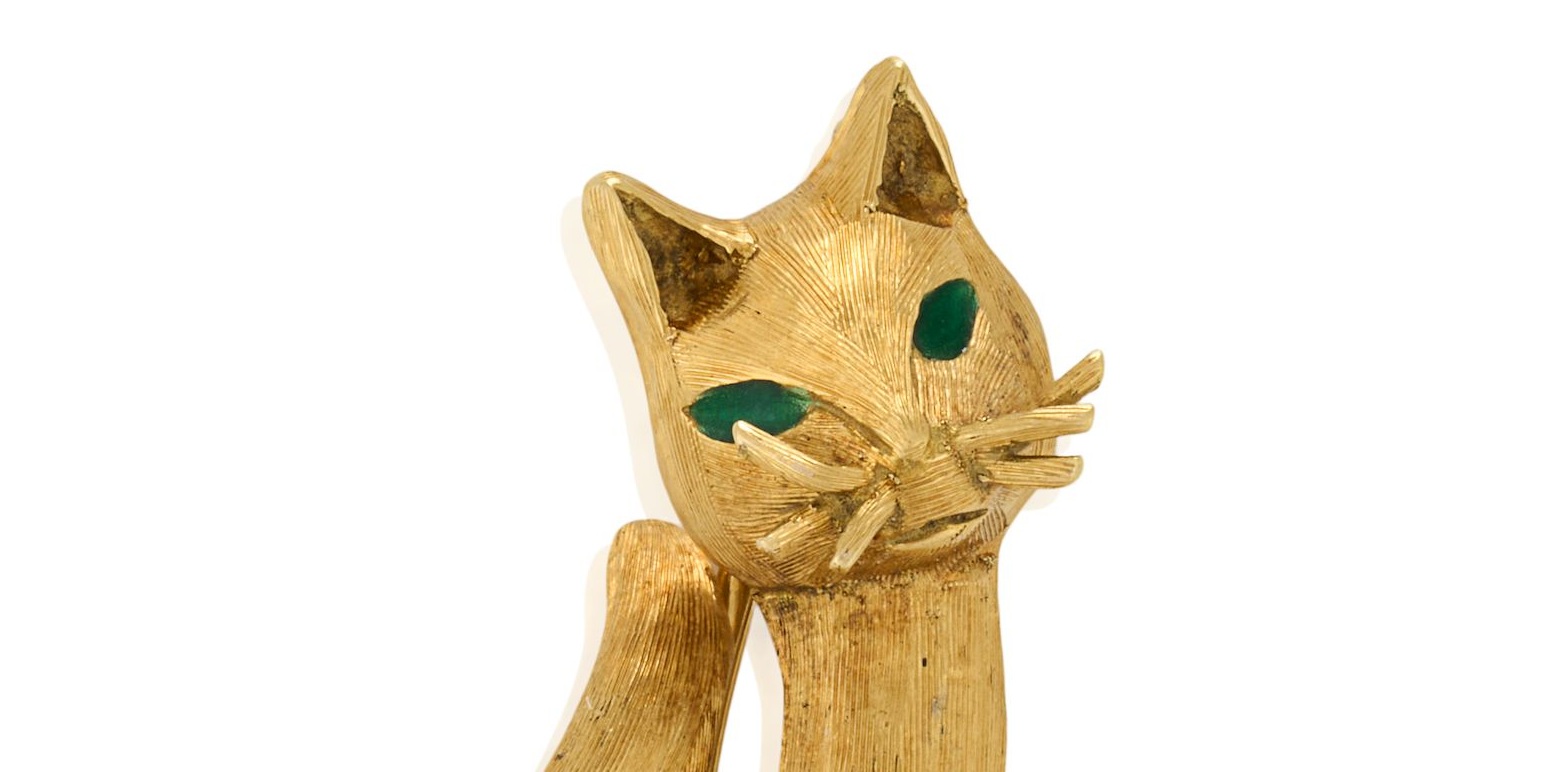
Sandy Lerner Is Rehoming Her Cats: A Tiffany Cat Brooch and Sixty-Five More
The Cisco co-founder spent four decades collecting cats in gold, enamel, amethyst and bronze. On 30 September 2026 Bonhams sells 66 of them in New York, from a $700 carved cat to a $120,000 bronze by the sculptor Rembrandt Bugatti. She is keeping the live ones.
Why Are Jewelry Prices Still Going Up?
Jewelry costs about 15% more than it did a year ago, and it is the gold accounting for most of it. The answer coming back from the jewelry trade and brands is less gold in the piece, which changes what you have to ask for at the counter.

Natural Diamond Prices Are Going Up Again, at Least for Now
Lab-grown stones pushed mined diamond prices down for years. The diamond trade's price index rose again in August, led by small stones. What that changes for you.
The newsletter.
One email when something is worth your attention. New essays, the buying calls behind them, and what we’re watching in the trade. No roundups, no affiliate dumps.