Imperfection Is the New Premium
Lab-grown diamonds made colorless perfection cheap and uninteresting, and the taste market responded. Baroque pearls, brown diamonds, parti sapphires, old mine cuts, and textured gold are at the center now, and this is what the 2026 characterful-jewelry shift looks like when you connect every trend.
Five years ago, a baroque pearl was a consolation prize, a brown diamond was a defect, and an old mine cut was an “inferior” antique. In 2026, all three are at the center of fine-jewelry taste. The words that move now are characterful, imperfect, and visibly hand-made.
The shift is not random. Lab-grown diamonds got so good at making the GIA ideal (colorless, nearly flawless, precisely cut, one carat) that the ideal stopped feeling special. De Beers CEO Al Cook told JCK in May 2025 that lab-grown prices have fallen over 90% since 2018, while natural diamond prices did not. In a June 2025 National Jeweler interview, he said you can now buy lab-grown “for $45 a carat” and “in supermarkets for $200.” What the technology optimized for was the ideal. And somewhere in the process of making the ideal cheap, it made the ideal less interesting.
The taste market noticed. Not all at once, not by announcement, but piece by piece, category by category, in a pattern that’s now unmistakable. Baroque pearls. Brown and champagne diamonds. Parti sapphires. Old mine cuts. Estate pieces with hand-engraved details and signed maker’s marks. Hammered gold surfaces that catch the light wrong, on purpose. The characterful, imperfect, organic, warm-toned things that the grading system had spent decades treating as consolation prizes: they’re the ones people are looking at now.
What the Grading System Actually Rewards
For almost a century, four measures graded every diamond: carat (weight), cut (how precisely the facets are aligned), color (how close to colorless), and clarity (how free of internal flaws). The trade calls them the 4Cs, and they shaped how buyers learned to think about stones. The ideal sat at one end of each scale, and drift from it was measurable, gradable, and usually unwanted. Brown in a diamond’s color grade was a defect. Inclusions in the clarity grade were flaws. Asymmetry in an antique cut counted as imprecision. Nobody called it character.
Standardized grading wasn’t arbitrary. When De Beers was building the diamond market in the mid-20th century, standardized grading was the infrastructure that let stones trade at scale. A GIA certificate made a stone readable to a buyer who had never seen it. It created a market for a category that had previously been opaque.
The problem with standardized grading is that it also standardizes desire. Once the ideal is defined and measurable, an entire culture learns to want the same thing. And when technology finds a cheaper way to produce that exact thing, the ideal doesn’t get more valuable. It gets ordinary. ALTR CEO Amish Shah said it plainly to JCK back in 2021: “You either add value or you become a commodity.”
The share numbers track the commodity outcome. Tenoris pegged lab-grown at about 6% of the U.S. engagement-ring market in 2021 and roughly 10% in 2022. By 2024, BriteCo’s purchase data put lab-grown at over 45% of U.S. engagement rings; BriteCo’s 2025 report says 48% of engagement rings sold in 2025 carried a lab-grown center stone. The Knot’s survey data runs higher: 52% in 2024, 61% of 2025 weddings. Either way, what was a niche category four years ago is now either half or most of the market, depending on which source you ask.
The Part De Beers Understood First
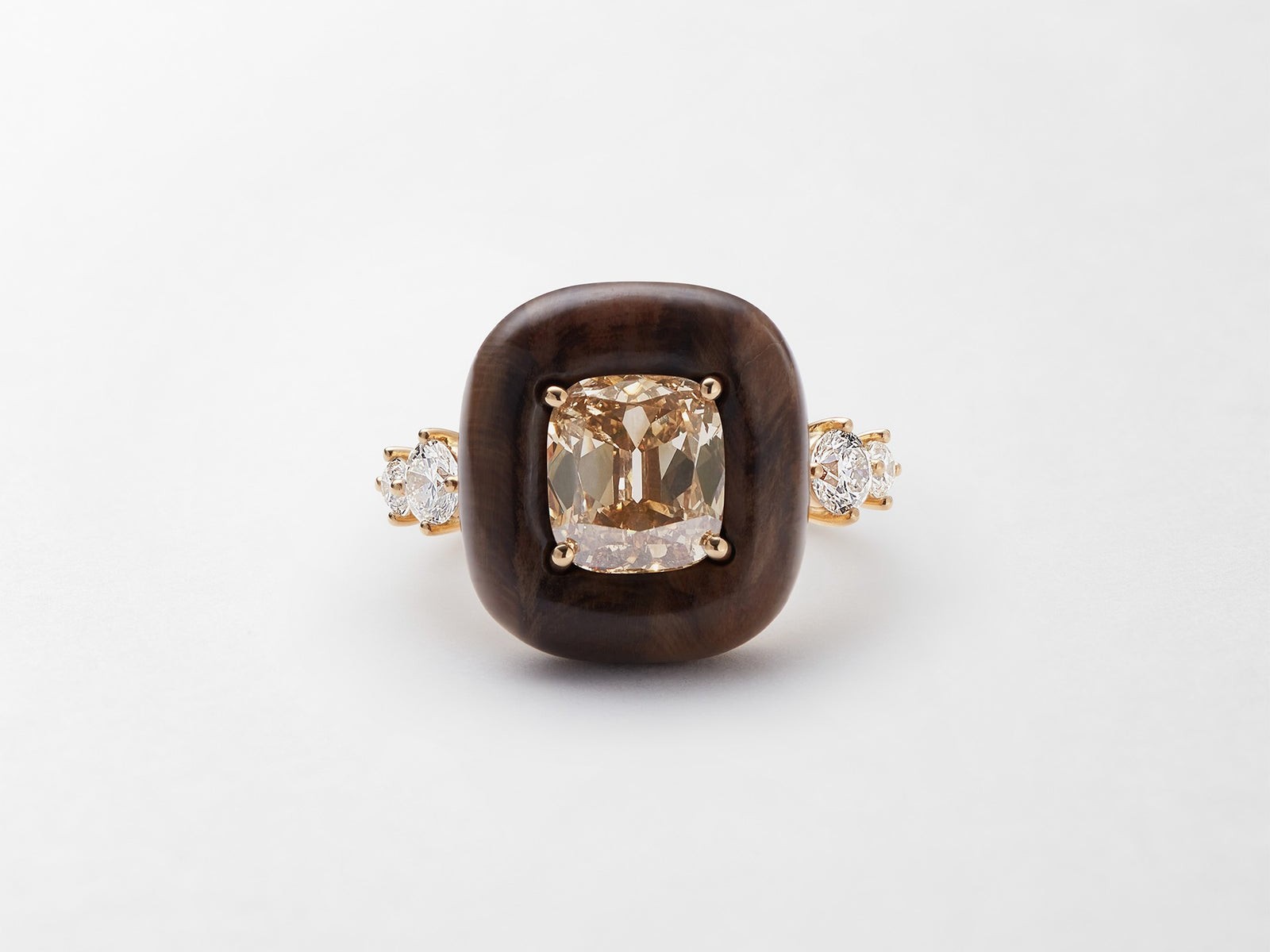
The Desert Diamonds campaign that De Beers launched in October 2025 is the clearest evidence that someone inside the diamond industry saw this shift coming. The campaign’s framing (Sunlit Whites, Honey, Amber, Champagne, Whisky, Caramel) was a deliberate move to make warm-toned natural diamonds desirable at a moment when the colorless category was under price pressure from the lab. De Beers called it their “largest category marketing investment in more than ten years.” Sally Morrison, their marketing head, told JCK it wasn’t a brown program. “We’re using the color palette as a metaphor to tell the story of naturals,” she said, later tying Taylor Swift’s old mine cut ring to a stone that is “not commoditized like a D.”
What the campaign understood is that lab-grown diamonds are mostly colorless. The warm, earthy, variably-toned stones that occur naturally are harder to produce in a lab, rarer in lab inventories, and fundamentally tied to the geological accident of formation. If you could shift consumer desire from the colorless ideal toward something that only the natural world makes, you create a category where the premium story still holds.
Al Cook made the same argument in more combative terms. In a June 2025 National Jeweler interview, he said natural diamonds’ unique color and origin “contrasts completely with the endless array of commoditized lab grown.” De Beers had already conceded the fight on colorless: Lightbox, launched in 2018 at $800 per carat to signal the fashion-versus-bridal distinction, dropped its entry price to $500 per carat before De Beers shut it down entirely and redirected its Portland facility to industrial diamonds.
Lightbox launched in 2018 with white, blue, and pink lab-grown stones, priced in flat per-carat increments. The brand’s positioning materials called the target “less-special special occasions” like Sweet 16s and graduations, fashion rather than bridal.
But De Beers didn’t create the taste shift. It recognized and amplified one that was already running. The whole brown diamond story is a sequence that predates and exceeds any single campaign: Le Vian’s two decades of Chocolate Diamonds marketing, the 2024 Wall Street Journal piece noting that browns had already surged from undervalued to sought-after, and Taylor Swift’s engagement ring crystallizing the warm-tone moment for millions of people at once.
The campaign moved real numbers: De Beers reported it lifted consumer consideration for natural diamonds 10% year over year. What was also real was the direction of travel underneath that.
Each Trend Was Already There
When the taste shift is described as a single story, it can sound like fashion news: imperfection is in, perfection is out, bookmark this for later when it cycles back. But the individual currents had been building for years before they started reading as a pattern.
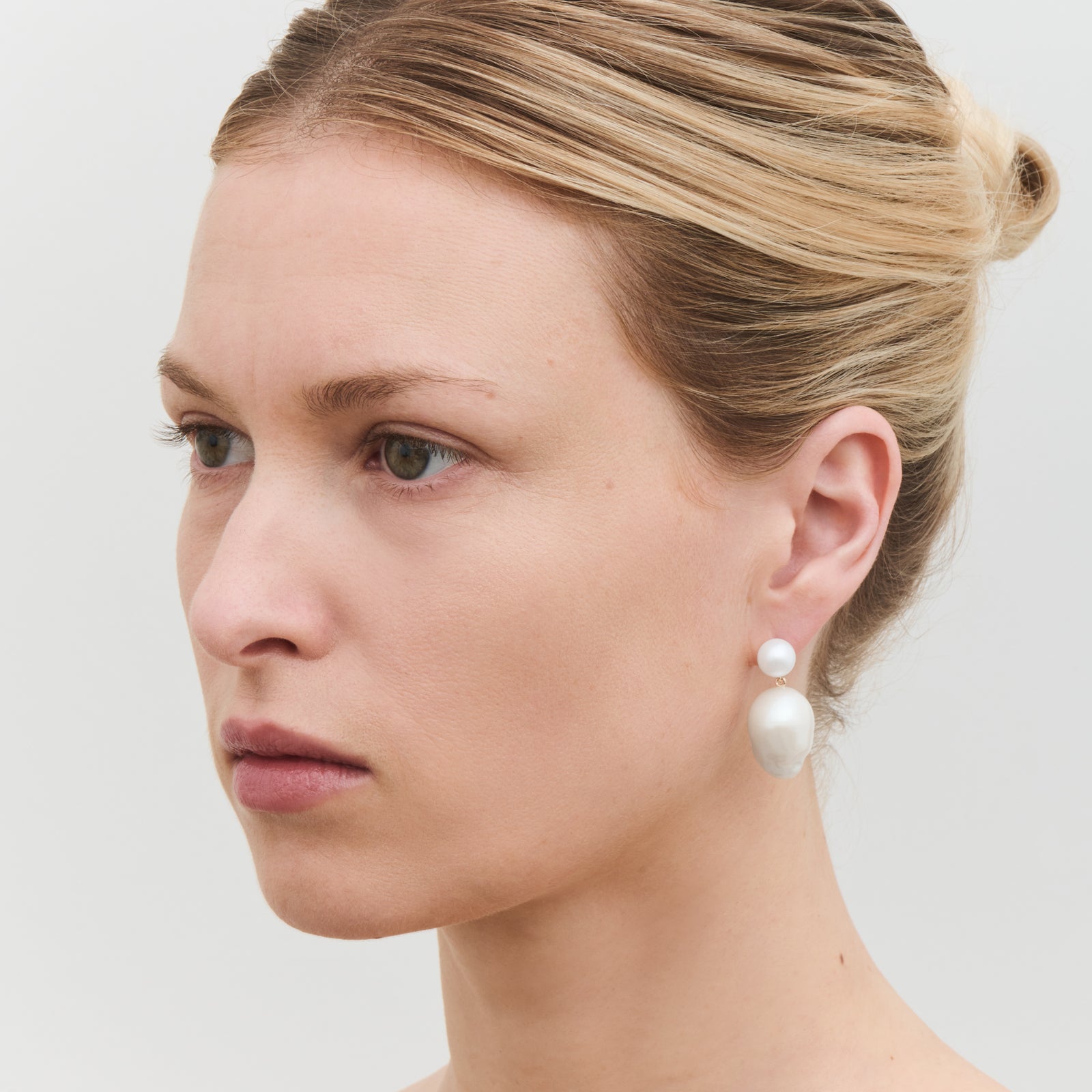
Baroque pearls have been showing up in fine jewelry editorials since at least 2023. The irregular, organic, asymmetric pearl form, as opposed to the round, matched, classically graded strand, had moved from the discount bin to the design brief. Who What Wear’s spring 2026 round-up gave baroque pearls a dedicated section; its 2025 jewelry-trends piece had already called out “Modern Baroque Pearls” as a distinct direction. Sophie Bille Brahe built a design language around them. Tasaki’s Balance line, which set pearls against industrial-weight metal bars, was introduced in 2010 and has been influencing the category ever since. The modern pearl story explains why the round strand stopped being the reference: a baroque pearl rejects comparison because there’s nothing to compare it to. Each one is shaped differently. The irregularity is the design.
Old mine cut diamonds followed a similar arc. The cut is the cushion-shaped, hand-faceted ancestor of today’s round brilliant: 150 years old, pre-industrial, optimized for candlelight rather than fluorescent tubes. It produces broad, slow flashes of colored light instead of the tight white sparkle of the round brilliant, the precise machine-cut standard on most engagement rings now. GIA grades it by modern standards and it loses on almost every metric. That used to signal inferior. Now it signals character: a stone cut by a human hand, probably in Antwerp or Amsterdam, probably a hundred years ago, rather than by a machine programmed to replicate the 4Cs ideal. Who What Wear’s January 2026 trend piece says antique diamonds are having a major moment because of their “candlelit sparkle, imperfect symmetry, and storied past.” Vogue’s 2026 engagement-ring piece says buyers are moving toward “antique and hand-cut stones like Old Mine” and “crafted aesthetics over algorithm-driven perfection.” The old mine cut case is its own complete argument, but the short version is: it was always beautiful. The grading system just couldn’t say so.
The colored sapphire picture is different in structure but runs the same direction. Blue sapphires are the standardized ideal: the September birthstone, Princess Diana’s ring, the stone every chain jeweler carries and every buyer already knows. Teal, lavender, peach, yellow, and parti sapphires (a single stone showing two or more colors at once) have no standardized ideal. They’re graded on their own color curves, and those curves have been moving. Both the Who What Wear 2025 and 2026 engagement-ring trend packages push colored and full-spectrum gems as part of the move toward individuality and storytelling. Each stone is slightly different from every other one. That’s precisely why they’re interesting right now. The same recalibration is moving up the price ladder: a Tiffany Paraíba necklace cleared $4.2M at Christie’s in December 2025, more than ten times its low estimate, and one signal among several that the investment case for natural colored gemstones is hardening at the same moment lab-grown is softening the diamond one.
What the Aesthetic Trend Layer Adds
The imperfection story in stones connects directly to a parallel story in the metal. Organic maximalism, the direction fine jewelry aesthetics moved after quiet luxury, is built on the same logic. Hammered surfaces instead of high-polish. Rings with visible weight and sculptural irregularity rather than thin bands ground smooth. Gold that looks like it was shaped by a hand or a river rather than a machine. The anti-perfection instinct didn’t stop at stones; it extended to the material that holds them.
Bondeye’s January 2026 forecast named it organic maximalism: bold, sculptural forms with a natural rather than industrial quality. JCK described SS 2026 as “sculptural movement” that “treats precious metals more as fluid objets d’art than jewels.” Vogue’s 2026 ring-trend coverage adds “chunkier gold bands” and “sculptural forms inspired by modernist jewelry” as gaining momentum; Who What Wear’s 2026 bridal coverage says “bold, chunky gold solitaires” are taking precedence over finer bands. The connecting thread between the stone trends and the surface trends is the same one: the carefully optimized, clinically finished, standardized-beautiful object stopped feeling like the goal.
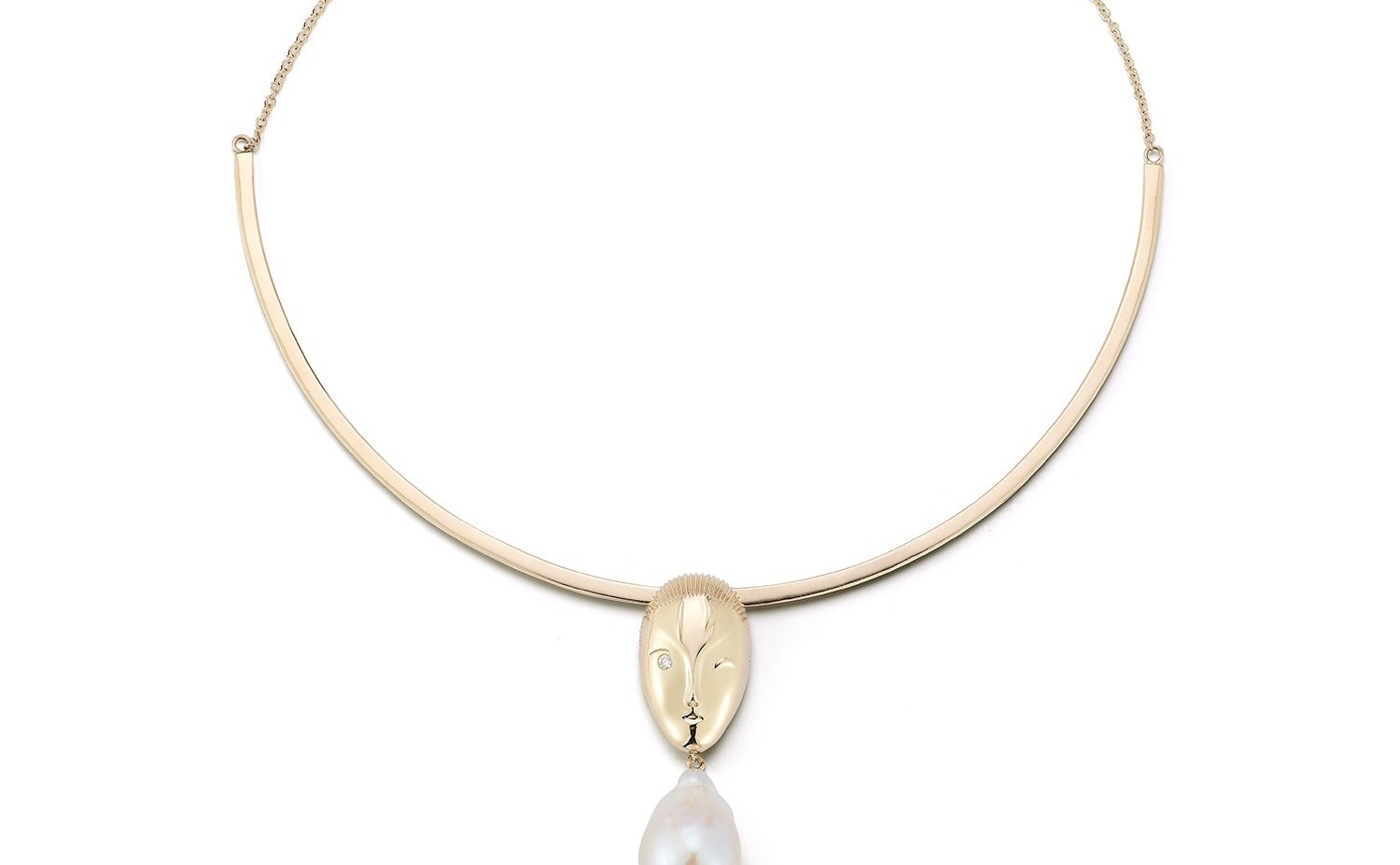
Pamela Love’s Molten Eternity Band looks like gold caught in a moment of movement. Kirsten Muenster’s Banksia Lace ring looks like an aerial photograph of coastline turned into jewelry. Fernando Jorge’s Fluid Diamond line is named for the thing you see in it. None of these pieces grades well by a grading system that was built to evaluate something else.
Why Vintage Got Interesting at the Same Moment
The case for estate and vintage jewelry was already strong before any of this. Pieces made before mass production, often with more hand-worked detail at lower prices, carrying the discount that comes from being previously owned. What the imperfection shift added was a taste permission structure. Vintage pieces were always characterful. Now characterful is the point.
The NYC Jewelry, Antique & Object Show drew nearly 7,000 people in November 2025, its strongest turnout yet. The fair has gone from 40 dealers at its 2023 debut to more than 160, a room full of old things that quadrupled in two years. Taylor Swift’s engagement ring, the one that sent old mine cut searches up and launched a thousand jeweler trend pieces, was set in hand-engraved yellow gold by Kindred Lubeck of Artifex Fine Jewelry. It wasn’t just the stone. It was the whole object: the evidence of specific craft decisions, the warmth of the metal, the engraving that required someone’s hand on a tool. The piece looked like it came from somewhere, because it did.
Antique jewelry has a provenance story built in. An Art Deco sapphire ring from the 1930s contains decisions made by someone who will never be identified, in a workshop that no longer exists, using techniques that were normal then and are rare now. That history is embedded in the object itself. It can’t be replicated, and it can’t be lab-grown.
The Brands Working This Space
What the designers in this space share is that they’ve built design languages around material that doesn’t optimize for the 4Cs. The stones are characterful or unusual. The surfaces are textured rather than polished to a clinical finish. The silhouettes are organic rather than geometrically standardized. They’re making the product that the taste shift is looking for, which is probably not coincidence. Some names worth knowing, with the caveat that this is a fast-moving area and prices shift:
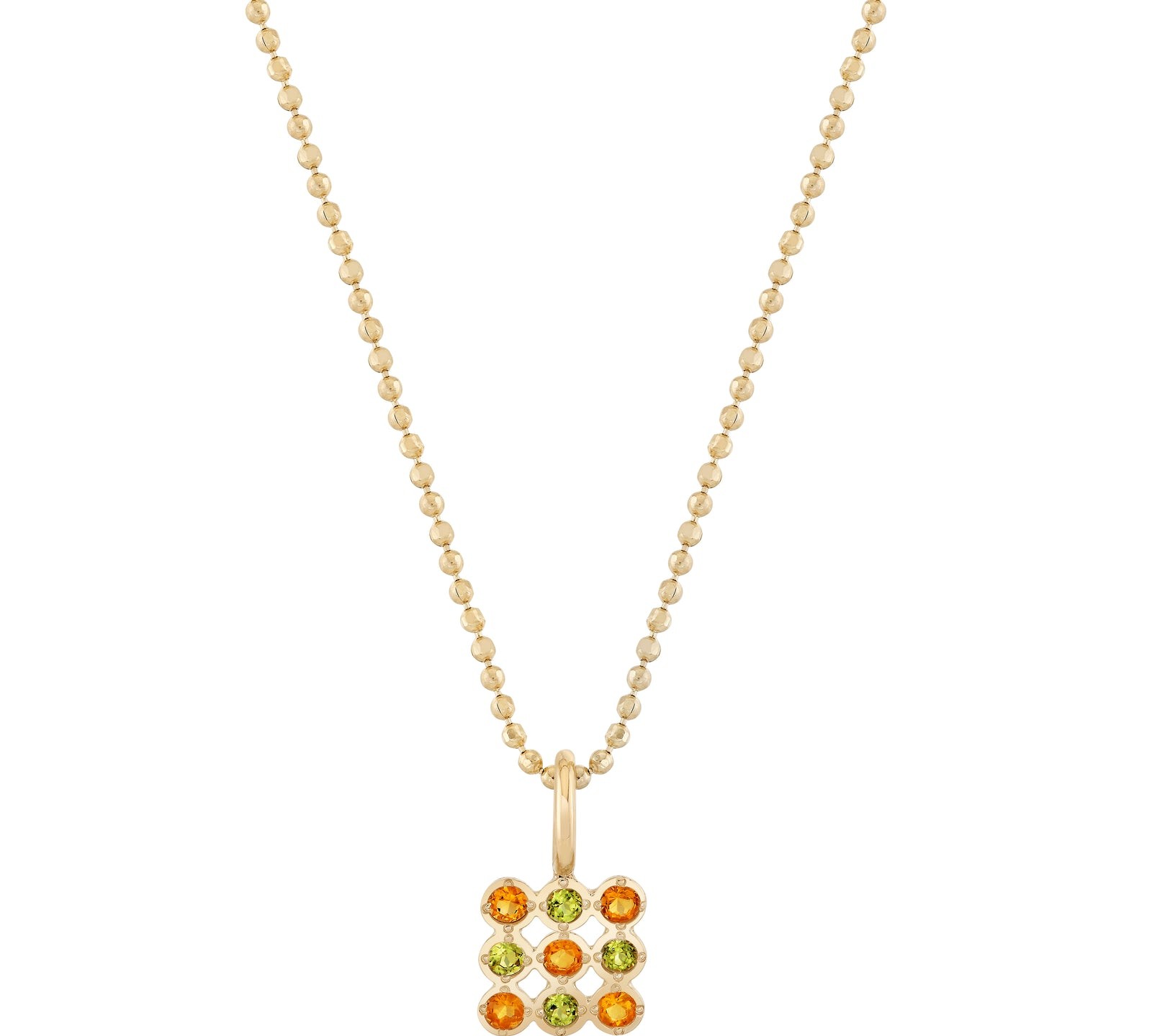
Sophie Bille Brahe works from Copenhagen with baroque and freshwater pearls as a primary material. Her Venus Blanc earrings are $1,725. Mizuki brings a sculptor’s sensibility to pearl pieces on leather cord. Ariel Gordon makes baroque pearl drops in 14k gold starting around $310 for entry pieces, with more significant pieces above $1,000. Gem Breakfast is one of the more interesting destinations for parti and Montana teal sapphires; the Golden Lime tri-color emerald cut is $4,650. Bario Neal does bi-color sapphire pieces that sit at the premium end of the tier. Catbird in Brooklyn has a standing champagne diamond ring category. GOODSTONE leans heavily into old mine cut stones. Jessica McCormack sits above this band rather than in it; Who What Wear describes her as a cult luxury bridal name known for old-mine and rose-cut diamonds (both antique cuts), blackened gold, and an heirloom-like feel. Mateo’s modern pearl work, including baroque-pearl pieces, shows up repeatedly in luxury-media coverage.
A few trade-offs to know before you buy from independent studios. Most of these brands are small operations: production runs are limited and waitlists are real on the most-photographed pieces. Gem Breakfast’s inventory is one-of-one: every colored stone is a single piece, and slowness costs you the piece. Bario Neal’s custom work runs eight to twelve weeks before delivery, longer if the ring uses an ethical-source stone or a non-stock cut. Ariel Gordon makes everything in 14k, which is part of what keeps her entry pieces accessible but means buyers who specifically want 18k won’t find it there. That’s the shape of buying from small studios versus inventory-deep chains, and most of these designers would tell you the trade goes their way.
The GIA Irony
You could read the taste recalibration as just cyclical. Minimalism peaked, maximalism followed, warm tones are having their moment, and eventually the pendulum swings back to the colorless ideal. That’s always possible.
But the lab-grown price dynamic is structural rather than cyclical. The Wall Street Journal reported in 2025 that a one-carat lab-grown had fallen to about $745 at retail, versus $3,925 for a comparable natural stone. Wholesale numbers from Edahn Golan’s quarterly price lists show one-carat round D/VS moving from $111/ct in Q4 2024 to $85/ct in Q1 2026, with quarterly declines slowing and a modest Q4 2025 rebound in the mix. The medium-term direction is collapse; the short-term picture is stabilization at a very low floor. What made colorless perfection feel premium was, at least partly, that it was expensive and relatively rare. Once it’s neither, the premium story has to rest on something else.
Even as the taste coverage swings toward individuality, most engagement rings still center on clear diamonds. The Knot’s data says 83% of engagement rings still feature a clear diamond center stone. The Natural Diamond Council says the round brilliant is still 62% of engagement-ring sales. The characterful segment hasn’t displaced the mainstream; it’s rewritten what the aspirational version looks like, and the editorial and industry vocabulary follows the aspirational version first.
De Beers understands this, which is why the Desert Diamonds campaign exists. The industry’s answer to lab-grown is to shift desire toward things lab-grown can’t easily make: the warm, the warm-toned, the geologically specific, the unique. The skeptical read is that De Beers manufactured this entirely. But the baroque pearl designers and the parti sapphire dealers and the old mine cut specialists were already in this material years before De Beers arrived. The industry found a story pointing the direction the taste was already going.
You don’t have to be cynical about that to see the logic. The interesting stones were always interesting. The grading system just spent a hundred years asking you to want something else.
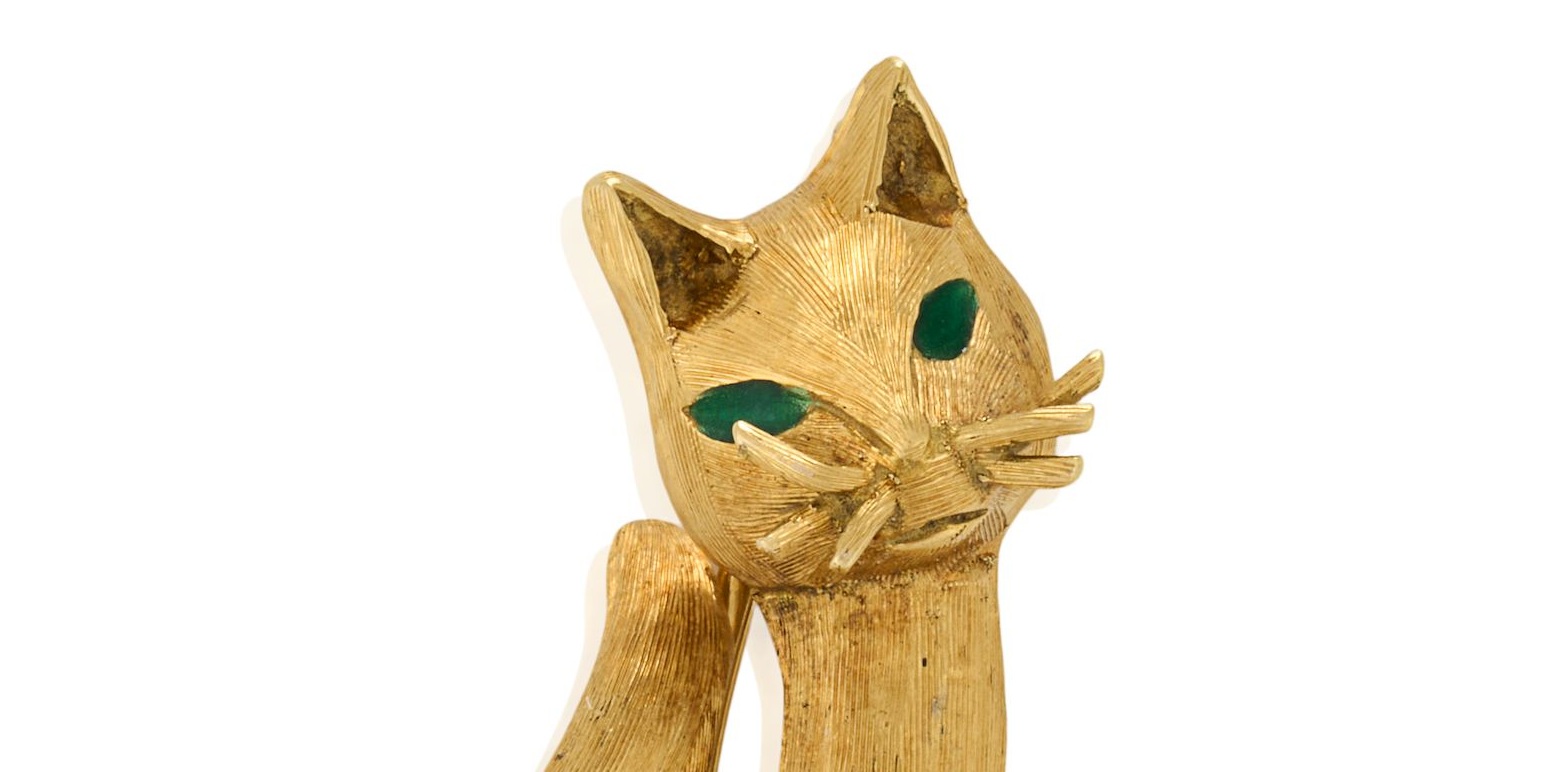
Sandy Lerner Is Rehoming Her Cats: A Tiffany Cat Brooch and Sixty-Five More
The Cisco co-founder spent four decades collecting cats in gold, enamel, amethyst and bronze. On 30 September 2026 Bonhams sells 66 of them in New York, from a $700 carved cat to a $120,000 bronze by the sculptor Rembrandt Bugatti. She is keeping the live ones.
Why Are Jewelry Prices Still Going Up?
Jewelry costs about 15% more than it did a year ago, and it is the gold accounting for most of it. The answer coming back from the jewelry trade and brands is less gold in the piece, which changes what you have to ask for at the counter.
Natural Diamond Prices Are Going Up Again, at Least for Now
Lab-grown stones pushed mined diamond prices down for years. The diamond trade's price index rose again in August, led by small stones. What that changes for you.
The newsletter.
One email when something is worth your attention. New essays, the buying calls behind them, and what we’re watching in the trade. No roundups, no affiliate dumps.