Organic Maximalism Isn't What You're Picturing
The 2026 maximalism moving through fine jewelry runs on sculptural gold, scale with purpose, and single pieces with enough presence to rewrite the context around them.
You’re in a jewelry store and the salesperson is showing you rings. Everything they pull is thin. Dainty, they keep saying, look how delicate, they’re stackable so you should buy more than one. And you’re looking at a row of slim gold bands that all basically look the same, thinking: is this it? Is the whole category just different widths of the same wire?
If the last few years of “less is more” jewelry made you feel like anything with visual weight was automatically loud or tasteless, 2026 would like a word.
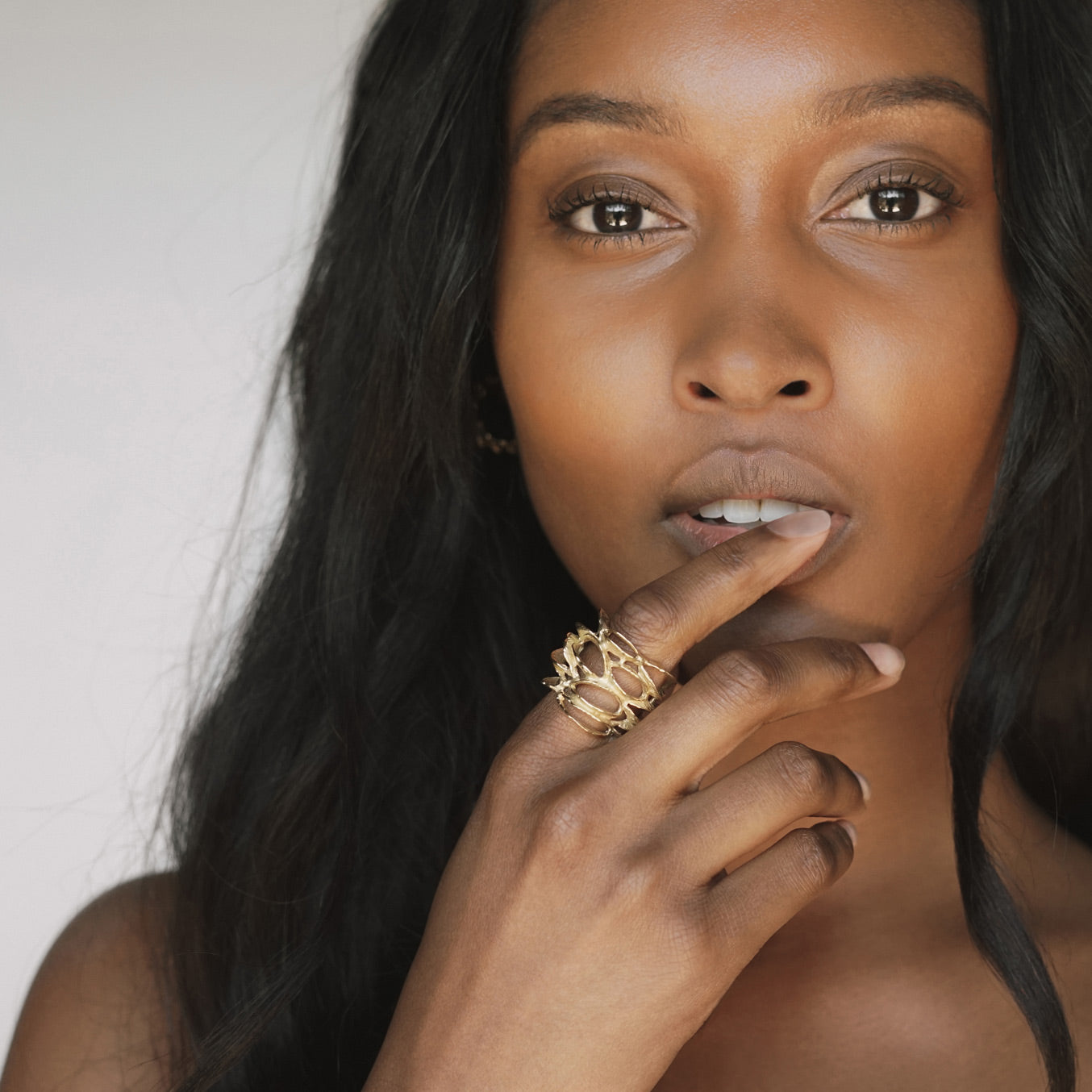
The maximalism that’s taken over fine jewelry has moved well past chunky chains and oversized gold-plated hoops that weigh half a pound and feel like a costume. Bondeye Jewelry published a forecast in January 2026 coining the phrase “organic maximalism” and declaring that Quiet Luxury “has been replaced” by a shift toward bold, sculptural forms. JCK called it “sculptural movement” that “treats precious metals more as fluid objets d’art than jewels.” They are not describing “wear more stuff” or just “go bigger.” They’re describing jewelry where the metal itself is the point, with sculptural gold and surfaces that twist and fold and look like something melted in a beautiful way. Rings that are thick and heavy and sit on your finger like they belong to your hand rather than your hand belonging to them, earrings that move, a pendant that people glance down at when talking to you. I’m talking about pieces with some weight, some texture, and some scale. Quantity and size are beside the point.
What Quiet Luxury Got Wrong (and Right)
Quiet luxury was a correction. For years, the jewelry conversation had been dominated by logomania and trend-chasing, and the idea that your jewelry should signal taste rather than budget was a useful pushback. The thin chain, the small stud, the invisible earring: these had their moment because they represented editing, and editing felt sophisticated.
But editing can become its own trap. If everything in your jewelry wardrobe is thin, small, and understated, you’ve curated yourself into a corner where the only move is thinner, smaller, more understated. The “less is more” principle, applied relentlessly, eventually becomes less is just less. A stack of three delicate chains reads as composed. A single substantial cuff reads as decisive. Both are choices. One is harder to replicate by accident.
What quiet luxury got right was the principle of intention. Every piece chosen for a reason. What it got wrong was confusing intention with restraint, as if the only way to be intentional was to be small. You can be maximalist and intentional at the same time. A large sculptural ring that you chose because it stopped you mid-step in a store window reads as decisive. The motive is what determines loudness. The clarity of the choice is what determines everything else.
There’s a version of this where I trace the whole quiet luxury timeline, from the Succession finale through the Sofia Richie wedding through whatever Gwyneth wore to whatever event, and chart the moment the pendulum swung. (The longer essay on the shift from quiet luxury to maximalism exists separately, if the timeline’s what you came for.) For this piece, the timeline doesn’t matter. What matters is that a lot of women spent three years buying very thin jewelry because the culture told them thin was tasteful, and some of them are now looking at their collection and feeling like it’s all a bit… safe.
What the Aesthetic Looks Like
Old maximalism was accumulation: pile on more rings, more chains, more bracelets, turn the volume up on everything simultaneously. This version is about a single object with enough presence that it rewrites the context around it.
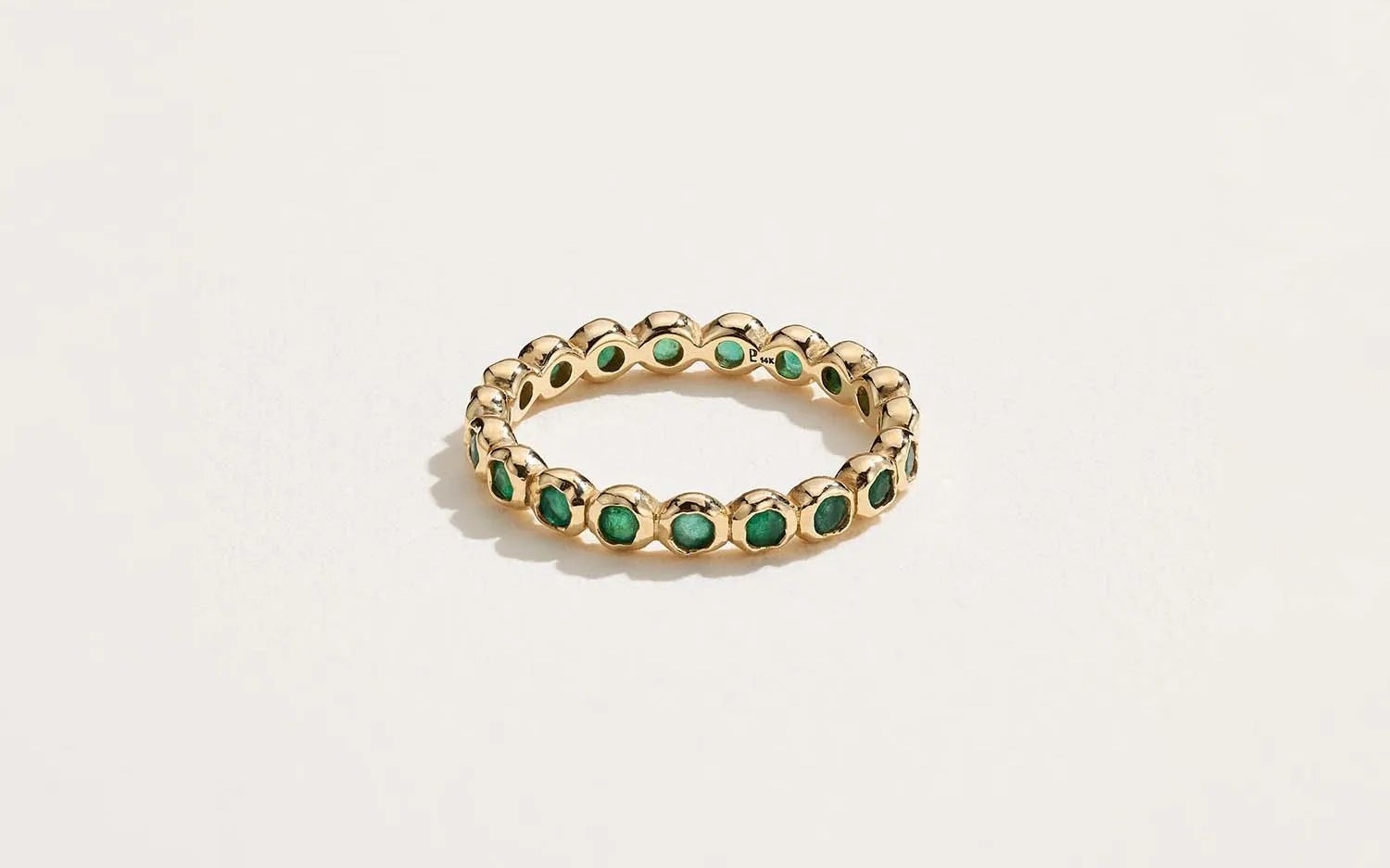
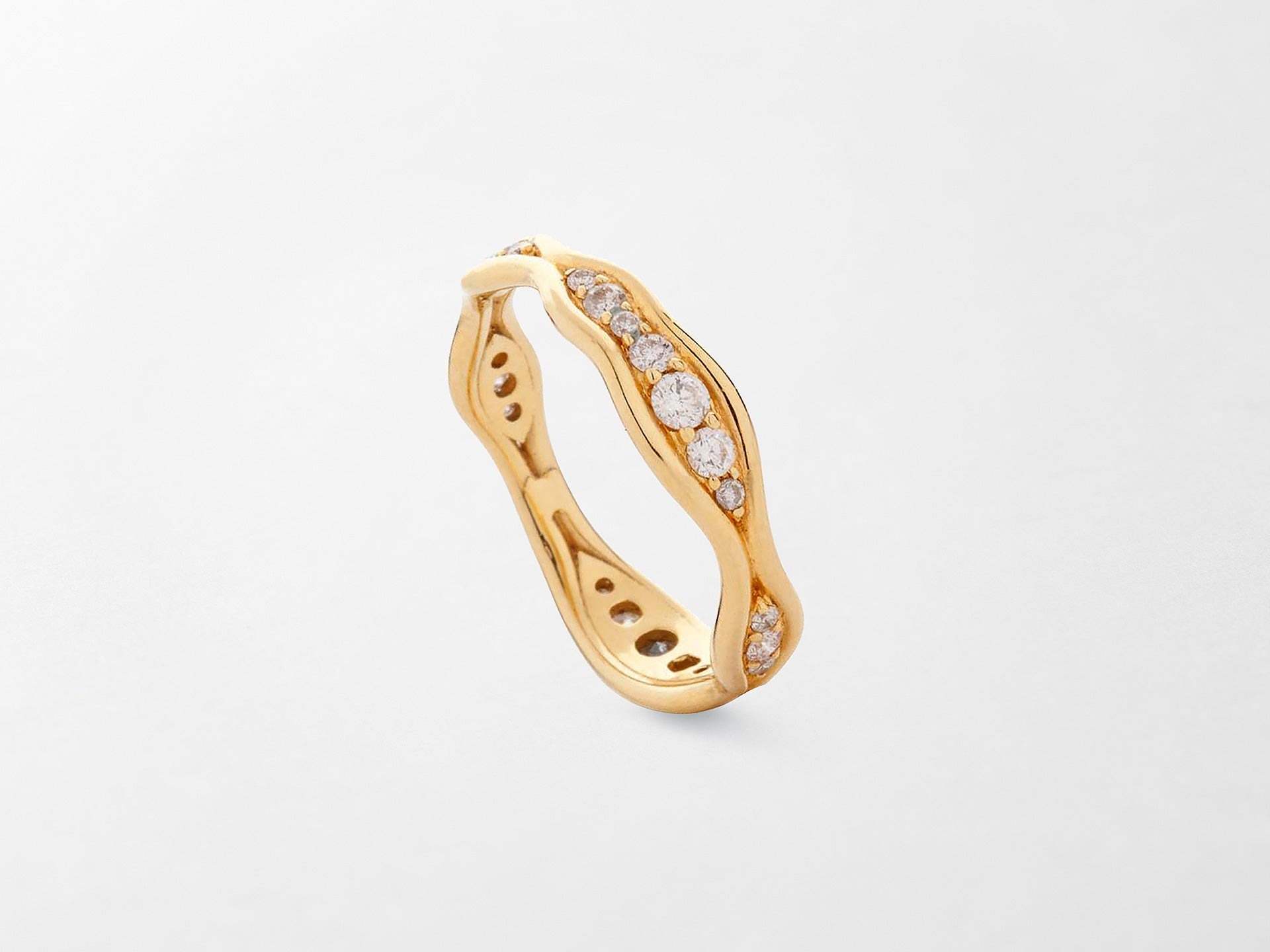
Sculptural gold is the center. Rings, cuffs, and earrings where the metal itself is the design. No stone, or a minimal stone subordinated to the form. The gold is twisted, folded, textured, shaped into organic forms that reference nature without being literal about it. Something that feels like a leaf remembered, or like water frozen mid-current in gold.
Scale with purpose. Bigger, but not bigger-for-bigger’s-sake. A ring that’s wider than usual because the design requires the width. Earrings that are longer because the shape needs the drop. If you can imagine the piece smaller and it would still work, the scale isn’t doing anything. If the piece needs that size to exist, it’s earning its footprint.
Texture over polish. Hammered, brushed, organic, or rippled surfaces rather than high-polish everything. Texture gives gold visual weight and makes pieces feel handmade even when they’re produced at small scale. It’s the difference between a smooth gold band and a gold band that looks like it was shaped by a river. Same material. Different relationship with light, with touch, with the person sitting across from you who keeps looking at it.
The brands operating in this space at this price level, where you can verify the prices before you walk in: Pamela Love has sculptural 14k and 18k gold pieces that sit squarely in the tier. The Molten Eternity Band is $1,085. The Ovalado Ring is $1,170. The Inlay Scarab Ring runs $2,050 to $3,600 depending on the colorway. Kirsten Muenster is a San Francisco studio working in small runs and one-of-a-kind editions, ethically sourced gold, 3 to 6 week lead times on made-to-order pieces. The Willow Ring is $2,300. The Banksia Lace is $3,000. Fernando Jorge enters the band at $2,900 with his Fluid Diamond Small Chain Earrings, designed in London and handcrafted in Brazil in 18k gold. The Fluid Band is $3,600. He’s at NET-A-PORTER and Bergdorf, so you can see the work in person without tracking down a studio.
One note on Brent Neale: the work belongs in this conversation. Hand-carved in New York. One of the more distinctive examples of studio sculpture in fine jewelry right now. But the current verified price points sit above our band. The Mini Knot Ring is $8,250. The Hopscotch Statement Ring is $8,850. Worth knowing about. Worth looking at. Not something you’ll find at $1,000 to $5,000 right now.
And fewer, larger pieces. New maximalism replaces three quiet pieces with one that doesn’t need the company. The total number of items might be less than a minimalist outfit. The visual presence is bigger. That math confuses people who think maximalism is about accumulation. It’s about the intensity of each individual object.
The Buying Shift
At this price level, the new maximalism changes what you’re shopping for. Instead of two delicate pieces, one substantial one. The thin gold chain gets replaced by a heavier one with more visual weight. The tiny studs give way to a single pair of sculptural earrings that can carry an outfit without anything else to support them.
This can feel uncomfortable if the last five years of content have sold you on restraint as good taste. It requires trusting that a bold piece can be tasteful, that weight and presence aren’t the same as excess, and that wearing one large, well-made thing is a form of editing rather than its opposite.
Two things worth knowing before you buy. Wide sculptural rings fit tighter than thin bands: Zoran Designs explicitly tells you to order at least half a size up, and they’re not the only ones. And lead times are real. Most of the independent studios doing this work are made-to-order, which means three to six weeks minimum, sometimes twelve to sixteen. That reflects how the work is made. It is also the opposite of instant gratification, and knowing before you fall in love with something specific will save you a frustrated week. (If you’re also sorting out what to look for in the piece itself, there’s a separate piece on reading craftsmanship that’s worth reading before you go shopping.)
Where the Label Gets Misused
New maximalism has nothing to do with logo chains, costume jewelry scaled up, or fashion jewelry from a fast brand made bigger. The “maxi” here refers to design ambition and physical substance, and the marketing budget has no part in it.
It’s also not six pieces at once. That’s just a lot of jewelry. You can be a maximalist with two pieces on your entire body if those two pieces have enough presence. You can wear eight thin, quiet pieces and still read as a minimalist. The label tracks the energy of the objects, whatever the count.
And it is emphatically not permission to buy heavy gold jewelry because a magazine told you maximalism is back. If you’re buying something because a trend report said it was time, you’re not making a maximalist choice. You’re making a reactive one. The difference is whether the piece stopped you because of what it is, or because of what you read about it that morning.
Go Try Something On
If you’ve been looking at your jewelry and feeling like it’s all a bit expected, a bit “I bought this because it matched everything and offended no one,” try an experiment. Walk into a jeweler. Ask to see their widest ring, or their most sculptural earring, or whatever they have that takes up the most space. Try it on. Don’t commit to anything. Just see how it feels on your body.
See if you keep looking at it. That reaction, the involuntary return of your eyes to your own hand, is data. It means the piece has presence, and it means you respond to presence even if the pieces you’ve been reaching for lately have all been smaller.
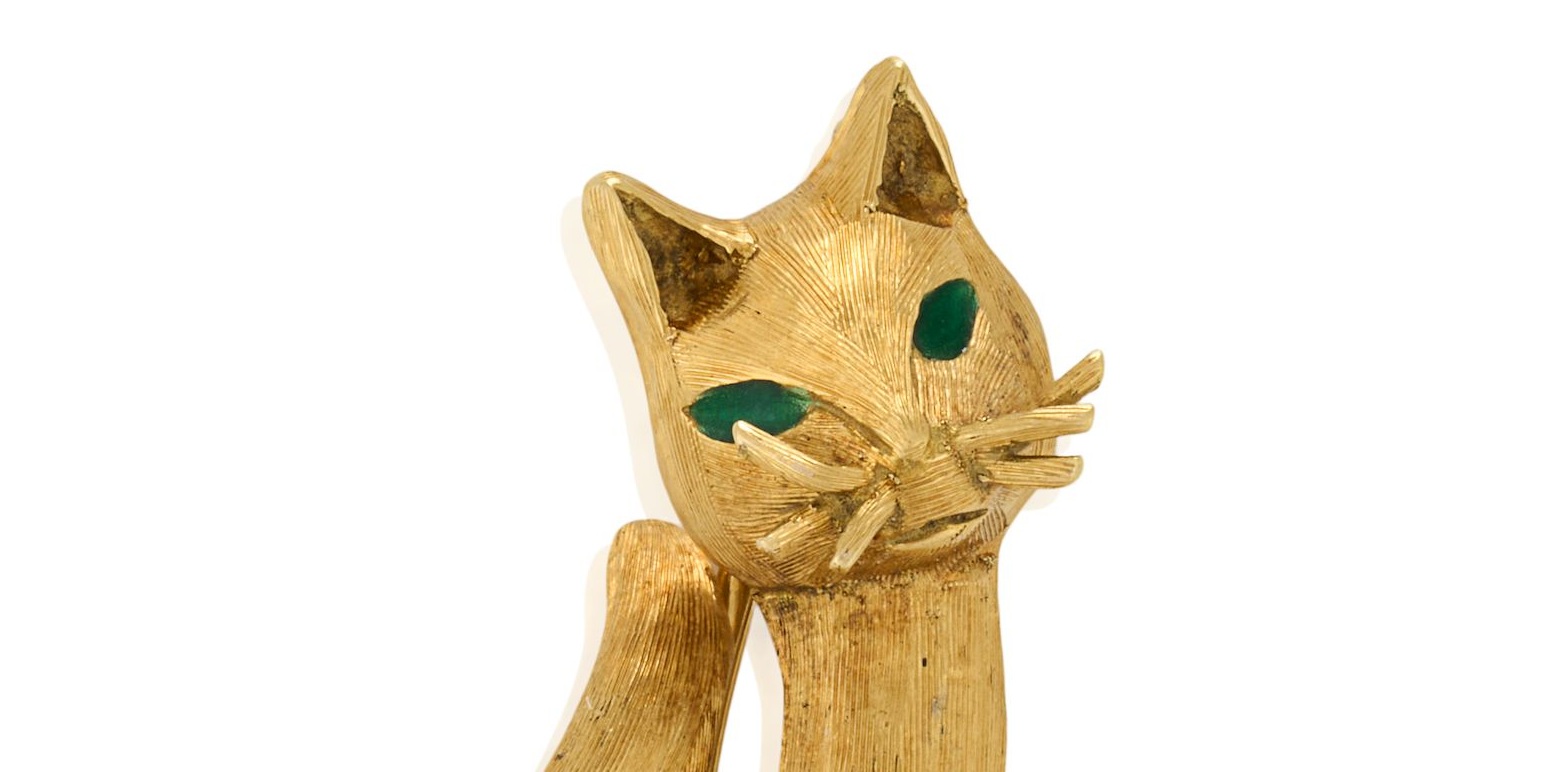
Sandy Lerner Is Rehoming Her Cats: A Tiffany Cat Brooch and Sixty-Five More
The Cisco co-founder spent four decades collecting cats in gold, enamel, amethyst and bronze. On 30 September 2026 Bonhams sells 66 of them in New York, from a $700 carved cat to a $120,000 bronze by the sculptor Rembrandt Bugatti. She is keeping the live ones.
Why Are Jewelry Prices Still Going Up?
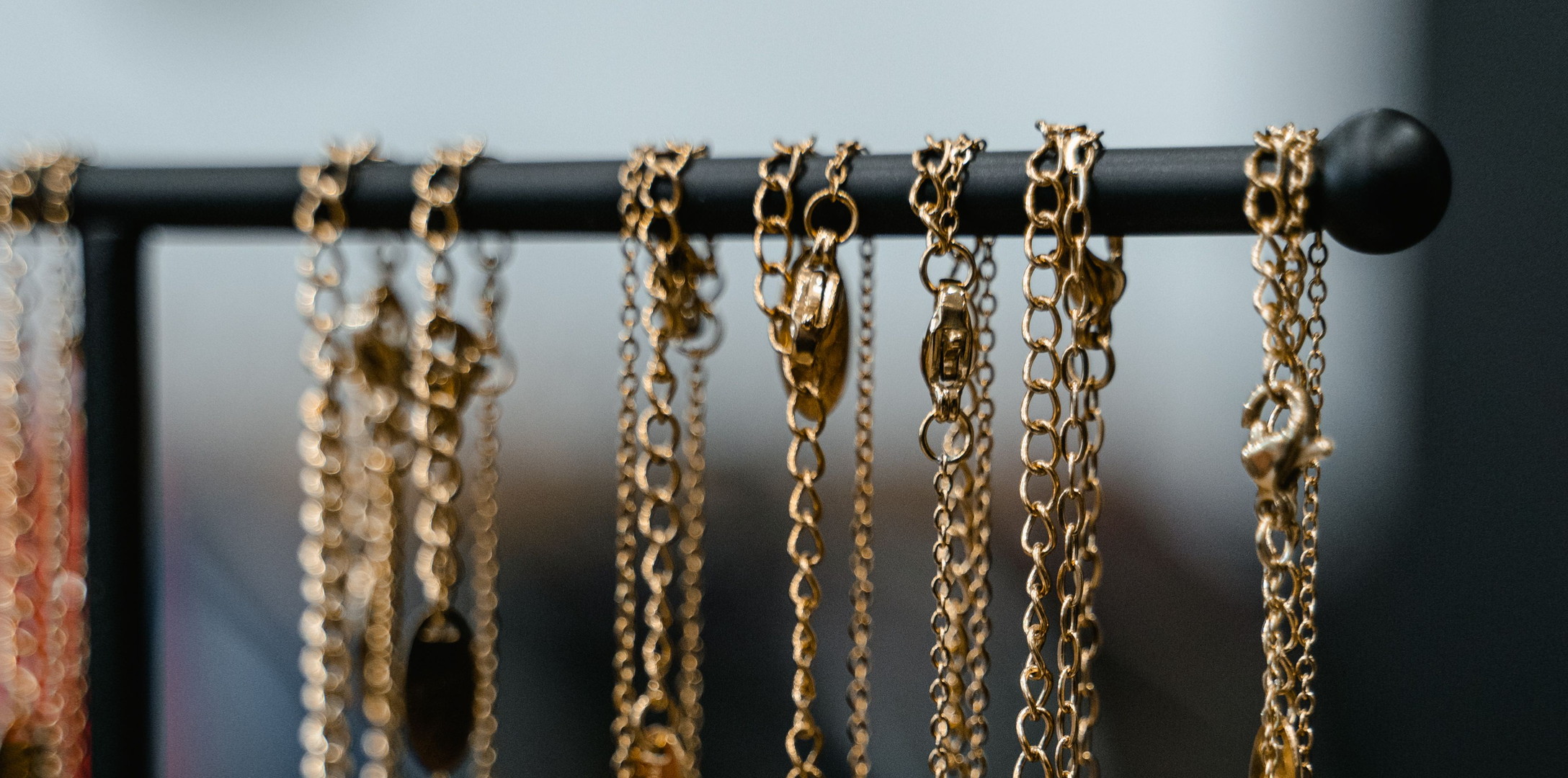
Jewelry costs about 15% more than it did a year ago, and it is the gold accounting for most of it. The answer coming back from the jewelry trade and brands is less gold in the piece, which changes what you have to ask for at the counter.
Natural Diamond Prices Are Going Up Again, at Least for Now
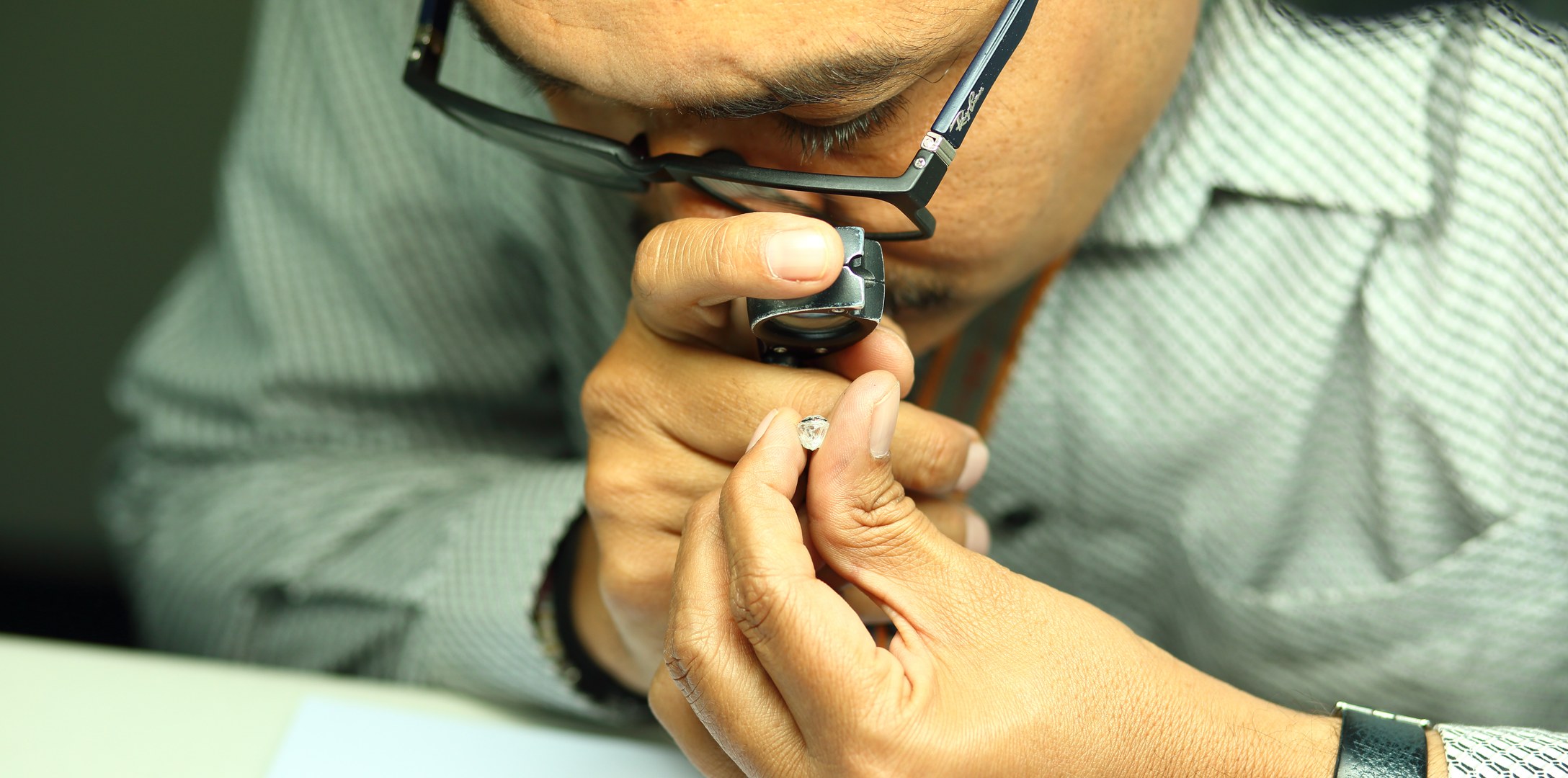
Lab-grown stones pushed mined diamond prices down for years. The diamond trade's price index rose again in August, led by small stones. What that changes for you.
The newsletter.
One email when something is worth your attention. New essays, the buying calls behind them, and what we’re watching in the trade. No roundups, no affiliate dumps.