
The Gold Signet Ring Is Fine Jewelry's Most Honest Buy Right Now
A gold signet ring is mostly metal and craftsmanship, with no stone hiding the cost, which makes it the rare fine-jewelry buy you can almost price by weight. With gold at record highs and the signet back in the culture, a clear guide to what one is worth now and how to choose well.
For thousands of years, a signet ring was how you signed your name. You pressed its carved face into hot wax and the mark it left stood in for you: your seal, your authority, proof a thing came from your hand. It is the oldest ornament still worn for the reason it was first made, to carry a personal mark, and that fact is the pull of it long before any recent trend.
The signet is having its moment right now, and a movie put it there: the matching gold rings Margot Robbie and Jacob Elordi wear in Wuthering Heights. The trend coverage stops at the romance and skips the practical part, which is that a gold signet ring is, on the numbers, one of the most honestly priced things in fine jewelry. Tom Wood makes the case in two: its Cushion signet is the same ring in two metals, about $409 in sterling silver and about $2,909 in solid 9-karat gold. Same face, same shank. The whole gap is the metal. With no stone in the middle doing the expensive, hard-to-value work, a signet is one of the few pieces where you can see almost the entire price, which with gold at record highs is trend worth engaging with.
A seal you wear
The signet’s face has carried a mark for more than 5,000 years. Cylinder seals turned up in Mesopotamia around 3500 BCE; ancient Egypt set the seal into a ring you could wear; the wax impression closed and authenticated a letter. The word comes from the Latin signum, a sign. The signet has no stone because it never needed one. The face was always the point.
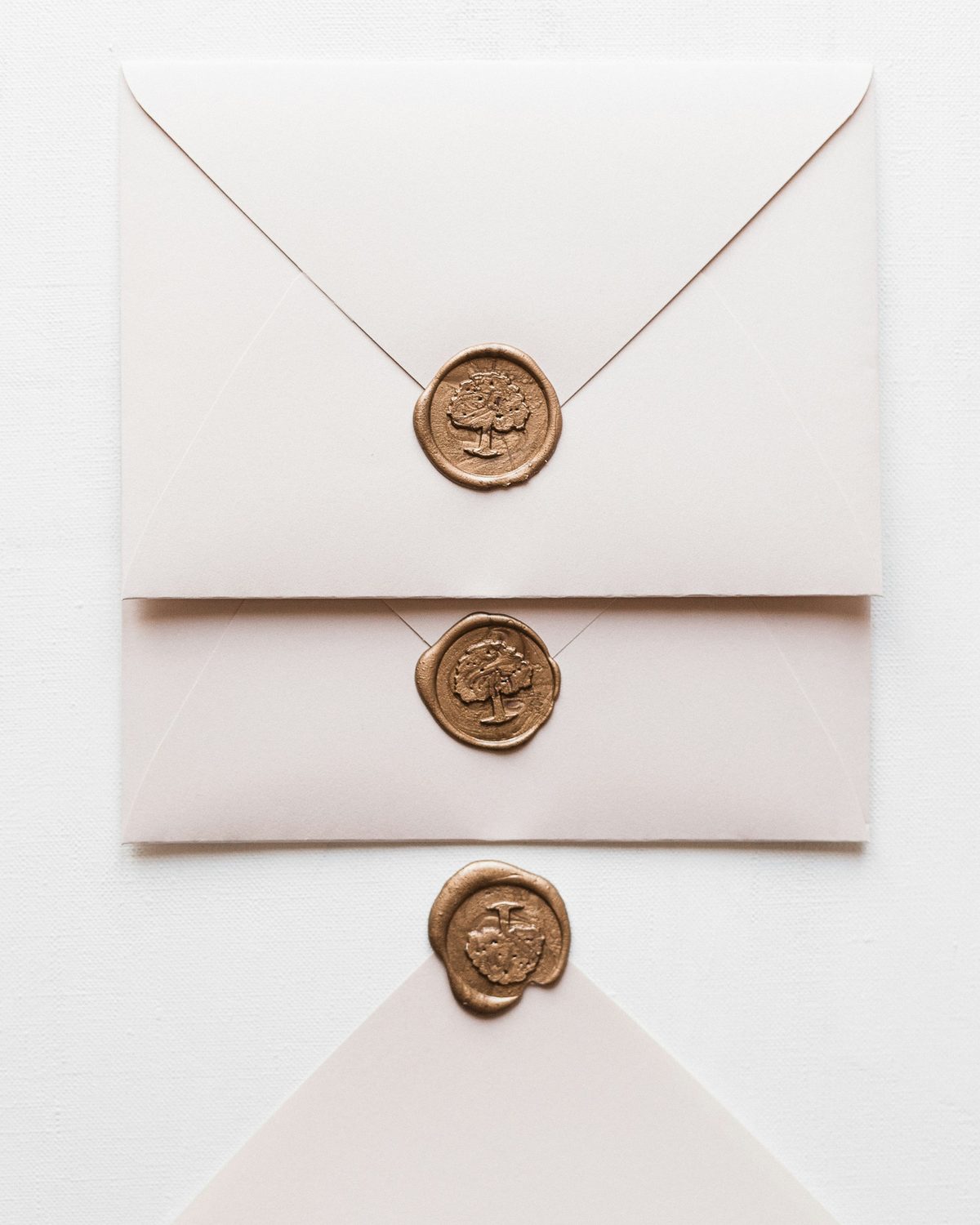
The pinky is the placement nearly everyone asks about, and tradition explains it: the signet went on the little finger of the non-dominant hand so it would not smudge the wax while the other hand wrote. The pinky still reads as classic for a smaller face, while a larger signet moves to the ring or middle finger to anchor a stack. None of this is a modern rule though, wear your signet wherever it suits you.
Because the face is intended to be marked, engraving is the whole point of the form: initials, a monogram, a crest, a symbol, or a blank face you grow into. Some brands, like Foundrae and Sorellina build custom engraving into their signet offers, and Sorellina runs a design-your-own program. A seal-engraver like London’s Rebus hand-cuts each one over several weeks. One real trade-off comes with it: hand engraving is custom and usually means a final sale, so decide what goes on the face with intention.
What you’re paying for
Most fine jewelry places much of its value in the stone. A diamond’s price turns on cut, clarity, color, and a lab’s opinion, and the metal is almost an afterthought on the tag. A signet inverts that. Strip out the stone and the price is gold weight plus the work that shapes the face.
Gold has jumped recently, which sharpens the question. Spot gold broke $5,000 an ounce for the first time in January 2026, after rising 64% in 2025, its biggest year since 1979. A run like that lifts anything mostly made of gold, and a signet is mostly gold, so the rising gold price presses on a signet’s price more directly than on a stone-dominated piece. For a signet, the questions about metal are the ones that decide whether you bought well.
There are two. The first is karat. Tom Wood’s gold signets are 9-karat, less pure gold and lower in price; Foundrae’s Balance Signet and Sorellina’s Gold Motif Signet are 18-karat, deeper in color with more gold in them. Higher karat buys warmer color and more metal value, lower karat buys a harder everyday surface for less, and the call is yours on color and budget. The second is whether the ring is solid or hollow, the quality tell that matters most on a metal piece: a solid shank (the band) and face let you engrave deeply, resize cleanly, and hand it down. Weight is the signal, the same as it is across well-made jewelry. Pick the ring up and a solid gold signet announces itself before any spec sheet does.
What a stone does to the price
The honest test of the no-stone argument is to add the stone back. Brent Neale makes signets with carved gemstones and pavé (a field of tiny diamonds), and they run from about $9,850 to $16,850. The jump is the stones: they put back exactly the expensive, hard-to-value element a plain signet leaves out. A solid-gold men’s signet from David Yurman clears $6,400, which tells you a recognized house charging a house premium for plain gold still lands where the independents doing plain gold start to look like the smarter buy. A signet’s value lives in the plainness. Keep the face gold and the math stays honest; set it with stones and you have made a different, lovelier, more expensive decision, on purpose.
A piece for everyone
The signet is back because of one very romantic placement. In Emerald Fennell’s 2026 Wuthering Heights, Margot Robbie and Jacob Elordi wear matching gold signets by the London goldsmith Cece Jewellery: 18-karat, enameled with two skeletons in a bed of roses, ringed by diamonds and a line from Brontë. Robbie gifted Elordi his, and both wear them on the pinky. The rings were made for the film, with no price and nothing to buy, so read them as the spark and shop the real market.
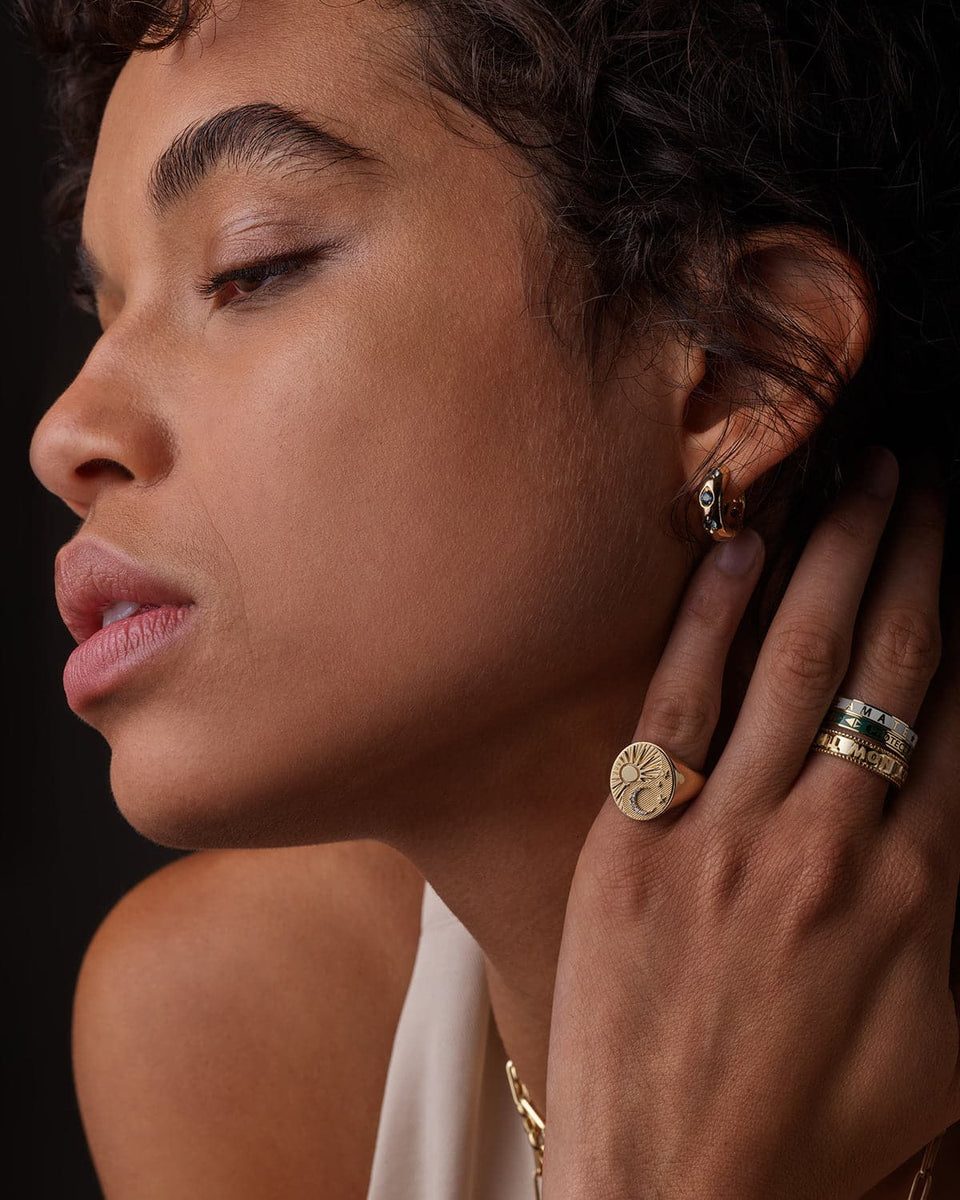
The spark worked. By one UK auctioneer’s count, searches for signet rings jumped about 47% after the premiere, and the trade and fashion press followed. What makes the moment different from the medallion’s is who it belongs to. The men’s medallion and the medallion as a first fine-jewelry piece are men’s stories by subject. The signet’s spike is shared down the middle: the same film put one on Robbie’s hand and Elordi’s, and the catalog backs it up. Foundrae’s Balance reads unisex, Sorellina’s is made for women and worn by anyone, Tom Wood’s sit on any hand. The same object answers two different buyers, which is part of why it is having the year it is.
How to buy one
The decision is a few real questions, and none of them is about a stone. Pick the metal first: 18-karat for deeper color and more gold, from Foundrae or Sorellina under $5,000, or 9-karat for a harder surface and a lower entry, where Tom Wood runs roughly $2,029 to $2,909. Confirm the ring is solid through the shank and face, because the weight is the make-quality. Decide the engraving knowing the cut is usually permanent, or leave the face blank for now. If the mark is the whole point, a seal-engraver like Rebus is the most faithful route, with a wait of a few weeks the honest cost.
A diamond asks you to trust a grading report. A signet asks you to understand gold and to decide what mark is yours, then hands you an object that has meant exactly that, a seal pressed into something soft, for longer than almost anything else people wear. The film will fade by summer. The form has lasted for over 5,000 years, so you can be fairly confident that one of your descendants may be enjoying yours someday. �����������������������������������������

Fine Jewelry Started Ungendered And Never Stopped
Jewelry was sorted by rank for five thousand years and by gender for about one century. The men's and women's split is commercial noise rather than a property of the adornment: where gendered jewelry came from, and what it should and should not change about what you buy.
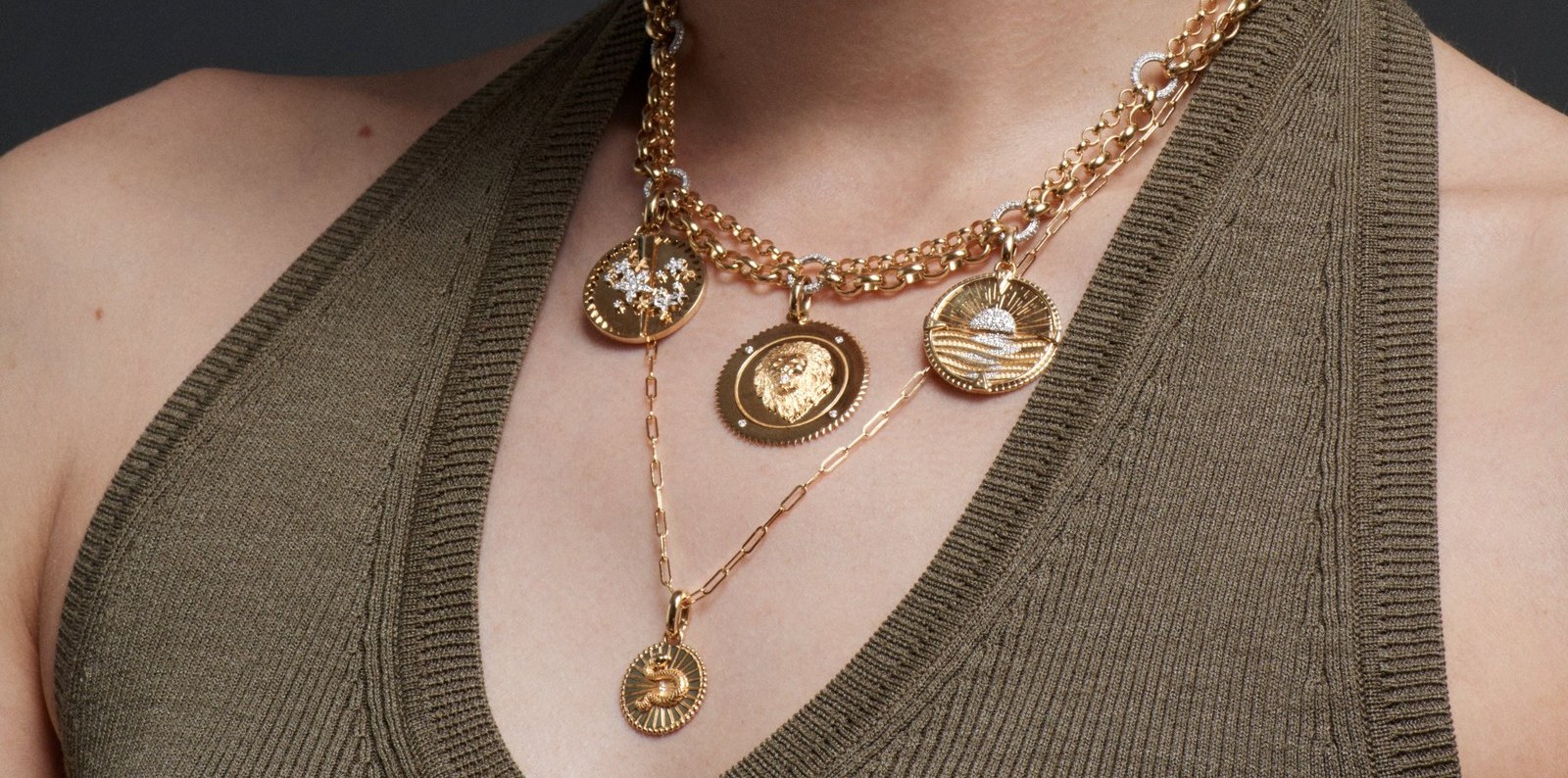
The Independent Jewelry Brands That Hold Their Value
Spending real money with an independent jewelry designer means trusting your own eye instead of a famous name. The used market is where that trust gets tested, because nobody pays most of retail for a secondhand piece as a favor. Seven designers pass that test on their signature pieces, and have for years.
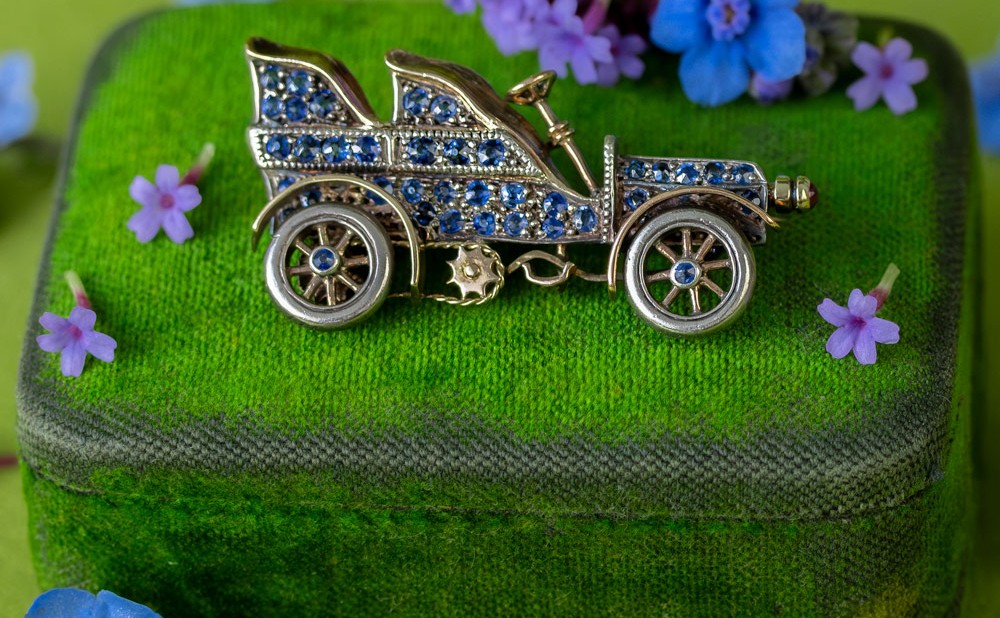
The Fine Jewelry Brooch: Where It Came From, Why It's Back, and Where It's Going
The brooch fastened clothing for thousands of years before it became pure ornament. The history of the clasp turned decorative shows where it's headed as jewelry, plus the COVID origin of its most recent return, what recent fashion shows added, and why brooches worth buying now are waiting for you in estate sales and dusty cases.
The newsletter.
One email when something is worth your attention. New essays, the buying calls behind them, and what we’re watching in the trade. No roundups, no affiliate dumps.